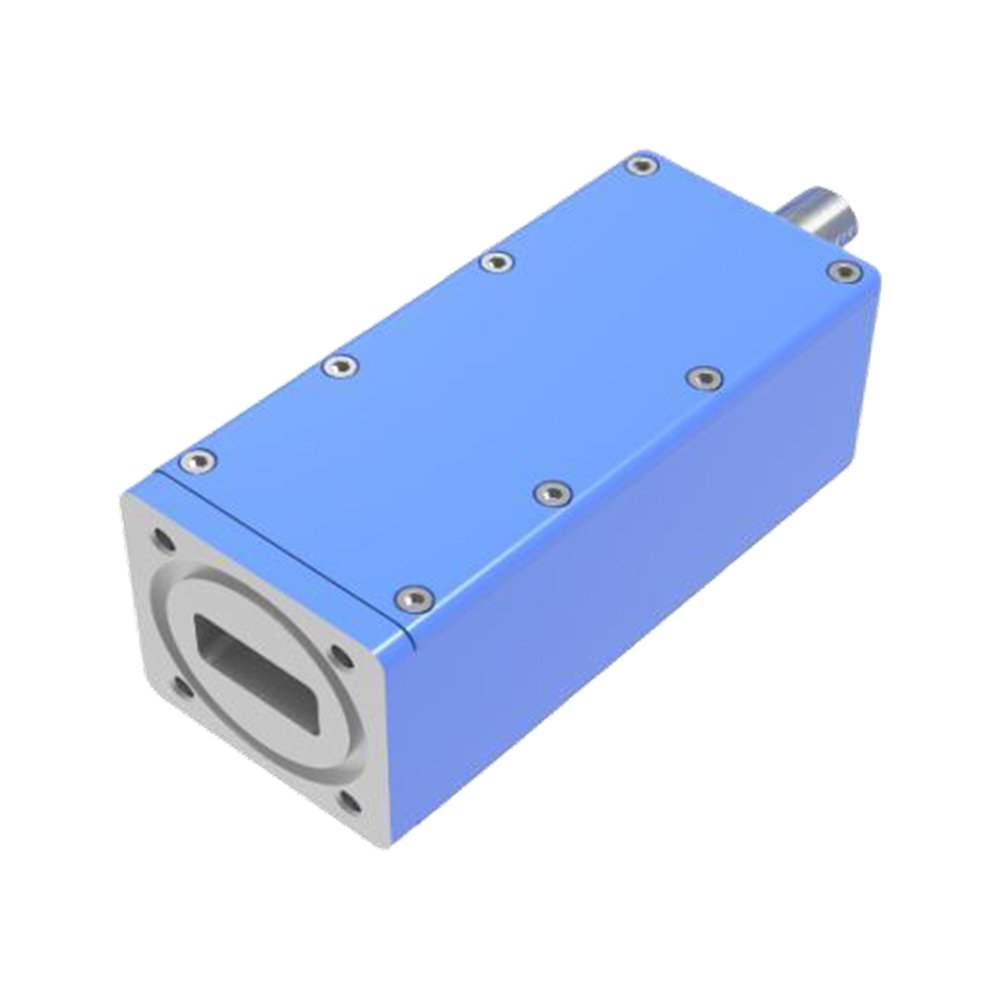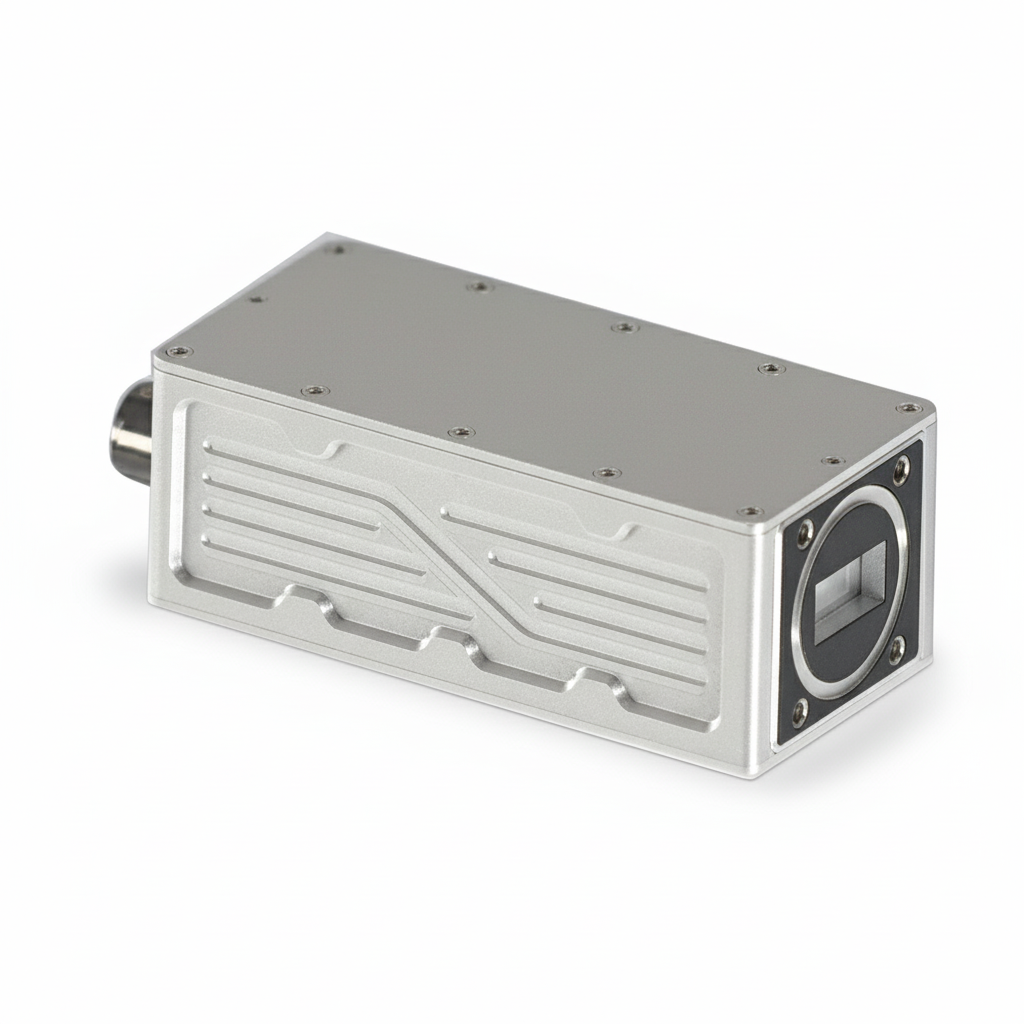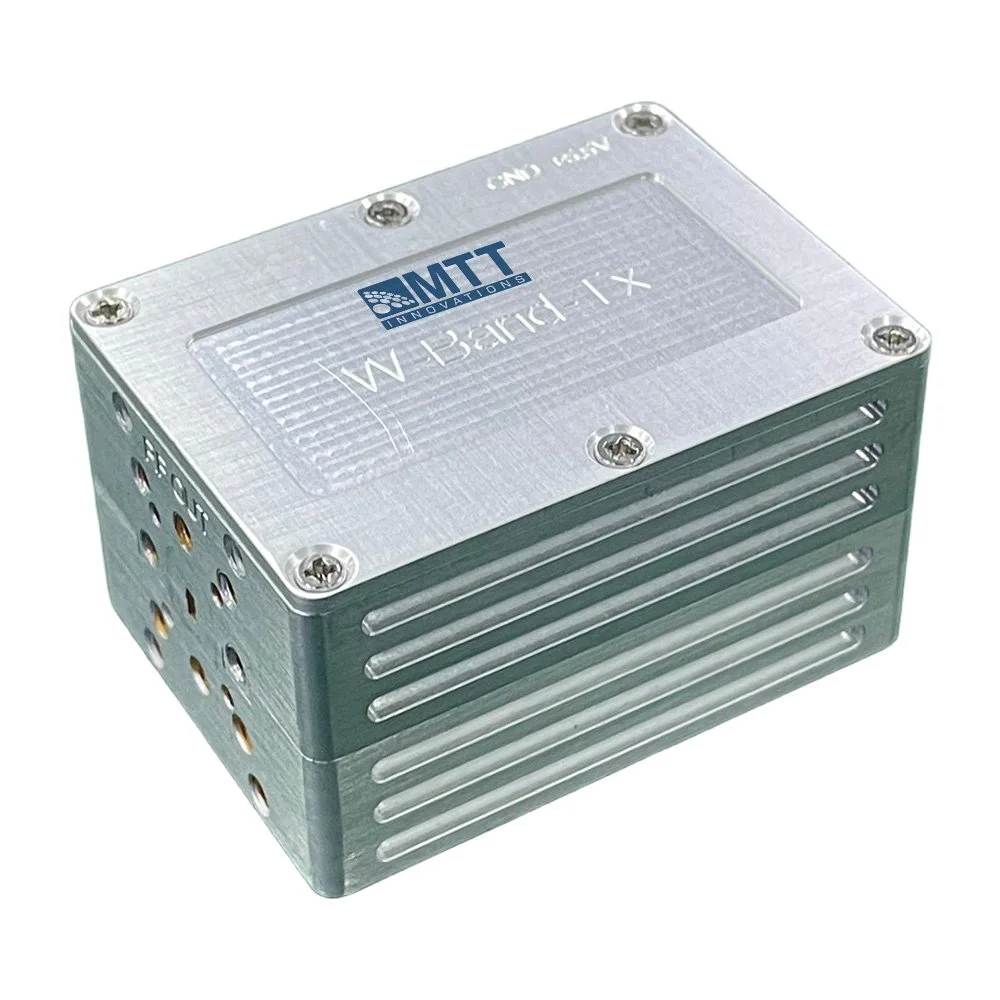
W-Band Tx Component (92~94GHz)

₹0.00

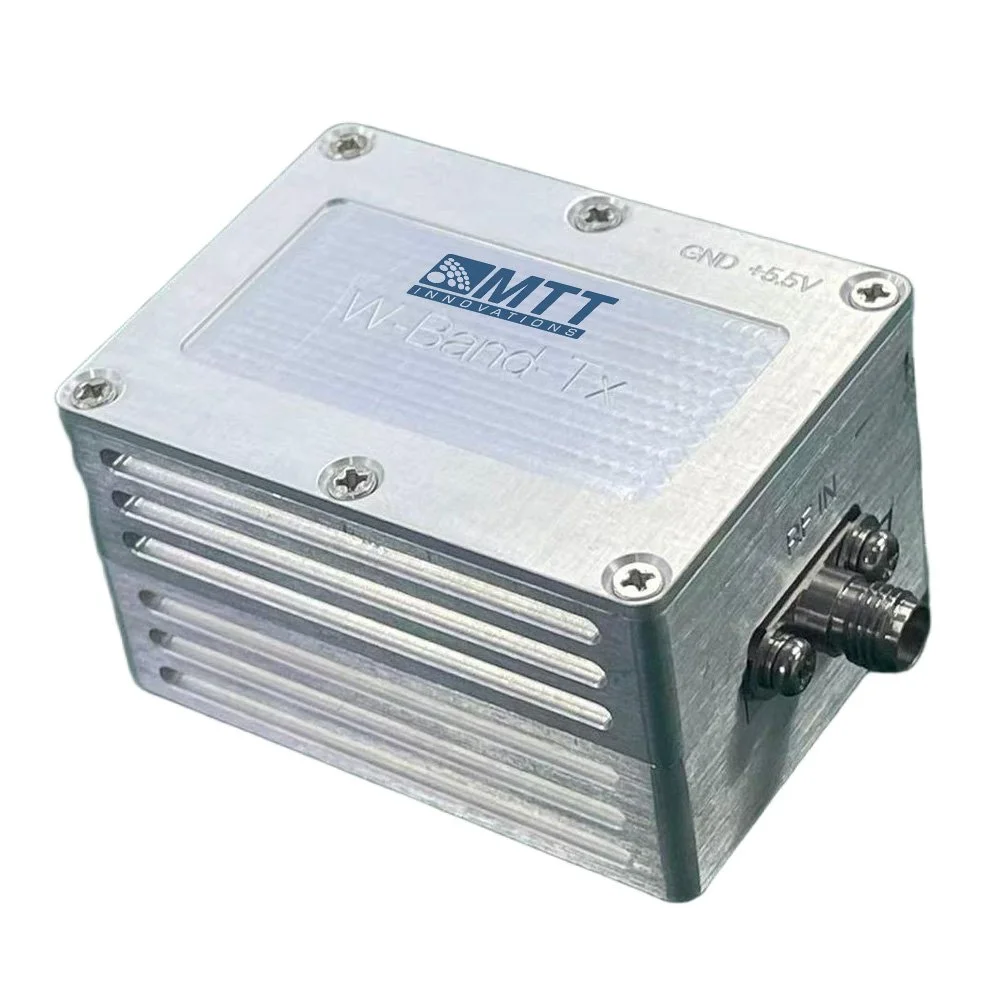
W‑Band Tx Component (92–94 GHz)

Product Features :

  • Operating frequency band: 92~94GHz

  • Output power: ≥20dBm (continuous wave)

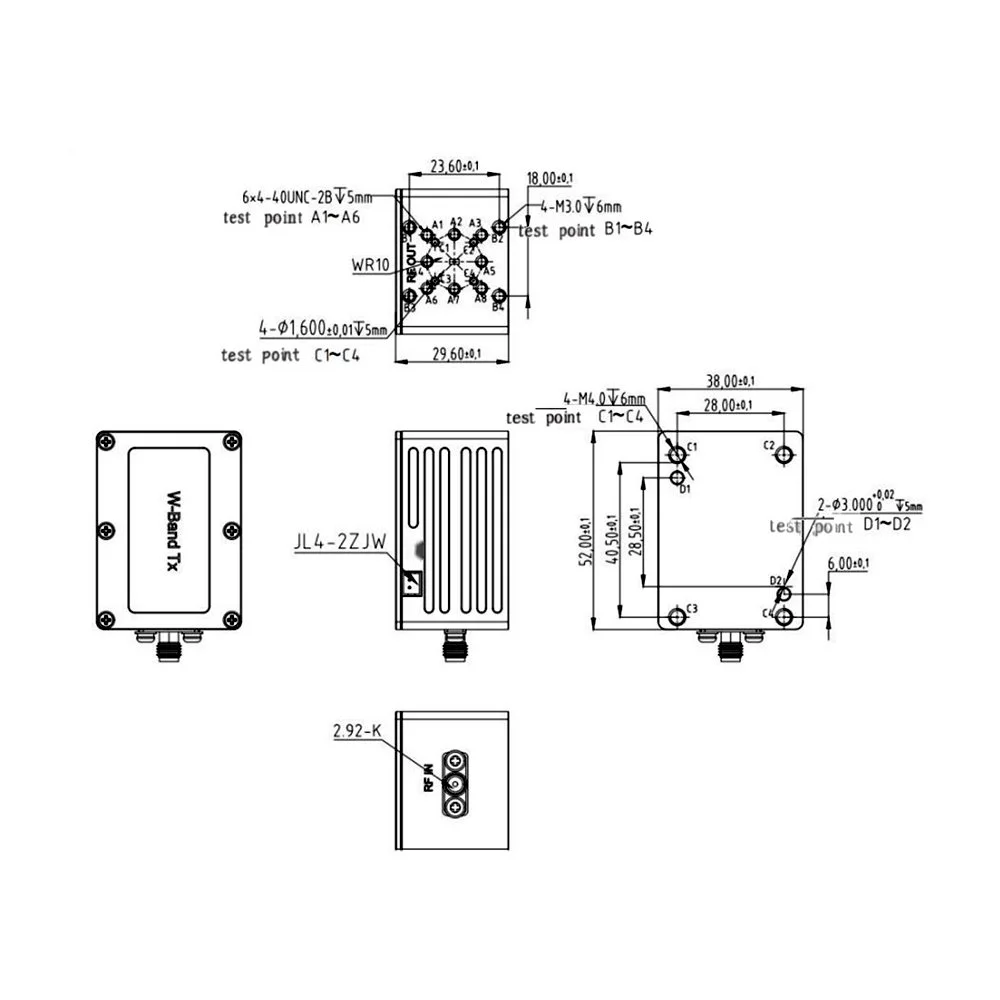
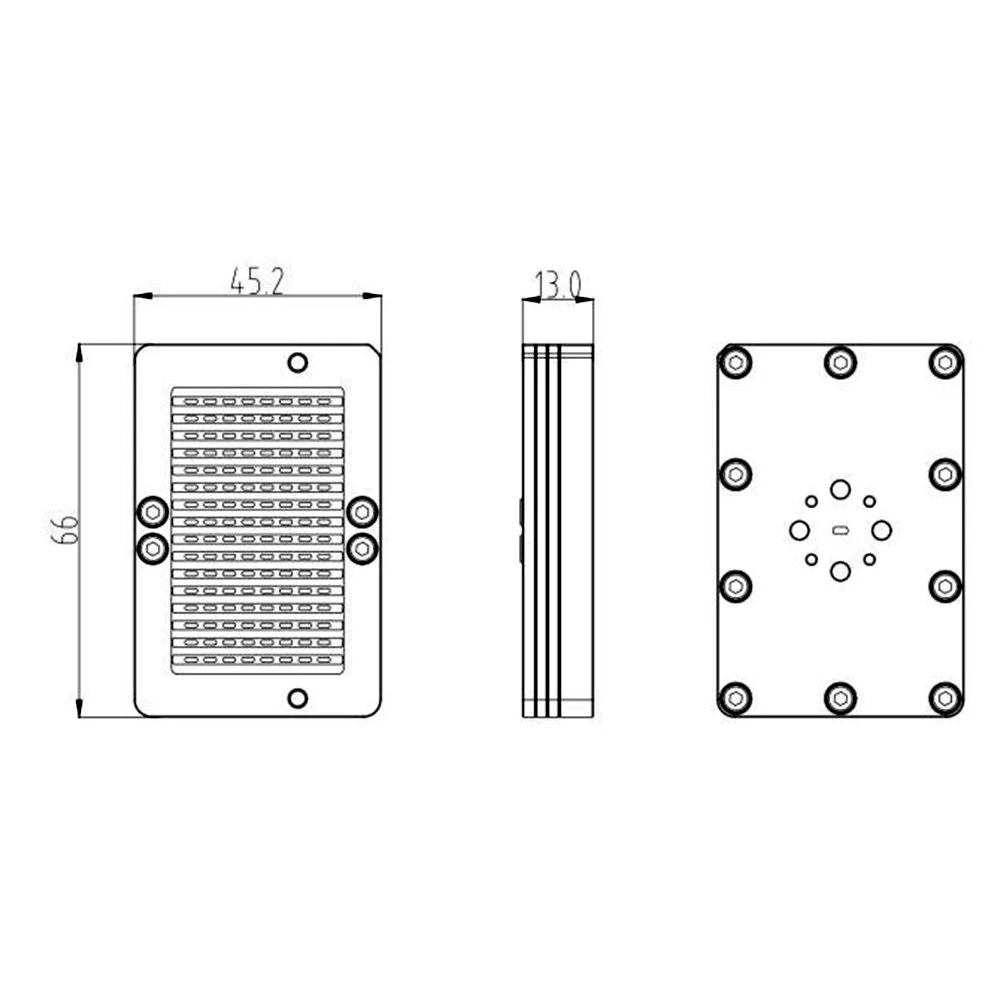
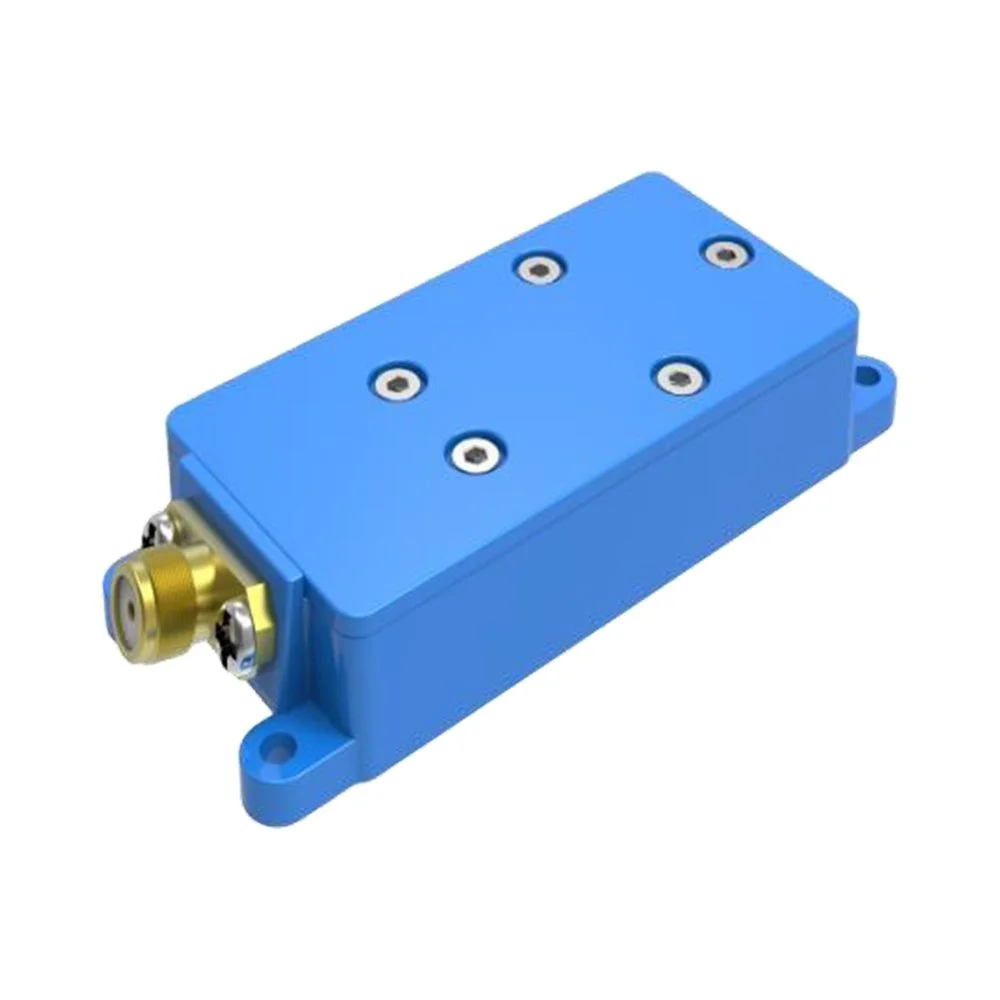
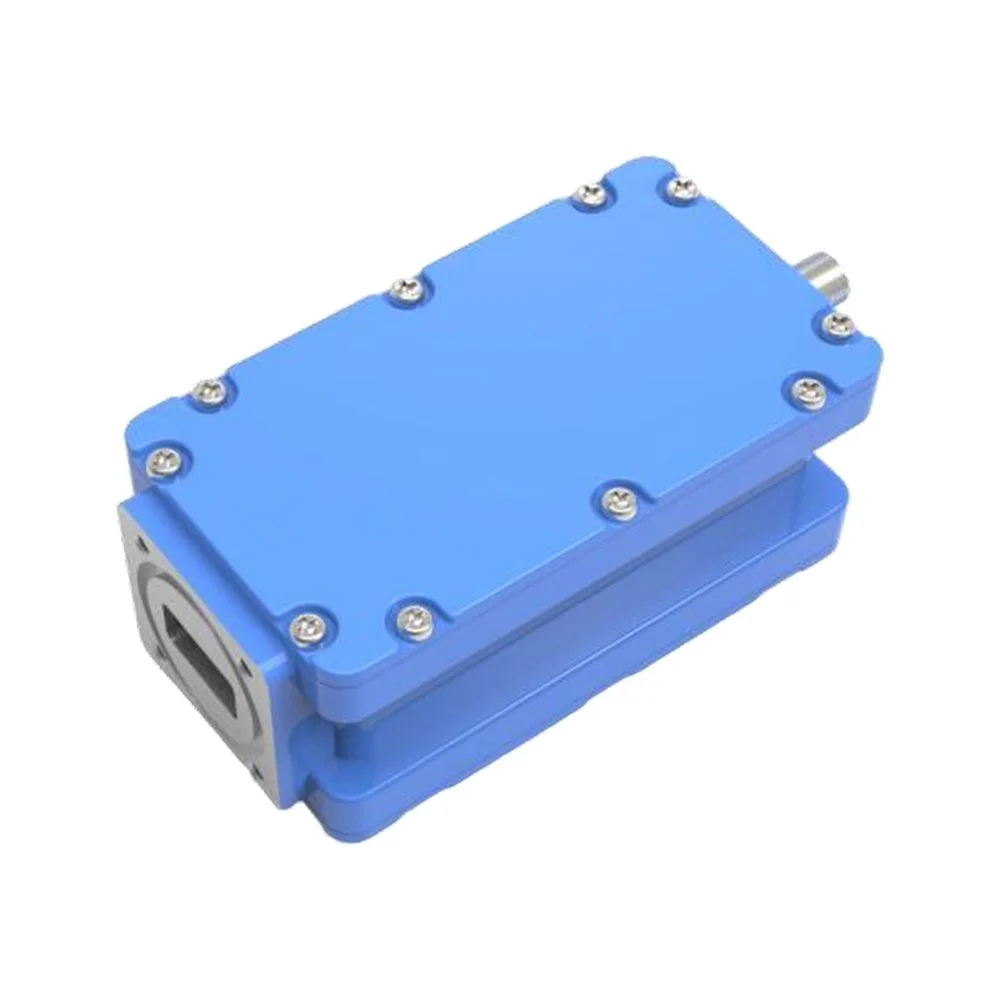
  • Dimensions: 50mm×38mm×29.6mm

Overview A W‑band transmit component designed for 92–94 GHz operation provides a compact, high‑performance solution for short‑range high‑resolution radar, imaging, and high‑data‑rate wireless links. This design brief outlines key specifications, architecture choices, performance targets, and integration considerations for a transmit (Tx) module operating across the 92–94 GHz segment of the W‑band.

Target Applications

  • Automotive and industrial short‑range radar (high‑resolution imaging and object localization)

  • Security screening and millimeter‑wave imaging systems

  • High‑capacity wireless backhaul and point‑to‑point links over short distances

  • Research testbeds for mmWave component characterization

Key Specifications (target)

  • Frequency band: 92.0–94.0 GHz

  • Output power (continuous wave, CW): +10 to +18 dBm (application dependent; default target +15 dBm)

  • EIRP: up to +40 dBm (with integrated or external antenna gain)

  • Gain: 25–35 dB (active Tx chain including driver and power amplifier)

  • Noise figure (Tx chain contribution): minimized for transmit spurious performance and receiver isolation (typical specified as Tx phase noise rather than NF)

  • Phase noise: ≤ −90 dBc/Hz at 100 kHz offset; ≤ −70 dBc/Hz at 10 kHz offset (goal for coherent radar and comms)

  • Output return loss: ≤ −10 dB across band

  • Harmonics and spurious: meet spectral mask; fundamental suppression > 40 dBc for harmonics; spurious < −60 dBc

  • Modulation: supports CW, FMCW, PSK/QAM up to required symbol rates depending on IF bandwidth

  • IF/RF bandwidth: up to several GHz (depending on upconversion chain and PA linearity)

  • Power consumption: optimized for application; typical module 2–8 W depending on output power class

  • Operating temperature: −40°C to +85°C (commercial and industrial grades available)

  • Size: compact PCB module or waveguide block; example footprint 25×25×5 mm for integrated PCB modules, or flanged waveguide package for higher power

Architecture and Key Blocks

  • LO Source: low‑phase‑noise synthesizer or VCO phase‑locked to a reference (10 MHz or 100 MHz). Frequency multiply (×9 or ×12) schemes commonly used to reach ~92–94 GHz from lower‑GHz LOs. PLL loop bandwidth and VCO design chosen to minimize phase noise degradation.

  • Upconverter / Mixer: single‑ or double‑conversion architecture. Image rejection and LO leakage control critical at W‑band—use of balanced mixers or filtered stages recommended.

  • Driver Amplifier(s): one or more gain stages to drive the final PA into desired output range while preserving linearity for modulated signals.

  • Power Amplifier (PA): GaAs pHEMT, GaN, or InP HEMT PAs depending on power and linearity requirements. GaN for higher power and efficiency; InP for lowest noise/highest frequency performance. Thermal management and output network for impedance matching to waveguide or antenna.

  • Output Filtering and Harmonic Suppression: waveguide filter or integrated MMIC filter to suppress harmonics and out‑of‑band spurs.

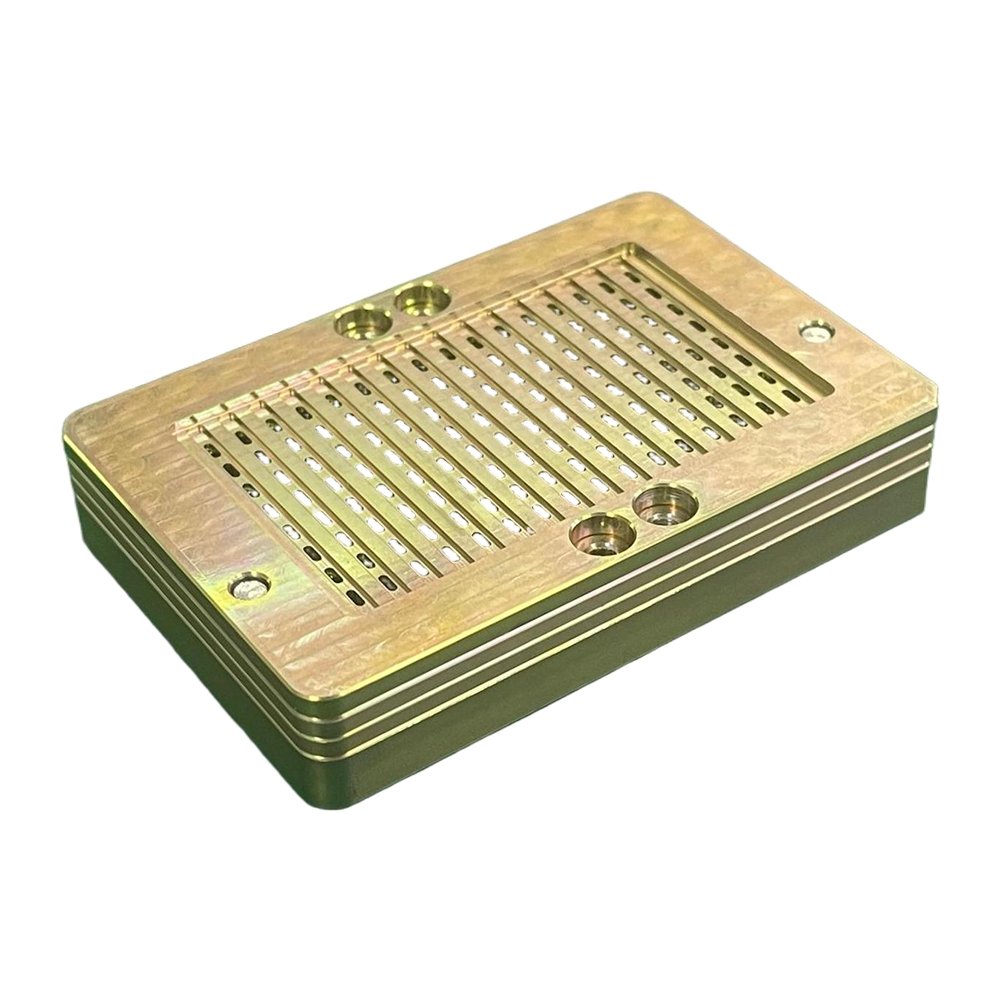
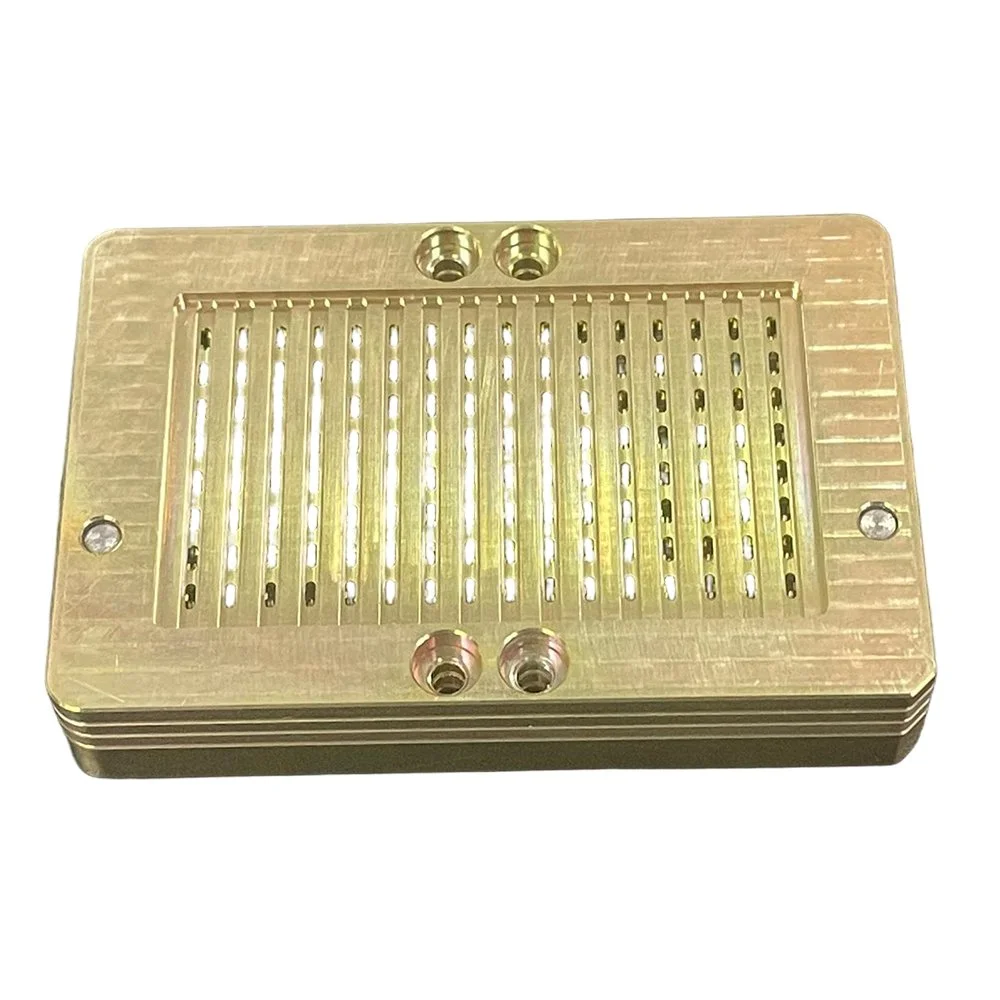
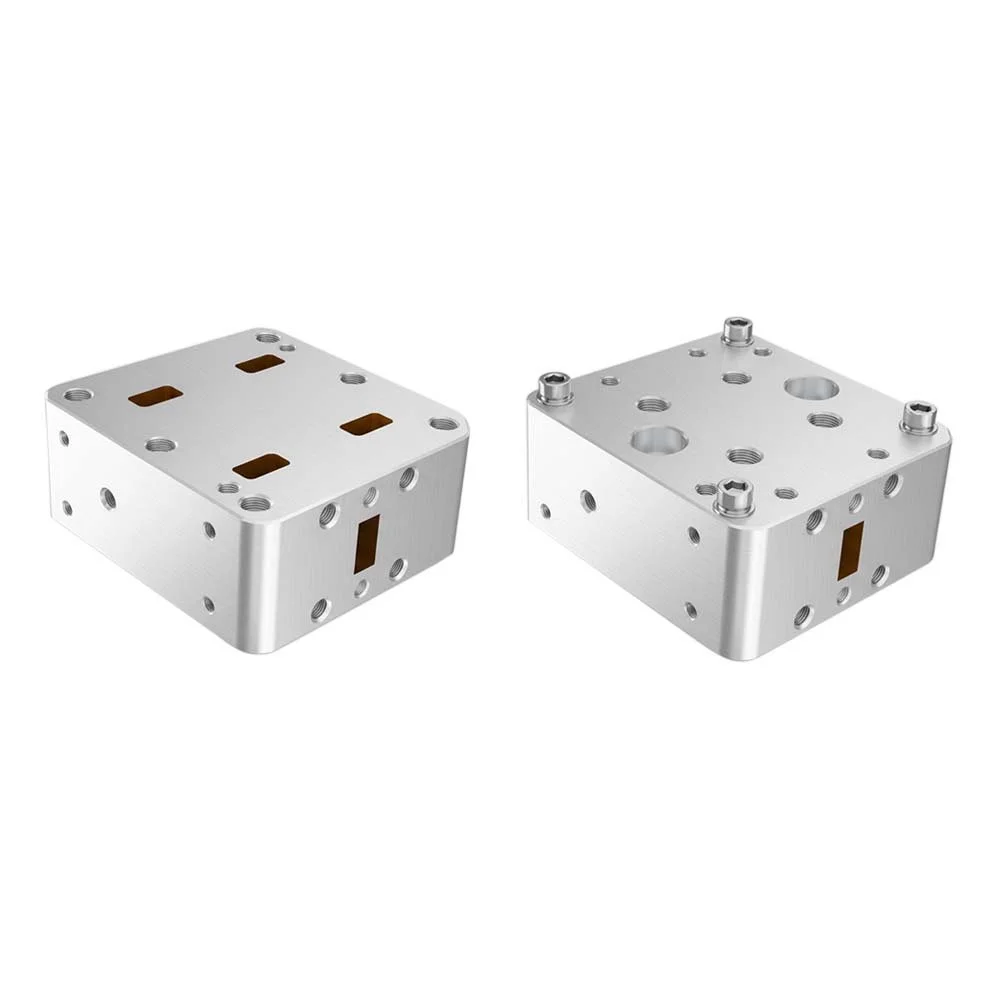
  • Output Interface: WR‑10 (for 75–110 GHz family) or a custom waveguide/antenna flange; alternatively, integrated on‑chip antenna or PCB radiating element for compact systems.

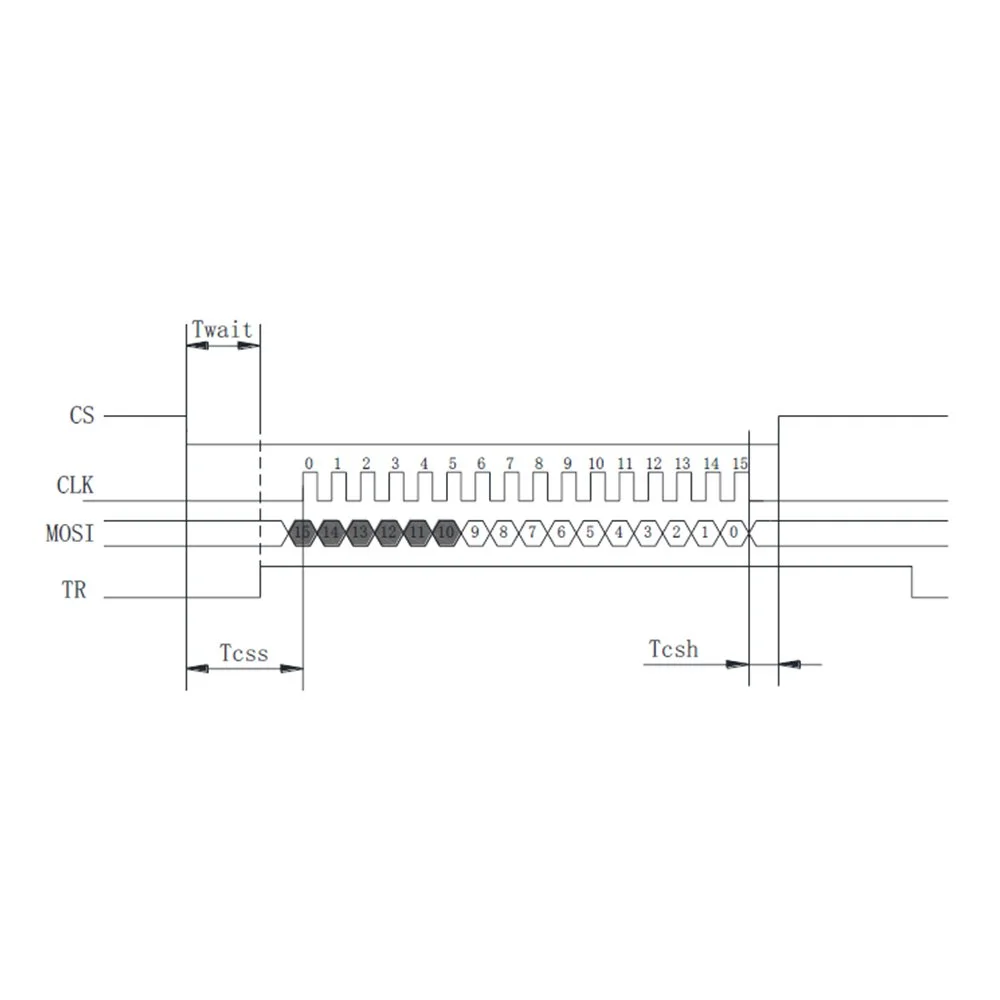
  • Control and Monitoring: bias control, temperature sensing, forward/reflected power monitoring, and interlocks. Optional digital control via I2C/SPI for PLL and gain control.

Design Considerations

  • LO distribution and multiplication: tradeoffs between direct high‑frequency PLLs and lower‑frequency PLL + multiplication. Multipliers add phase noise (20*logN for ideal integer N) and spurs; use low‑noise multipliers and careful filtering.

  • Impedance matching at W‑band: tolerances are tight—precision substrates (e.g., quartz, alumina,

W‑Band Tx Component (92–94 GHz)

Product Features :

  • Operating frequency band: 92~94GHz

  • Output power: ≥20dBm (continuous wave)

  • Dimensions: 50mm×38mm×29.6mm

Overview A W‑band transmit component designed for 92–94 GHz operation provides a compact, high‑performance solution for short‑range high‑resolution radar, imaging, and high‑data‑rate wireless links. This design brief outlines key specifications, architecture choices, performance targets, and integration considerations for a transmit (Tx) module operating across the 92–94 GHz segment of the W‑band.

Target Applications

  • Automotive and industrial short‑range radar (high‑resolution imaging and object localization)

  • Security screening and millimeter‑wave imaging systems

  • High‑capacity wireless backhaul and point‑to‑point links over short distances

  • Research testbeds for mmWave component characterization

Key Specifications (target)

  • Frequency band: 92.0–94.0 GHz

  • Output power (continuous wave, CW): +10 to +18 dBm (application dependent; default target +15 dBm)

  • EIRP: up to +40 dBm (with integrated or external antenna gain)

  • Gain: 25–35 dB (active Tx chain including driver and power amplifier)

  • Noise figure (Tx chain contribution): minimized for transmit spurious performance and receiver isolation (typical specified as Tx phase noise rather than NF)

  • Phase noise: ≤ −90 dBc/Hz at 100 kHz offset; ≤ −70 dBc/Hz at 10 kHz offset (goal for coherent radar and comms)

  • Output return loss: ≤ −10 dB across band

  • Harmonics and spurious: meet spectral mask; fundamental suppression > 40 dBc for harmonics; spurious < −60 dBc

  • Modulation: supports CW, FMCW, PSK/QAM up to required symbol rates depending on IF bandwidth

  • IF/RF bandwidth: up to several GHz (depending on upconversion chain and PA linearity)

  • Power consumption: optimized for application; typical module 2–8 W depending on output power class

  • Operating temperature: −40°C to +85°C (commercial and industrial grades available)

  • Size: compact PCB module or waveguide block; example footprint 25×25×5 mm for integrated PCB modules, or flanged waveguide package for higher power

Architecture and Key Blocks

  • LO Source: low‑phase‑noise synthesizer or VCO phase‑locked to a reference (10 MHz or 100 MHz). Frequency multiply (×9 or ×12) schemes commonly used to reach ~92–94 GHz from lower‑GHz LOs. PLL loop bandwidth and VCO design chosen to minimize phase noise degradation.

  • Upconverter / Mixer: single‑ or double‑conversion architecture. Image rejection and LO leakage control critical at W‑band—use of balanced mixers or filtered stages recommended.

  • Driver Amplifier(s): one or more gain stages to drive the final PA into desired output range while preserving linearity for modulated signals.

  • Power Amplifier (PA): GaAs pHEMT, GaN, or InP HEMT PAs depending on power and linearity requirements. GaN for higher power and efficiency; InP for lowest noise/highest frequency performance. Thermal management and output network for impedance matching to waveguide or antenna.

  • Output Filtering and Harmonic Suppression: waveguide filter or integrated MMIC filter to suppress harmonics and out‑of‑band spurs.

  • Output Interface: WR‑10 (for 75–110 GHz family) or a custom waveguide/antenna flange; alternatively, integrated on‑chip antenna or PCB radiating element for compact systems.

  • Control and Monitoring: bias control, temperature sensing, forward/reflected power monitoring, and interlocks. Optional digital control via I2C/SPI for PLL and gain control.

Design Considerations

  • LO distribution and multiplication: tradeoffs between direct high‑frequency PLLs and lower‑frequency PLL + multiplication. Multipliers add phase noise (20*logN for ideal integer N) and spurs; use low‑noise multipliers and careful filtering.

  • Impedance matching at W‑band: tolerances are tight—precision substrates (e.g., quartz, alumina,

Electrical Specifications
Electrical specifications including frequency range, bandwidth, power levels, and performance characteristics.
Parameter Min Typ Max Unit
Frequency 92 - 94 GHz
Bandwidth - 2 - GHz
Input Frequency 11.5 - 11.75 GHz
Output Power 20 - - dBm
Output Power Flatness - ≤1.5 - dB
Spurs - ≤45 - dBc
Power Variation at High Humidity - ≤1.5 - dB
Input Power 2 - 8 dBm
Performance Specifications
Performance specifications including input power rating, operating voltage, and temperature ranges.
Parameter Maximum Rating
Input Power +10 dBm (CW)
Operating Voltage +6.5 V
Operating Temperature -40 ℃ to +85 ℃
Storage Temperature -55 ℃ to +85 ℃
Recommended Operating Conditions
Recommended operating conditions including input power, operating voltage, temperature range, and current requirements.
Parameter Min Typ Max Unit
Input Power (CW) +2 5 +8 dBm
Operating Voltage (Vd) 5 5.5 6 VDC
Operating Temperature -32 - +75
Operating Current 0.5 - - A
Interface Definition
Interface definition including connector type, pin number, signal name, and attribute description.
Interface Pin No. Name Attribute
JL4-2ZJW 1 VDD +5.5V
JL4-2ZJW 2 GND -
2.92-Female - FRIN RF Input
WR10 - FROUT RF Output