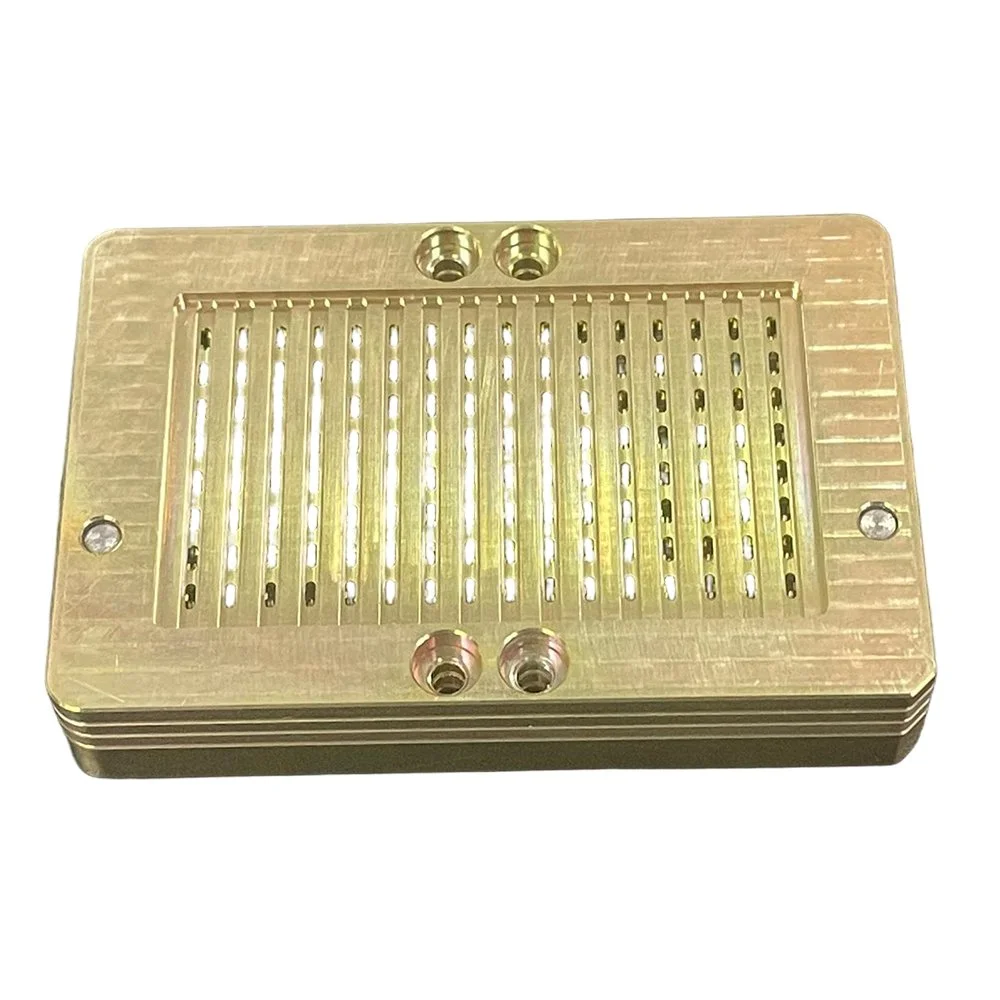
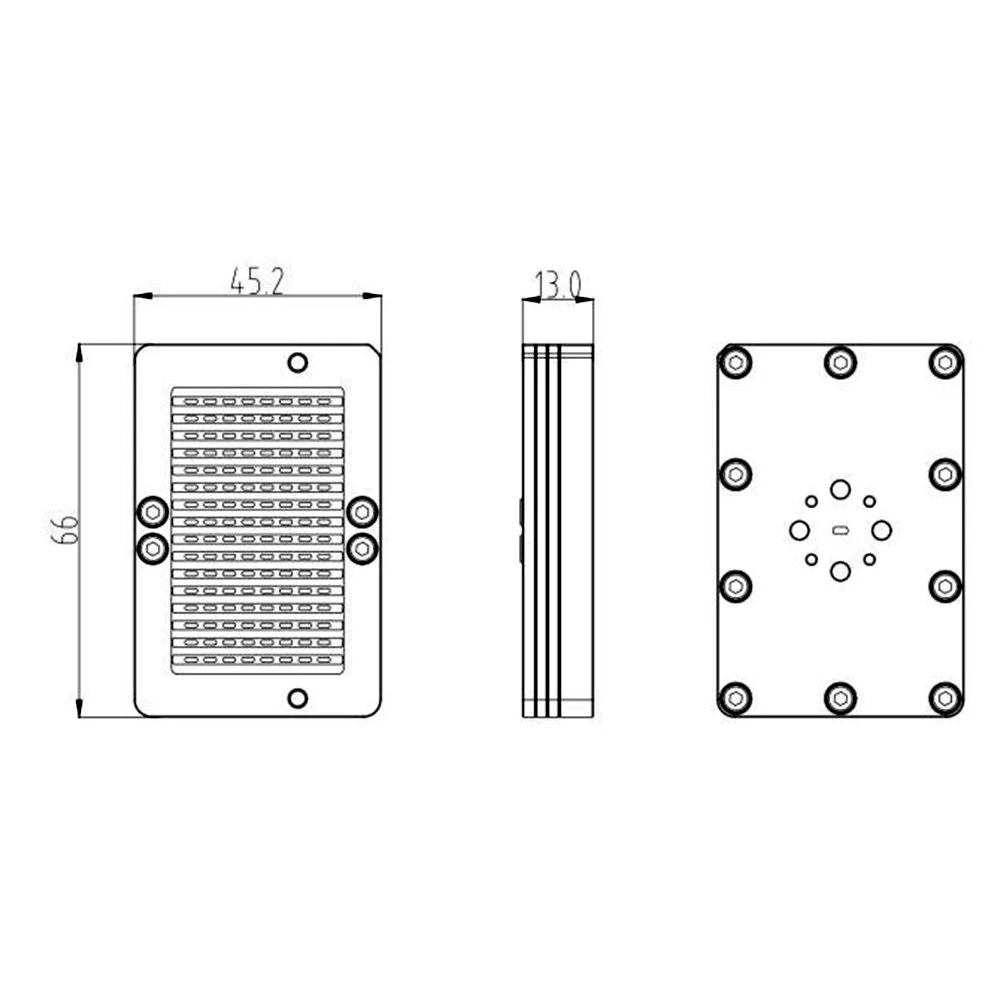
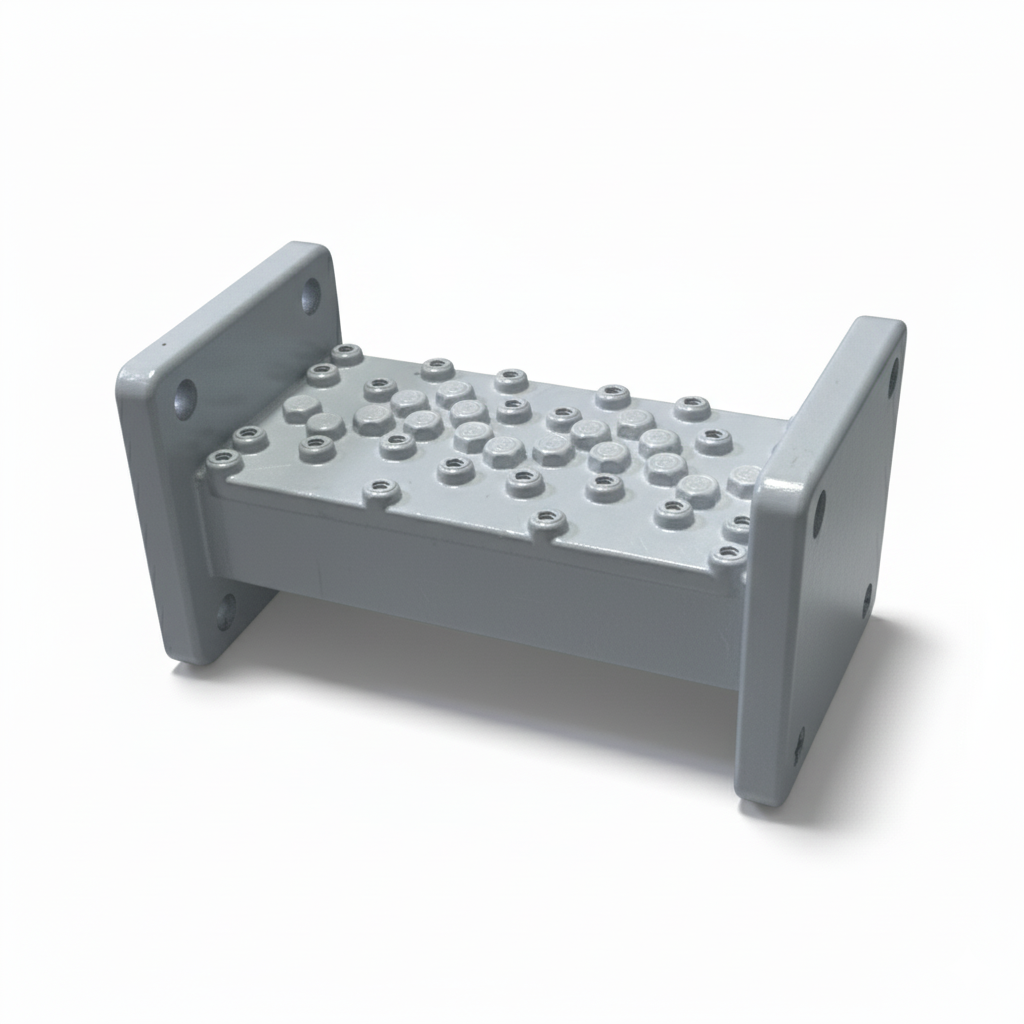
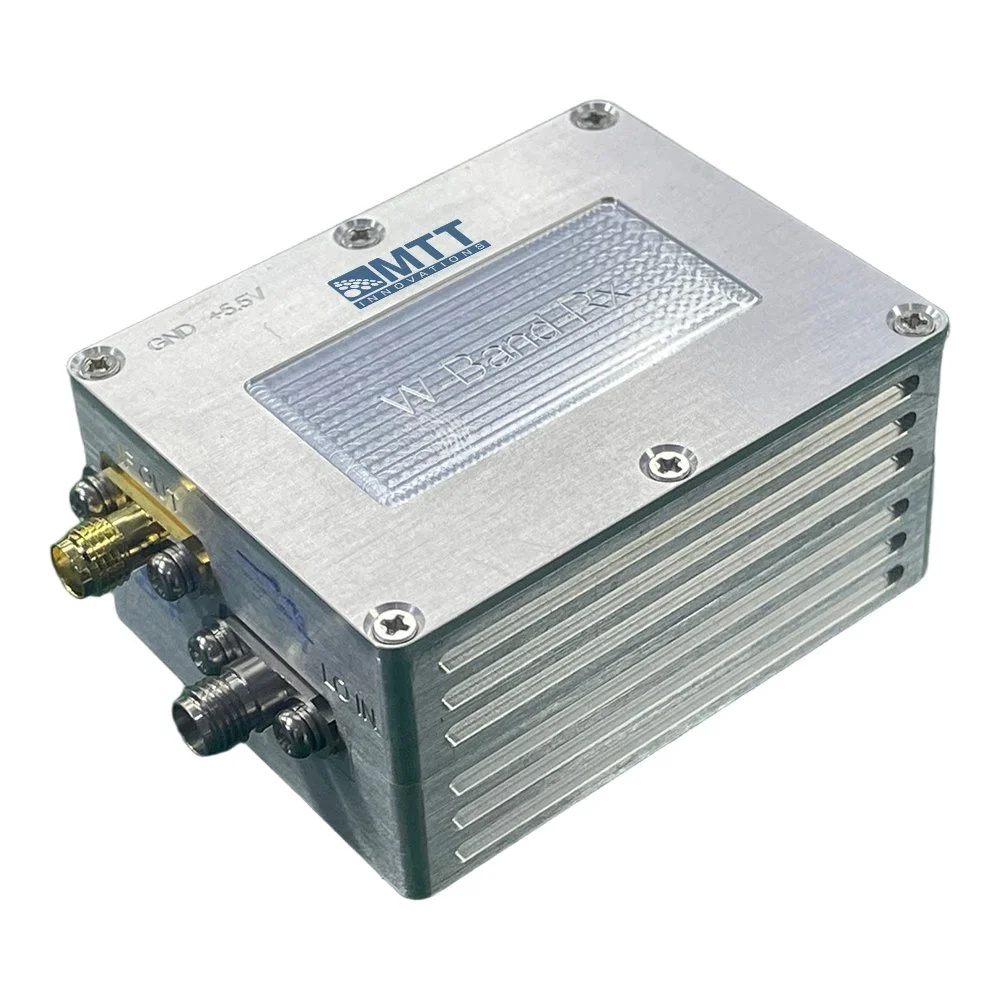
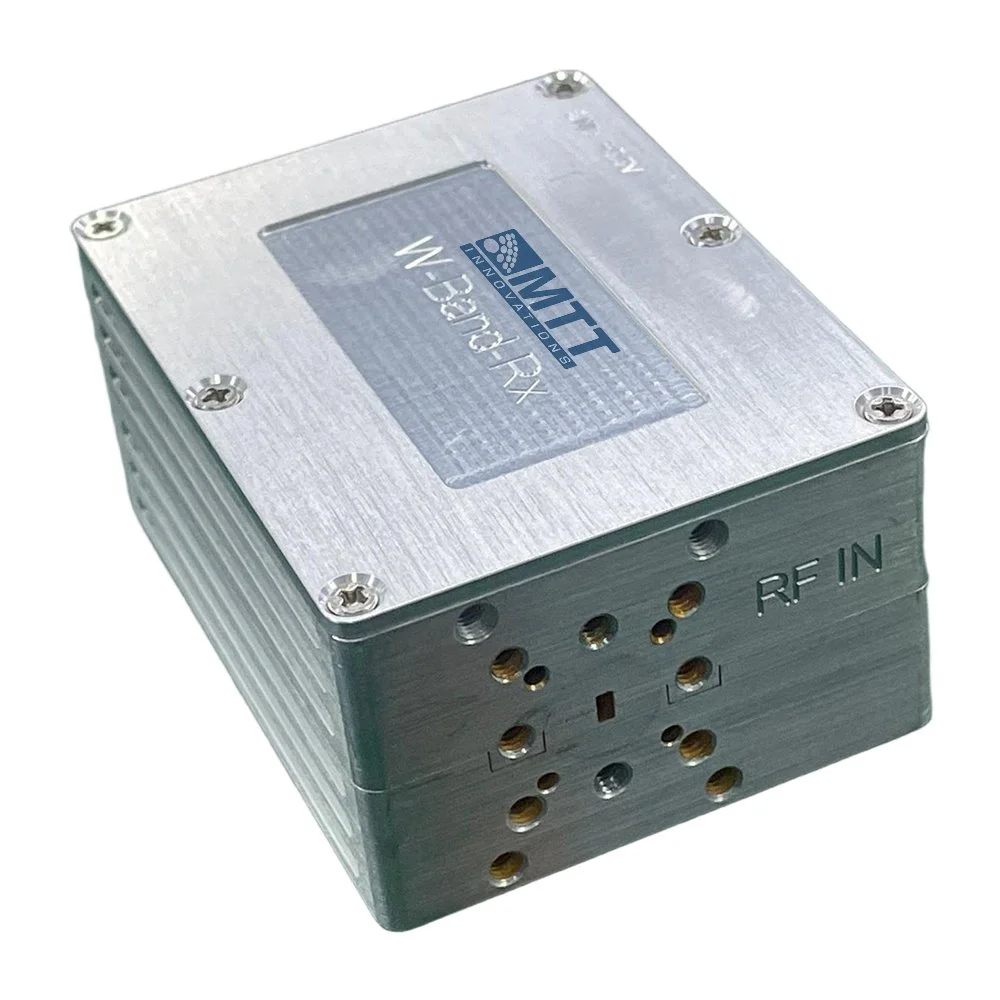
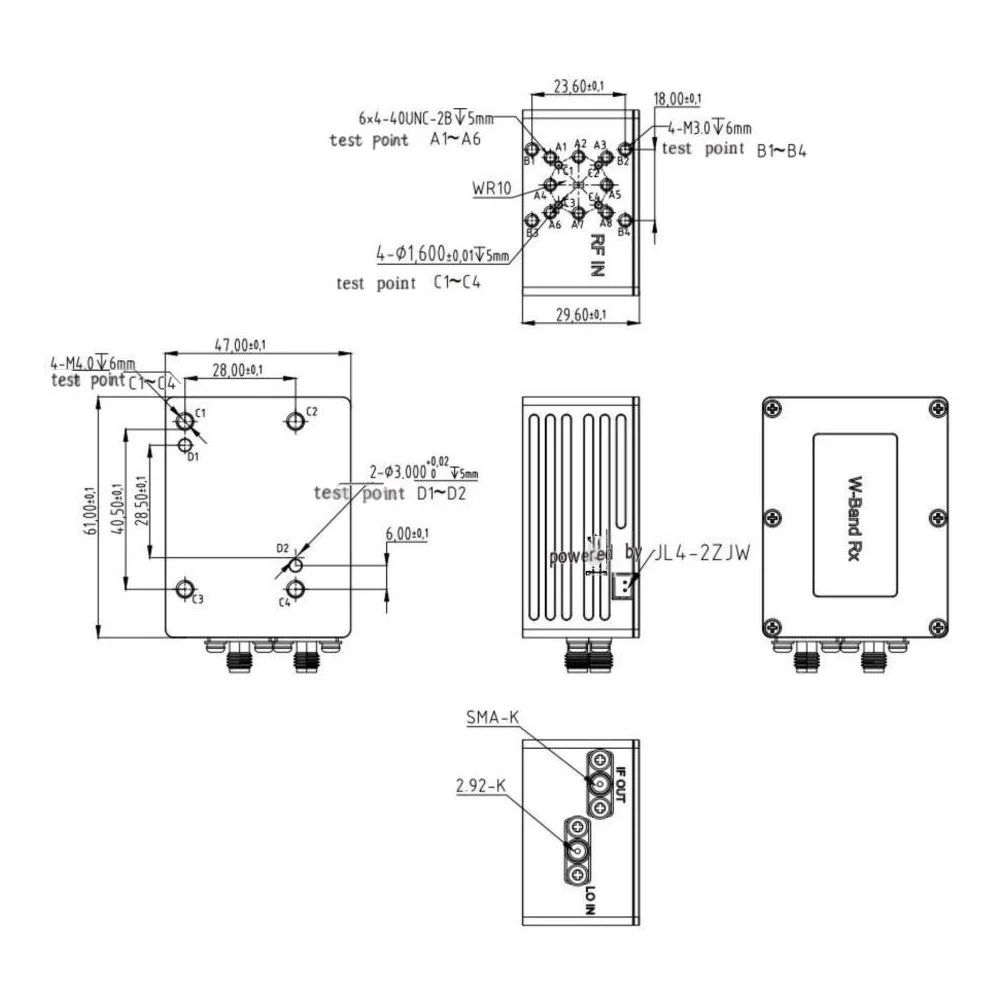
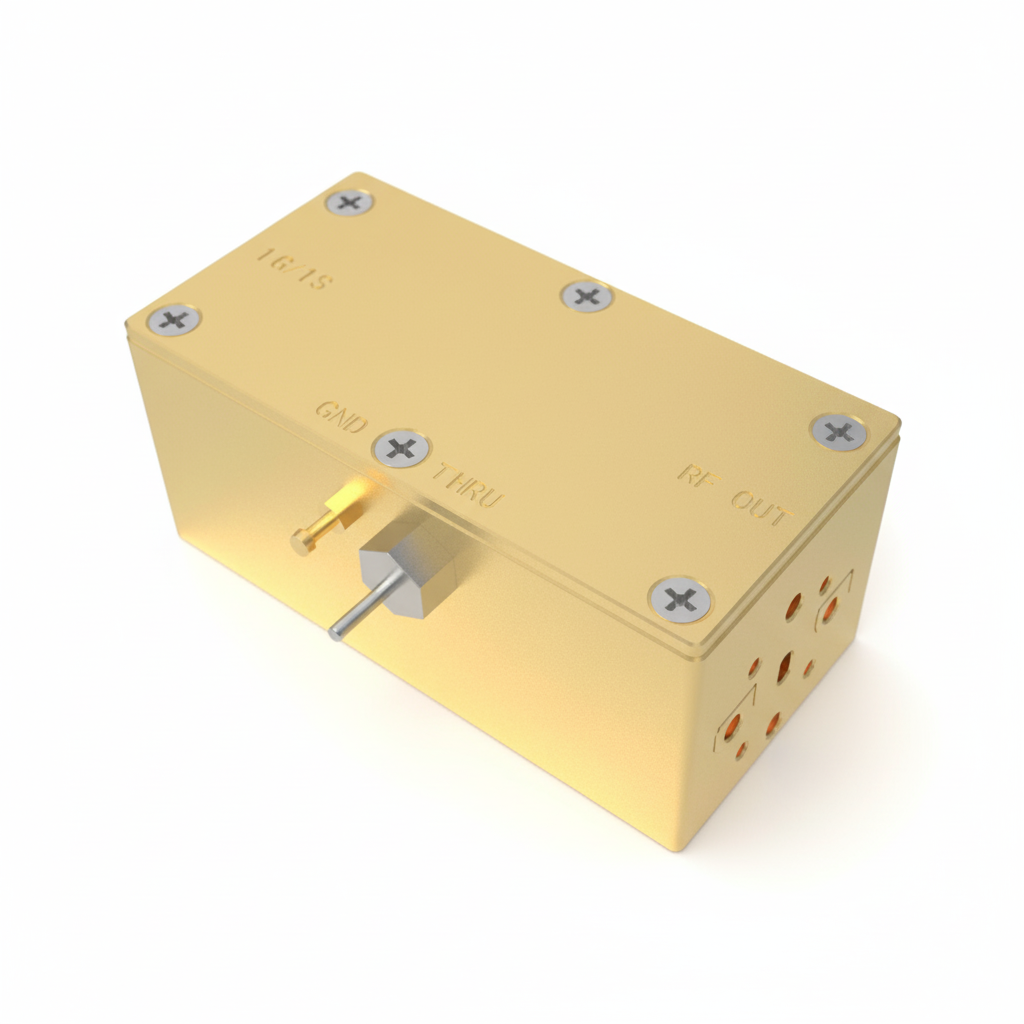
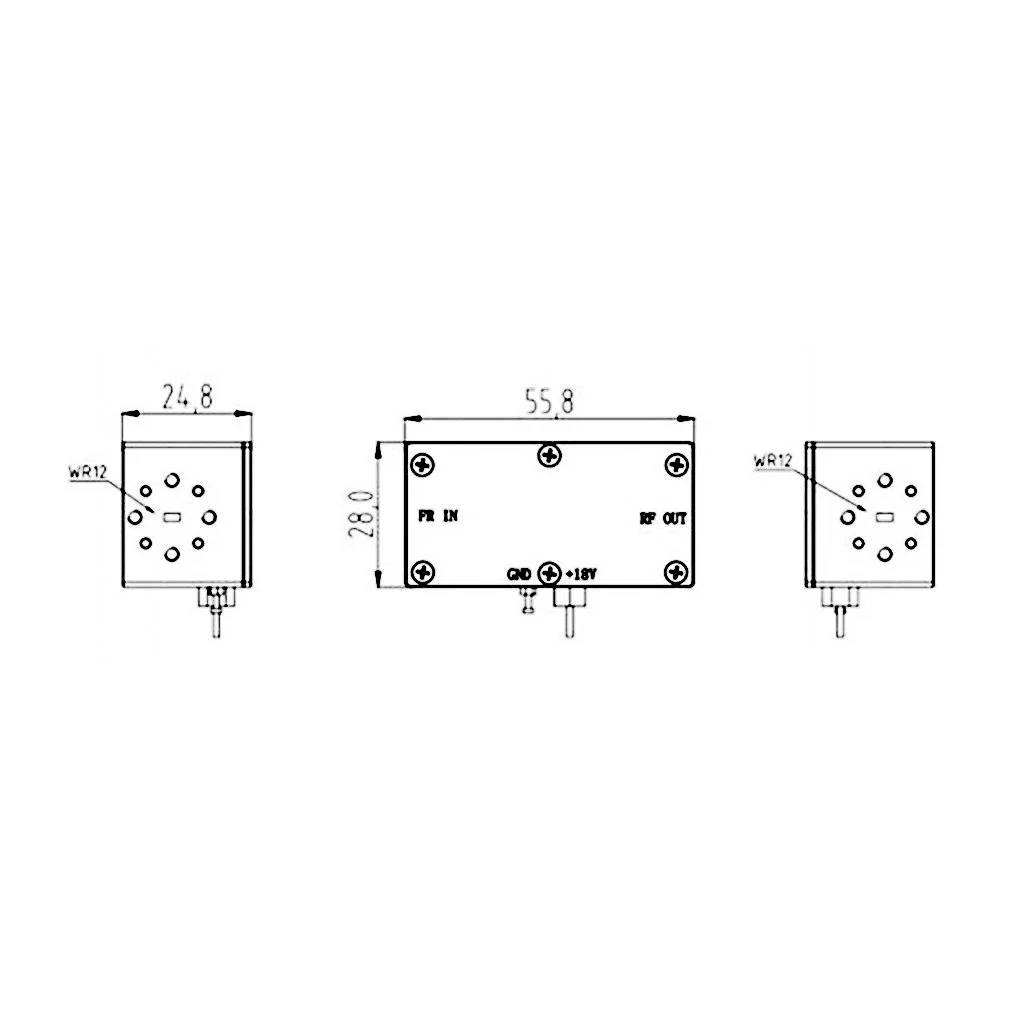
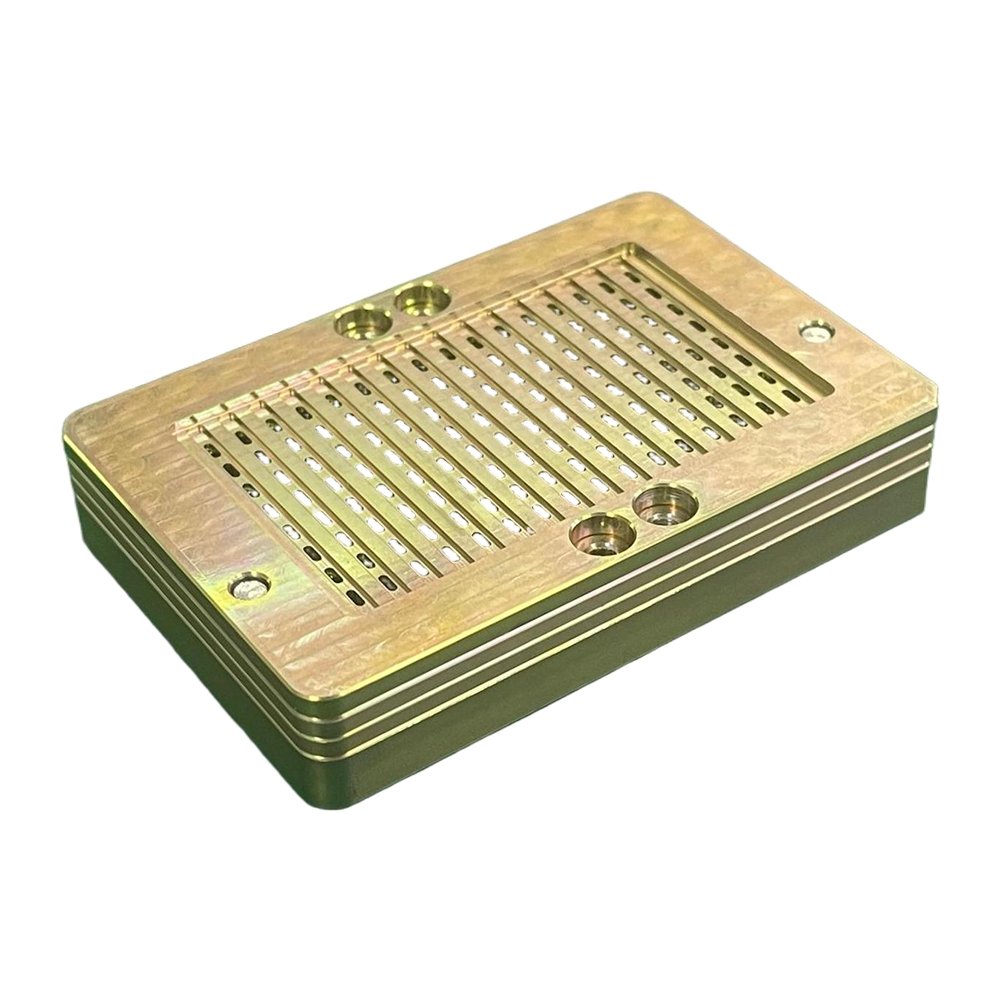
W-Band Antenna (92~94GHz)

₹0.00

W‑Band Antenna (92–94 GHz)

Product Features :

  • Operating frequency band: 92~94GHz

  • Noise Figur ≥24dBi

  • Miniaturization and low loss

  • Frequency range: 92–94 GHz (within the W‑band portion of the millimeter‑wave spectrum)

  • Applications: automotive radar, short‑range sensing, imaging, high‑resolution security screening, laboratory measurement systems, 5G/6G research, satellite and terrestrial point‑to‑point links in specialized systems

  • Key benefits: very small physical size for a given beamwidth, high angular resolution, large available bandwidth for high data rates and fine range resolution

Design considerations

  • Wavelength and dimensions: free‑space wavelength ~3.2 mm at 94 GHz. Radiating elements, feed structures, and lens/aperture sizes scale to millimeter dimensions; tolerances are tight.

  • Materials: low‑loss dielectrics and high‑conductivity metals are essential to minimize insertion and surface losses. Common substrates include alumina, quartz, and specific low‑loss RF laminates designed for mmWave use.

  • Feeding and transitions: waveguide (WR‑10 for 75–110 GHz, though some designs use custom WR‑10 variants), microstrip, CPW, or stripline with careful transition design to avoid mismatch and radiation losses. Probe and aperture transitions must be optimized.

  • Antenna types:

    • Horn antennas (rectangular or conical): good gain, simple pattern, useful for measurement and lab setups.

    • Waveguide slot arrays: high gain and efficiency, rugged for outdoor or airborne use.

    • Microstrip or patch arrays: compact, planar form factor, scalable to phased arrays but require loss management and accurate phase control.

    • Lens antennas (silicon or Teflon lenses): enable high gain with compact apertures, often used with feed arrays.

    • Phased arrays: beam steering, MIMO and adaptive beamforming for dynamic scanning and clutter rejection.

  • Beamwidth and gain: small apertures still achieve moderate-to-high gain due to short wavelength. Aperture efficiency and surface/assembly tolerances impact realized gain.

  • Polarization: linear (vertical/horizontal) or circular as required by system link budget and polarization discrimination needs.

Performance metrics

  • Return loss (S11): aim for better than −10 dB, typically −15 dB or lower for high‑performance links.

  • Insertion loss/efficiency: minimize feed and substrate losses; target total aperture efficiency >60% when possible depending on design.

  • Gain: varies with aperture and design — from ~10 dBi for small horns/patch arrays to 30+ dBi for larger apertures or lens‑coupled arrays.

  • Bandwidth: W‑band spans 75–110 GHz, but here

W‑Band Antenna (92–94 GHz)

Product Features :

  • Operating frequency band: 92~94GHz

  • Noise Figur ≥24dBi

  • Miniaturization and low loss

  • Frequency range: 92–94 GHz (within the W‑band portion of the millimeter‑wave spectrum)

  • Applications: automotive radar, short‑range sensing, imaging, high‑resolution security screening, laboratory measurement systems, 5G/6G research, satellite and terrestrial point‑to‑point links in specialized systems

  • Key benefits: very small physical size for a given beamwidth, high angular resolution, large available bandwidth for high data rates and fine range resolution

Design considerations

  • Wavelength and dimensions: free‑space wavelength ~3.2 mm at 94 GHz. Radiating elements, feed structures, and lens/aperture sizes scale to millimeter dimensions; tolerances are tight.

  • Materials: low‑loss dielectrics and high‑conductivity metals are essential to minimize insertion and surface losses. Common substrates include alumina, quartz, and specific low‑loss RF laminates designed for mmWave use.

  • Feeding and transitions: waveguide (WR‑10 for 75–110 GHz, though some designs use custom WR‑10 variants), microstrip, CPW, or stripline with careful transition design to avoid mismatch and radiation losses. Probe and aperture transitions must be optimized.

  • Antenna types:

    • Horn antennas (rectangular or conical): good gain, simple pattern, useful for measurement and lab setups.

    • Waveguide slot arrays: high gain and efficiency, rugged for outdoor or airborne use.

    • Microstrip or patch arrays: compact, planar form factor, scalable to phased arrays but require loss management and accurate phase control.

    • Lens antennas (silicon or Teflon lenses): enable high gain with compact apertures, often used with feed arrays.

    • Phased arrays: beam steering, MIMO and adaptive beamforming for dynamic scanning and clutter rejection.

  • Beamwidth and gain: small apertures still achieve moderate-to-high gain due to short wavelength. Aperture efficiency and surface/assembly tolerances impact realized gain.

  • Polarization: linear (vertical/horizontal) or circular as required by system link budget and polarization discrimination needs.

Performance metrics

  • Return loss (S11): aim for better than −10 dB, typically −15 dB or lower for high‑performance links.

  • Insertion loss/efficiency: minimize feed and substrate losses; target total aperture efficiency >60% when possible depending on design.

  • Gain: varies with aperture and design — from ~10 dBi for small horns/patch arrays to 30+ dBi for larger apertures or lens‑coupled arrays.

  • Bandwidth: W‑band spans 75–110 GHz, but here

Electrical Specifications
Electrical specifications including frequency range, gain, beamwidth, sidelobe suppression and polarization details.
Parameter Min Typ Max Unit
Frequency Range 92 - 94 GHz
In-band VSWR - - 1.8 -
Gain 24 - - dBi
Azimuth Beamwidth (-3dB) 20° - - -
Elevation Beamwidth (-3dB) - - -
Elevation Sidelobe Suppression 23 - - dB
Azimuth Sidelobe Suppression 25 - - dB
Cross-polarization Ratio - - -40 dB
Polarization Vertical Polarization - - -
Interface WR10 - - -