 Image 1 of 16
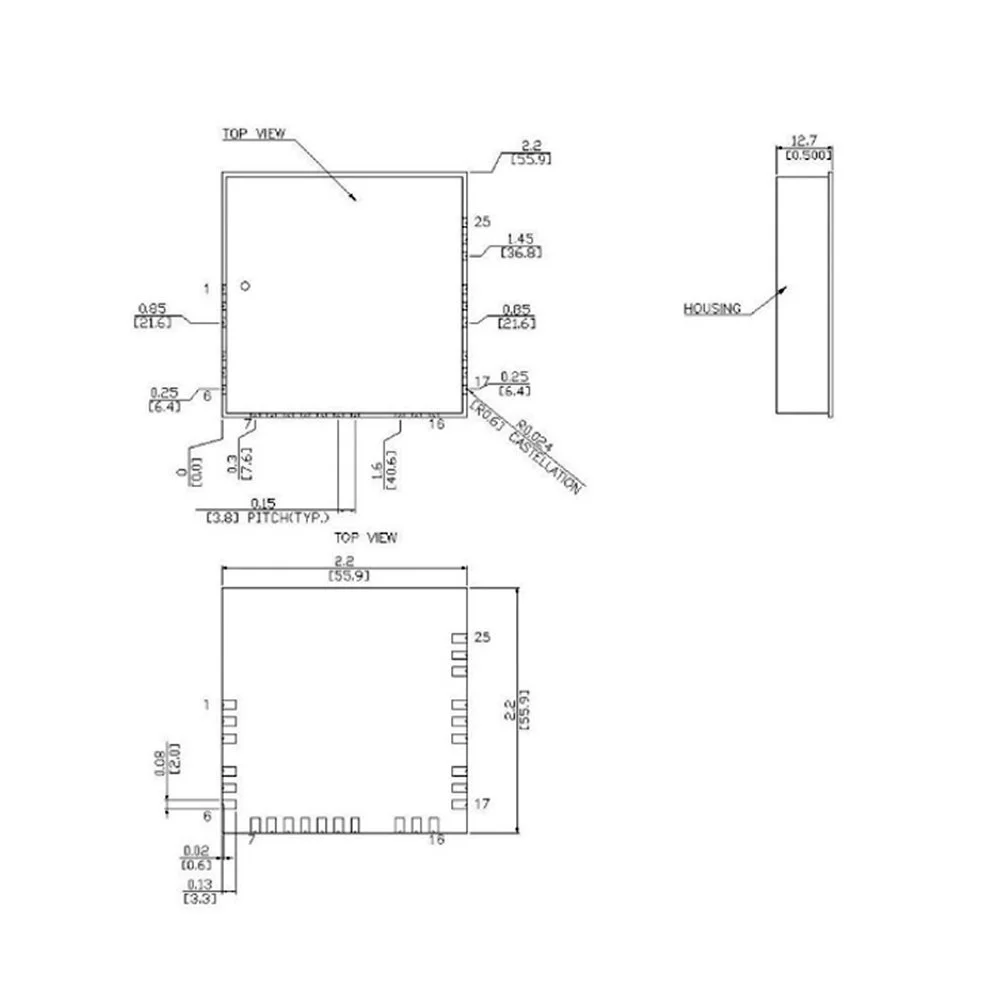 Image 2 of 16
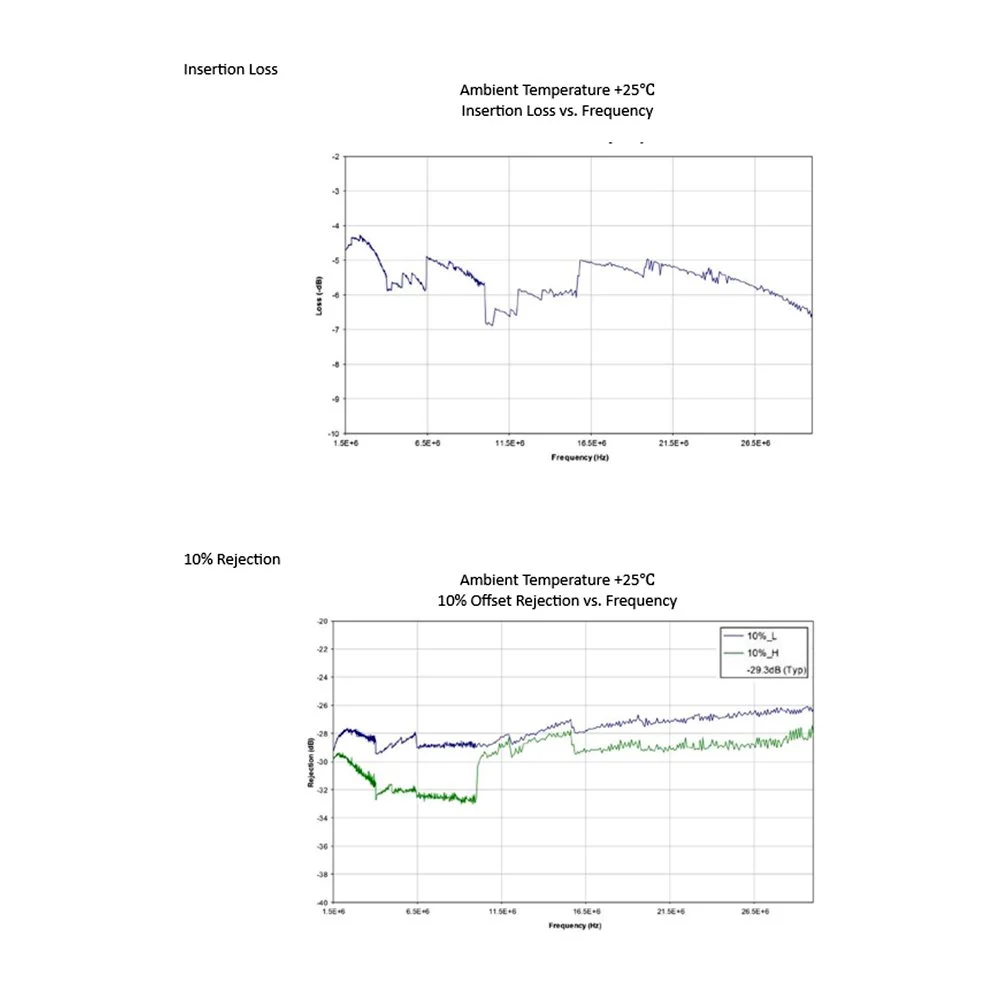 Image 3 of 16
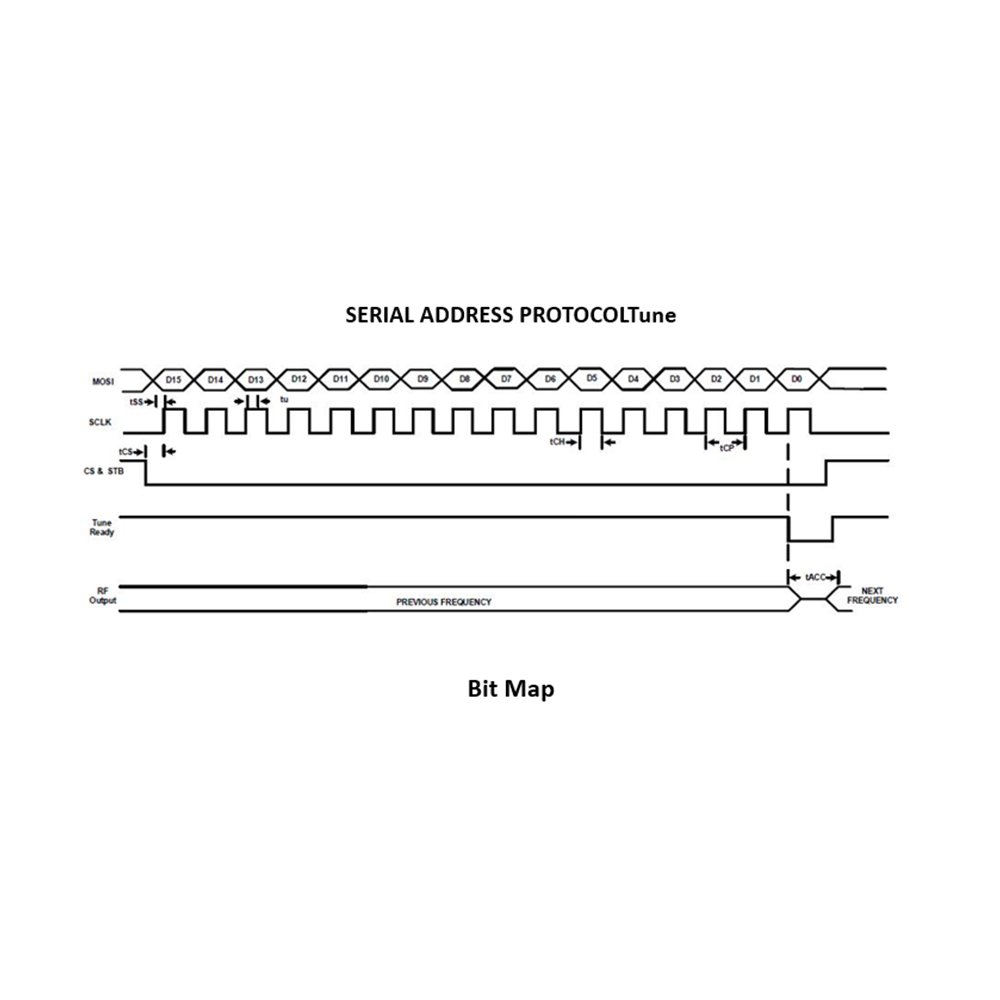 Image 4 of 16
Image 5 of 16
Image 6 of 16
Image 7 of 16
Image 8 of 16
Image 9 of 16
Image 10 of 16
Image 11 of 16
Image 12 of 16
Image 13 of 16
Image 14 of 16
Image 15 of 16
Image 16 of 16
Image 4 of 16
Image 5 of 16
Image 6 of 16
Image 7 of 16
Image 8 of 16
Image 9 of 16
Image 10 of 16
Image 11 of 16
Image 12 of 16
Image 13 of 16
Image 14 of 16
Image 15 of 16
Image 16 of 16
| Parameter | Value |
|---|---|
| Frequency Range | 1.5 – 30 MHz |
| Bandwidth (Typical) | 3.1% |
| Impedance (Input / Output) | 50 Ω |
| Fc±10% Selectivity | < -28.5 dBc |
| 2Fc | < -60 dBc |
| Tuning Speed | < 20 μs |
| Insertion Loss (Typical) | 5.8 dB |
| Insertion Loss (Max) | 7.5 dB |
| Return Loss (Min) | 8.0 dB |
| Tuning Channels | |
| 1.5 MHz – 4 MHz | 250 |
| 4 MHz – 10 MHz | 249 |
| 10 MHz – 30 MHz | 249 |
| RF Input Power (P1dB) | |
| 1.5 MHz – 4 MHz | 33 dBm |
| 4 MHz – 10 MHz | 33 dBm |
| 10 MHz – 30 MHz | 33 dBm |
| In Band Power Handling (Max) | 37 dBm |
| Out of Band Power Handling | 37 dBm |
| IP3 | |
| 1.5 MHz – 4 MHz | 35 dBm |
| 4 MHz – 10 MHz | 35 dBm |
| 10 MHz – 30 MHz | 37 dBm |
| Vcc | 3.3V ~ 12V |
| Vbb | NC |
| DC Current (Max) | ≤ 30 mA |
| Operating Temperature | -40 to +85℃ |
| Control Interface | SPI Interface |
| Dimensions | 2.2 × 2.2 × 0.5 in (55.9 × 55.9 × 12.7 mm) |
| Pin Number | Description | Pin Number | Description |
|---|---|---|---|
| 1 | GND | 14 | GND |
| 2 | RF IN | 15 | SPI CLK |
| 3 | GND | 16 | SPI MOSI |
| 4 | GND | 17 | SPI CS |
| 5 | N/C | 18 | N/C |
| 6 | N/C | 19 | Vbb |
| 7 | TUNE-READY | 20 | GND |
| 8 | N/C | 21 | RV OUT |
| 9 | N/C | 22 | GND |
| 10 | N/C | 23 | GND |
| 11 | N/C | 24 | Vcc |
| 12 | N/C | 25 | GND |
| 13 | GND |
Notes:
1. Tolerances ±0.01 [0.25] unless otherwise specified.
2. Dimensions are in inches [mm].
| Model Number | (-) | Bandwidth | (-) | Options | Evaluation Board Option |
|---|---|---|---|---|---|
| - | - | Add “-EM” for unit mounted on evaluation board |
A:
B:
C:
| Frequency Range | 1.5 to 30 MHz | ||
|---|---|---|---|
| Available BW | 3.1% | 5% | 7% |
| Ftune ±10% Selectivity (Typical) | -28.5 dBc | TBD | TBD |
| Ftune ±15% Selectivity (Typical) | -35.5 dBc | TBD | TBD |
| Ftune ±20% Selectivity (Typical) | -41.0 dBc | TBD | TBD |
| Insertion Loss (Typical) | 5.8 dB | TBD | TBD |
Model MTTB20855 series filters are tunable band pass filters that can be tuned over the frequency range of 1.5 to 30 MHz.
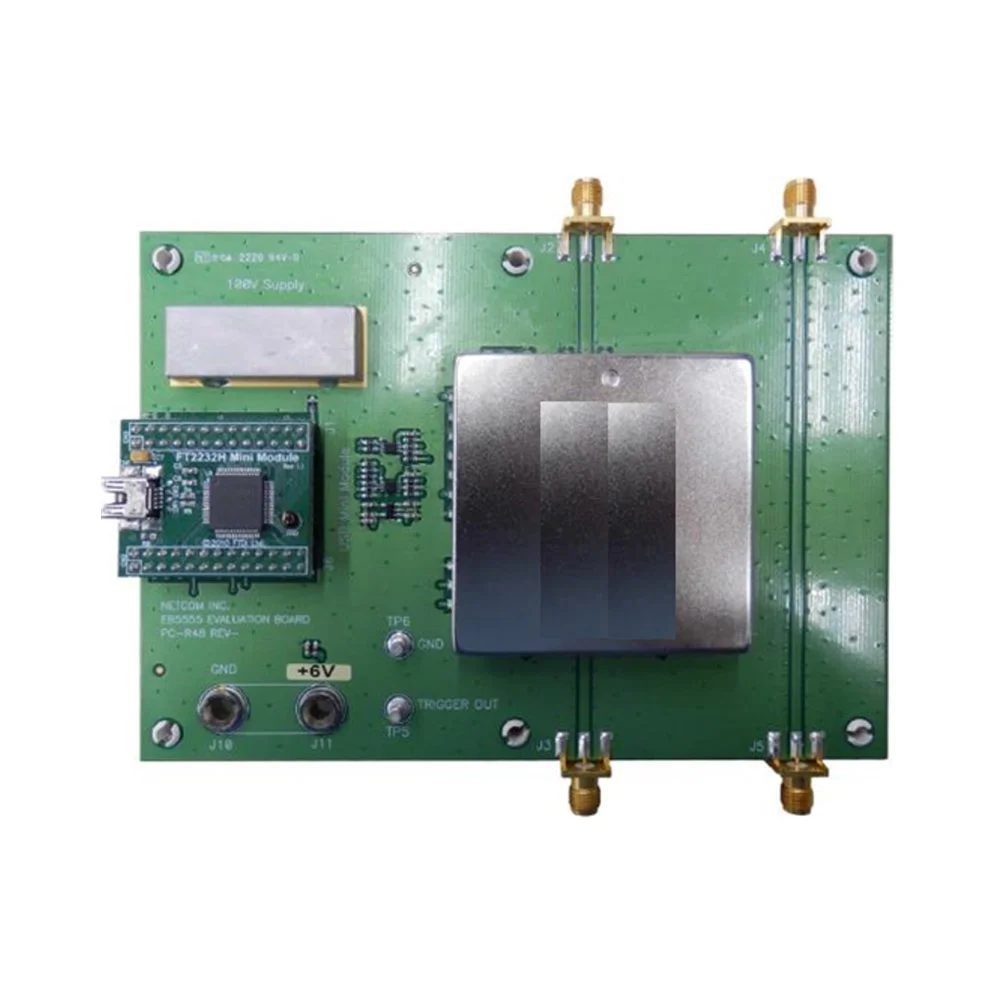
The MTTB20855 Evaluation Board is designed to test and evaluate the Model MTTB20855 frequency agile filter. The evaluation board also supports future frequency agile filters within the MTTB20855 family.
The board is used to supply power to the filter, provide tuning control, and facilitate measurement of RF parameters, switching speed, and power consumption.
Tuning control is provided in the form of frequency tune words. The system uses a USB input along with a user interface program to enable frequency tuning of the filter.
The evaluation board includes a dedicated RF thru path for calibration of test equipment, improving the accuracy of RF measurements.
When the SPI_CS line is pulled low, the Tune Ready line goes to a high logic state, indicating that the unit is ready to accept the tune word.
Once tuning is complete, the Tune Ready line returns to a high logic state.
After sending the 16th clock pulse, the SPI_CS line must be reset high to allow the unit to complete its reset cycle following tuning.
| Symbol | Parameter | Min | Max | Units |
|---|---|---|---|---|
| tSS | Setup time MOSI Data to SPICLK | 50 | ns | |
| tu | Hold Time MOSI Data From SPICLK | 0 | ns | |
| tCH | Clock High Time | 125 | ns | |
| tCP | Clock Period | 250 | ns | |
| tCS | Chip Setup Time (CS falling edge to SPICLK start) | 125 | ns | |
| tTR | Tune Ready Indicator | 200 | µs | |
| tACC | Access time from last (16th) SPICLK edge to Fo | 200 | µs | |
| Maximum Hop Rate (Tune frequency to next tuned frequency) | 1000 | Hz |
| D15 | D14 | D13 | D12 | D11 | D10 | D9 | D8 | D7 | D6 | D5 | D4 | D3 | D2 | D1 | D0 |
|---|---|---|---|---|---|---|---|---|---|---|---|---|---|---|---|
| 0 | 0 | 0 | 0 | 0 | 0 | B1* | B0* | Filter Tune Address** | |||||||
** Refer to Address Table for selected band start and end addresses.
| Band | B1 | B0 | Frequency Range |
|---|---|---|---|
| 1 | 0 | 0 | 1.5 MHz – 4.0 MHz |
| 2 | 0 | 1 | 4.0 MHz – 10.0 MHz |
| 3 | 1 | 0 | 10.0 MHz – 30.0 MHz |
| Illegal | 1 | 1 | Do Not Select |
| Band | Start Address | End Address | Frequency Range |
|---|---|---|---|
| 1 | 0 | 250 | 1.5 MHz – 4.0 MHz |
| 2 | 0 | 249 | 4.0 MHz – 10.0 MHz |
| 3 | 0 | 249 | 10.0 MHz – 30.0 MHz |
| Category | Specification |
|---|---|
| Temperature |
High temperature: MIL-STD-810E, Method 501.3, Procedure I (85°C storage), Procedure II (85°C operating) Low temperature: Method 502.3, Procedure I (-57°C storage), Procedure II (-40°C operating) |
| Vibration | MIL-STD-810E Method 514.4, Ground Mobile Test Procedure I, Test Condition I – 3.4.7 |
| Shock | MIL-STD-810E Method 516.4, Procedure I – Functional Shock |
| Reflow | 218°C Max (30 seconds) |
| MSL (Moisture Sensitivity Level) | Level 3 |