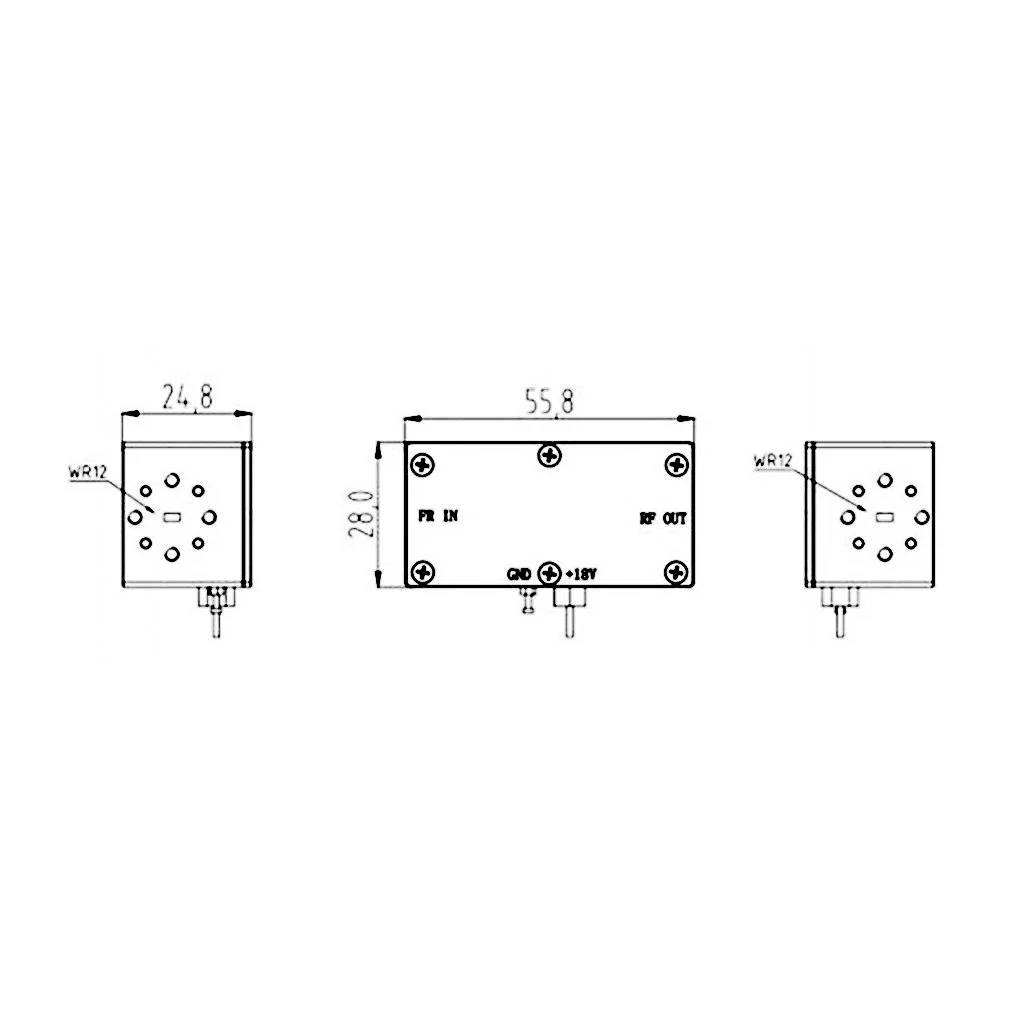
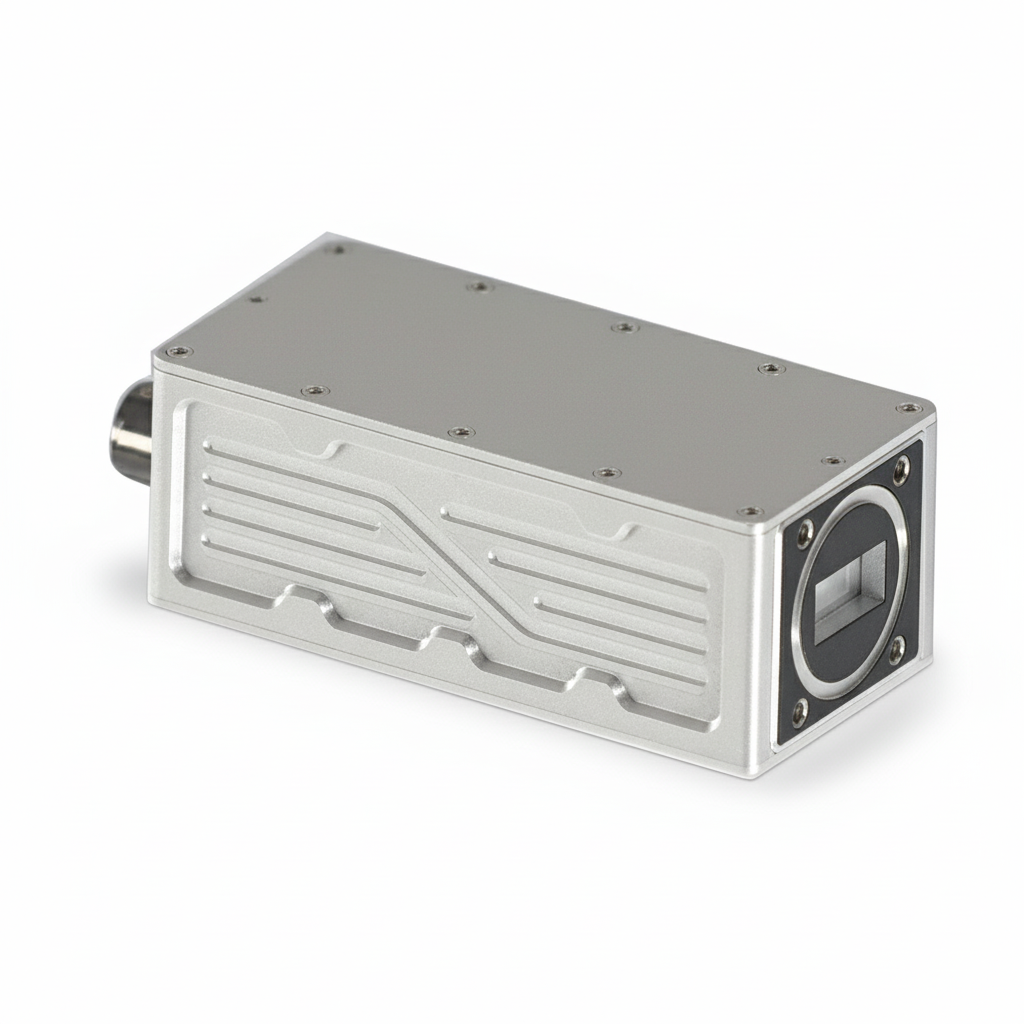
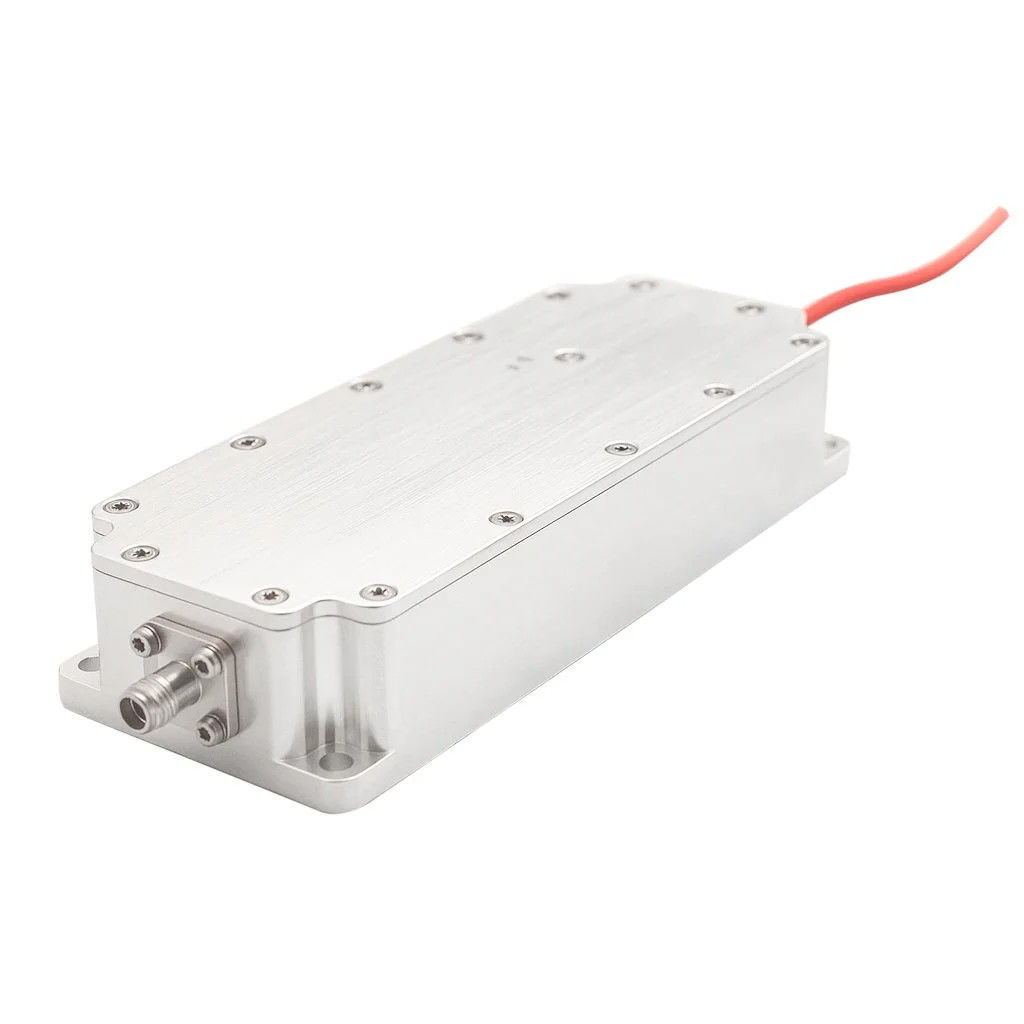
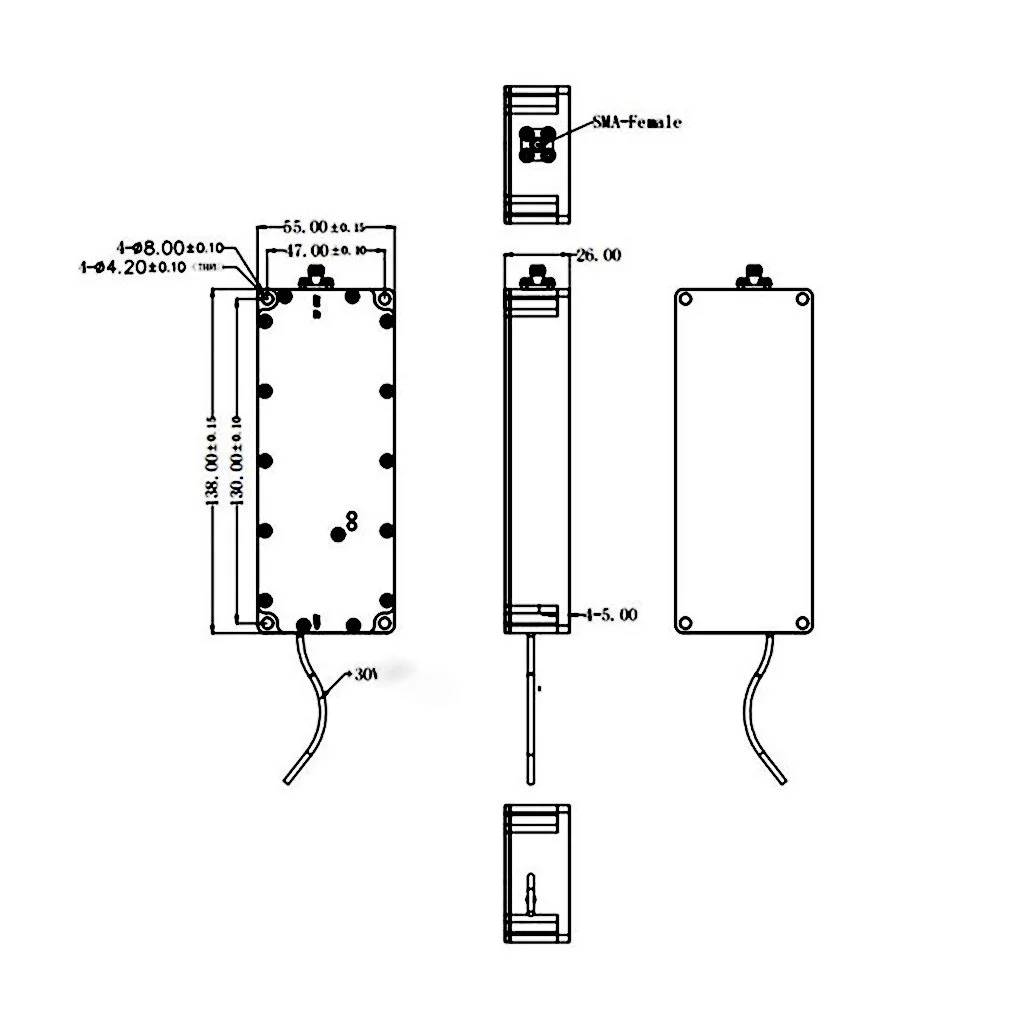
| Parameter Name | Minimum Value | Typical Value | Maximum Value | Unit | Remark |
|---|---|---|---|---|---|
| Frequency | 71 | 76 | GHz | ||
| Small signal gain | 20 | dB | |||
| Input Power | 25 | dBm | |||
| Output Power | 33.5 | dBm | |||
| Input VSWR | 1.5 | - | |||
| Output VSWR | 2.0 | - | |||
| Supply Voltage | 18 | 20 | V | ||
| Saturation Current | 800 | mA |
High Frequency
Broadband Continuous Wave Amplifier
Temperature Protection Function
High Reliability Circuit Design
Operating Temperature: -40℃ to +65℃
Storage Temperature: -50℃ to +85℃
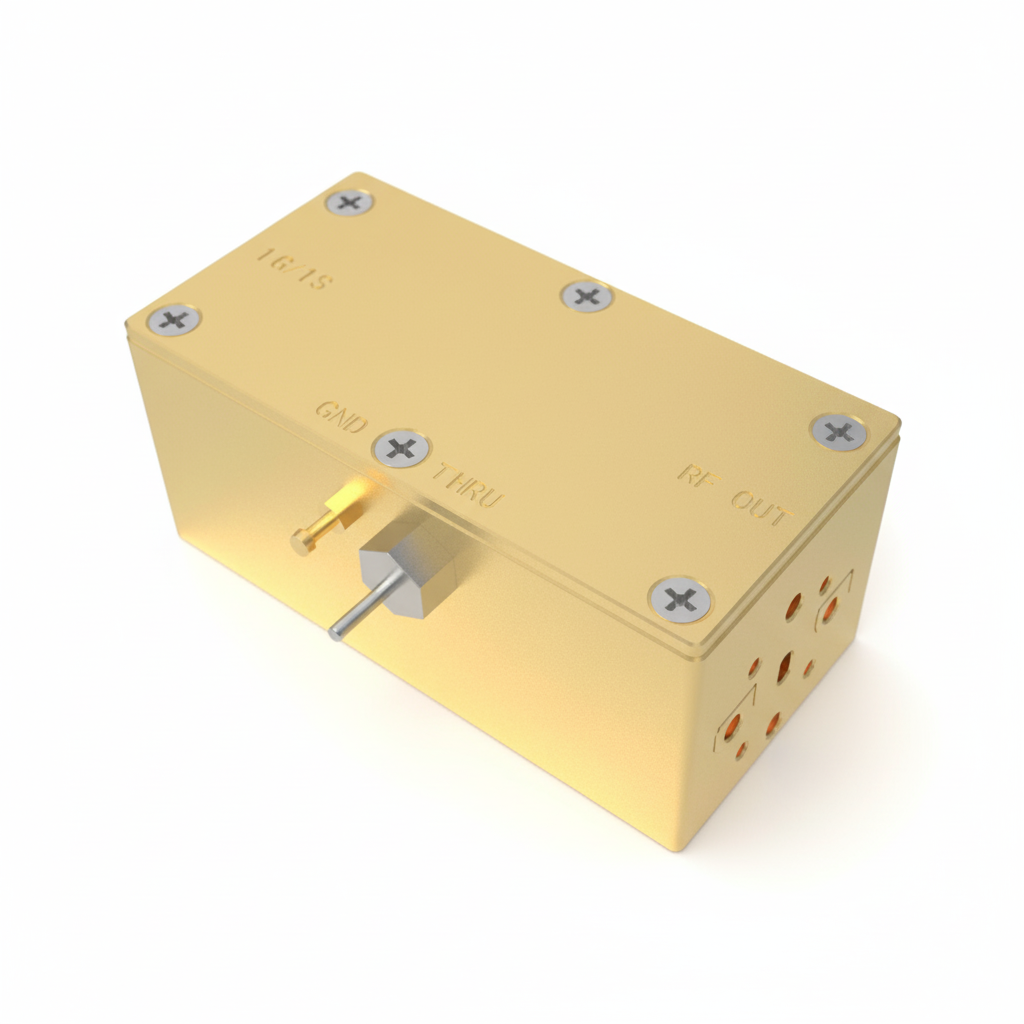
Operating within the 71 to 76 GHz frequency band, power amplifiers designed for this range are critical components in advanced communication systems, automotive radar, and high-resolution imaging applications. At these millimeter-wave frequencies, performance demands are exceptionally high, requiring state-of-the-art semiconductor technologies and innovative circuit design strategies to overcome inherent challenges such as signal loss, heat dissipation, and linearity.
Modern power amplifiers in the 71–76 GHz band leverage advanced III-V semiconductor materials like GaAs and GaN, as well as silicon-based processes including CMOS and SiGe BiCMOS, to achieve high gain, efficiency, and output power. Key design considerations focus on optimizing impedance matching, minimizing parasitic capacitances, and ensuring stability across the wide bandwidth.
Applications of power amplifiers in this spectrum include:
Automotive Radar Systems: Providing accurate object detection with enhanced range and resolution, critical for Autonomous Driving and Advanced Driver Assistance Systems (ADAS).
Fixed Wireless Access (FWA): Enabling ultra-high data rate transmission over short distances, supporting 5G and beyond networks.
High-Resolution Imaging: Used in security screening and industrial sensing with millimeter-wave imaging capabilities.
Innovations in packaging and integration techniques further improve thermal management and reduce size, facilitating compact, high-performance modules suitable for next-generation wireless infrastructure and vehicle platforms. The continuous evolution of power amplifier technology in the 71–76 GHz range paves the way for faster, more reliable, and energy-efficient millimeter-wave systems.
High Frequency
Broadband Continuous Wave Amplifier
Temperature Protection Function
High Reliability Circuit Design
Operating Temperature: -40℃ to +65℃
Storage Temperature: -50℃ to +85℃
Operating within the 71 to 76 GHz frequency band, power amplifiers designed for this range are critical components in advanced communication systems, automotive radar, and high-resolution imaging applications. At these millimeter-wave frequencies, performance demands are exceptionally high, requiring state-of-the-art semiconductor technologies and innovative circuit design strategies to overcome inherent challenges such as signal loss, heat dissipation, and linearity.
Modern power amplifiers in the 71–76 GHz band leverage advanced III-V semiconductor materials like GaAs and GaN, as well as silicon-based processes including CMOS and SiGe BiCMOS, to achieve high gain, efficiency, and output power. Key design considerations focus on optimizing impedance matching, minimizing parasitic capacitances, and ensuring stability across the wide bandwidth.
Applications of power amplifiers in this spectrum include:
Automotive Radar Systems: Providing accurate object detection with enhanced range and resolution, critical for Autonomous Driving and Advanced Driver Assistance Systems (ADAS).
Fixed Wireless Access (FWA): Enabling ultra-high data rate transmission over short distances, supporting 5G and beyond networks.
High-Resolution Imaging: Used in security screening and industrial sensing with millimeter-wave imaging capabilities.
Innovations in packaging and integration techniques further improve thermal management and reduce size, facilitating compact, high-performance modules suitable for next-generation wireless infrastructure and vehicle platforms. The continuous evolution of power amplifier technology in the 71–76 GHz range paves the way for faster, more reliable, and energy-efficient millimeter-wave systems.
| Parameter Name | Minimum Value | Typical Value | Maximum Value | Unit | Remark |
|---|---|---|---|---|---|
| Frequency | 71 | 76 | GHz | ||
| Small signal gain | 20 | dB | |||
| Input Power | 25 | dBm | |||
| Output Power | 33.5 | dBm | |||
| Input VSWR | 1.5 | - | |||
| Output VSWR | 2.0 | - | |||
| Supply Voltage | 18 | 20 | V | ||
| Saturation Current | 800 | mA |