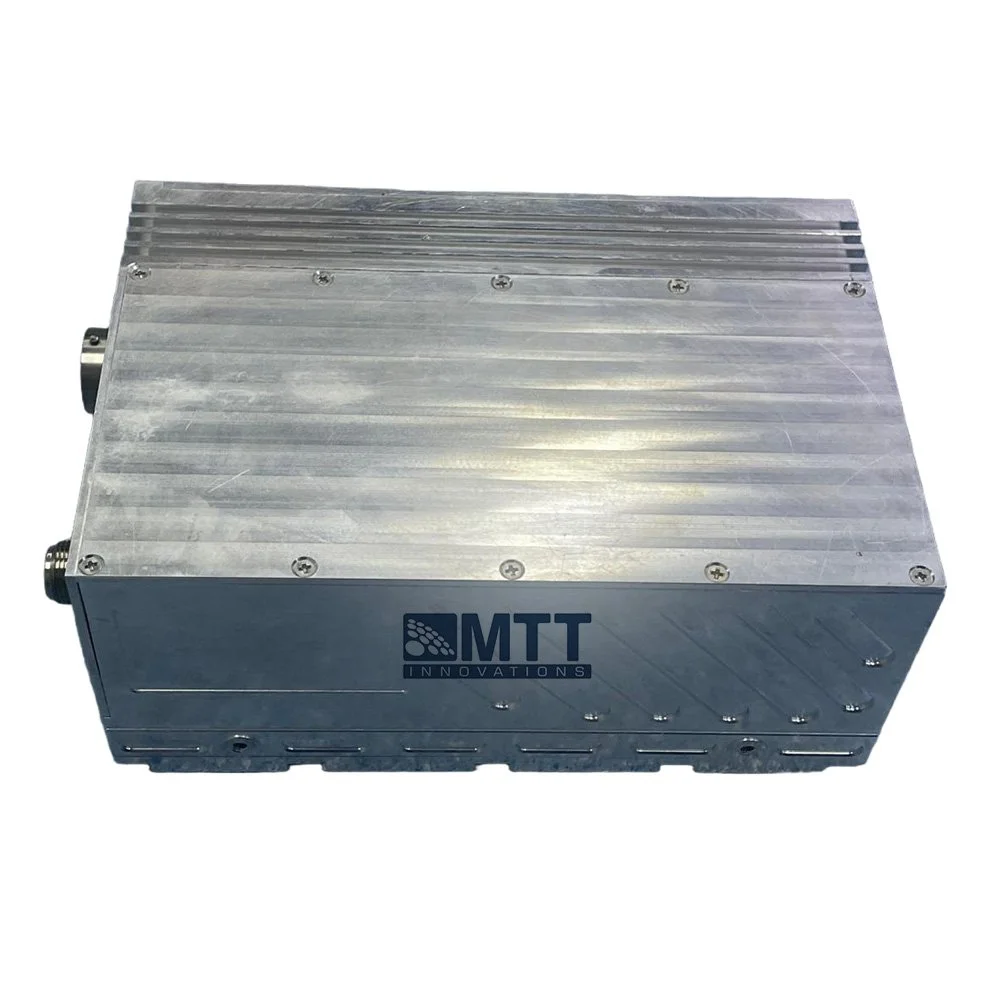
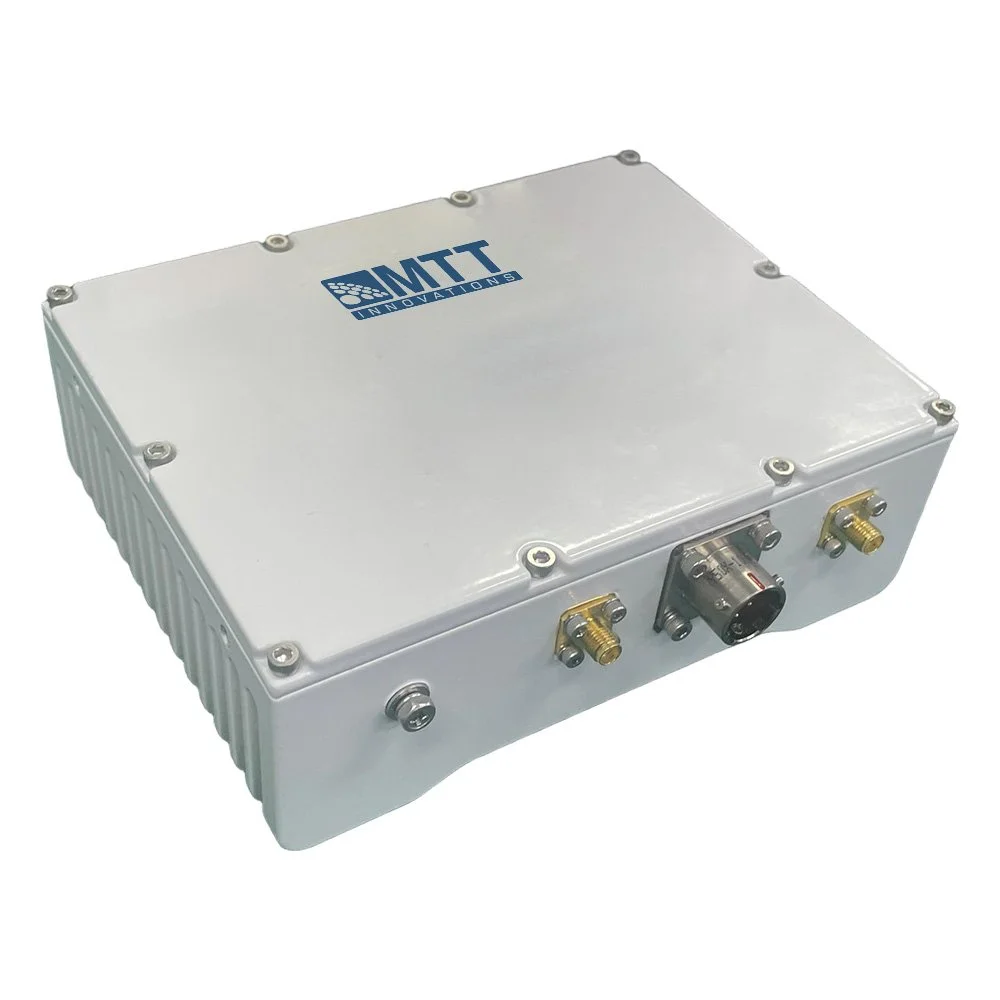
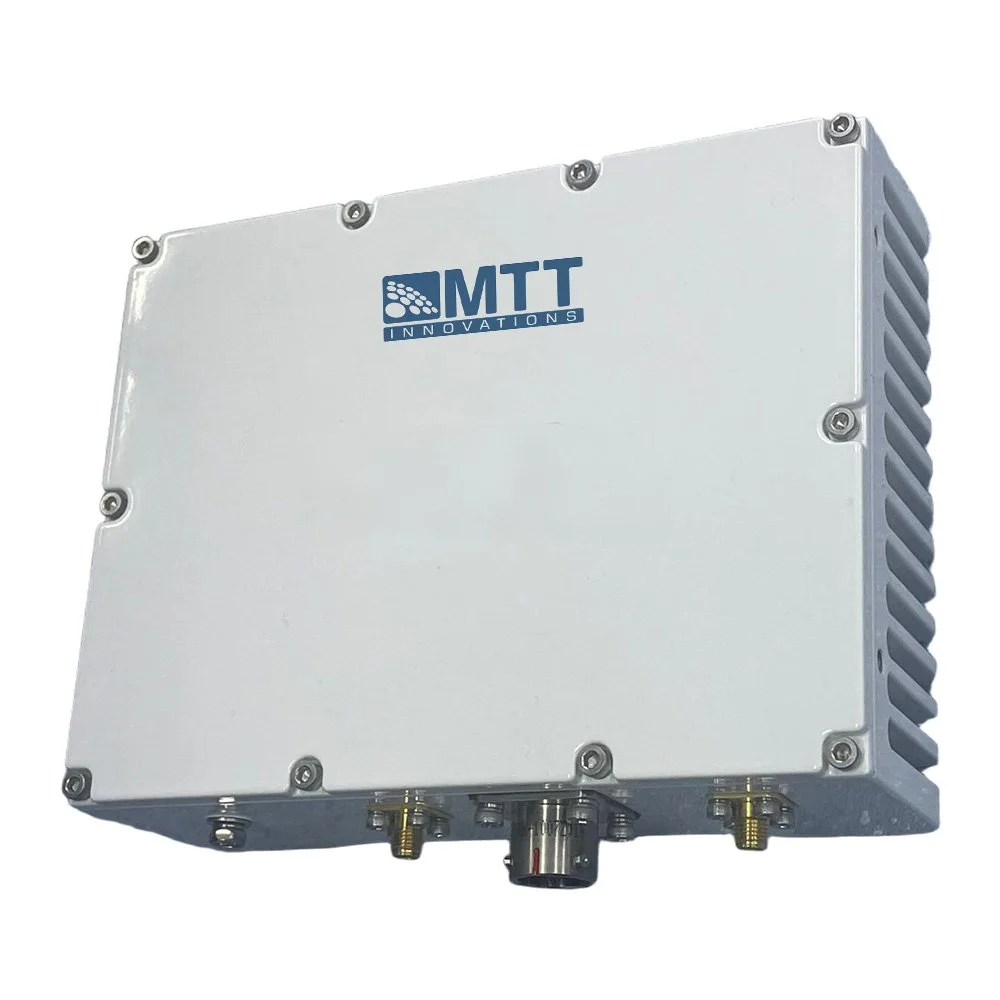
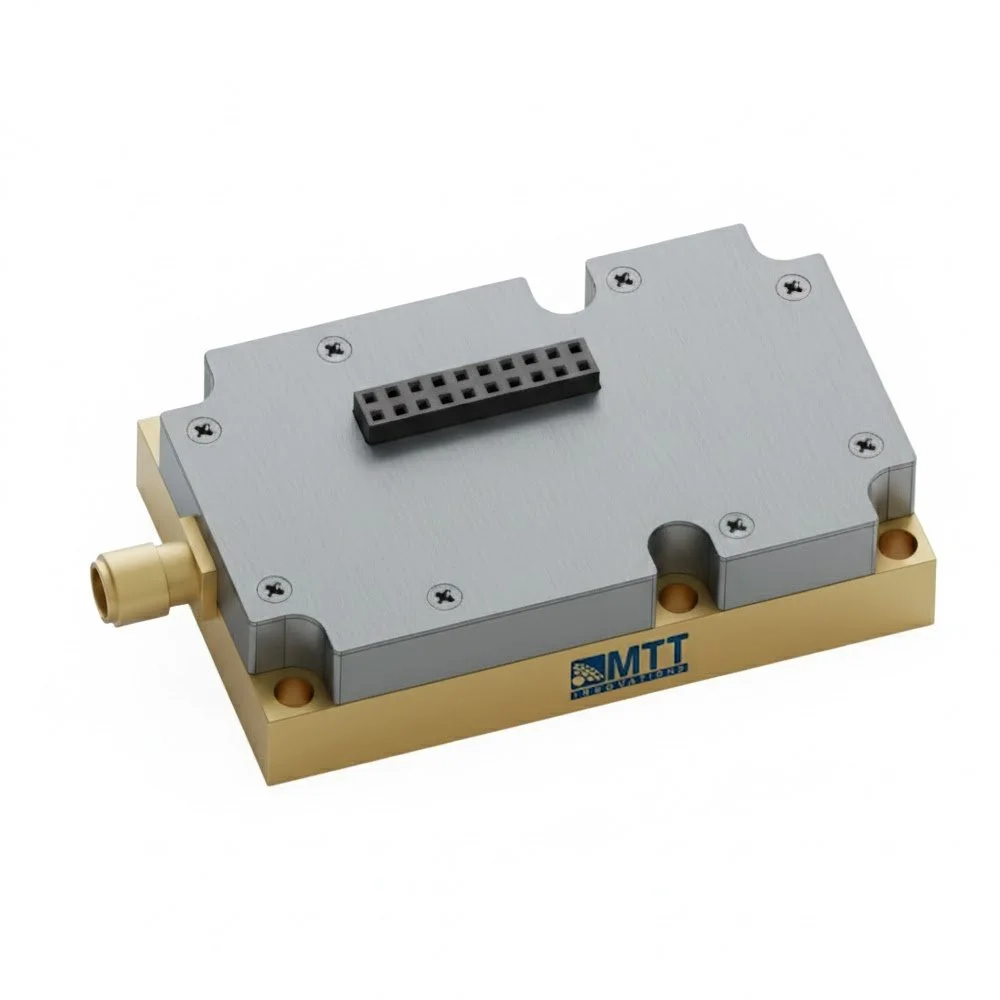
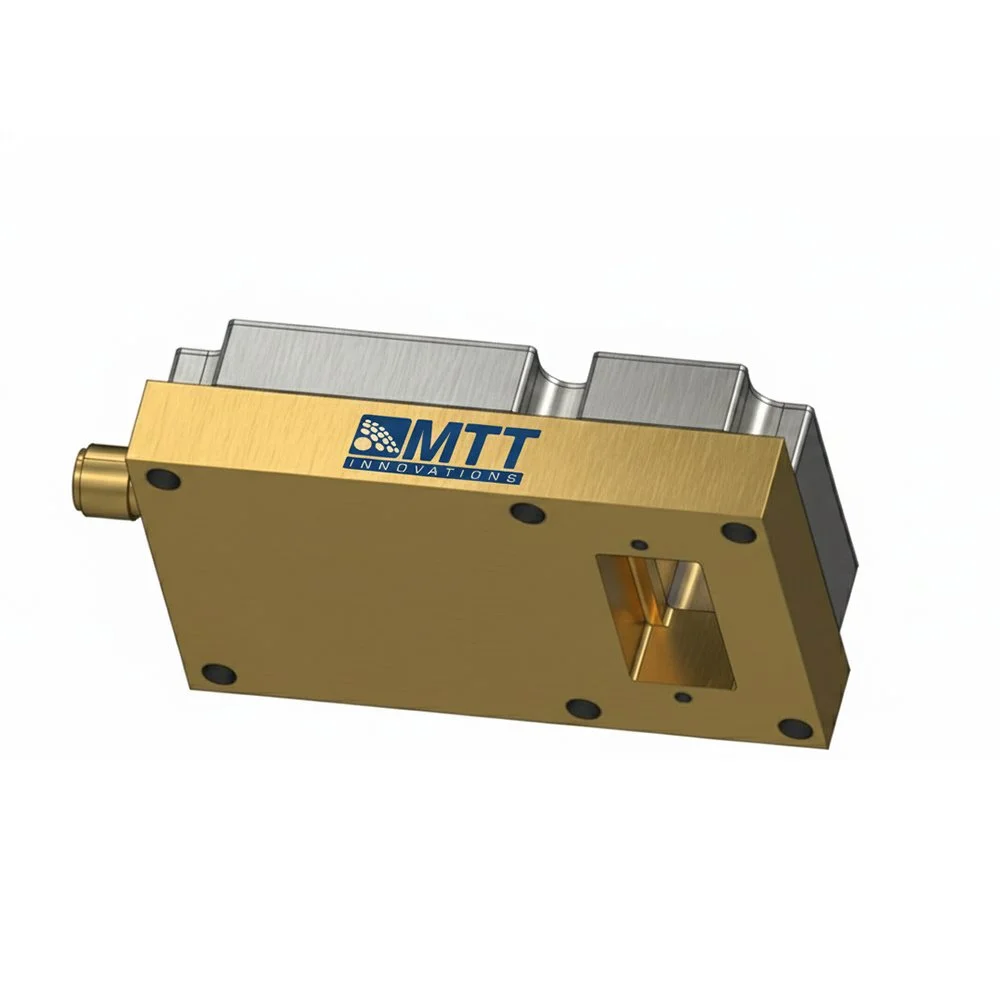
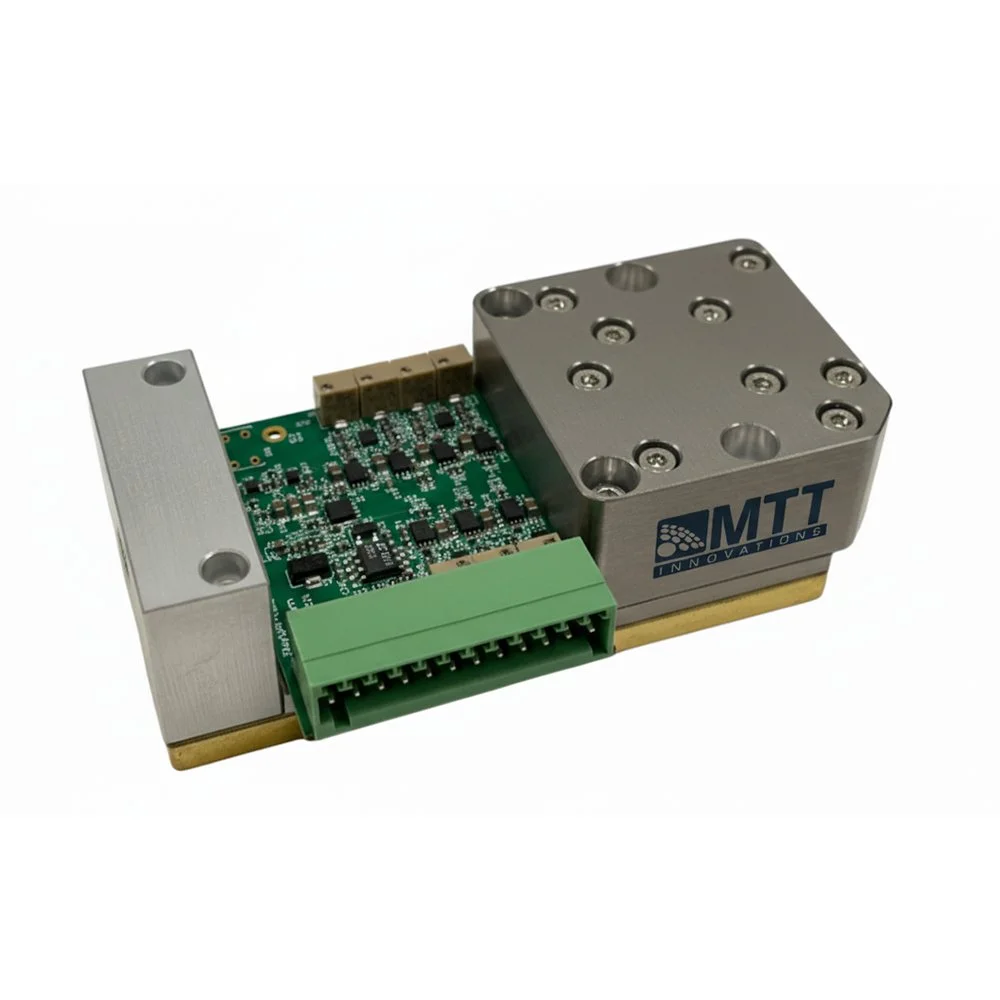
Ku Band 25W BUC

₹0.00

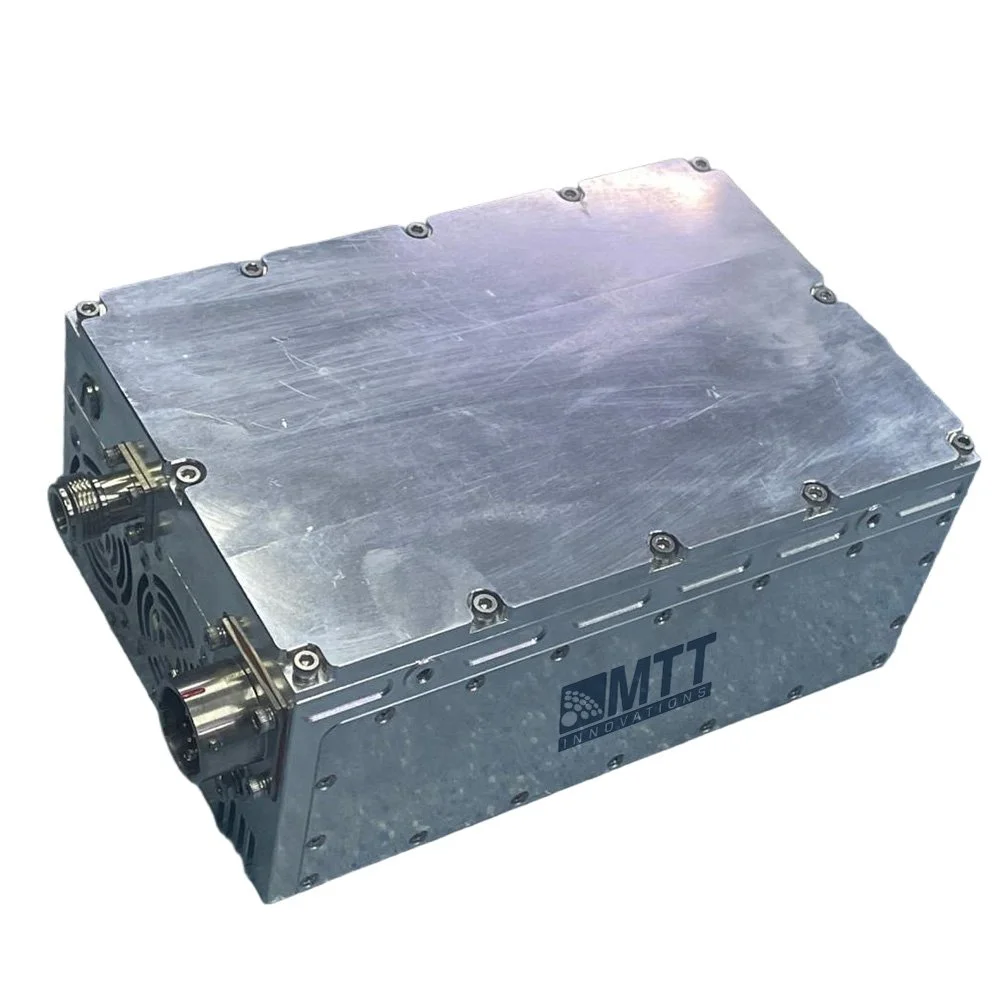
Ku‑Band 25W BUC

Product Features

  •  Built-in receiver suppression filter

  •  Low power consumption, low spurious

  •  Ultra-low phase noise

  •  Built-in overcurrent protection

  •  Built-in temperature protection

Overview A Ku‑Band 25W BUC (Block Upconverter) is a compact, high‑efficiency RF transmitter used in satellite ground terminals to convert L‑band IF (typically 950–2150 MHz) up to Ku‑band transmit frequencies (approximately 13.75–14.5 GHz for outbound FSS/SNG or other Ku allocations) and amplify the signal to a 25 watt (≈44 dBm) RF output power level. This module is engineered for VSAT, flyaway, maritime and portable satellite systems where size, weight, and power efficiency matter.

Key Features

  • Output power: 25 W (typical), specified in dBm and watts for clear link planning.

  • Frequency range: Ku‑band transmit range (specific coverage depends on model; common ranges cover 13.75–14.50 GHz).

  • IF input: 950–2150 MHz L‑band (single or dual L‑band ports depending on model).

  • Modulation support: Compatible with common satellite modulations (QPSK, 8PSK, 16APSK, DVB‑S2/S2X, etc.) when paired with suitable modem.

  • Phase noise: Low phase noise oscillator for improved EIRP stability and spectral purity.

  • Output linearity: High linearity for multicarrier and high‑order modulation; typical ACLR/IMD specs provided by manufacturer.

  • Gain: High and stable gain with adjustable IF/LO gain control.

  • LO options: Built‑in OCXO or Rubidium reference, or external 10 MHz reference input.

  • Interfaces: IF +24 dBmV to +10 dBmV typical ranges, RF monitor port, alarm and control via Ethernet, RS‑232/RS‑485, or Ethernet SNMP.

  • Power: DC power input range (e.g., 24–48 VDC) with power‑save and low power modes for portable applications.

  • Mechanical: Ruggedized housing, heat‑sink or forced‑air cooled, available in 1U/2U rack or compact flyaway form factors.

  • Environmental: MIL‑STD or commercial variants rated for shock, vibration, salt fog, and wide temperature operation (typical −30°C to +55°C operating).

Performance Considerations

  • EIRP: System EIRP depends on BUC output power plus antenna gain. A 25 W BUC on a 1.2–1.8 m antenna typically supports reliable links for many VSAT and SNG applications.

  • Link budgeting: When designing links, include BUC output power, antenna G/T, path loss, uplink margin, rain fade, and required Eb/No for chosen modulation and coding.

  • Linear vs. saturated operation: For single carrier, saturated operation increases apparent power but degrades modulation fidelity. For multi‑carrier or high‑order modulation use the BUC in its linear region with appropriate back‑off.

  • Phase noise and stability: Critical for high‑order modulations and carrier aggregation. Choose BUC models with disciplined LO (OCXO/Rb or external ref) for frequency stability.

  • Cooling and duty cycle: Ensure adequate ventilation for continuous 25 W operation; forced cooling may be required in high ambient temperatures or compact enclosures.

Typical Applications

  • VSAT networks for enterprise broadband

  • Satellite news gathering (SNG) and flyaway systems

  • Maritime satellite communications

  • Military and government tactical terminals (when ruggedized)

  • Temporary event connectivity and disaster recovery

Installation & Integration Notes

  • Match IF levels between modem and BUC; use attenuators or IF amplifiers as needed.

  • Provide a clean 10 MHz reference if using disciplined LO; isolate and route reference wiring to avoid interference.

  • Observe recommended grounding and lightning protection practices for outdoor feed assemblies.

  • Verify polarity, connector types (e.g., N‑type for IF, WR‑75 or waveguide flange for RF), and mechanical adapter needs before field deployment.

  • Use spectral monitoring and modulation error ratio (MER) checks during commissioning to optimize back‑off and gain settings.

Typical Specifications (example values — confirm with manufacturer)

  • Output power: 25 W (44 dBm)

  • Frequency range: 13.75–14.50 GHz

  • IF input: 950–2150 MHz

  • LO stability: OCXO ±0.05 ppm or disciplined Rb option

  • Phase noise: −90 dBc/Hz @ 10 kHz offset (example)

  • Gain: 60–70 dB (model dependent)

  • VSWR: <1.5:1

  • Connector: WR‑75 / 7‑16 DIN / waveguide flange options

  • Power consumption: 100–250 W

Ku‑Band 25W BUC

Product Features

  •  Built-in receiver suppression filter

  •  Low power consumption, low spurious

  •  Ultra-low phase noise

  •  Built-in overcurrent protection

  •  Built-in temperature protection

Overview A Ku‑Band 25W BUC (Block Upconverter) is a compact, high‑efficiency RF transmitter used in satellite ground terminals to convert L‑band IF (typically 950–2150 MHz) up to Ku‑band transmit frequencies (approximately 13.75–14.5 GHz for outbound FSS/SNG or other Ku allocations) and amplify the signal to a 25 watt (≈44 dBm) RF output power level. This module is engineered for VSAT, flyaway, maritime and portable satellite systems where size, weight, and power efficiency matter.

Key Features

  • Output power: 25 W (typical), specified in dBm and watts for clear link planning.

  • Frequency range: Ku‑band transmit range (specific coverage depends on model; common ranges cover 13.75–14.50 GHz).

  • IF input: 950–2150 MHz L‑band (single or dual L‑band ports depending on model).

  • Modulation support: Compatible with common satellite modulations (QPSK, 8PSK, 16APSK, DVB‑S2/S2X, etc.) when paired with suitable modem.

  • Phase noise: Low phase noise oscillator for improved EIRP stability and spectral purity.

  • Output linearity: High linearity for multicarrier and high‑order modulation; typical ACLR/IMD specs provided by manufacturer.

  • Gain: High and stable gain with adjustable IF/LO gain control.

  • LO options: Built‑in OCXO or Rubidium reference, or external 10 MHz reference input.

  • Interfaces: IF +24 dBmV to +10 dBmV typical ranges, RF monitor port, alarm and control via Ethernet, RS‑232/RS‑485, or Ethernet SNMP.

  • Power: DC power input range (e.g., 24–48 VDC) with power‑save and low power modes for portable applications.

  • Mechanical: Ruggedized housing, heat‑sink or forced‑air cooled, available in 1U/2U rack or compact flyaway form factors.

  • Environmental: MIL‑STD or commercial variants rated for shock, vibration, salt fog, and wide temperature operation (typical −30°C to +55°C operating).

Performance Considerations

  • EIRP: System EIRP depends on BUC output power plus antenna gain. A 25 W BUC on a 1.2–1.8 m antenna typically supports reliable links for many VSAT and SNG applications.

  • Link budgeting: When designing links, include BUC output power, antenna G/T, path loss, uplink margin, rain fade, and required Eb/No for chosen modulation and coding.

  • Linear vs. saturated operation: For single carrier, saturated operation increases apparent power but degrades modulation fidelity. For multi‑carrier or high‑order modulation use the BUC in its linear region with appropriate back‑off.

  • Phase noise and stability: Critical for high‑order modulations and carrier aggregation. Choose BUC models with disciplined LO (OCXO/Rb or external ref) for frequency stability.

  • Cooling and duty cycle: Ensure adequate ventilation for continuous 25 W operation; forced cooling may be required in high ambient temperatures or compact enclosures.

Typical Applications

  • VSAT networks for enterprise broadband

  • Satellite news gathering (SNG) and flyaway systems

  • Maritime satellite communications

  • Military and government tactical terminals (when ruggedized)

  • Temporary event connectivity and disaster recovery

Installation & Integration Notes

  • Match IF levels between modem and BUC; use attenuators or IF amplifiers as needed.

  • Provide a clean 10 MHz reference if using disciplined LO; isolate and route reference wiring to avoid interference.

  • Observe recommended grounding and lightning protection practices for outdoor feed assemblies.

  • Verify polarity, connector types (e.g., N‑type for IF, WR‑75 or waveguide flange for RF), and mechanical adapter needs before field deployment.

  • Use spectral monitoring and modulation error ratio (MER) checks during commissioning to optimize back‑off and gain settings.

Typical Specifications (example values — confirm with manufacturer)

  • Output power: 25 W (44 dBm)

  • Frequency range: 13.75–14.50 GHz

  • IF input: 950–2150 MHz

  • LO stability: OCXO ±0.05 ppm or disciplined Rb option

  • Phase noise: −90 dBc/Hz @ 10 kHz offset (example)

  • Gain: 60–70 dB (model dependent)

  • VSWR: <1.5:1

  • Connector: WR‑75 / 7‑16 DIN / waveguide flange options

  • Power consumption: 100–250 W

Electrical specifications including frequency ranges, gain, power, noise performance, VSWR, and power requirements.
Parameter Specification Remarks
RF Frequency 13.75 / 14 GHz – 14.5 GHz
IF Frequency 950 MHz – 1450 / 1700 MHz
or 2500 MHz – 3000 MHz
LO Frequency 12.8 / 13.5 GHz or 11.5 GHz
Reference Frequency 10 MHz ± 5 dBm Input via IF port
Small-Signal Gain ≥ 65 dB
Gain Adjustment Range 20 dB @ 0.5 dB step
Gain Flatness ± 0.6 dB / 40 MHz
± 1.5 dB / 500 MHz
± 2 dB / 750 MHz
Saturated Output Power ≥ 44 dBm Other power levels customizable
IMB ≤ −25 dBc @ rated power backed off by 3 dB
Phase Noise ≤ −63 dBc/Hz @ 100 Hz
≤ −73 dBc/Hz @ 1 kHz
≤ −83 dBc/Hz @ 10 kHz
≤ −93 dBc/Hz @ 100 kHz
In-band TX Noise ≤ −76 dBm/Hz
In-band RX Noise ≤ −156 dBm/Hz @ 10.95 – 12.75 GHz
Spurs ≤ −55 dBc
Input VSWR 1.5 : 1
Output VSWR 2 : 1
Power Supply +28 V DC
Power Consumption ≤ 140 W
Mechanical characteristics including dimensions, RF interfaces, monitoring interfaces, cooling method, and protection rating.
Parameter Specification Remarks
Dimensions 160 mm × 80 mm × 70 mm
RF Input N-F
RF Output WR75
Monitoring Interface RS485 / Monitoring Port
Power / Communication Interface PT02E-14-12
Cooling Forced Air Cooling
Protection Rating IP65

MTT INNOVATIONS PVT. LTD.

© 2025 All Rights Reserved

Contact

E : sales@mtsrl.in
Ph : +91-8779723540 Vakratunda Corporate, Goregaon East, Mumbai, MH 400063