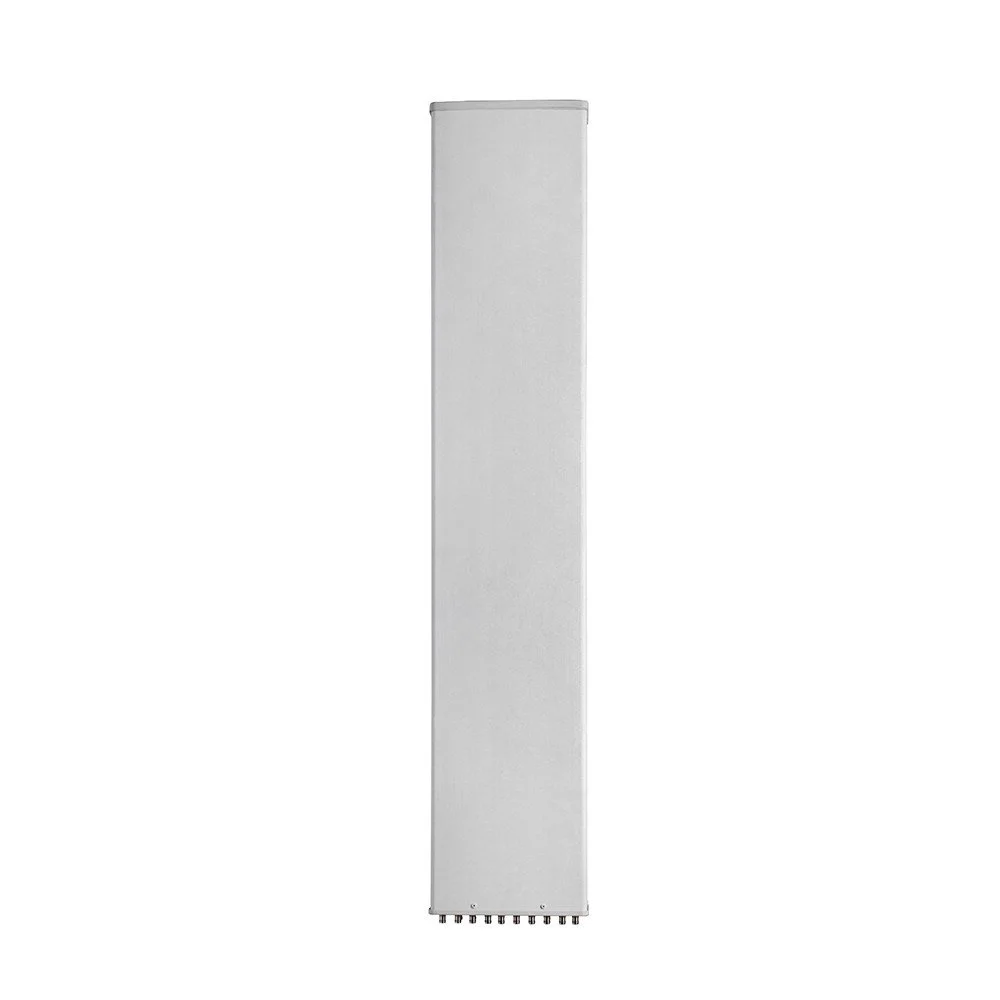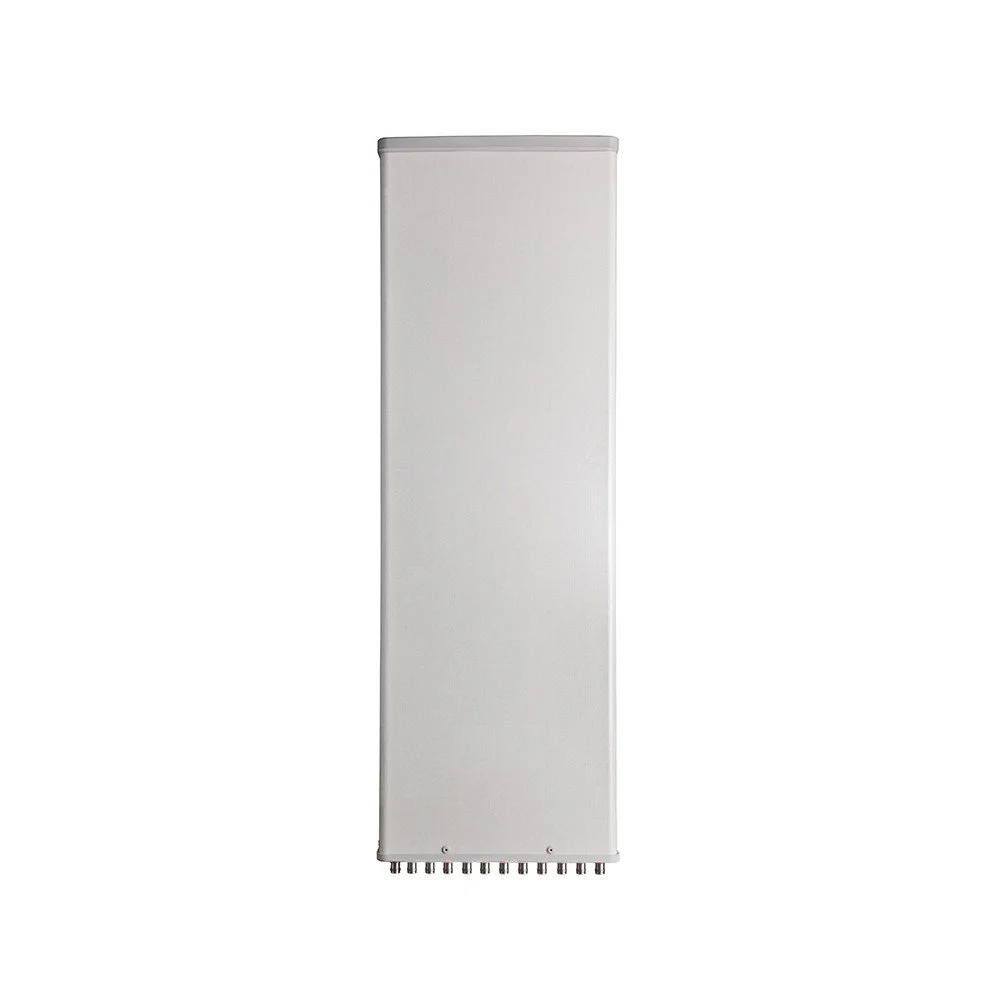
19-Port, TDD Hybrid Panel Antenna ( 698 - 3800 MHz )

₹0.00

19-Port TDD Hybrid Panel Antenna Frequency: 698–3800 MHz

Overview A high-performance, compact 19-port TDD hybrid panel antenna engineered for dense urban and suburban deployments. Covers 698–3800 MHz for broad operator compatibility, supporting multi-band Time Division Duplex (TDD) systems with combined MIMO and carrier aggregation capability. Ideal for macro-sector and small-cell installations where high capacity, low interference, and future-proof spectral flexibility are required.

Key Features

  • Wideband coverage: 698–3800 MHz in a single enclosure to simplify inventory and speed deployment.

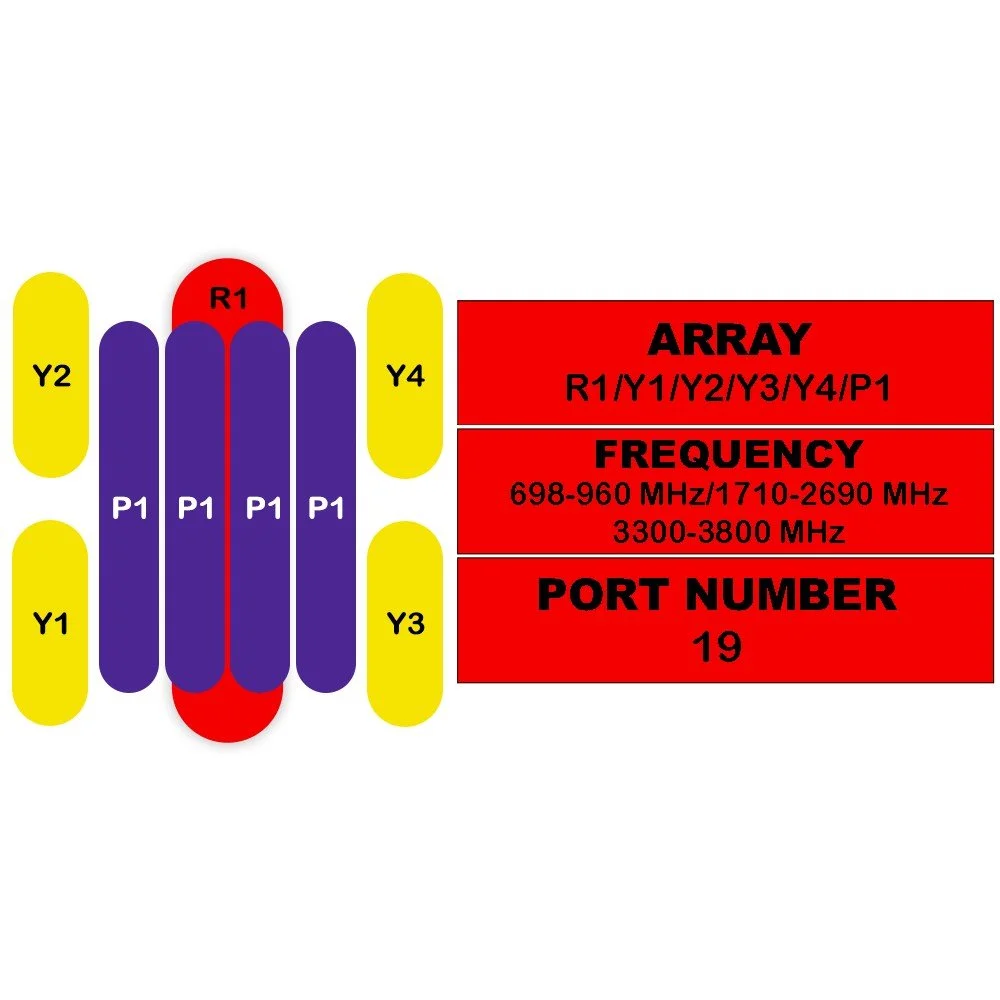
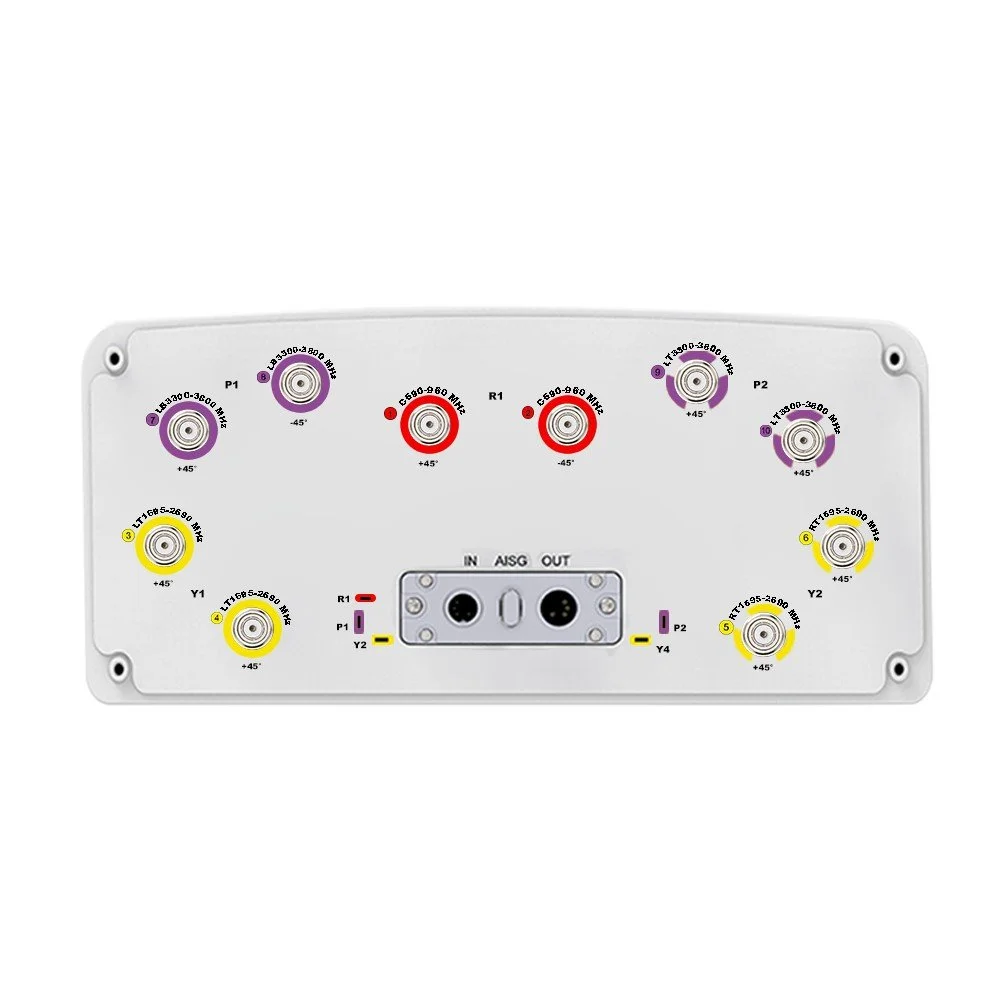
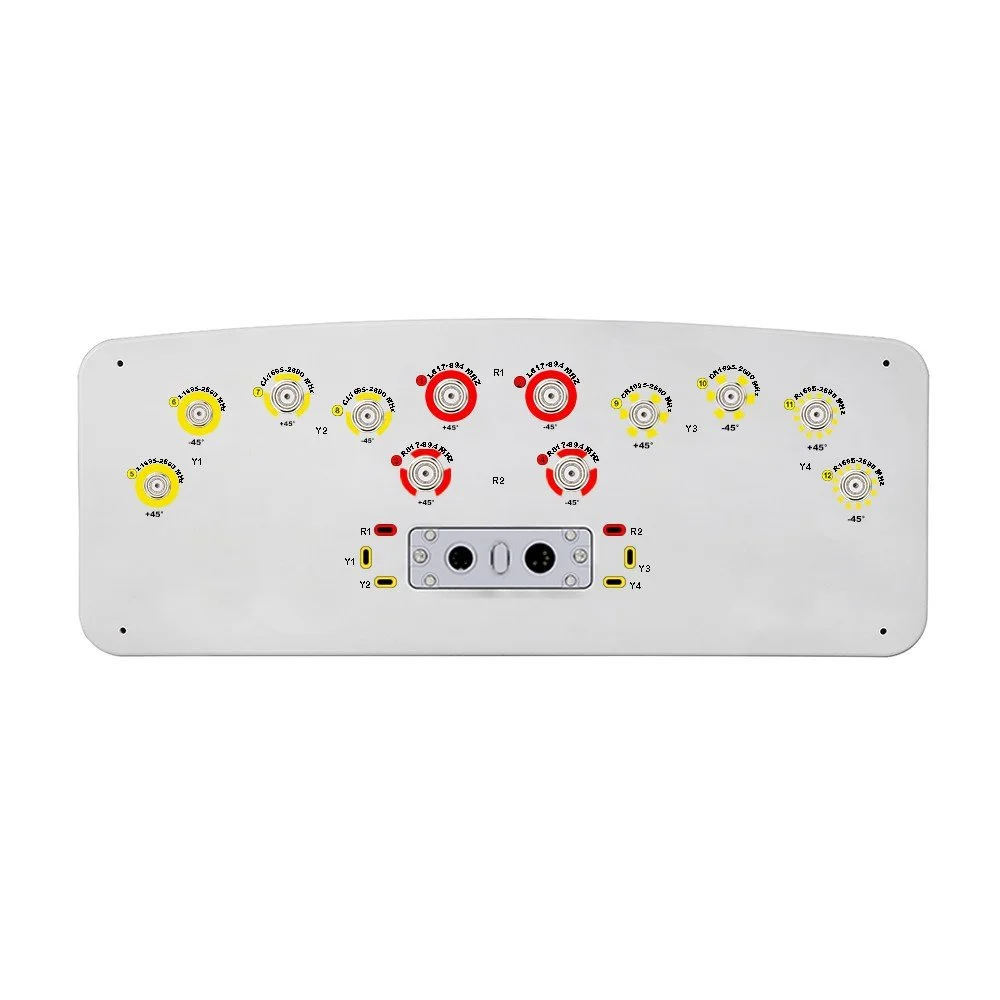
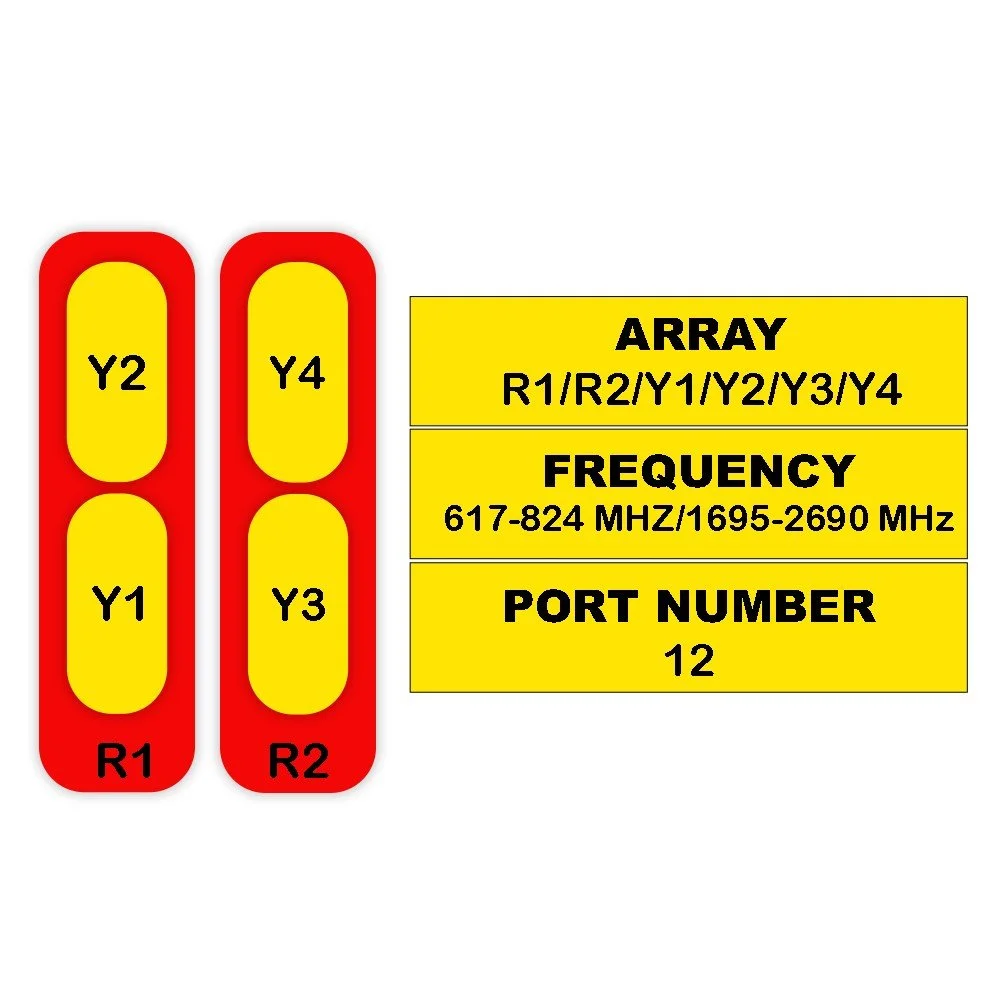
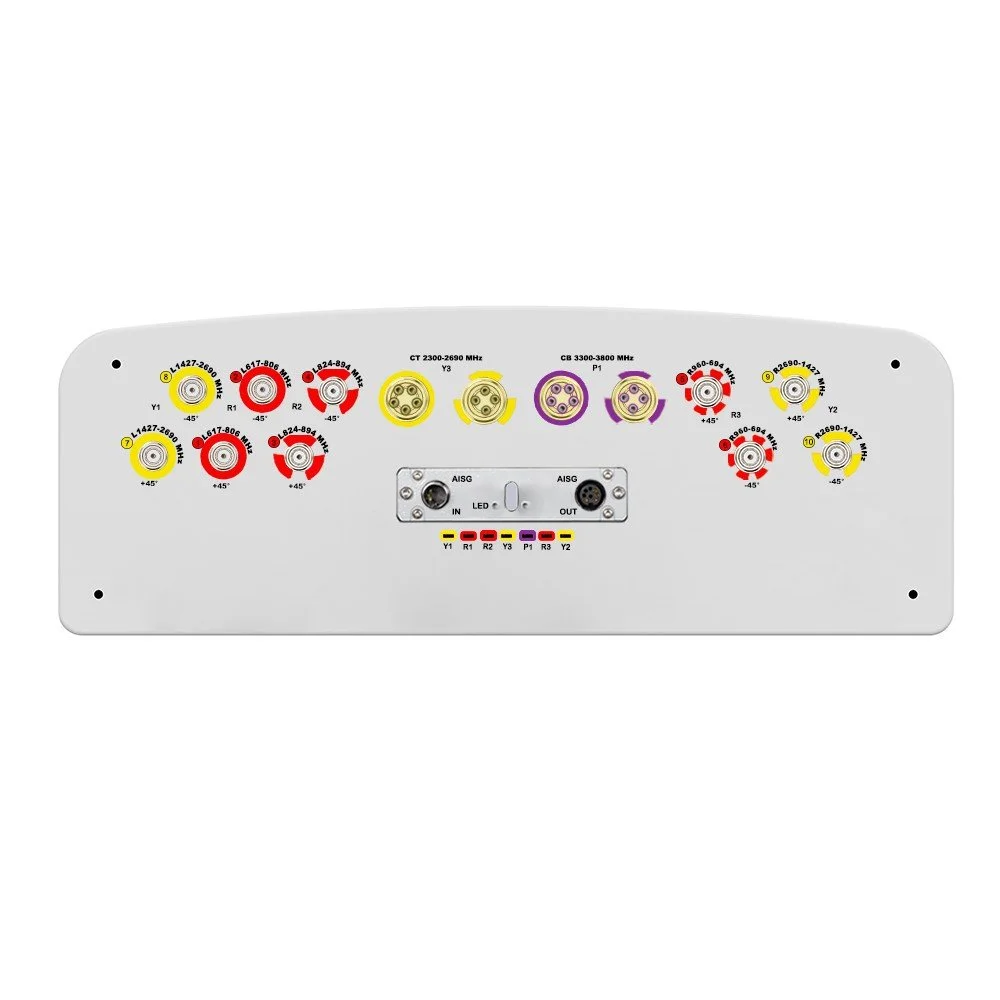
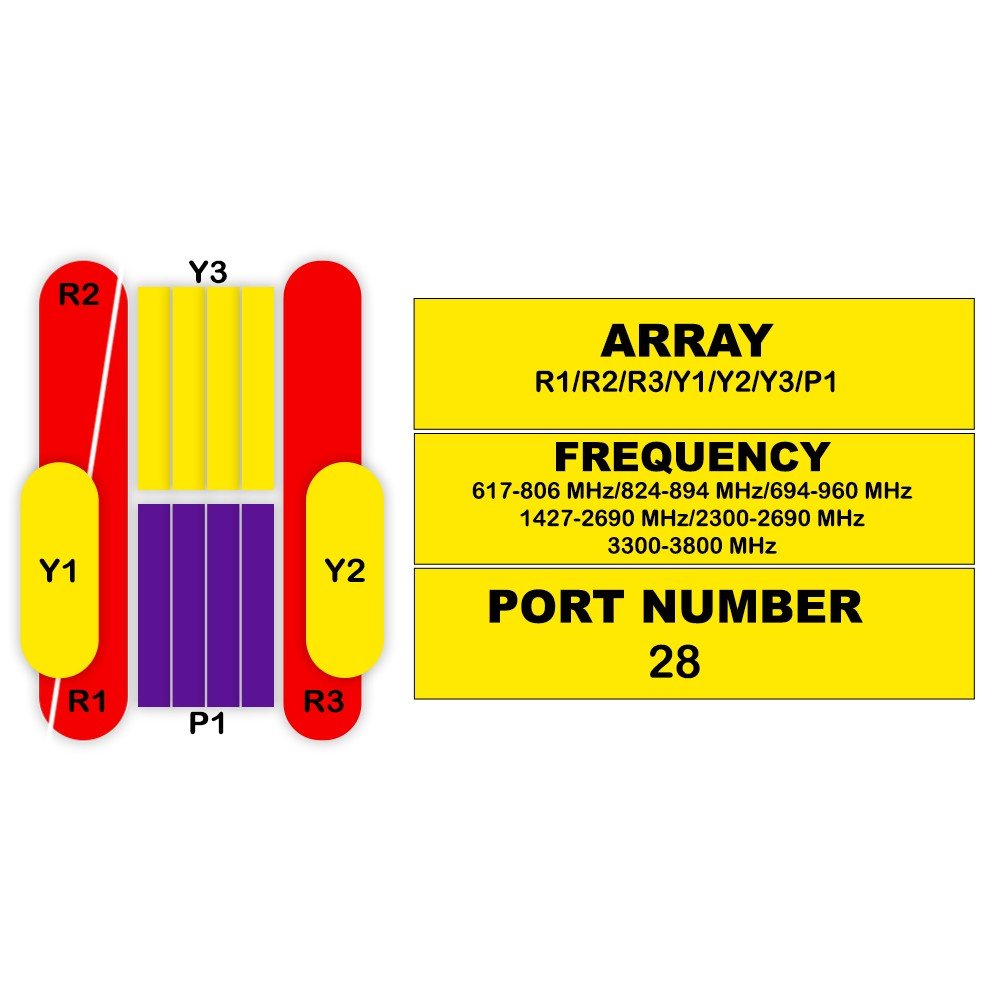
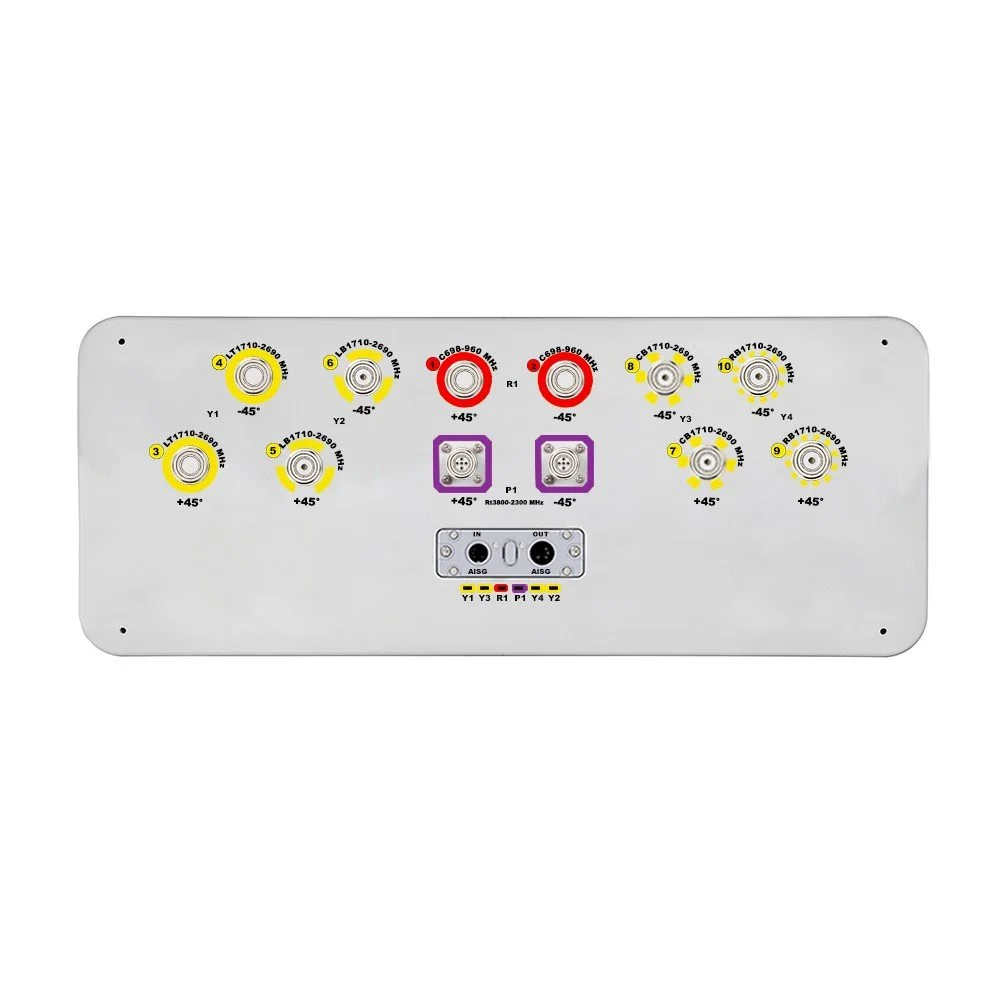
  • 19 RF ports: Designed to support multiple antenna sub-arrays, enabling flexible MIMO configurations and independent sectorization.

  • TDD-optimized: Port isolation and element phasing tuned for Time Division Duplex operation, maximizing uplink/downlink performance and reciprocity benefits.

  • Hybrid architecture: Combines single-band and multi-band elements to deliver consistent pattern control and gain across the entire band.

  • High isolation and low inter-port coupling: Minimizes self-interference and preserves MIMO channel capacity.

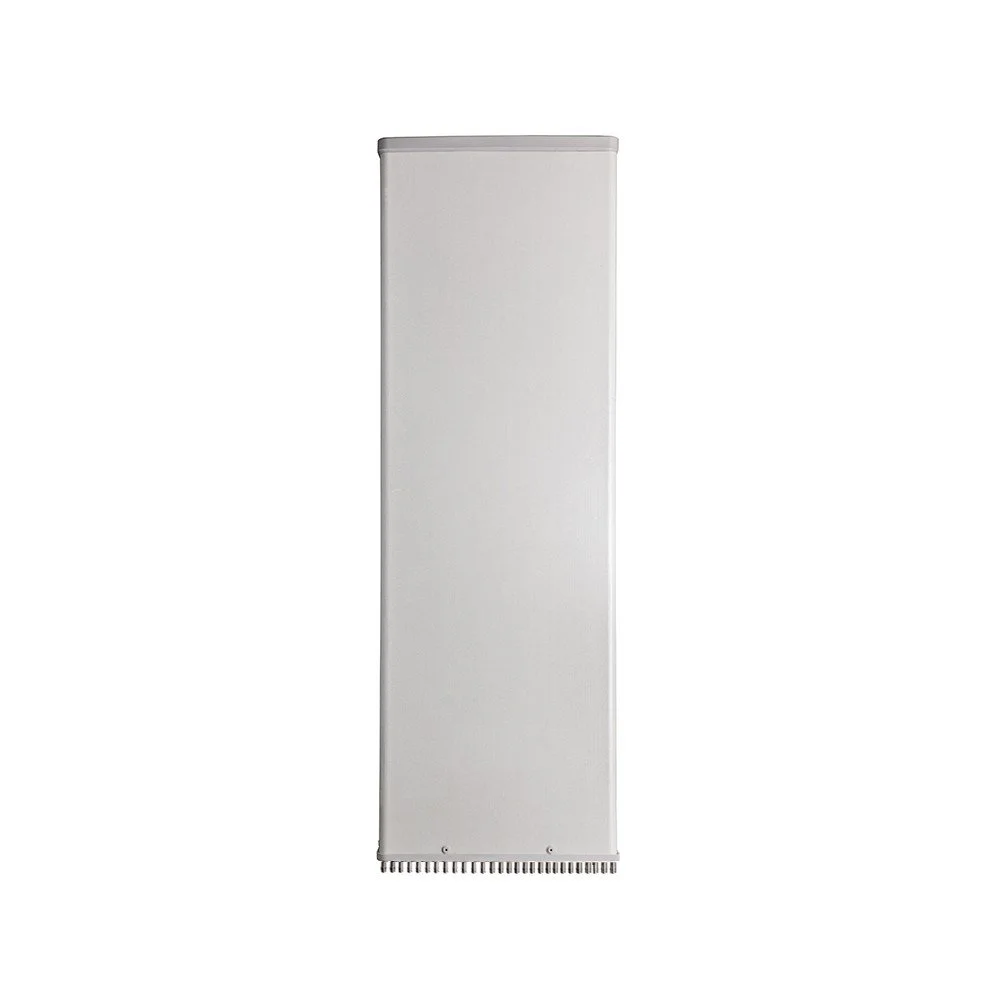
  • Compact form factor: Space-efficient housing for rooftop, tower, and wall-mount installations.

  • Robust mechanical design: Corrosion-resistant materials, stainless fasteners, and industry-standard mounting brackets for secure long-term deployments.

  • IP66 (weatherproof) rated enclosure with UV-stable radome for outdoor reliability.

  • Wide operating temperature range: Engineered to withstand harsh environmental extremes.

  • Lightning and surge protection options available at feed points to protect connected radios.

Electrical Specifications (typical)

  • Frequency range: 698–3800 MHz

  • Number of ports: 19

  • Polarization: Dual linear (vertical/horizontal) or slant options depending on configuration

  • Nominal gain: Varies by sub-band; optimized across the covered spectrum for balanced uplink/downlink performance

  • VSWR: ≤ 2.0:1 typical across each operating band

  • Isolation: High inter-port isolation through element design and internal filtering (specific values per configuration)

  • Beamwidth: Sector-optimized azimuth and elevation patterns to reduce side lobes and interference

  • Front-to-back ratio: Engineered for strong rejection of off-axis energy

Mechanical & Environmental

  • Radome: UV-stable, impact-resistant composite

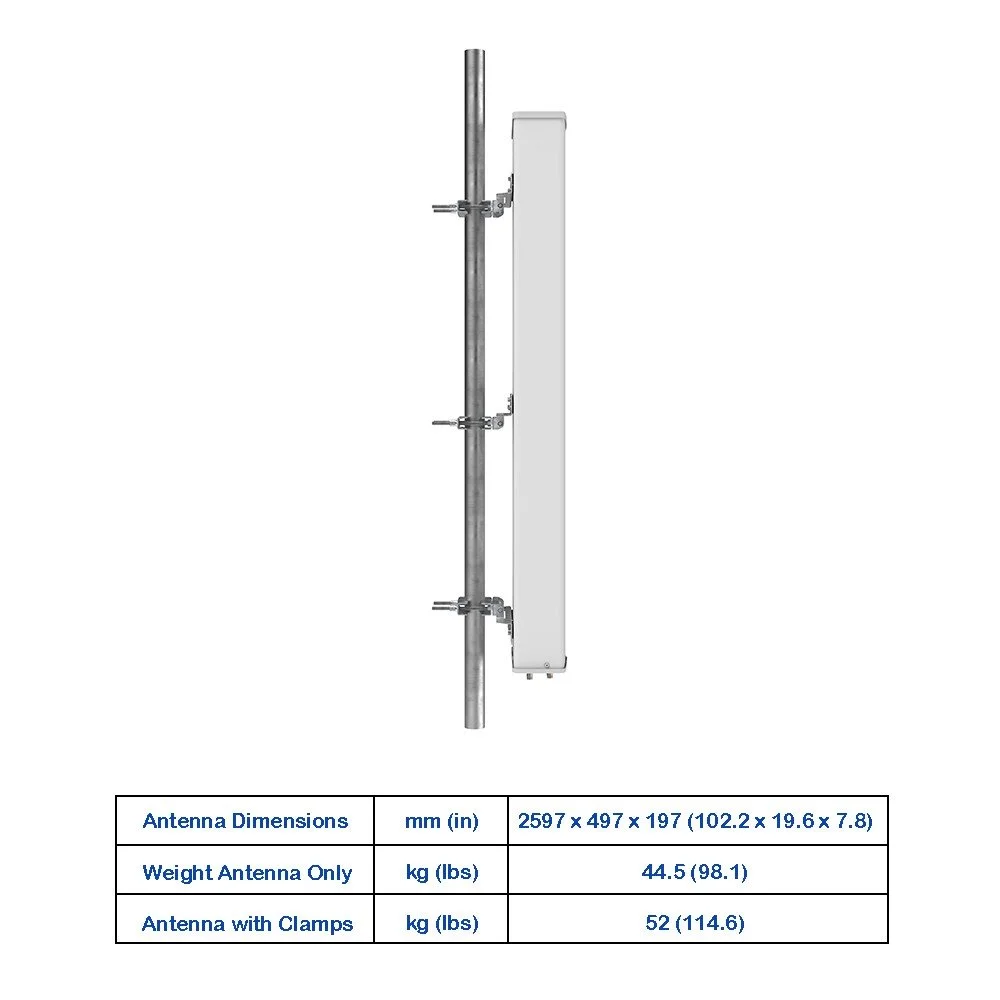
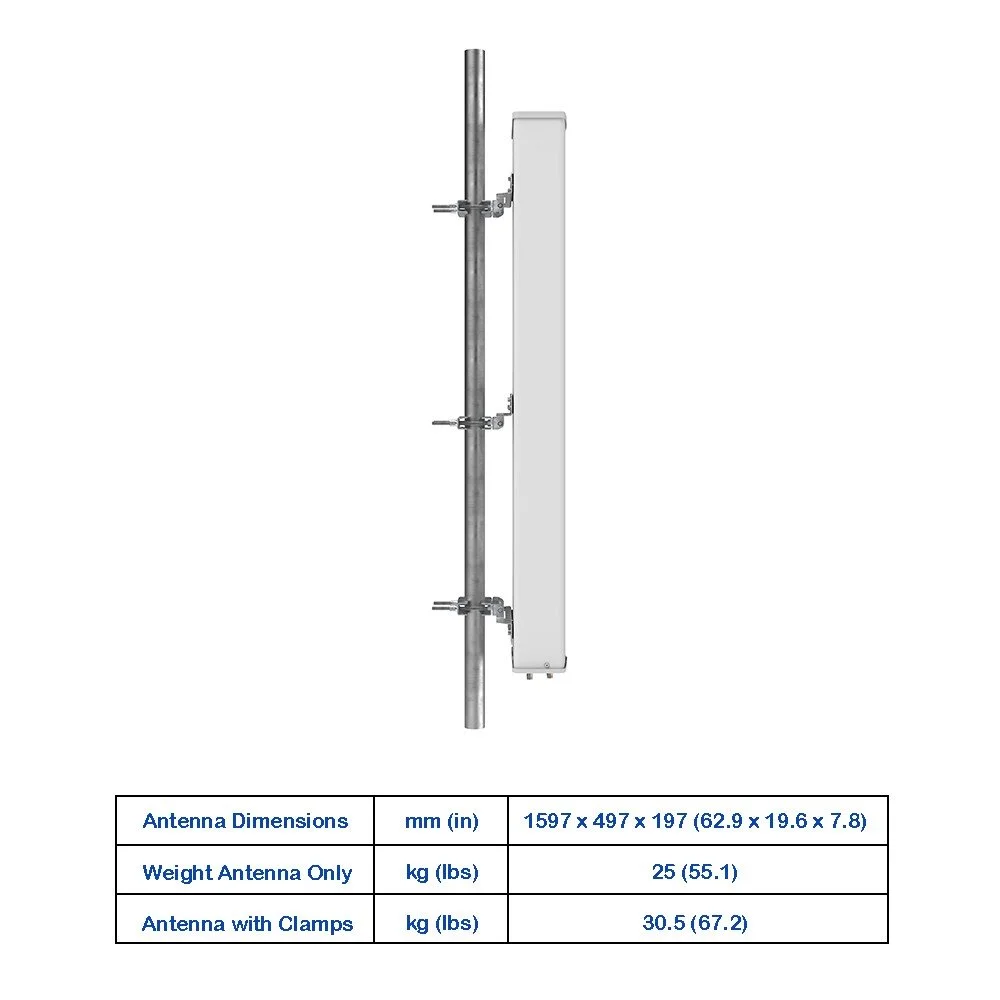
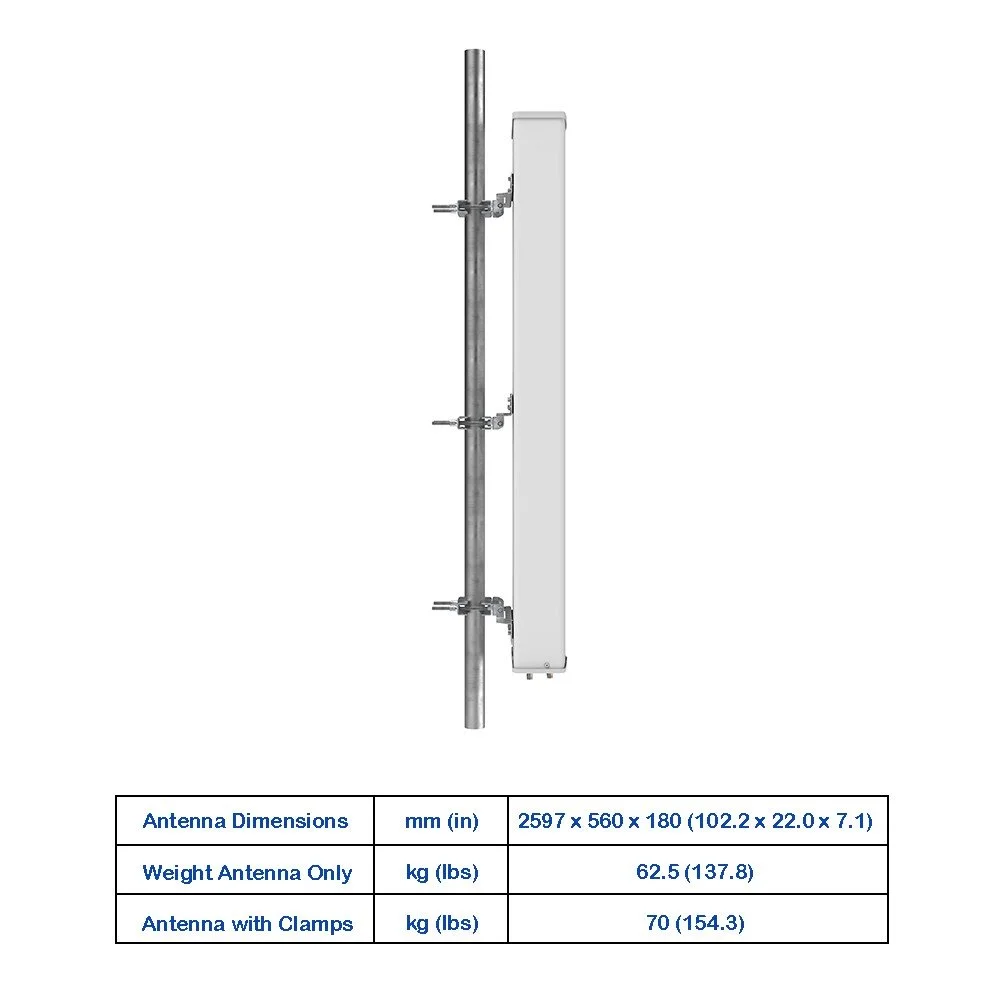
  • Mounting: Standard pole and wall-mount brackets; adjustable azimuth and tilt

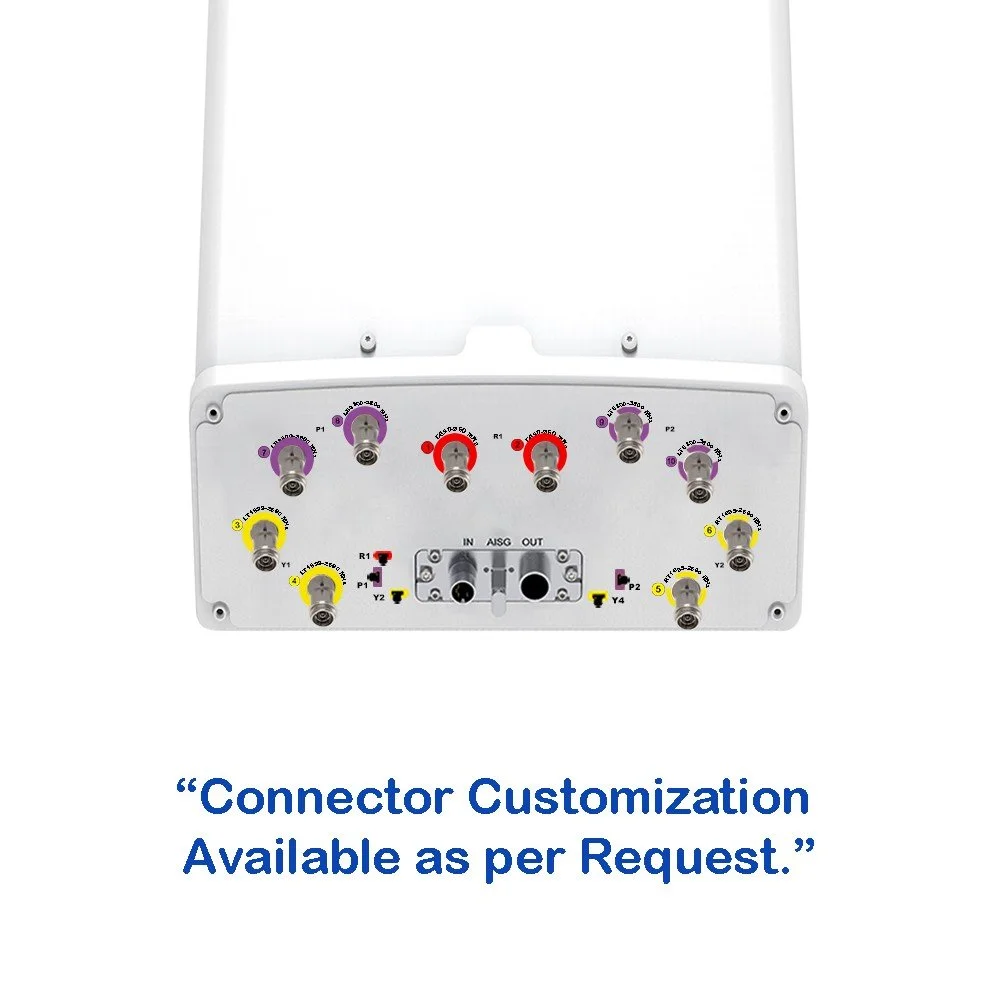
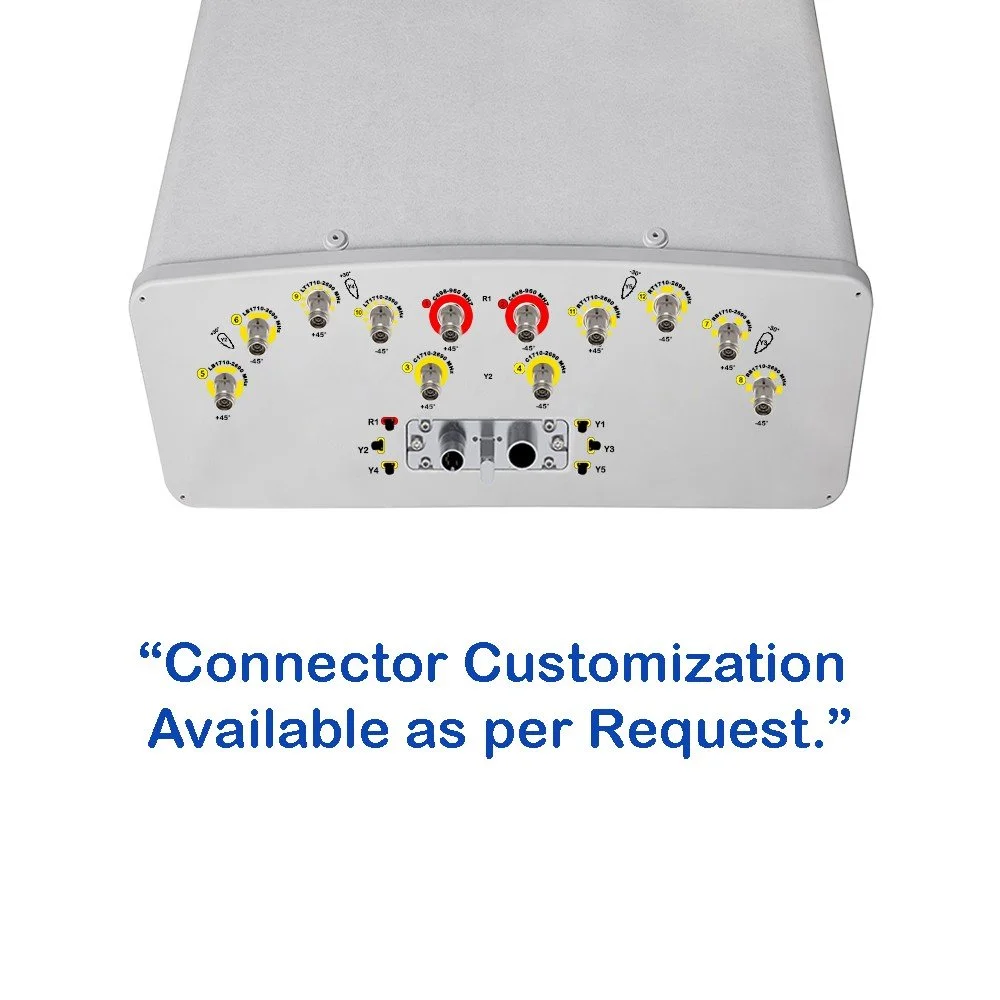
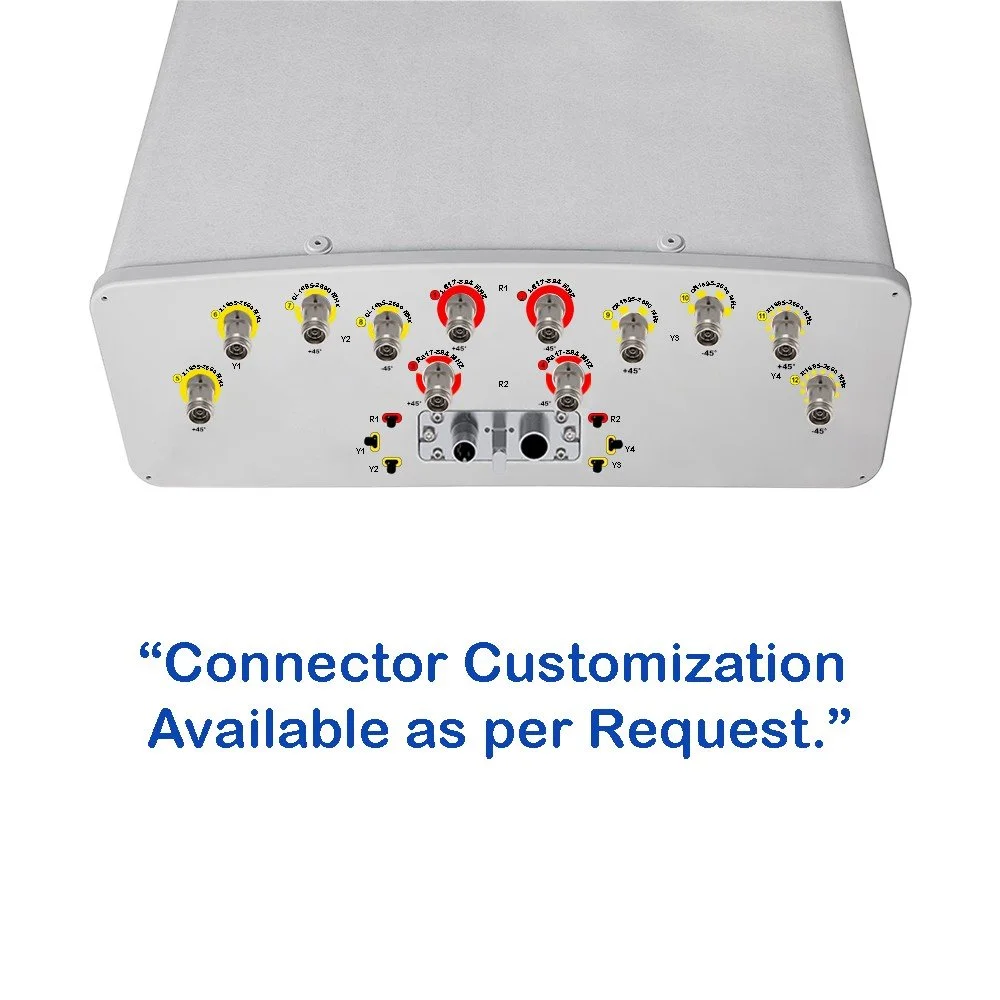
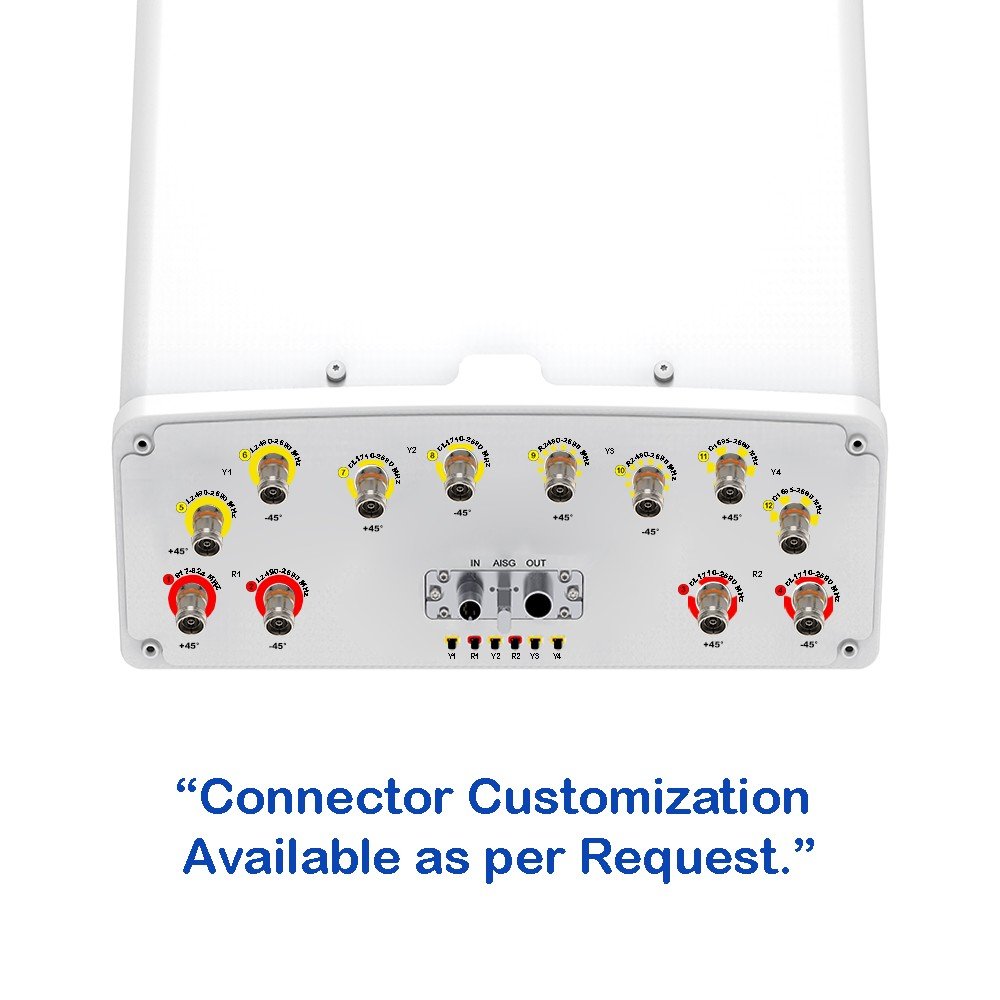
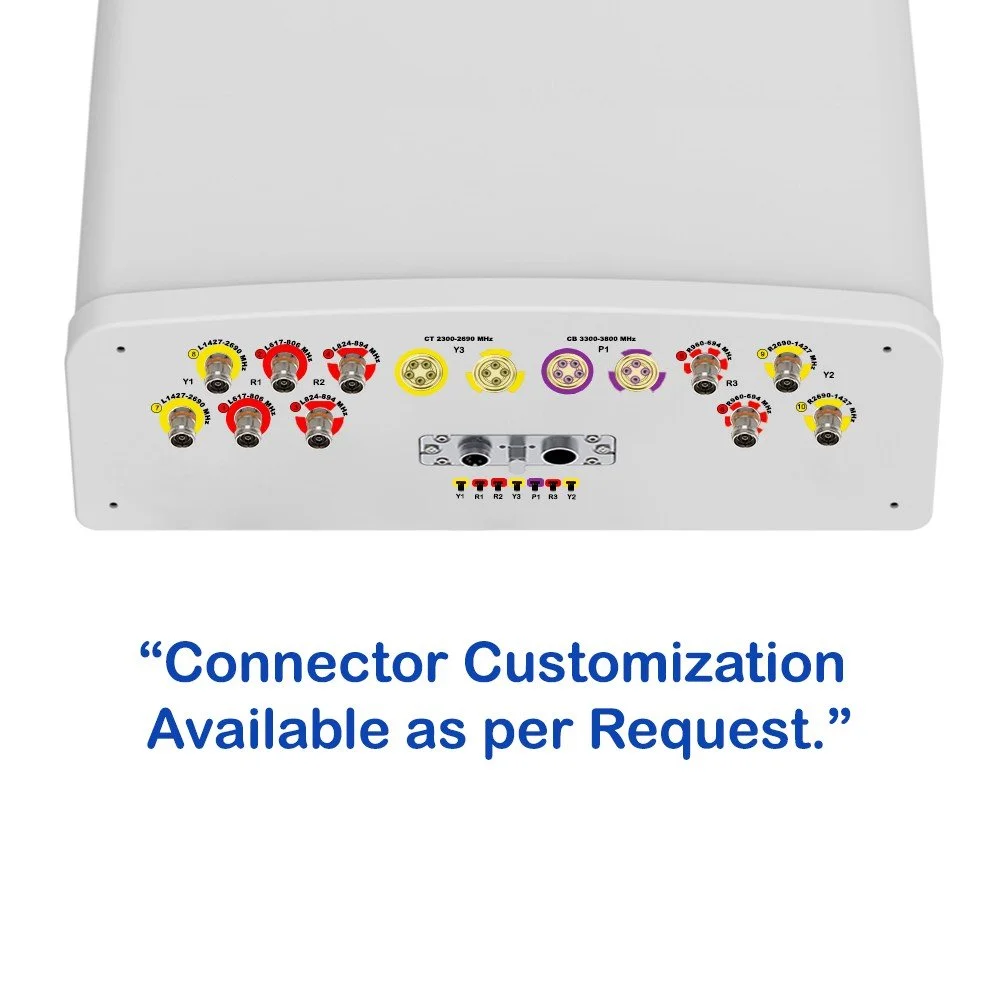
  • Connectors: Weatherproof RF connectors (N-type or ruggedized equivalents)

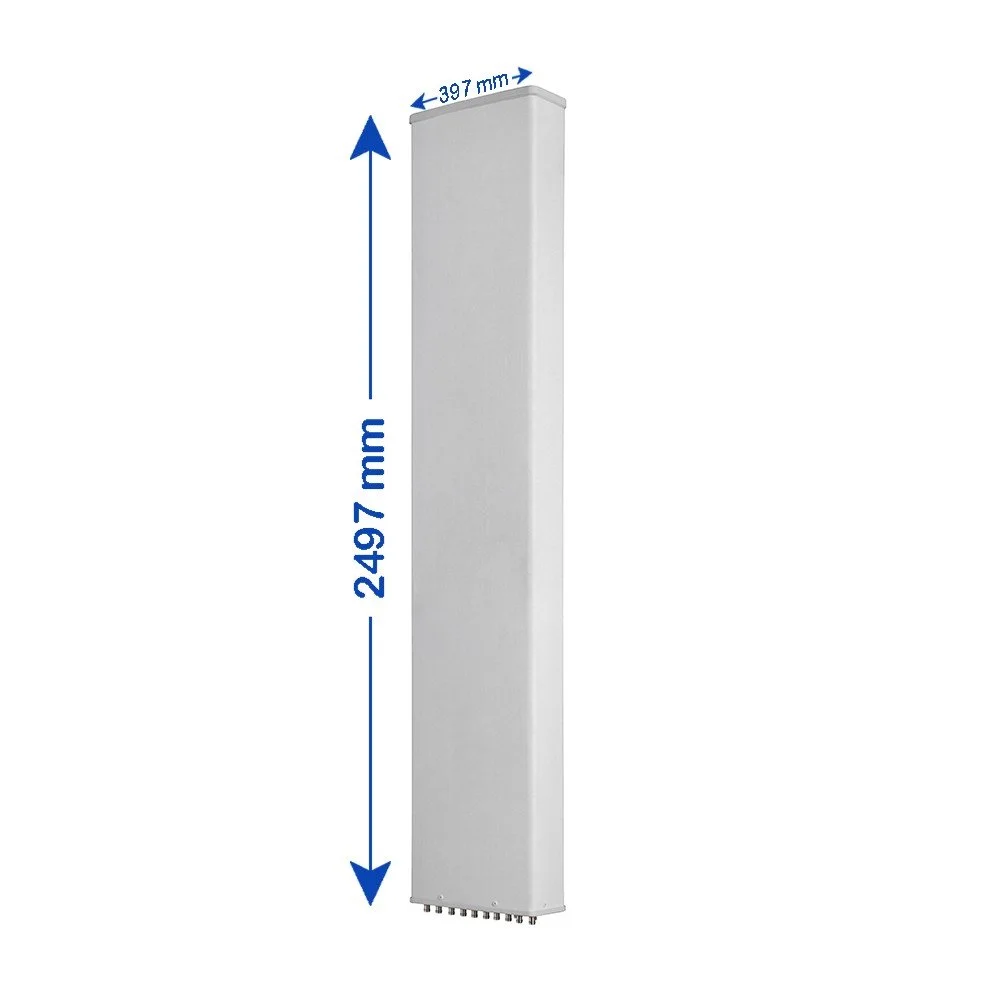
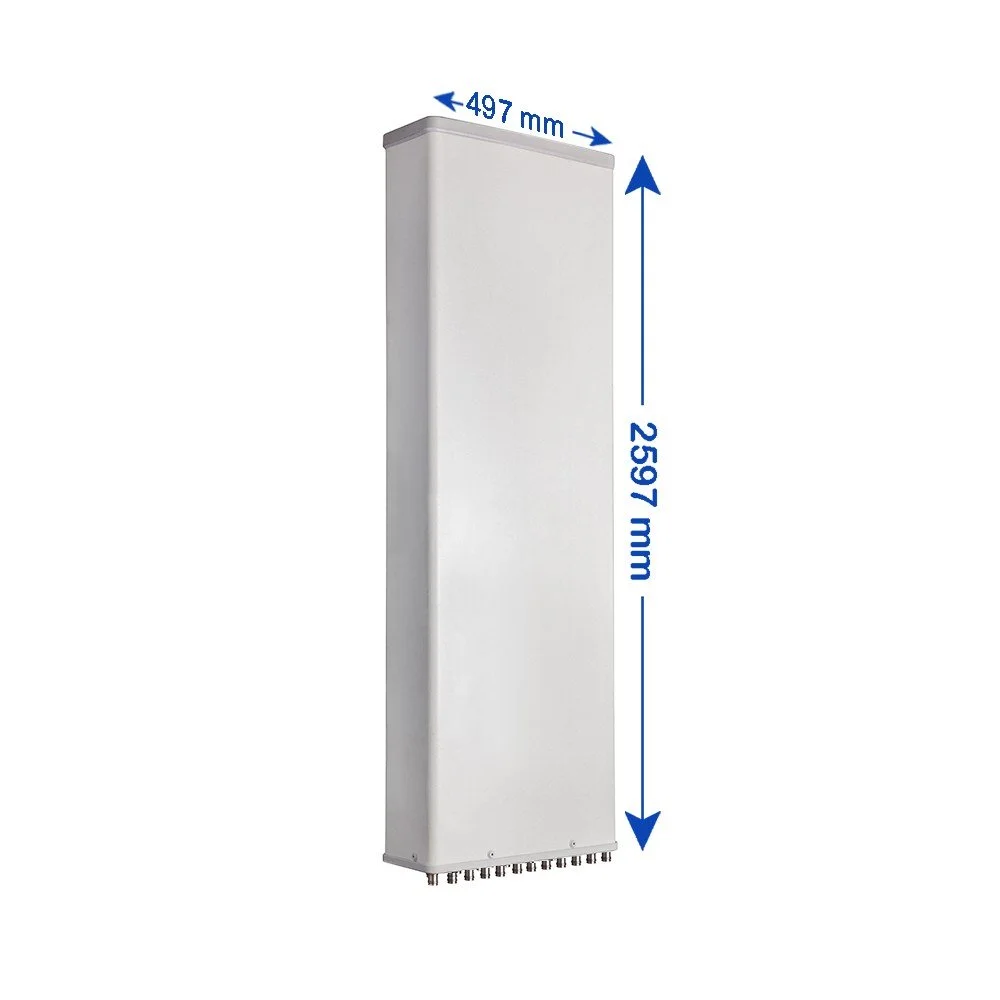
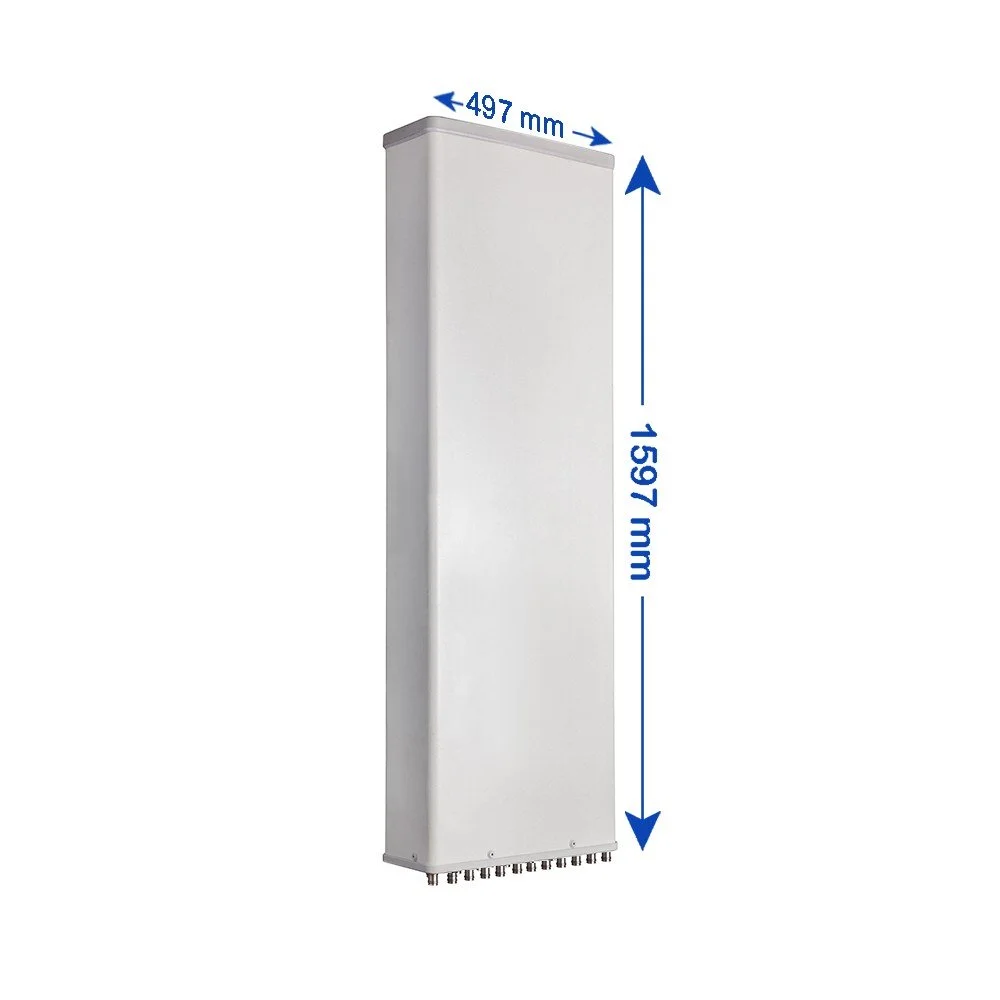
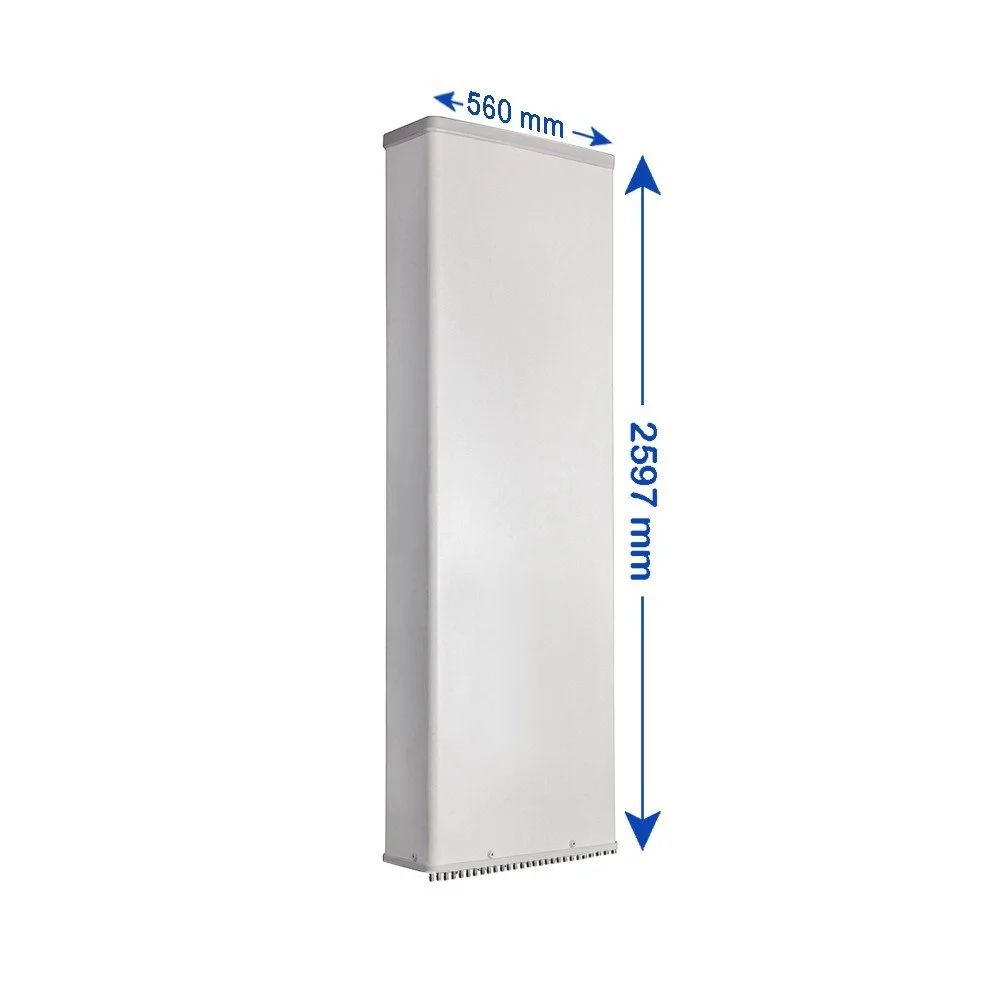
  • Dimensions: Compact panel footprint for minimal visual impact (dimensions vary by configuration)

  • Weight: Lightweight design for simplified handling and installation

  • Operating temperature: Typical industrial range (consult datasheet for exact limits)

  • Ingress protection: IP66

Use Cases

  • High-capacity macro sectors in urban and suburban networks

  • Small-cell aggregation points where multiple carriers and MIMO layers are required

  • Fixed wireless access (FWA) hubs that need broad band support and robust TDD performance

  • Multi-operator sites and neutral host deployments requiring flexible port mapping

  • Rapid rollouts and network densification projects demanding a single wideband antenna solution

Benefits

  • Simplifies inventory and logistics by covering 698–3800 MHz in one unit

  • Boosts system capacity with multi-port MIMO support and strong isolation

  • Reduces site count and lease costs through wideband, multi-band coverage

  • Future-ready for evolving TDD deployments and carrier aggregation strategies

  • Durable construction minimizes maintenance and lifecycle costs

Compliance & Options

  • Designed to meet common industry standards for performance and safety

  • Product variants available with different connector types, mounting kits, tilt options, and integrated surge protection

  • Customizable configurations on request for polarization, gain tapering, and mechanical adaptation

For detailed electrical plots, mechanical drawings, and ordering codes, consult the product datasheet or contact your supplier/technical sales representative.

19-Port TDD Hybrid Panel Antenna Frequency: 698–3800 MHz

Overview A high-performance, compact 19-port TDD hybrid panel antenna engineered for dense urban and suburban deployments. Covers 698–3800 MHz for broad operator compatibility, supporting multi-band Time Division Duplex (TDD) systems with combined MIMO and carrier aggregation capability. Ideal for macro-sector and small-cell installations where high capacity, low interference, and future-proof spectral flexibility are required.

Key Features

  • Wideband coverage: 698–3800 MHz in a single enclosure to simplify inventory and speed deployment.

  • 19 RF ports: Designed to support multiple antenna sub-arrays, enabling flexible MIMO configurations and independent sectorization.

  • TDD-optimized: Port isolation and element phasing tuned for Time Division Duplex operation, maximizing uplink/downlink performance and reciprocity benefits.

  • Hybrid architecture: Combines single-band and multi-band elements to deliver consistent pattern control and gain across the entire band.

  • High isolation and low inter-port coupling: Minimizes self-interference and preserves MIMO channel capacity.

  • Compact form factor: Space-efficient housing for rooftop, tower, and wall-mount installations.

  • Robust mechanical design: Corrosion-resistant materials, stainless fasteners, and industry-standard mounting brackets for secure long-term deployments.

  • IP66 (weatherproof) rated enclosure with UV-stable radome for outdoor reliability.

  • Wide operating temperature range: Engineered to withstand harsh environmental extremes.

  • Lightning and surge protection options available at feed points to protect connected radios.

Electrical Specifications (typical)

  • Frequency range: 698–3800 MHz

  • Number of ports: 19

  • Polarization: Dual linear (vertical/horizontal) or slant options depending on configuration

  • Nominal gain: Varies by sub-band; optimized across the covered spectrum for balanced uplink/downlink performance

  • VSWR: ≤ 2.0:1 typical across each operating band

  • Isolation: High inter-port isolation through element design and internal filtering (specific values per configuration)

  • Beamwidth: Sector-optimized azimuth and elevation patterns to reduce side lobes and interference

  • Front-to-back ratio: Engineered for strong rejection of off-axis energy

Mechanical & Environmental

  • Radome: UV-stable, impact-resistant composite

  • Mounting: Standard pole and wall-mount brackets; adjustable azimuth and tilt

  • Connectors: Weatherproof RF connectors (N-type or ruggedized equivalents)

  • Dimensions: Compact panel footprint for minimal visual impact (dimensions vary by configuration)

  • Weight: Lightweight design for simplified handling and installation

  • Operating temperature: Typical industrial range (consult datasheet for exact limits)

  • Ingress protection: IP66

Use Cases

  • High-capacity macro sectors in urban and suburban networks

  • Small-cell aggregation points where multiple carriers and MIMO layers are required

  • Fixed wireless access (FWA) hubs that need broad band support and robust TDD performance

  • Multi-operator sites and neutral host deployments requiring flexible port mapping

  • Rapid rollouts and network densification projects demanding a single wideband antenna solution

Benefits

  • Simplifies inventory and logistics by covering 698–3800 MHz in one unit

  • Boosts system capacity with multi-port MIMO support and strong isolation

  • Reduces site count and lease costs through wideband, multi-band coverage

  • Future-ready for evolving TDD deployments and carrier aggregation strategies

  • Durable construction minimizes maintenance and lifecycle costs

Compliance & Options

  • Designed to meet common industry standards for performance and safety

  • Product variants available with different connector types, mounting kits, tilt options, and integrated surge protection

  • Customizable configurations on request for polarization, gain tapering, and mechanical adaptation

For detailed electrical plots, mechanical drawings, and ordering codes, consult the product datasheet or contact your supplier/technical sales representative.

Electrical Specifications
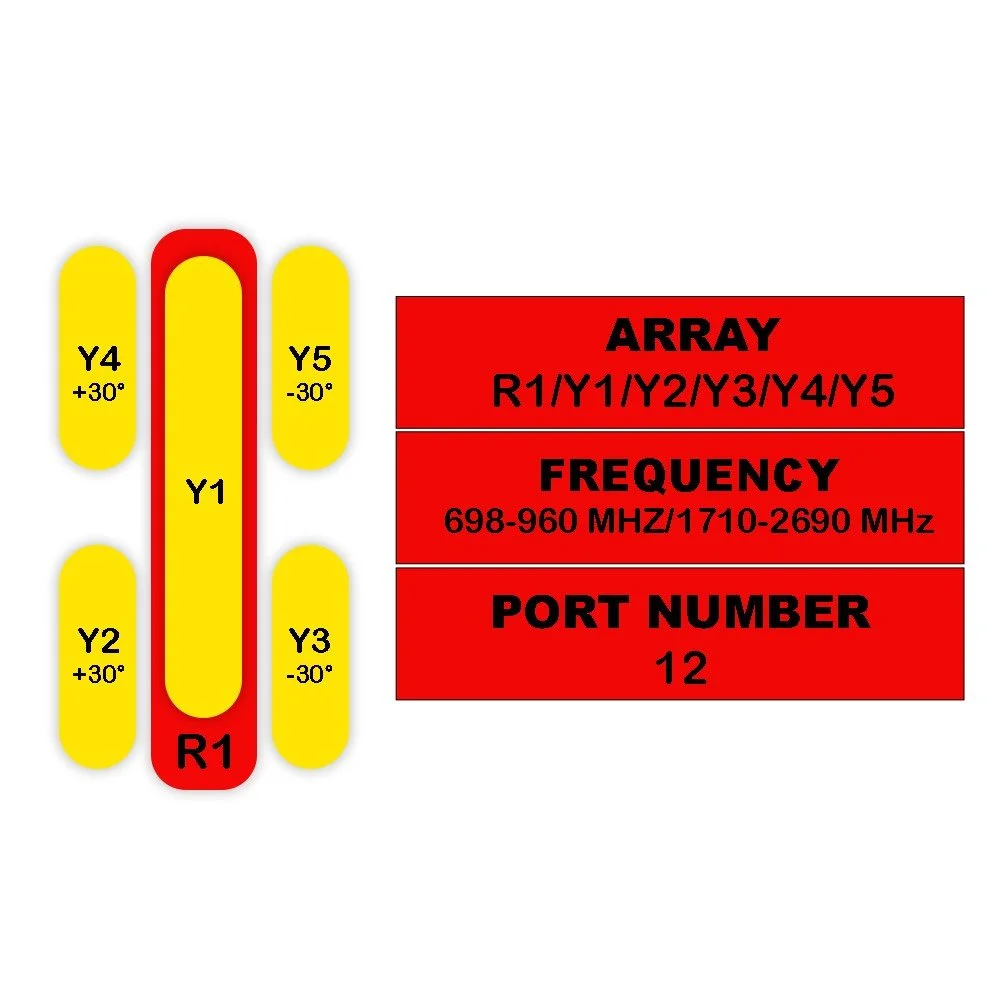
Electrical specifications table for R1 and Y1/Y2/Y3/Y4 frequency bands including gain, beamwidth, isolation, and power ratings.
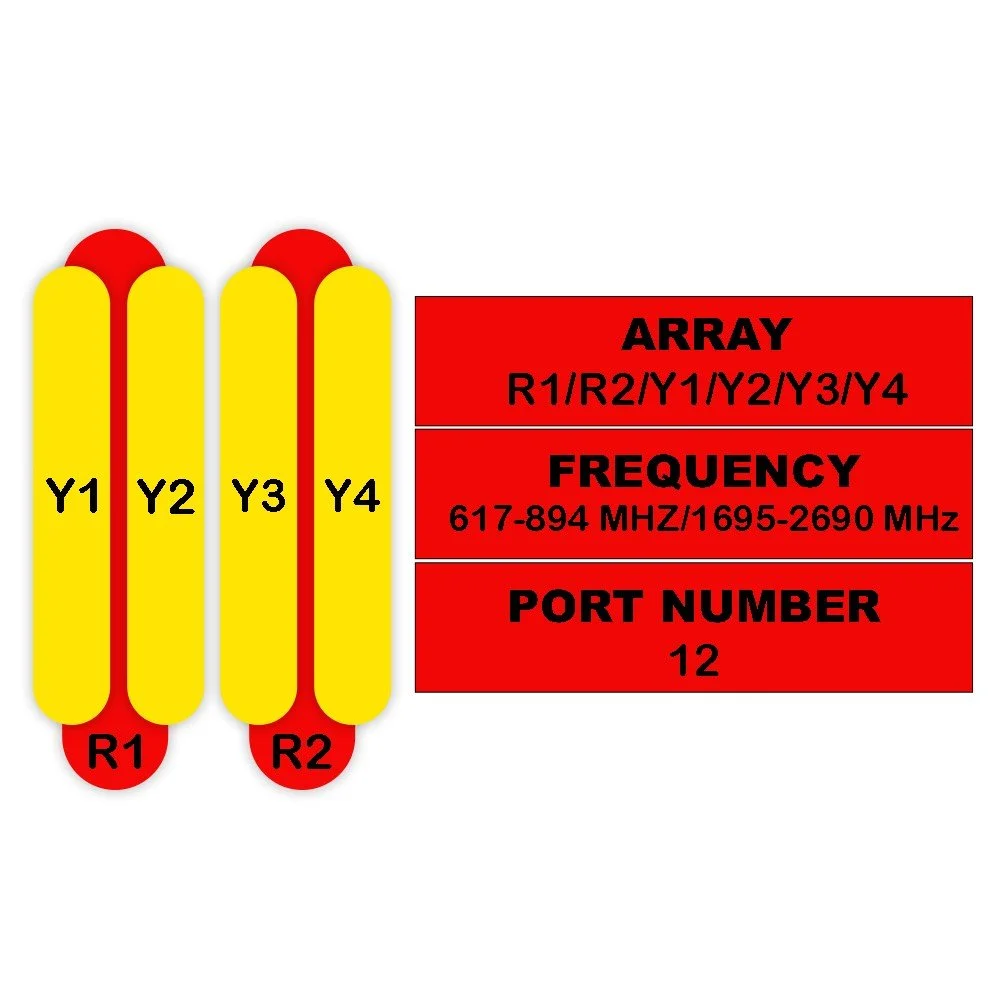
Parameter Unit R1 Y1 / Y2 / Y3 / Y4
698–960 MHz 1710–2690 MHz
698–806 790–894 880–960 1710–1880 1850–1990 1920–2170 2300–2500 2500–2690
Polarization ±45° ±45°
Gain (at Mid Tilt) dBi 14.915.415.8 15.215.615.816.116.1
Gain (Over All Tilts) dBi 14.8 ± 0.615.3 ± 0.615.7 ± 0.6 15.1 ± 0.615.5 ± 0.615.7 ± 0.616.0 ± 0.615.9 ± 0.6
Horizontal Beamwidth degree 68 ± 565 ± 562 ± 5 67 ± 565 ± 564 ± 562 ± 560 ± 5
Vertical Beamwidth degree 10.5 ± 1.09.6 ± 1.09.0 ± 0.9 9.7 ± 1.09.1 ± 0.98.5 ± 0.97.1 ± 0.76.6 ± 0.7
Electrical Downtilt, Continuously Adjustable degree 02–12 02–12
First Upper Side Lobe Suppression dB > 15> 15> 15 > 15> 15> 15> 15> 15
Front-To-Back Ratio ±30° dB > 23> 24> 25 > 25> 25> 25> 25> 25
Cross Polar (at Boresight) dB > 17> 17> 17 > 18> 18> 18> 18> 18
Cross Polar Discrimination (Over Sector) dB > 8> 8> 8 > 8> 8> 8> 8> 8
Squint degree 3.53.53.5 3.53.53.53.53.5
Tracking dB 333 33333
Isolation (Cross-Polar) dB ≥ 25 ≥ 25
Isolation (Port-to-Port) dB ≥ 25 ≥ 25
Impedance Ohm 50 50
VSWR < 1.5 < 1.5
Return Loss dB > 14 > 14
PIM3 (2x43 dBm Carrier) dBc < -153 < -153
Lightning Protection DC Ground DC Ground
Maximum Average Input Power per Port, at 50° C Ambient Temperature Watts 250 200
Electrical Specifications – TDD LTE P1
Electrical specifications for TDD LTE P1 antenna including Single Column Beam, Broadcast Beam, Service Beam, Soft Split Multi-Beam and Electrical Parameters.
Parameter Unit 2300–2690 MHz 3300–3800 MHz
Frequency Range MHz 2300–3800
Polarization ±45°
Electrical Downtilt, Continuously Adjustable degree 2–12
Single Column Beam
GaindBi15.516.5
Horizontal Beamwidthdegree9070
Vertical Beamwidth (3 dB)degree8.3 ± 0.86.2 ± 0.6
Cross-Polar Ratio at BoresightdB≥ 16≥ 16
Cross-Polar Ratio Over SectordB1010
First Upper Side Lobe SuppressiondB≥ 15≥ 15
Front-To-Back RatiodB≥ 25≥ 25
Broadcast Beam (65°)
GaindBi16.517.3
Horizontal Beamwidth (3 dB)degree6565
Vertical Beamwidth (3 dB)degree8.3 ± 0.86.2 ± 0.6
Gain Roll-Off At Sector EdgedB1212
Cross-Polar Ratio at BoresightdB≥ 16≥ 16
Cross-Polar Ratio Over SectordB1010
First Upper Side Lobe SuppressiondB≥ 15≥ 15
Front-To-Back RatiodB≥ 25≥ 25
Service Beam (0°)
Direct Beam GaindBi2020.5
Direct Beam 3 dB Horizontal Beamwidthdegree2520
Horizontal SidelobesdB-12-12
Direct Beam Cross Polar Ratio at Beam-PeakdB≥ 18≥ 18
Cross Polar Discrimination over 10 dBdB1111
Direct Beam Front-To-Back RatiodB≥ 30≥ 30
(±30°) Direct Beam GaindBi18.519.0
Soft Split Multi-Beam
GaindBi19.0
Horizontal Beamwidth (3 dB)degree31
Vertical Beamwidth (3 dB)degree8.3 ± 0.8
First Upper Sidelobe SuppressiondB18
Front-To-Back RatiodB≥ 30
Cross Polar Ratio at Beam-PeakdB≥ 18
Cross Polar Ratio Over 10 dBdB11
Calibration and Electrical Parameter
Coupling Factor Between Calibration and Each Antenna PortdB-26 ± 2
Max. Amplitude Tolerance From Calibration Port To Input PortsdB1.0
Max. Phase Tolerance From Calibration Port To Input Portsdegree9
Ports VSWR1.5
Average Power CapacityW75
Isolation
IntrabanddB≥ 25
InterbanddB≥ 20
Impedance Ohm 50
Lightning Protection DC Ground
Mechanical Specifications
Mechanical specifications including connectors, dimensions, weight, wind load, and environmental ratings.
Parameter Sub-Category Unit Specification
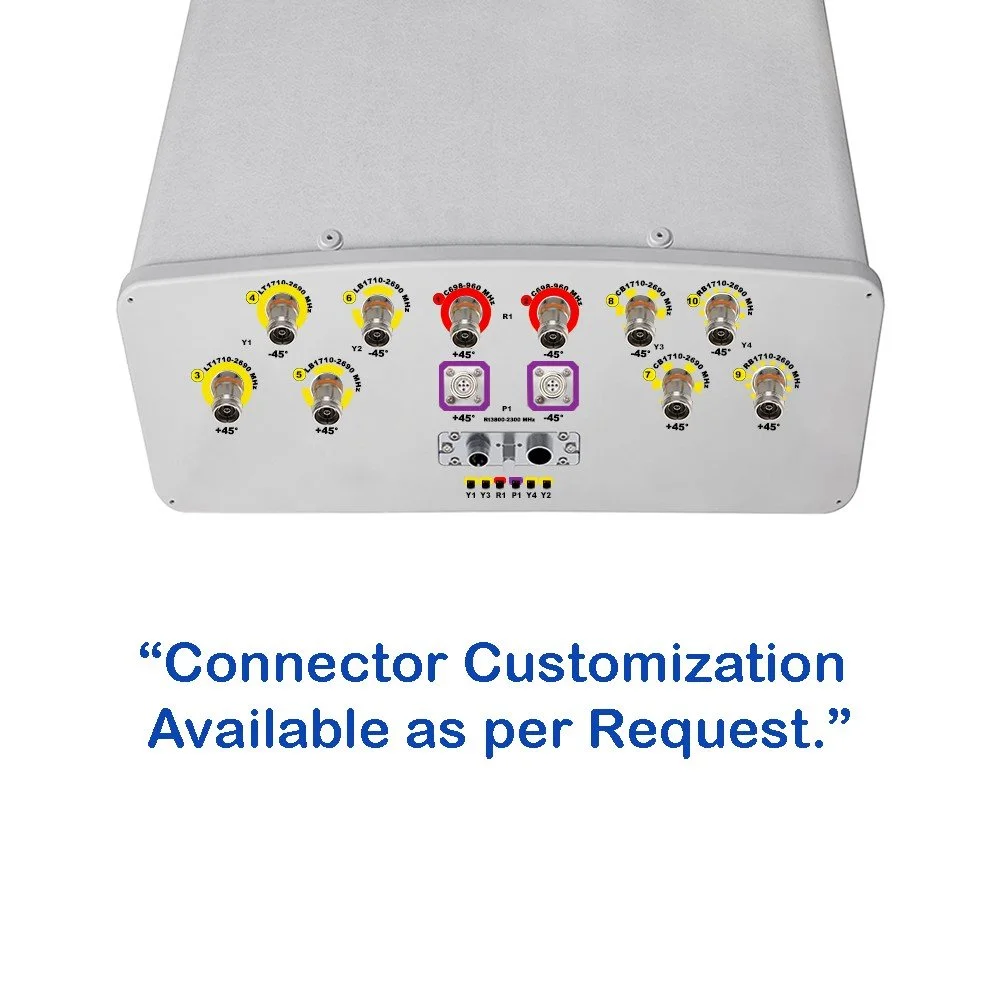
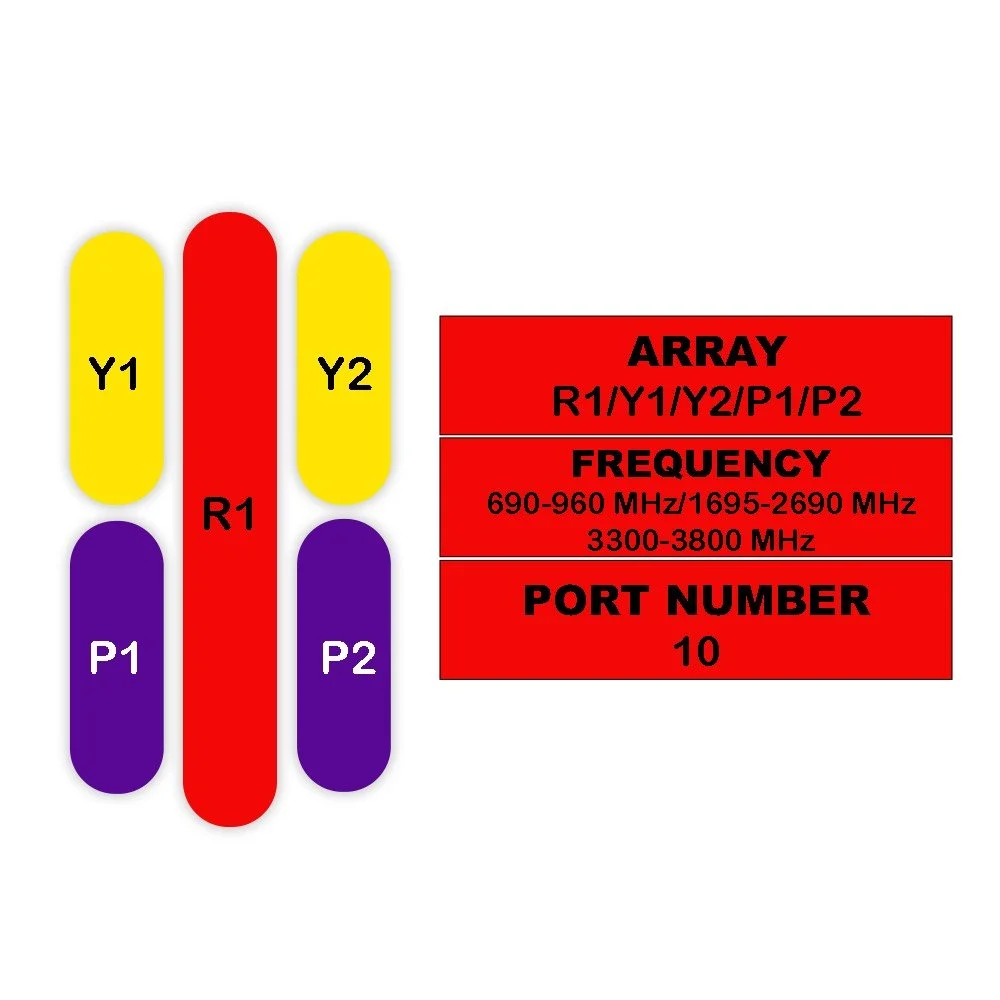
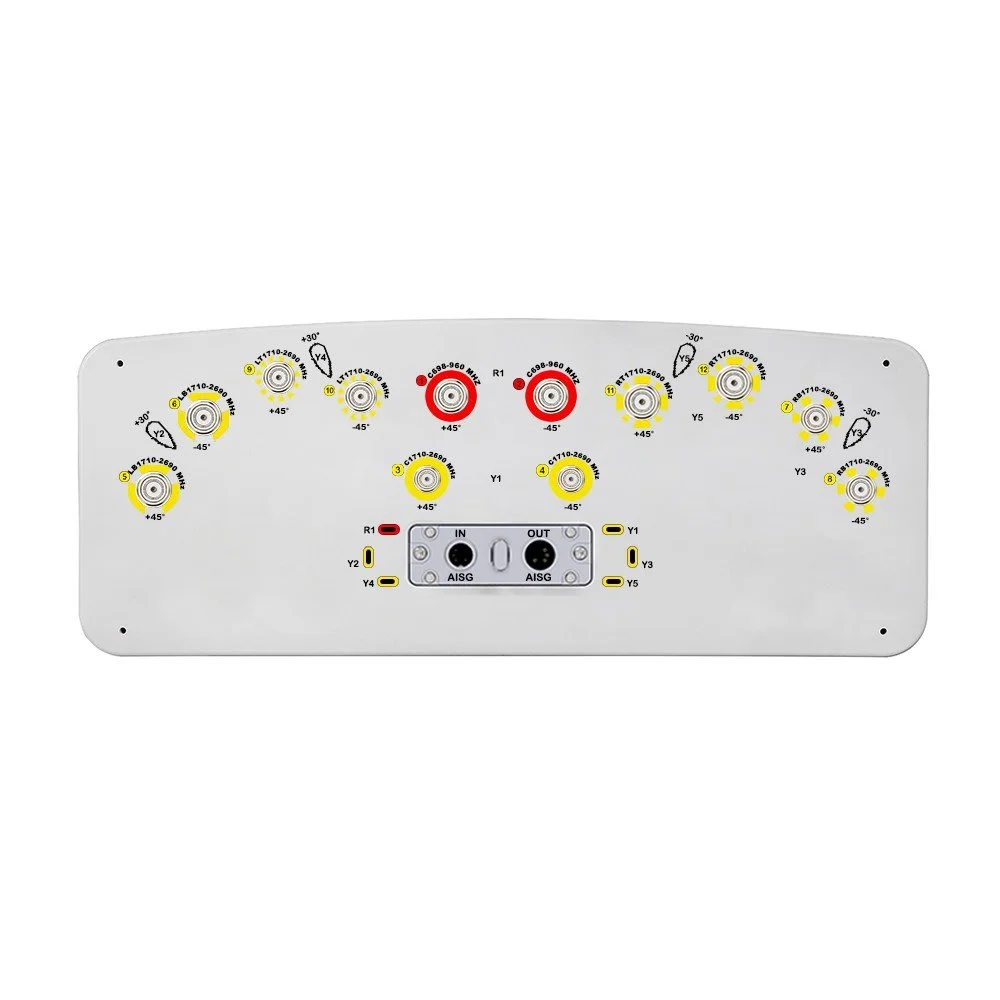
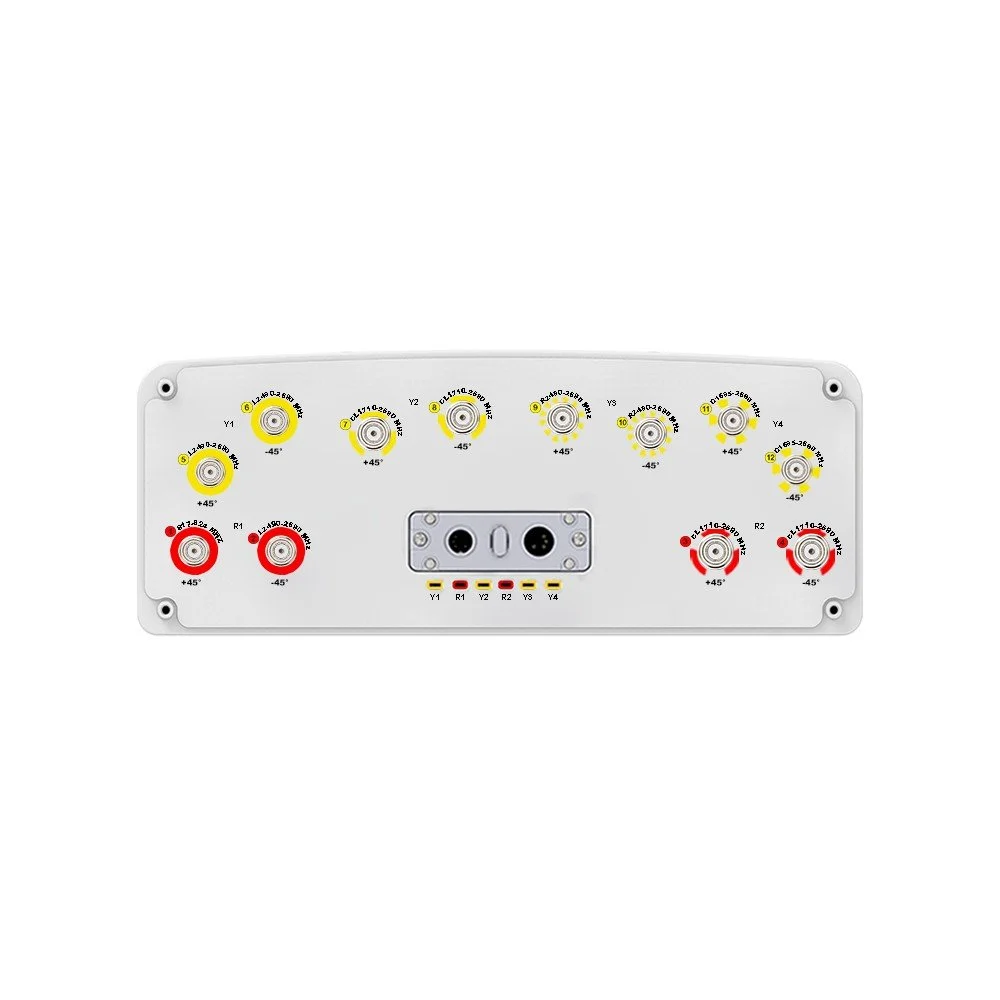
Connector Type (10x) 4.3/10 Female + (2x) Cluster
Connector Position Bottom
Electrical Tilt Control FDD: Integrated RET, Each Band Individually Adjustable
TDD: Integrated RET, Single Internal RET Control for All Four Antenna Arrays
Radome Material Fiberglass
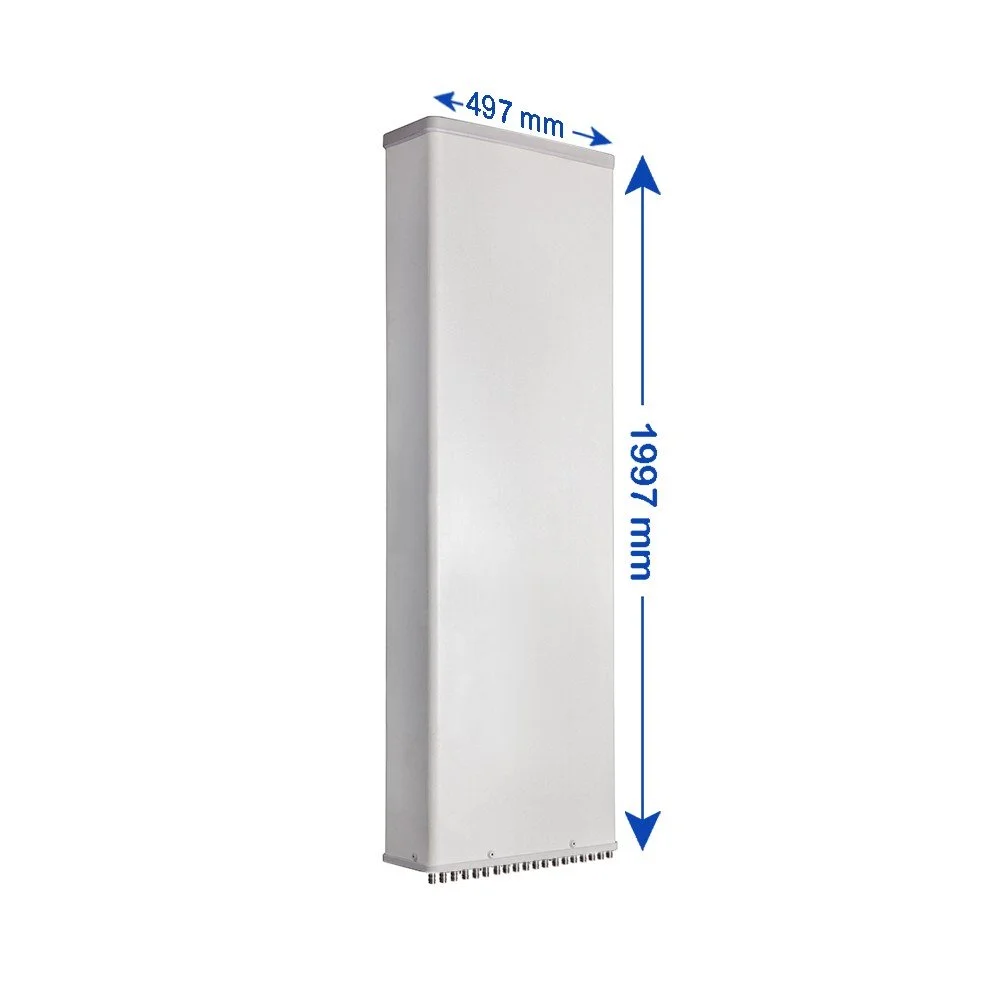
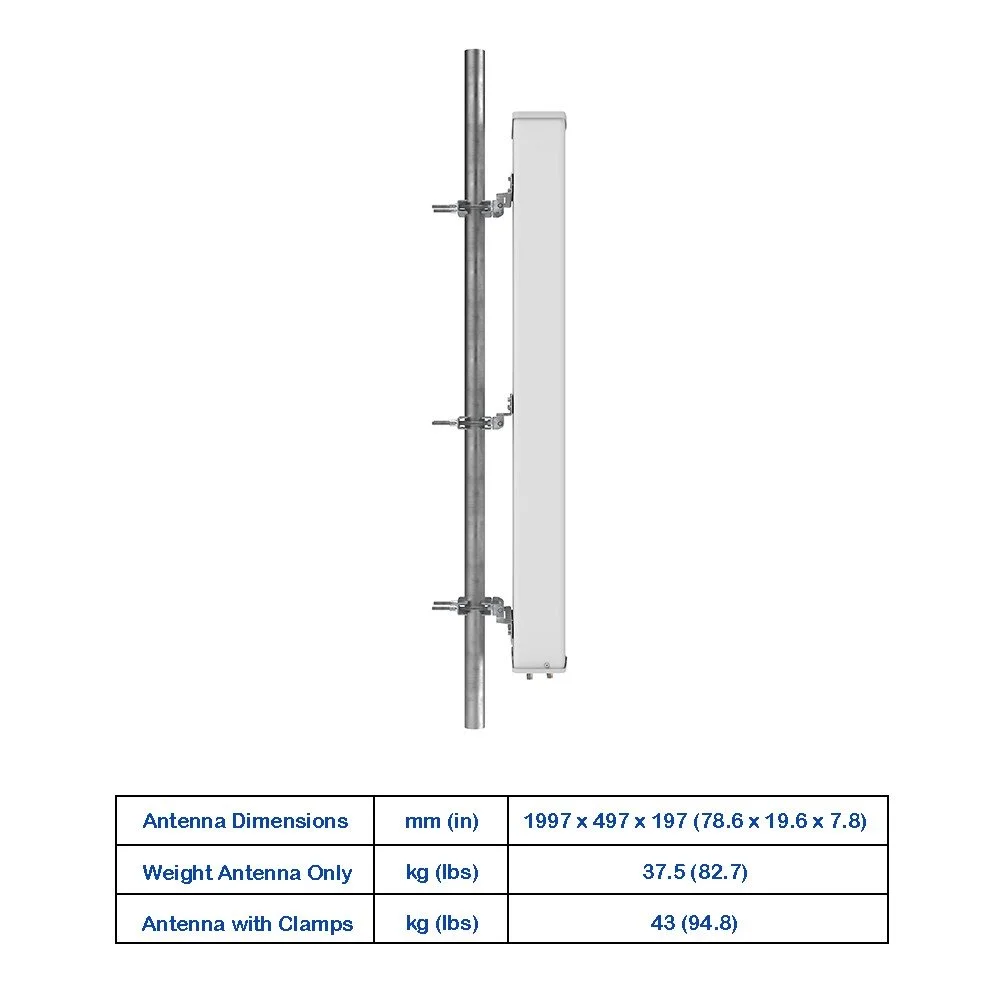
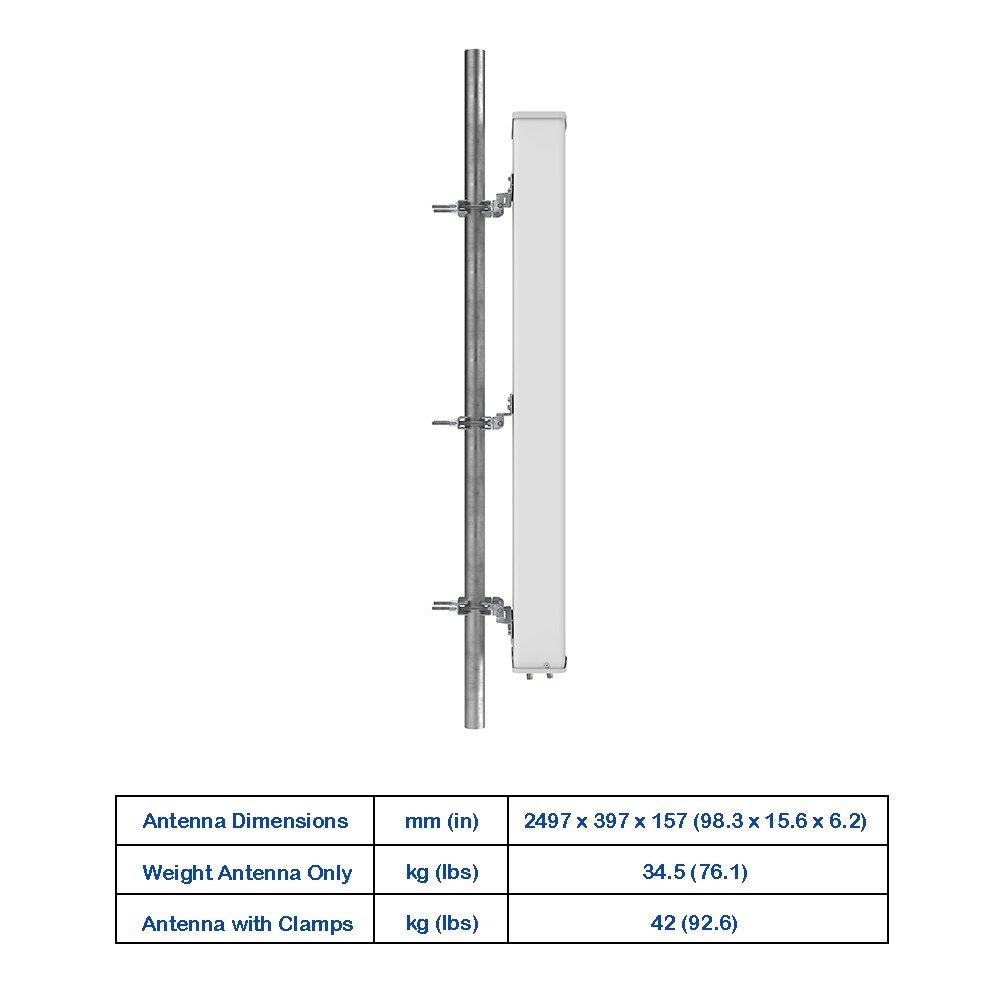
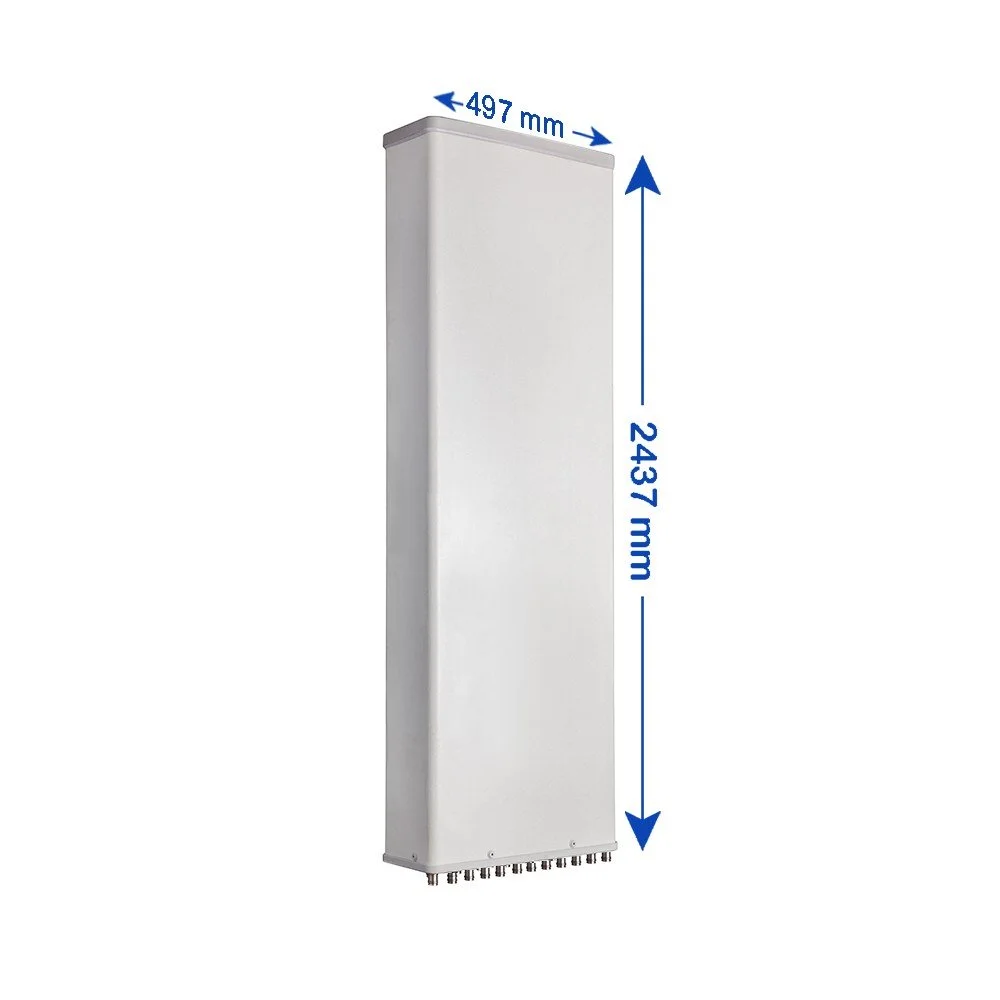
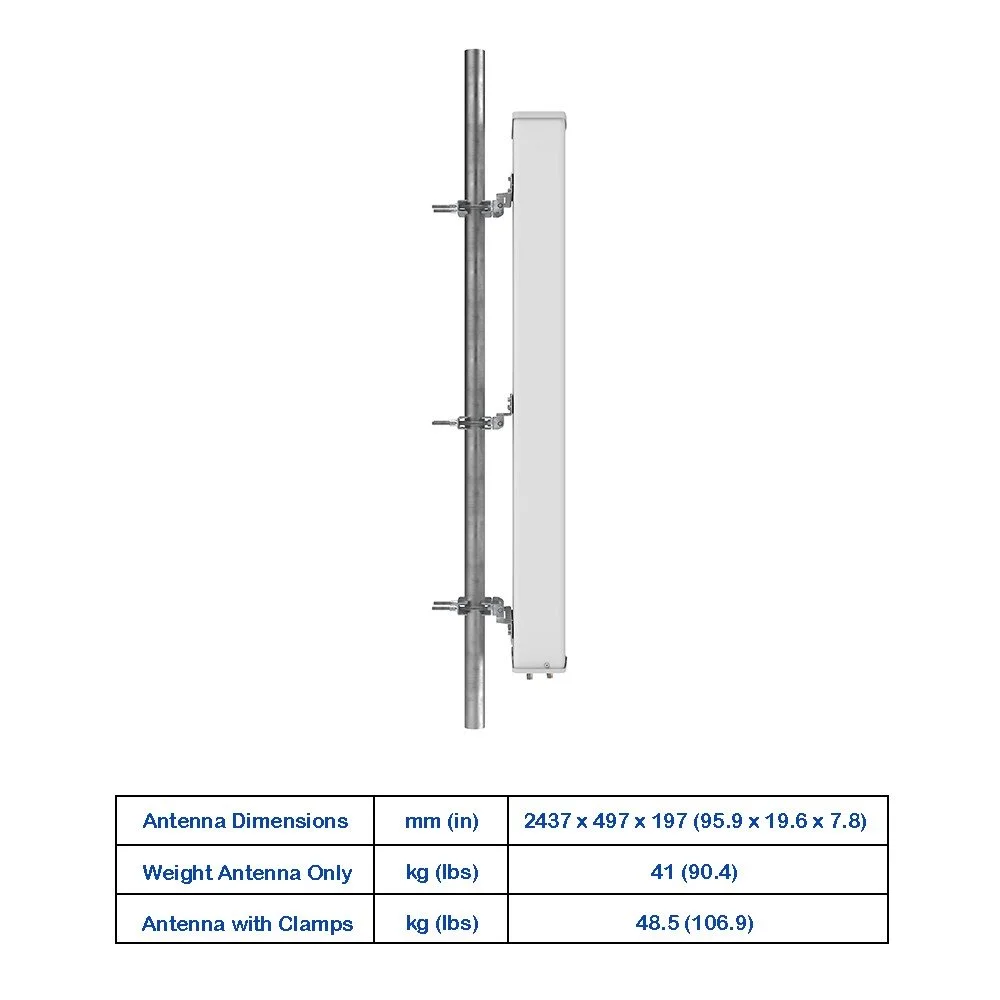
Antenna Dimensions (H x W x D) mm (in) 1997 x 497 x 197 (78.6 x 19.6 x 7.8)
Antenna Weight Antenna Only kg (lbs) 37.5 (82.7)
Antenna Weight with Clamps kg (lbs) 43 (94.8)
Maximum Wind Speed km/h (mph) 200 (124.3)
Wind Load at 150 km/h
Frontal N (lbf) 915 (205.7)
Rear N (lbf) 1025 (230.4)
Lateral N (lbf) 450 (101.2)
Operating Temperature °C (°F) -40 to +60 (-40 to 140)