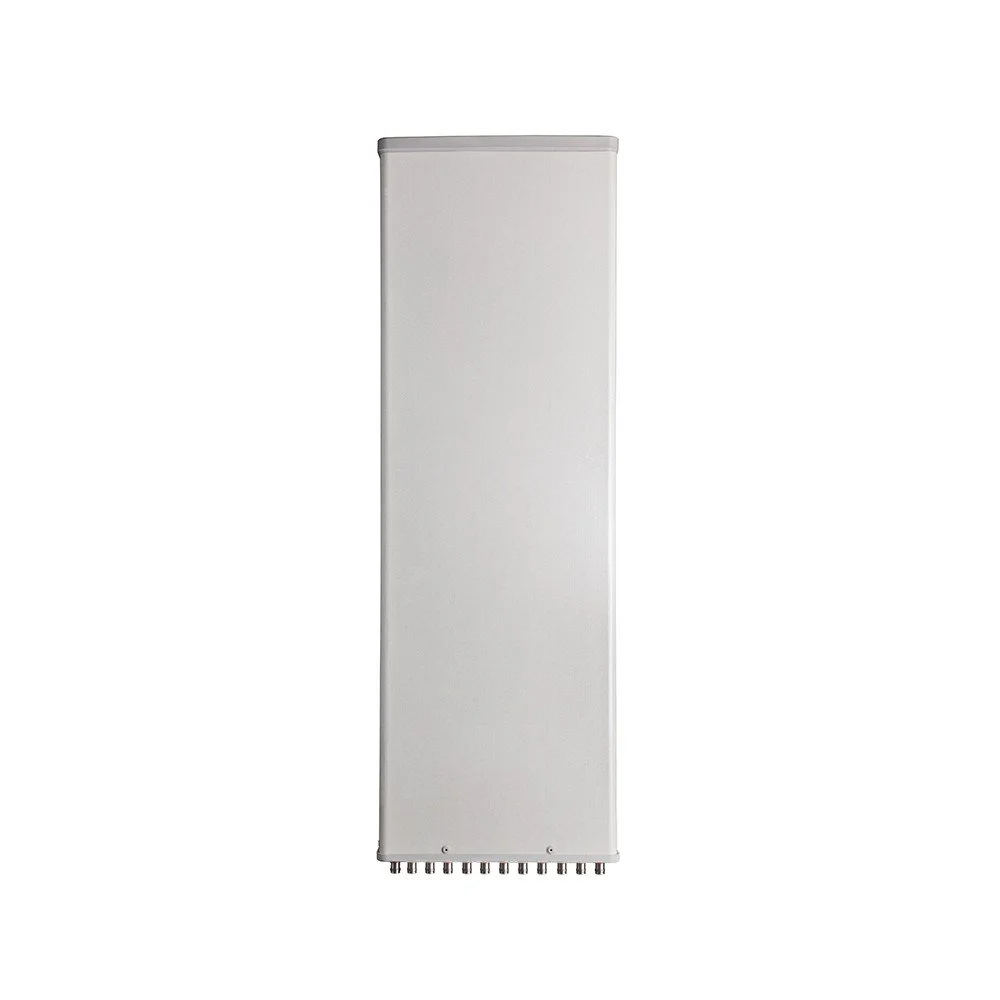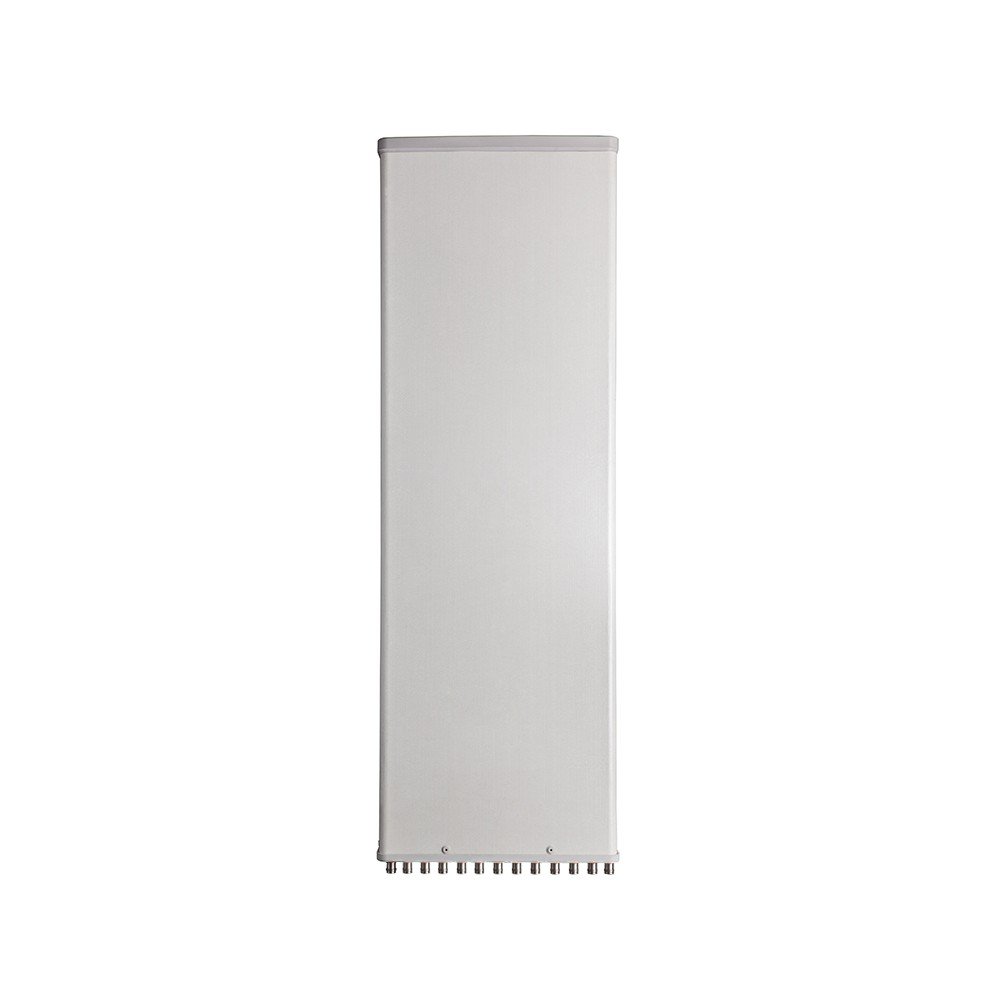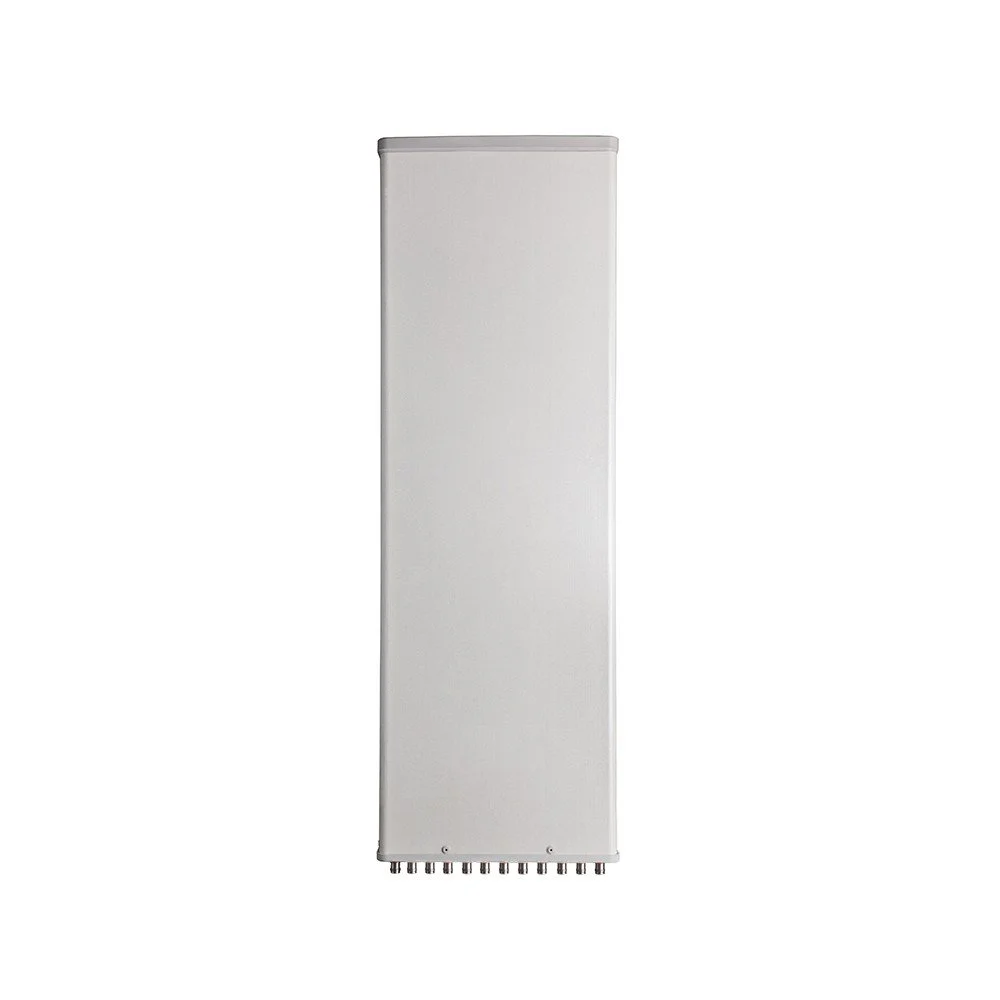
19-Port, TDD Hybrid Panel Antenna ( 690 - 3800 MHz )

₹0.00

19-Port TDD Hybrid Panel Antenna (690–3800 MHz)

Overview Compact, high-performance TDD hybrid panel antenna designed for multi-operator and multi-band deployments across 690–3800 MHz. Engineered for dense urban, suburban, and indoor/outdoor rooftop installations, the 19-port architecture provides flexible MIMO and carrier aggregation support while minimizing site footprint and simplifying installation.

Key Features :

  • Frequency range: 690–3800 MHz covering key 4G/5G TDD bands

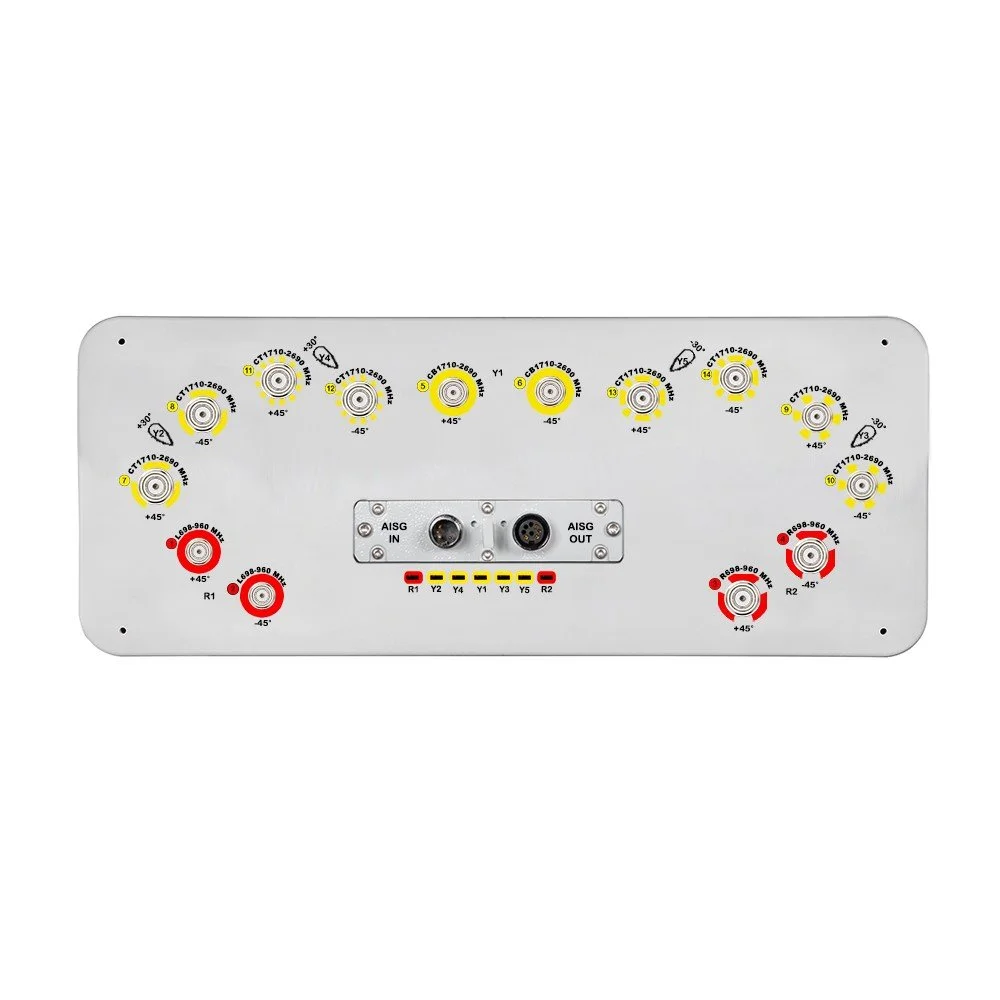
  • 19 ports: configurable for multiple MIMO layers, CBRS, shared infrastructure, or dedicated operator splits

  • Hybrid design: combined passive and active elements for optimized TDD performance and superior isolation between ports

  • Wide instantaneous bandwidth for carrier aggregation across low and mid bands

  • High port-to-port isolation to reduce inter-channel interference and boost overall system throughput

  • Low PIM construction for high linearity and reliable uplink performance

  • Rugged, weatherproof radome rated for outdoor use (IP65/67 equivalent)

  • Wide operating temperature range for harsh environments

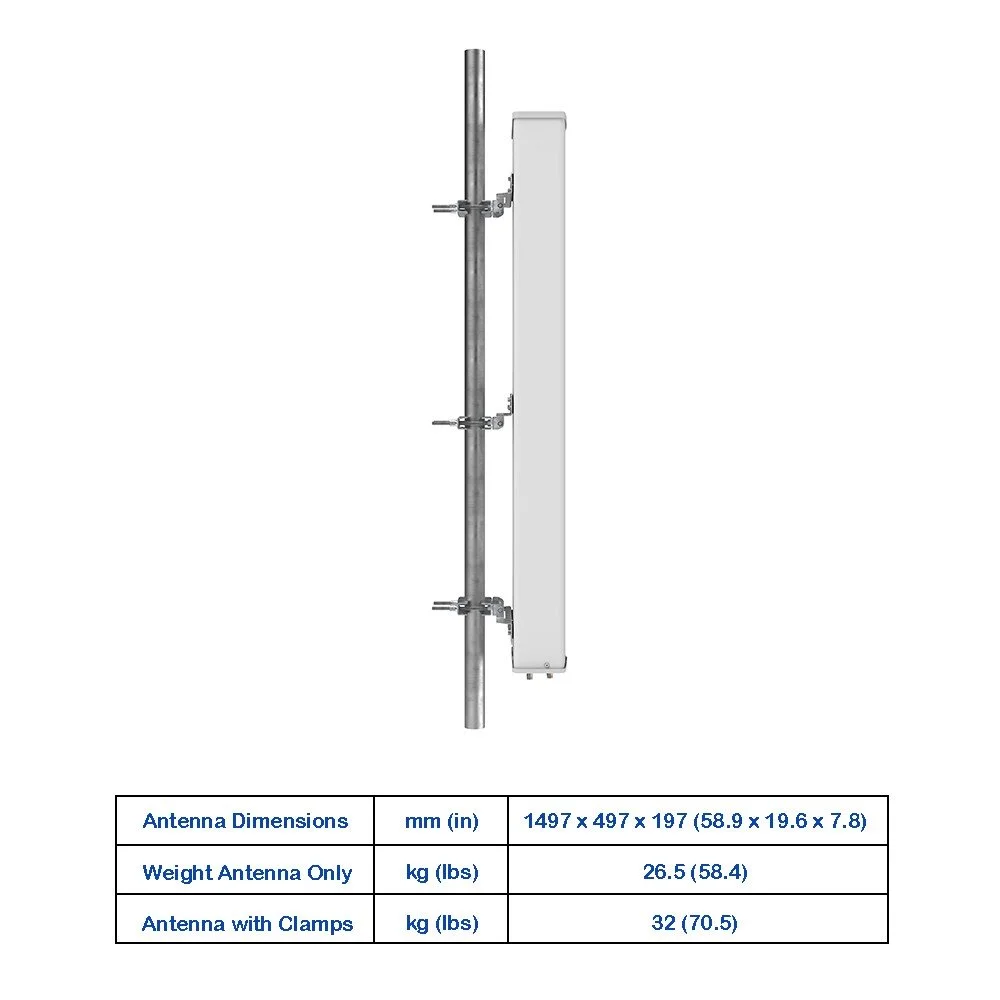
  • Lightweight, low-windload enclosure simplifies pole- and tower-mounting

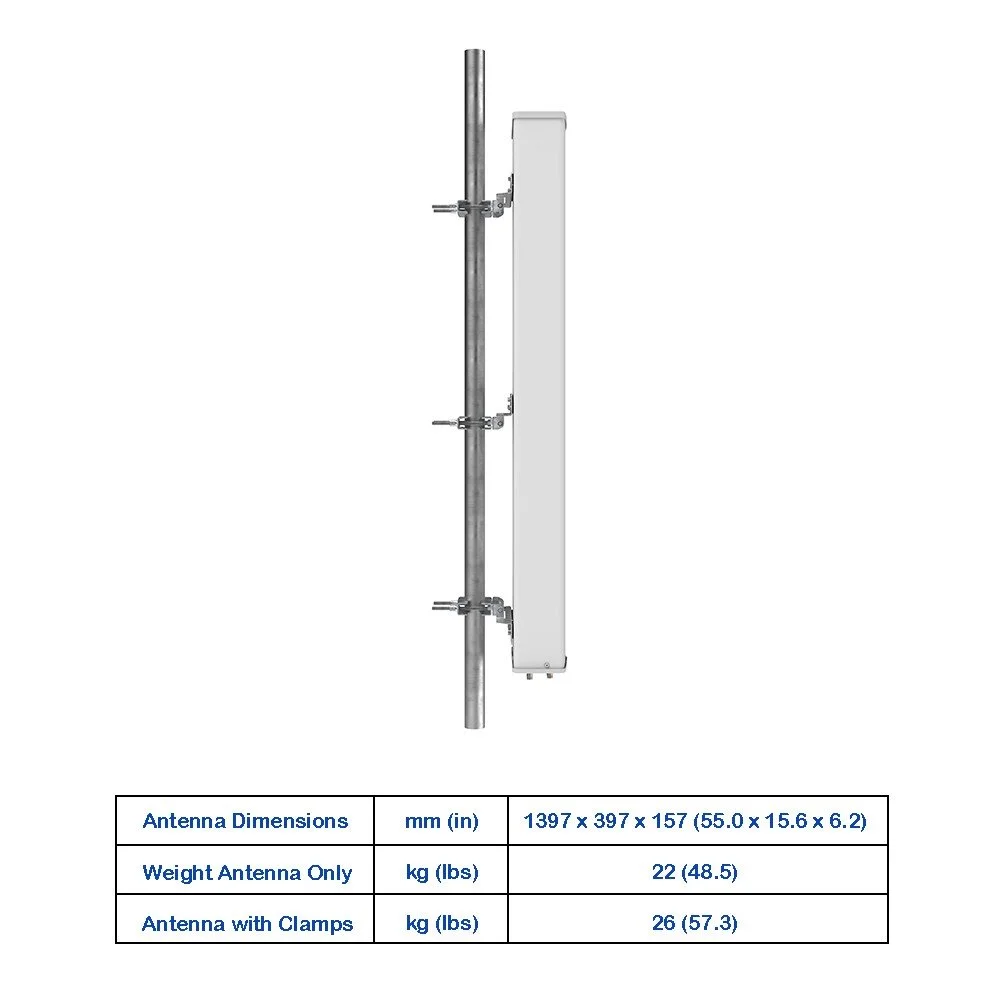
  • Integrated mounting bracket with tilt and azimuth adjustments; compatible with common mounting hardware

  • Optional integrated lightning and surge protection modules

Technical Specifications (typical) :

  • Frequency: 690–3800 MHz

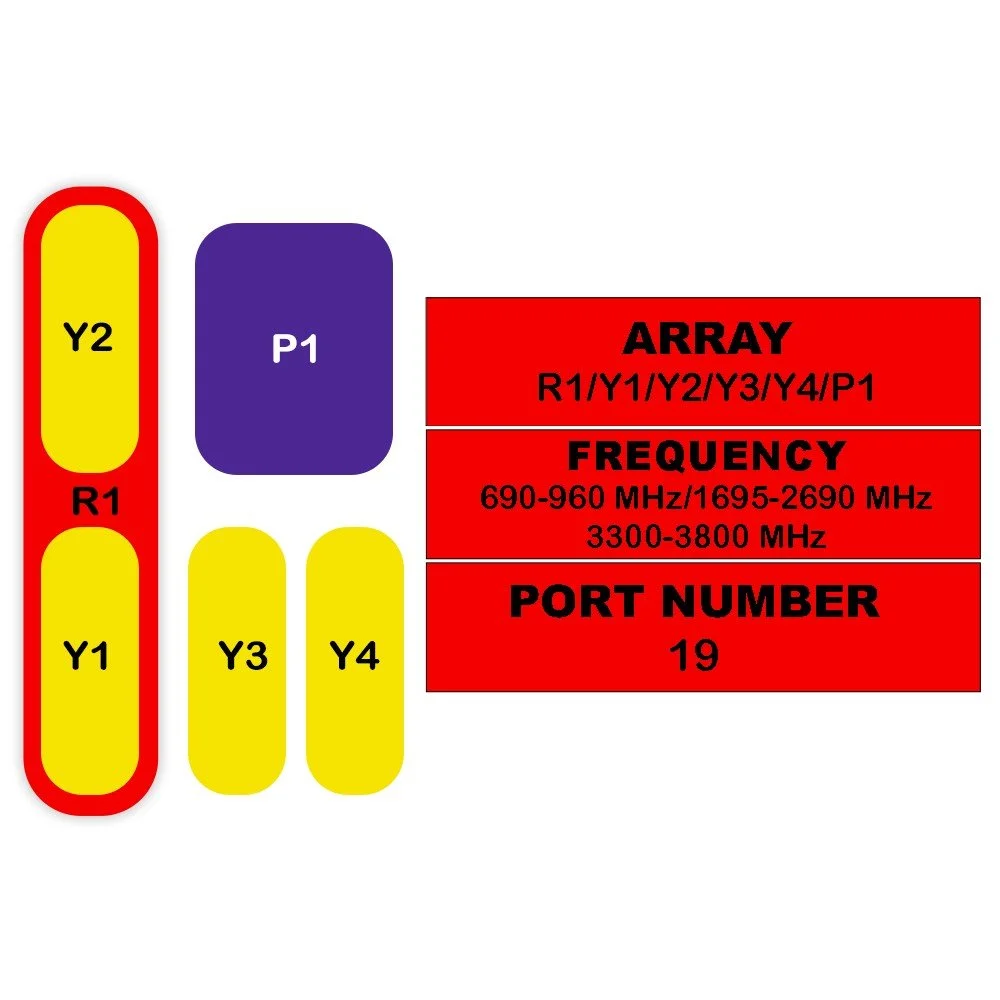
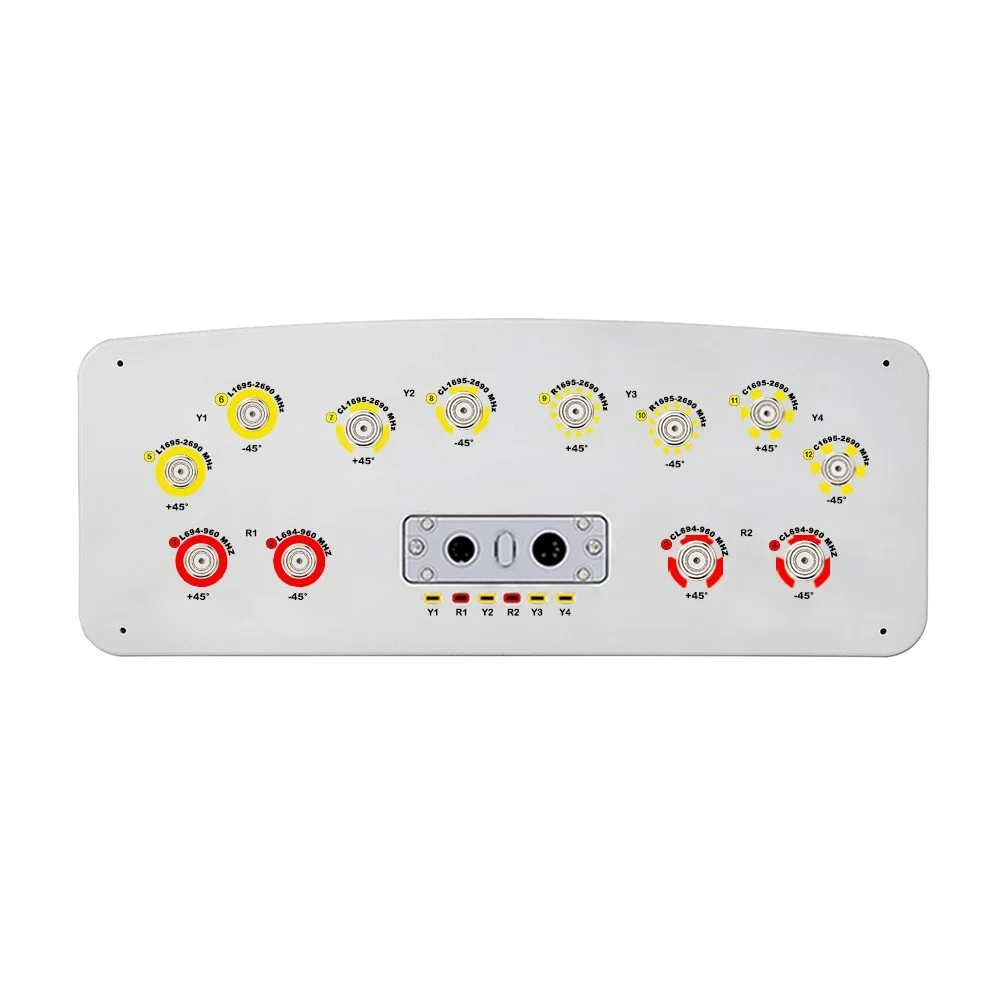
  • Ports: 19 independent RF ports

  • Polarization: Dual linear or mixed polarization options (consult model variants)

  • Gain: Frequency-dependent, optimized per band (consult datasheet for per-band gain curves)

  • Horizontal beamwidth: Sectorized configuration options (e.g., 65°/90°) depending on model variant

  • Vertical beamwidth: Tuned for coverage and downtilt optimization

  • VSWR: ≤1.8:1 typical across band

  • Isolation: ≥30 dB typical between adjacent ports

  • PIM: ≤ -150 dBc (when tested with two 43 dBm carriers)

  • Max input power: Specified per port (see datasheet)

  • Impedance: 50 ohm

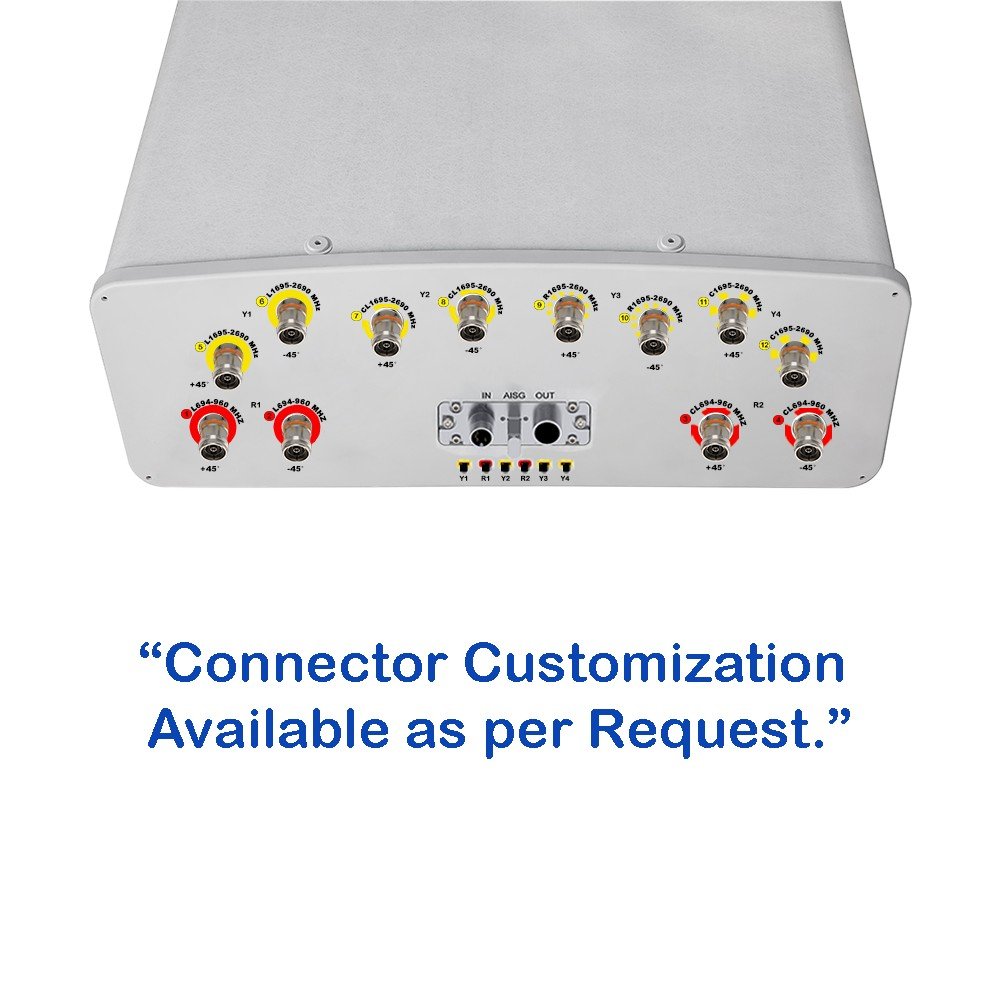
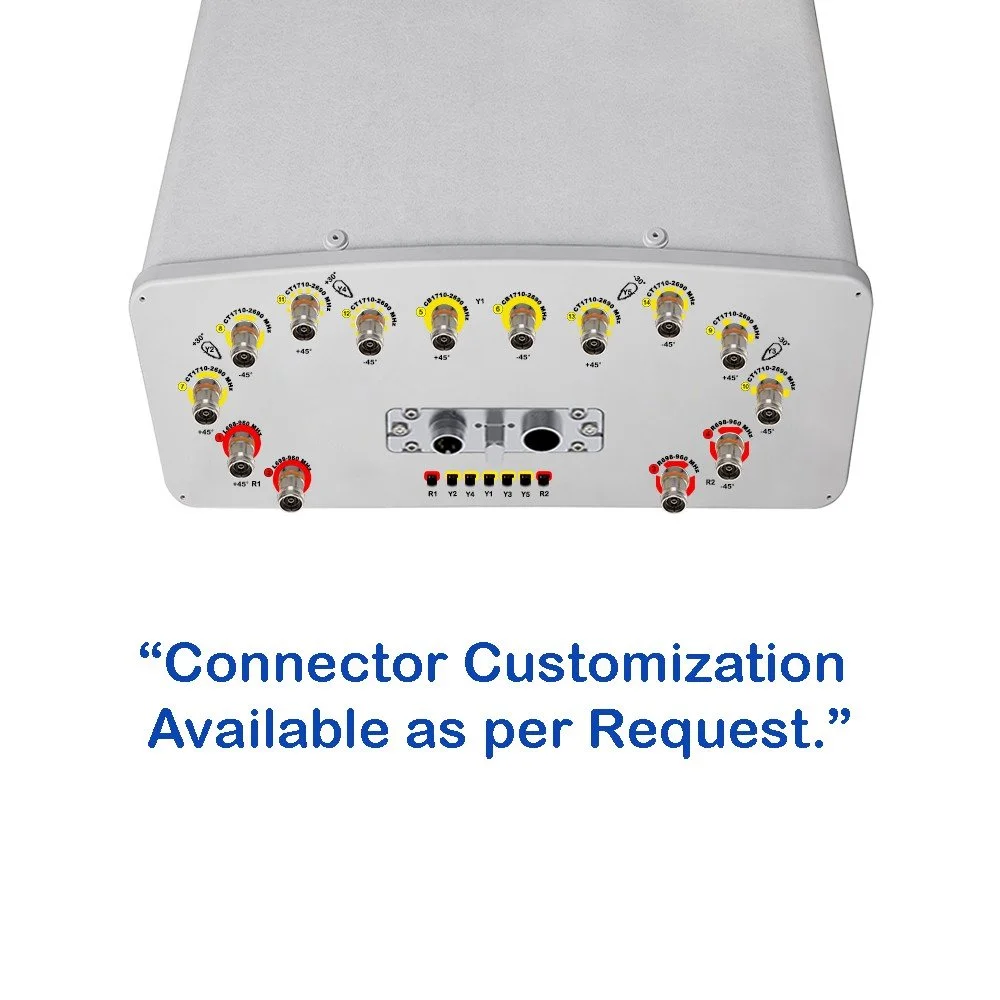
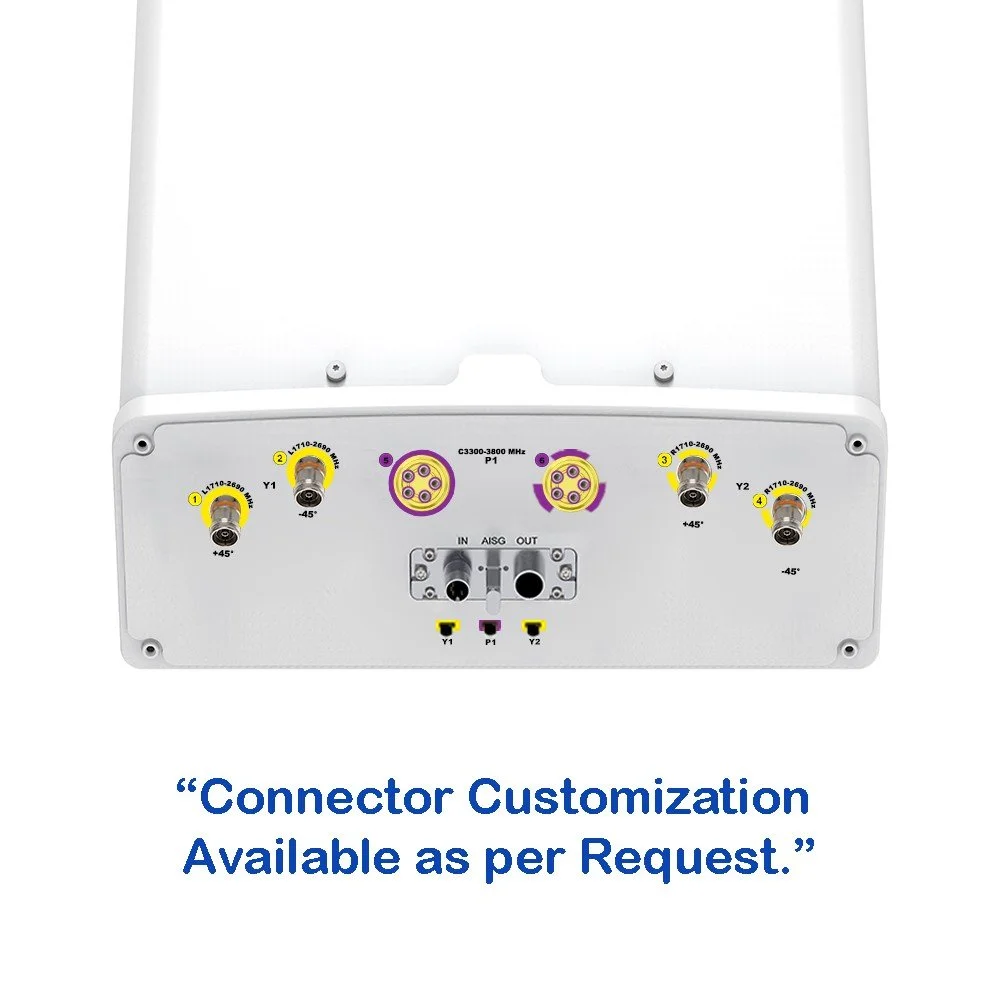
  • Connector types: Operator-selectable (N-type, 4.3-10, or SMA options available)

  • Mechanical: Aluminum radome and mounting hardware; UV-stable polymer cover

  • Environmental: Operating temperature -40°C to +65°C; IP65/67

Applications :

  • Multi-operator shared sites for 4G/5G TDD

  • High-capacity urban small cell clusters and macro site densification

  • Neutral host and private network deployments

  • CBRS and shared spectrum systems

  • Transport hubs, stadiums, arenas, and campus networks requiring high-density coverage

Benefits :

  • Simplifies site planning by combining multiple MIMO layers and bands into a single antenna enclosure

  • Reduces capex and opex through shared infrastructure and fewer physical mounts

  • Enhances spectral efficiency and user throughput with high isolation and low PIM

  • Flexible port configuration supports operator-specific splits and in-field reconfiguration

  • Durable design minimizes maintenance and maximizes uptime in challenging environments

Ordering and Support Available in multiple variants to match operator polarization, connector, and mounting preferences. Custom configurations and accessory bundles (e.g., surge protection, cable assemblies, brackets) available on request. Full datasheet, mechanical drawings, and RF performance curves provided with each model. Technical support and installation guidance available from MTT engineering.

Contact your MTT sales representative to specify model, port mapping, and deployment options.

19-Port TDD Hybrid Panel Antenna (690–3800 MHz)

Overview Compact, high-performance TDD hybrid panel antenna designed for multi-operator and multi-band deployments across 690–3800 MHz. Engineered for dense urban, suburban, and indoor/outdoor rooftop installations, the 19-port architecture provides flexible MIMO and carrier aggregation support while minimizing site footprint and simplifying installation.

Key Features :

  • Frequency range: 690–3800 MHz covering key 4G/5G TDD bands

  • 19 ports: configurable for multiple MIMO layers, CBRS, shared infrastructure, or dedicated operator splits

  • Hybrid design: combined passive and active elements for optimized TDD performance and superior isolation between ports

  • Wide instantaneous bandwidth for carrier aggregation across low and mid bands

  • High port-to-port isolation to reduce inter-channel interference and boost overall system throughput

  • Low PIM construction for high linearity and reliable uplink performance

  • Rugged, weatherproof radome rated for outdoor use (IP65/67 equivalent)

  • Wide operating temperature range for harsh environments

  • Lightweight, low-windload enclosure simplifies pole- and tower-mounting

  • Integrated mounting bracket with tilt and azimuth adjustments; compatible with common mounting hardware

  • Optional integrated lightning and surge protection modules

Technical Specifications (typical) :

  • Frequency: 690–3800 MHz

  • Ports: 19 independent RF ports

  • Polarization: Dual linear or mixed polarization options (consult model variants)

  • Gain: Frequency-dependent, optimized per band (consult datasheet for per-band gain curves)

  • Horizontal beamwidth: Sectorized configuration options (e.g., 65°/90°) depending on model variant

  • Vertical beamwidth: Tuned for coverage and downtilt optimization

  • VSWR: ≤1.8:1 typical across band

  • Isolation: ≥30 dB typical between adjacent ports

  • PIM: ≤ -150 dBc (when tested with two 43 dBm carriers)

  • Max input power: Specified per port (see datasheet)

  • Impedance: 50 ohm

  • Connector types: Operator-selectable (N-type, 4.3-10, or SMA options available)

  • Mechanical: Aluminum radome and mounting hardware; UV-stable polymer cover

  • Environmental: Operating temperature -40°C to +65°C; IP65/67

Applications :

  • Multi-operator shared sites for 4G/5G TDD

  • High-capacity urban small cell clusters and macro site densification

  • Neutral host and private network deployments

  • CBRS and shared spectrum systems

  • Transport hubs, stadiums, arenas, and campus networks requiring high-density coverage

Benefits :

  • Simplifies site planning by combining multiple MIMO layers and bands into a single antenna enclosure

  • Reduces capex and opex through shared infrastructure and fewer physical mounts

  • Enhances spectral efficiency and user throughput with high isolation and low PIM

  • Flexible port configuration supports operator-specific splits and in-field reconfiguration

  • Durable design minimizes maintenance and maximizes uptime in challenging environments

Ordering and Support Available in multiple variants to match operator polarization, connector, and mounting preferences. Custom configurations and accessory bundles (e.g., surge protection, cable assemblies, brackets) available on request. Full datasheet, mechanical drawings, and RF performance curves provided with each model. Technical support and installation guidance available from MTT engineering.

Contact your MTT sales representative to specify model, port mapping, and deployment options.

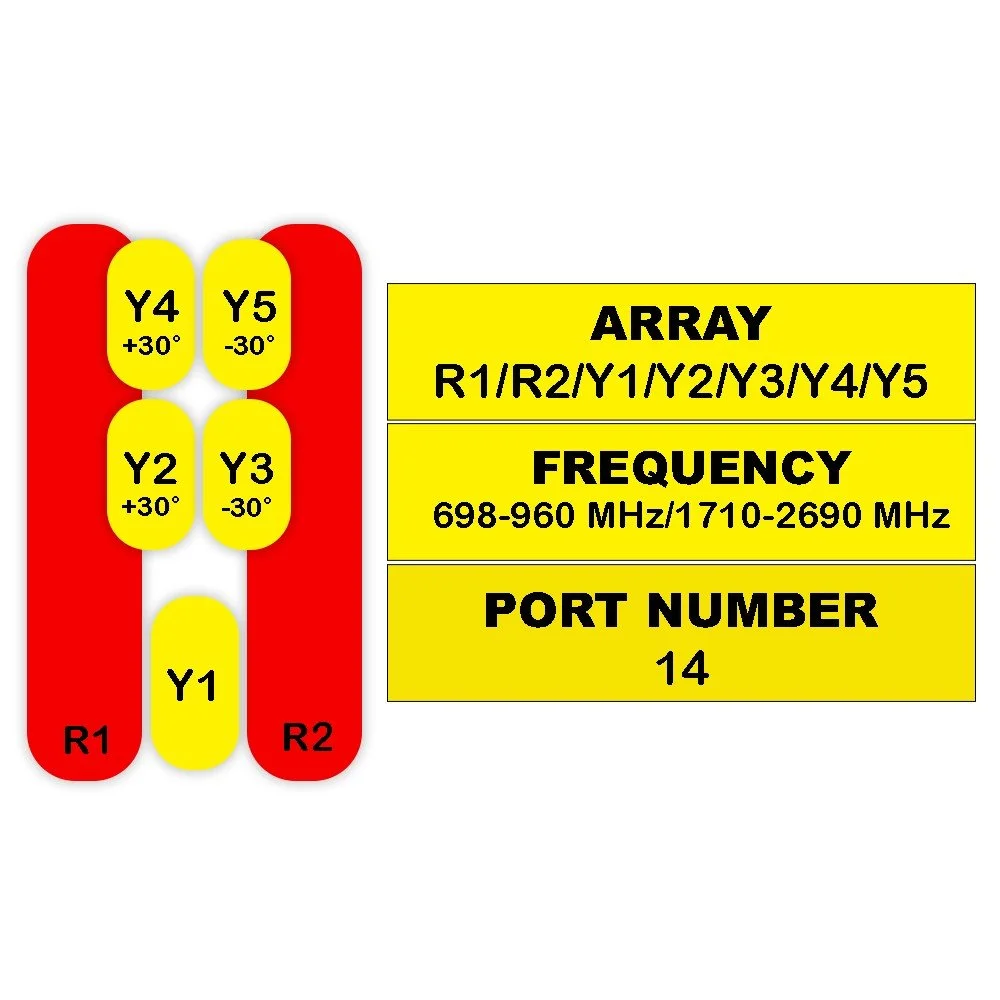
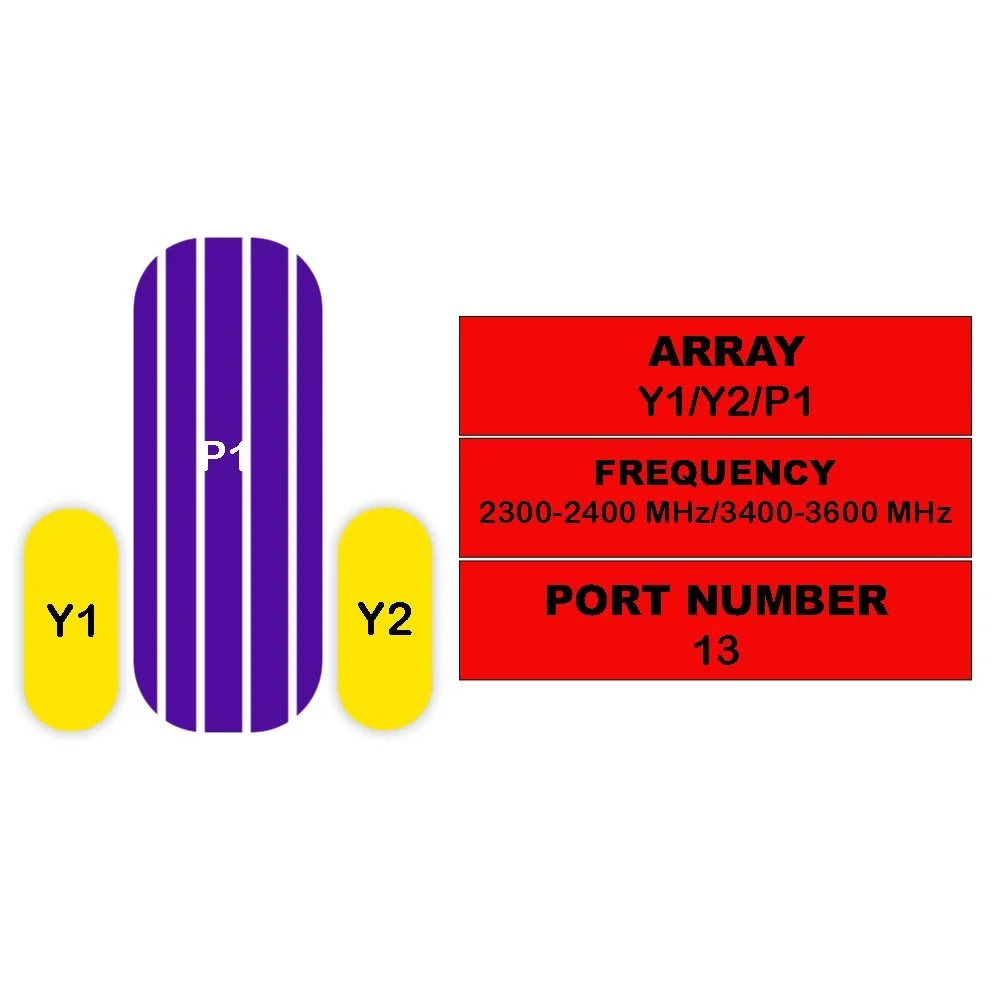
Electrical Specifications
Electrical specifications for R1 and Y1/Y2 antenna models including frequency range, gain, beamwidth, isolation, impedance, and power ratings.
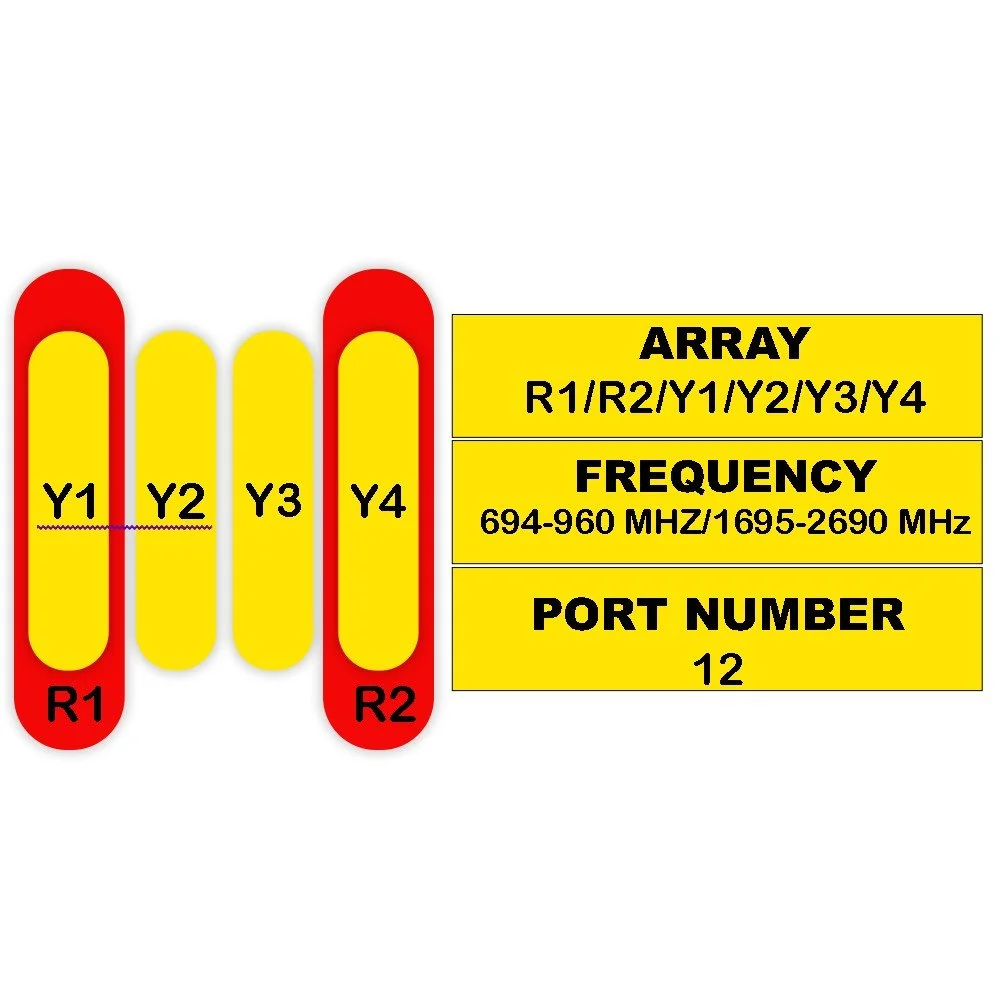
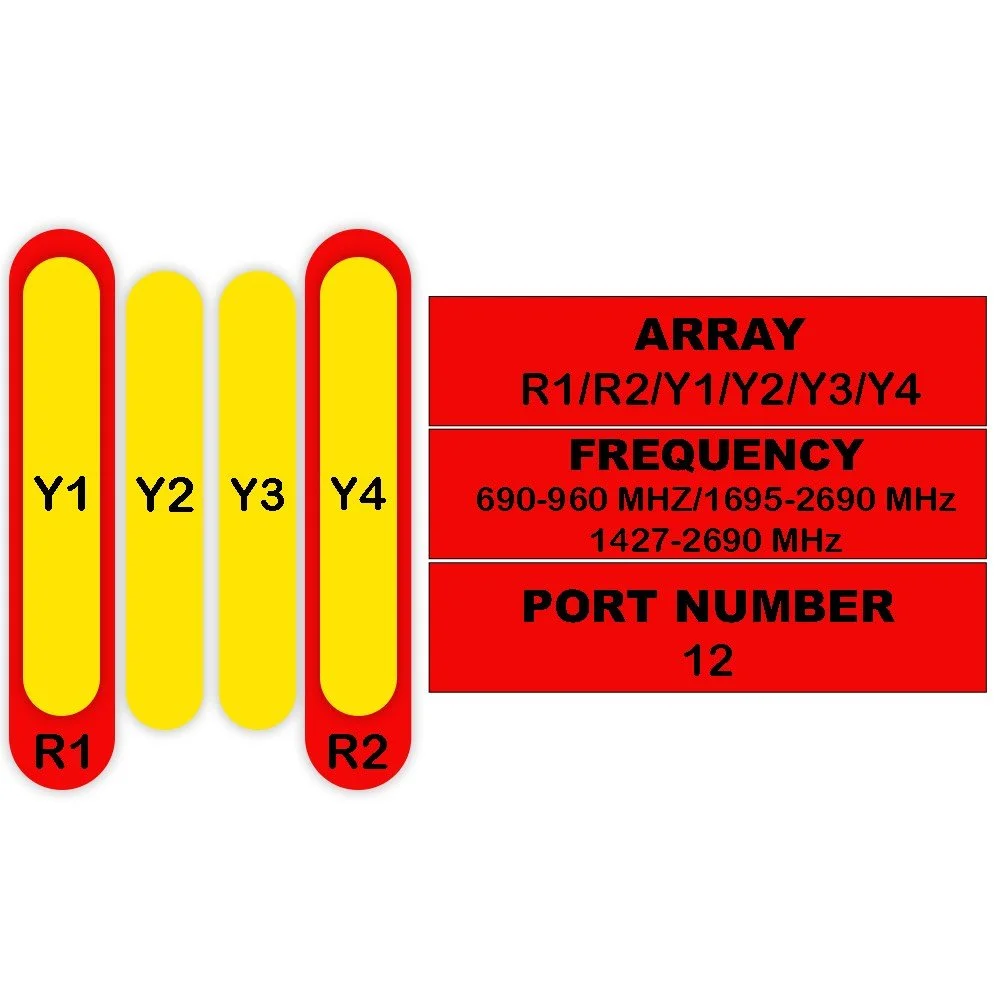
Parameter Unit R1 Y1 / Y2
690–960 MHz 1695–2690 MHz
690–806 MHz 790–894 MHz 880–960 MHz 1695–1880 MHz 1850–1990 MHz 1920–2170 MHz 2300–2400 MHz 2490–2690 MHz
Polarization ±45° ±45°
Gain at Mid Tilt dBi 12.2 12.7 13.2 12.0 12.4 12.8 13.2 13.2
Gain Over All Tilts dBi 12.0 ± 0.6 12.5 ± 0.6 13.0 ± 0.6 11.8 ± 0.6 12.2 ± 0.5 12.6 ± 0.5 13.0 ± 0.5 13.0 ± 0.6
Horizontal Beamwidth degree 72 ± 4.8 69 ± 3.9 67 ± 4.1 68 ± 4.9 67 ± 4.7 64 ± 5.1 62 ± 5.5 60 ± 5.2
Vertical Beamwidth degree 24 ± 2 21 ± 2 19 ± 2 20 ± 1.5 18 ± 1.5 16 ± 1.5 15 ± 1.5 13 ± 1.5
Electrical Downtilt, Continuously Adjustable degree 2–16 2–12
First Upper Side Lobe Suppression (typical) dB > 15 > 15 > 15 > 15 > 15 > 15 > 15 > 15
Front-To-Back Ratio ±30° dB > 22 > 23 > 25 ≥ 23 ≥ 23 > 24 ≥ 25 ≥ 25
Isolation Cross-Polar dB > 25 > 25
Isolation Interband (typical) dB > 35 > 28 (Y1, Y2 // Y3, Y4); > 35 (Y1, Y2 // R1)
Impedance Ohm 50 50
Voltage Standing Wave Ratio (VSWR) < 1.5 < 1.5
Return Loss dB > 14 > 14
Passive Intermodulation PIM3 (2 × 43 dBm Carrier) dBc < -153 < -153
Lightning Protection DC Ground DC Ground
Maximum Average Input Power per Port, at 50° C Ambient Temperature Watts 250 200
Electrical Specifications – Y3 / Y4
Electrical specifications for Y3 and Y4 antenna models including frequency range, gain, beamwidth, isolation, impedance, and power ratings.
Parameter Unit Y3 / Y4
Frequency Range: 1695–2690 MHz
1695–1880 MHz 1850–1990 MHz 1920–2170 MHz 2300–2400 MHz 2490–2690 MHz
Polarization ±45°
Gain at Mid Tilt dBi 12.2 12.6 13.0 13.4 13.4
Gain Over All Tilts dBi 12.0 ± 0.6 12.4 ± 0.5 12.8 ± 0.5 13.2 ± 0.5 13.2 ± 0.6
Horizontal Beamwidth degree 67 ± 4.9 65 ± 4.7 63 ± 5.1 59 ± 5.5 59 ± 5.2
Vertical Beamwidth degree 20 ± 1.5 18 ± 1.5 16 ± 1.5 15 ± 1.5 13 ± 1.5
Electrical Downtilt, Continuously Adjustable degree 2–12
First Upper Side Lobe Suppression (typical) dB > 15 > 15 > 15 > 15 > 15
Front-To-Back Ratio ±30° dB ≥ 23 ≥ 23 > 24 ≥ 25 ≥ 25
Isolation Cross-Polar dB > 25
Isolation Interband (typical) dB > 28 (Y3, Y4 // Y1, Y2); > 35 (Y3, Y4 // R1)
Impedance Ohm 50
Voltage Standing Wave Ratio (VSWR) < 1.5
Return Loss dB > 14
Passive Intermodulation PIM3 (2 × 43 dBm Carrier) dBc < -153
Lightning Protection DC Ground
Maximum Average Input Power per Port, at 50° C Ambient Temperature Watts 200
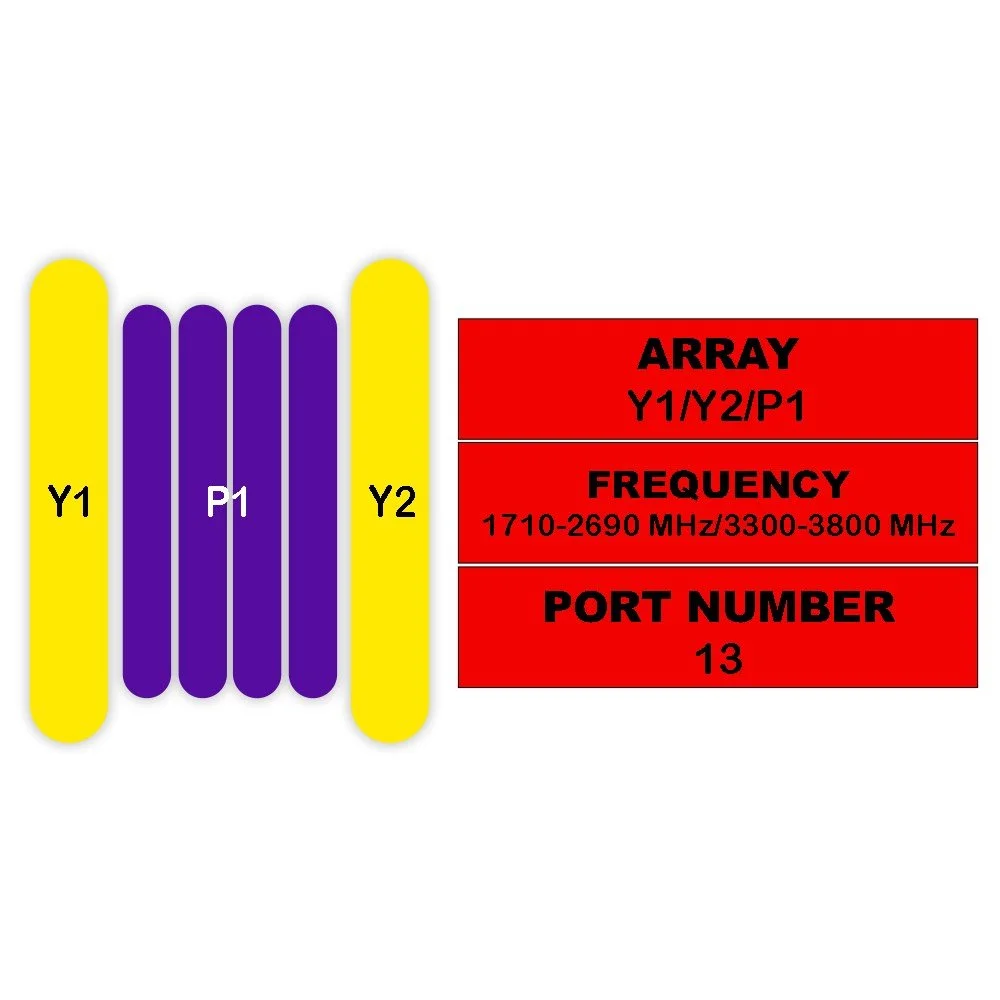
Electrical Specifications – P1
Electrical specifications for P1 antenna including frequency range, beam configurations, calibration parameters, isolation, impedance, and power ratings.
Parameter Unit Specification
Frequency Range MHz 3300–3800
Polarization ±45°
Electrical Downtilt, Continuously Adjustable degree 2–12
Single Column Beam – Gain dBi 12.5
Horizontal Beamwidth degree 78
Vertical Beamwidth (3 dB) degree 10.6
Cross-Polar Ratio at Boresight dB ≥ 16
First Upper Side Lobe Suppression (typical) dB ≥ 15
Front-To-Back Ratio dB ≥ 22
Broadcast Beam (65°) – Gain dBi 14
Horizontal Beamwidth degree 65
Vertical Beamwidth (3 dB) degree 10.6
Cross-Polar Ratio at Boresight dB ≥ 16
First Upper Side Lobe Suppression (typical) dB ≥ 15
Front-To-Back Ratio ±30° dB ≥ 22
Service Beam (0°) – Gain dBi 18
Horizontal Beamwidth degree 22
Vertical Beamwidth degree 10.6
Cross-Polar Ratio at Boresight dB ≥ 16
Azimuth Sidelobe Suppression (typical) dB ≥ 12
Front-To-Back Ratio ±30° dB ≥ 23
Calibration and Electrical Parameter – Coupling Factor Between Calibration and Each Antenna Port dB -26 ± 2
Maximum Amplitude / Phase Deviation dB / degree 1 dB / 8°
Ports Voltage Standing Wave Ratio (VSWR) 1.5
Average Power Capacity Watts 40
Isolation – Co-Polar Isolation Between Ports dB 20
Cross-Polar Isolation Between Ports dB 20
Impedance Ohm 50
Voltage Standing Wave Ratio (VSWR) < 1.5
Return Loss dB > 14
Passive Intermodulation PIM3 (2 × 43 dBm Carrier) dBc < -143
Lightning Protection DC Ground
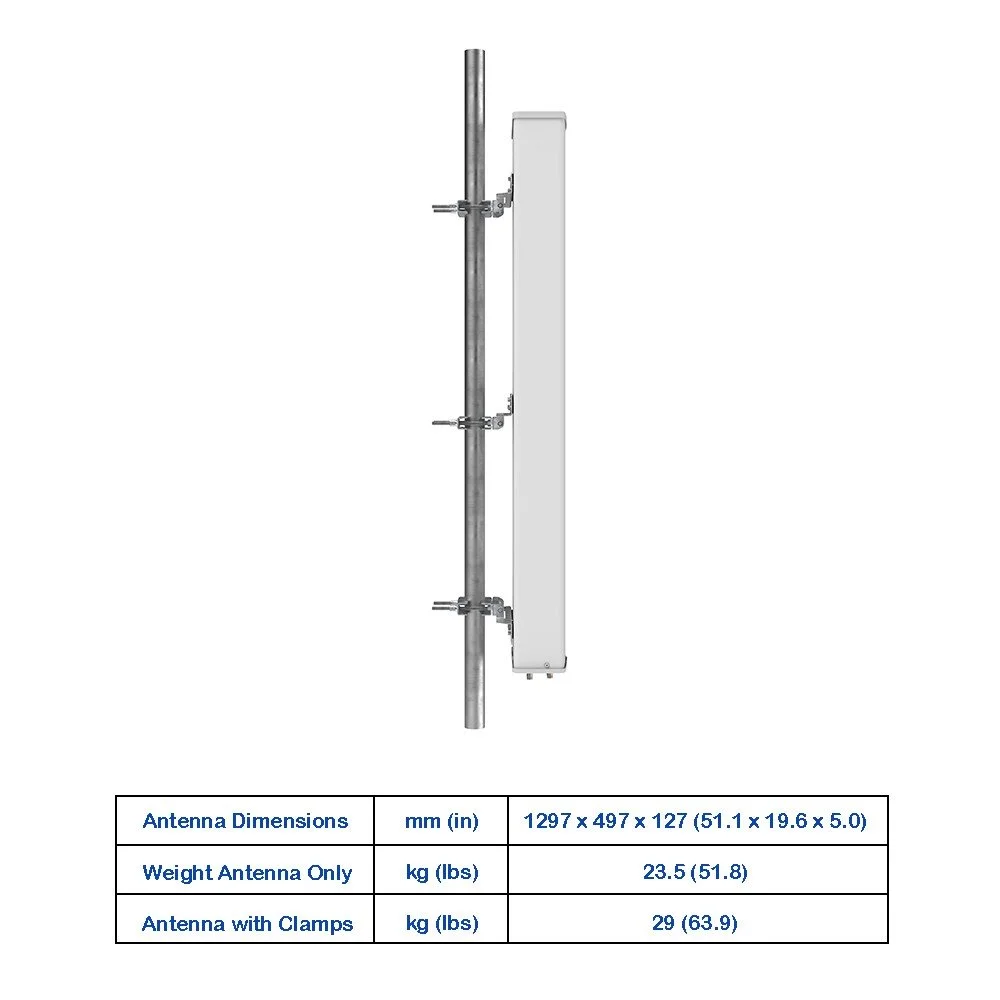
Mechanical Specifications
Mechanical specifications including connector type, dimensions, weight, wind load, and environmental ratings.
Parameter Unit Specification
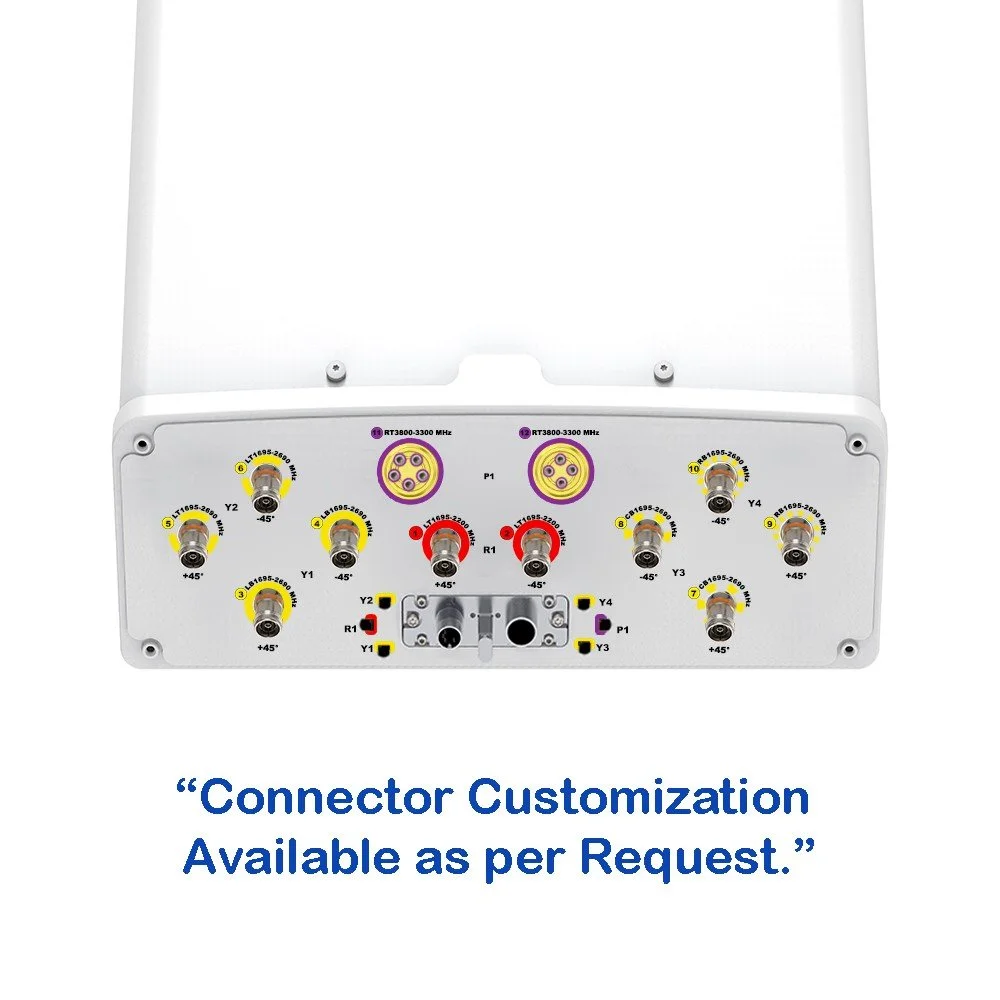
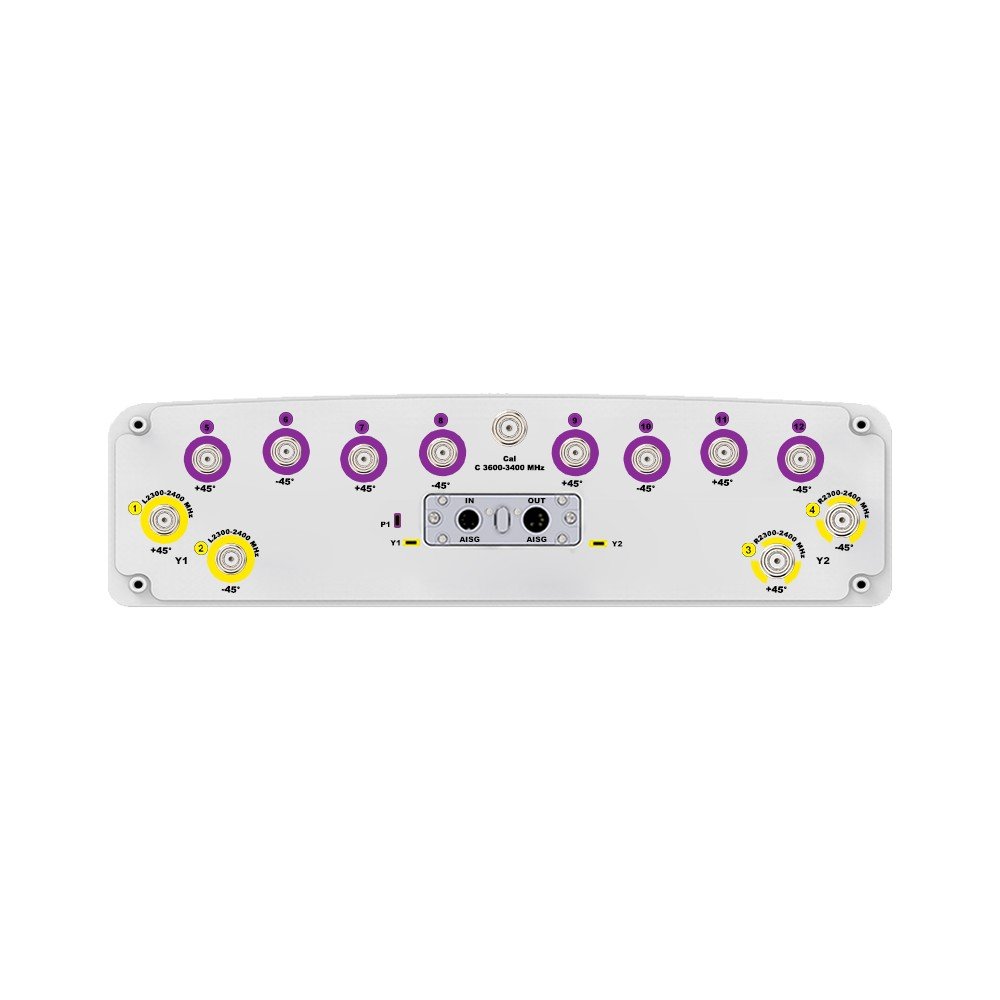
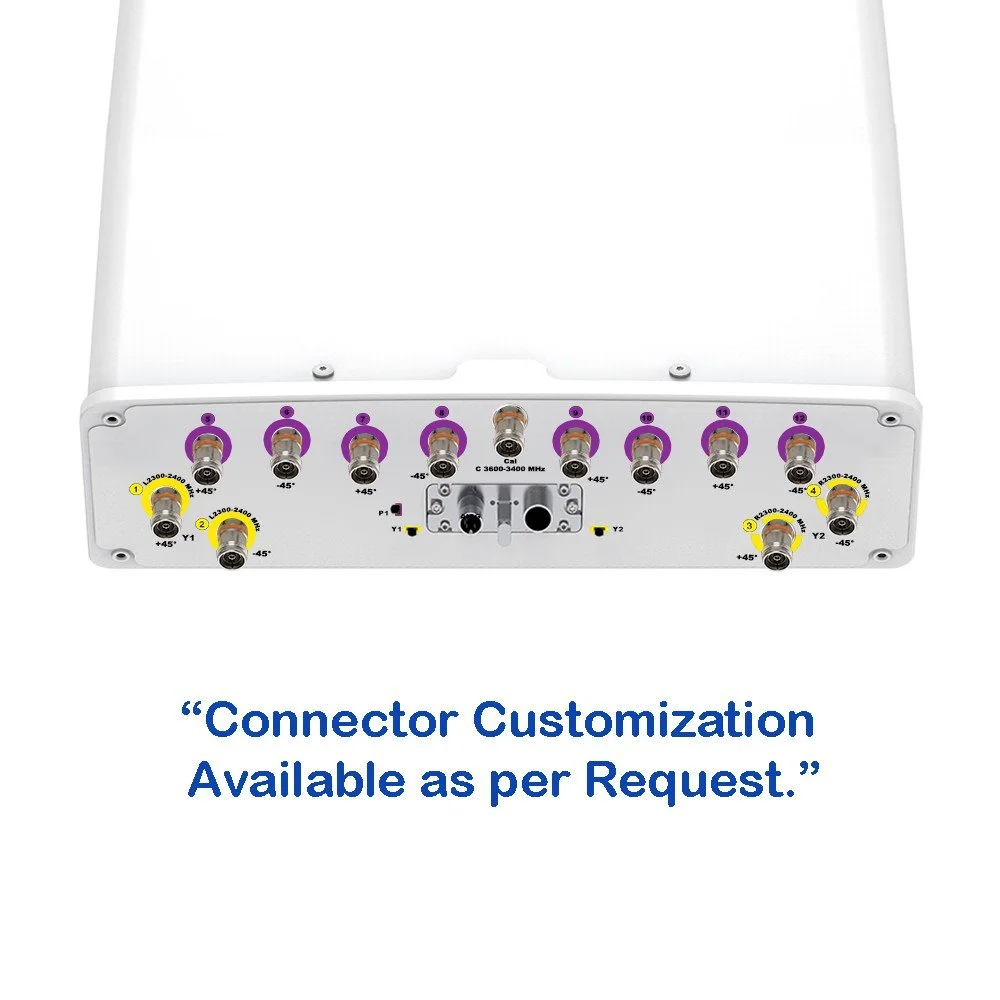
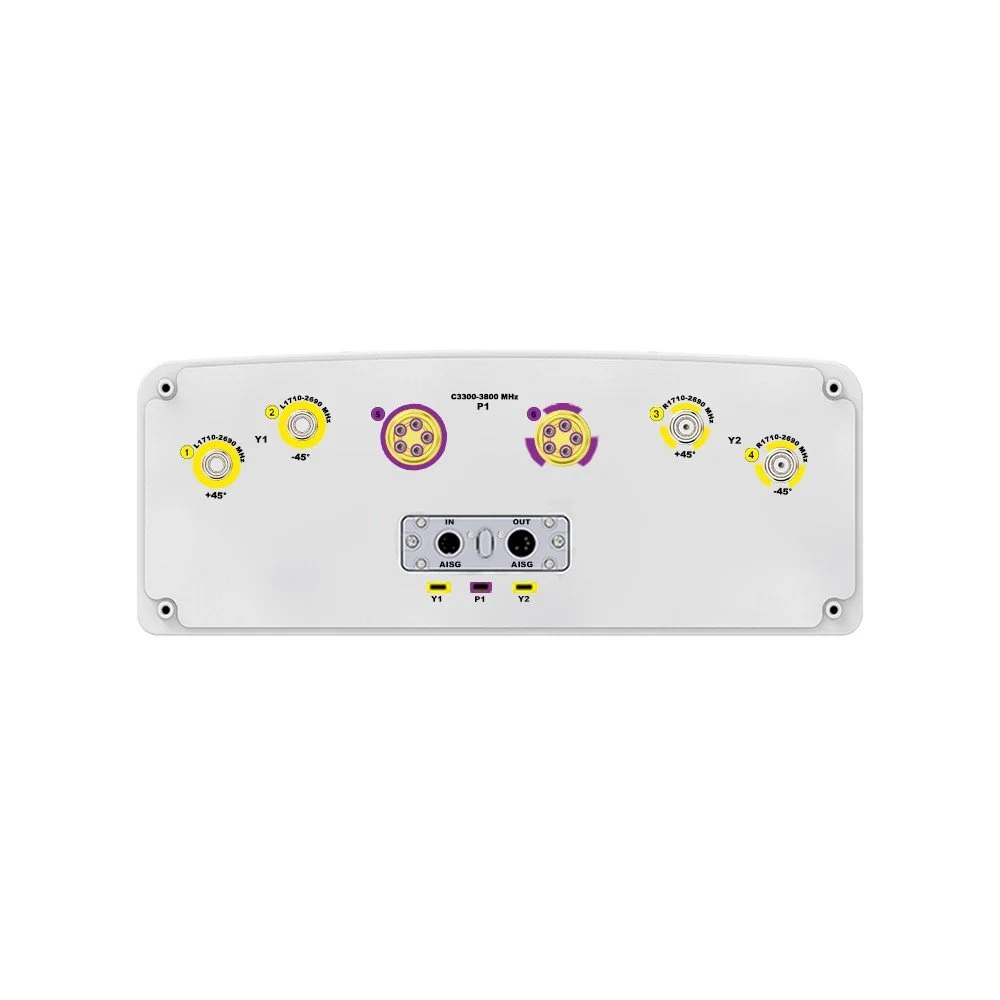
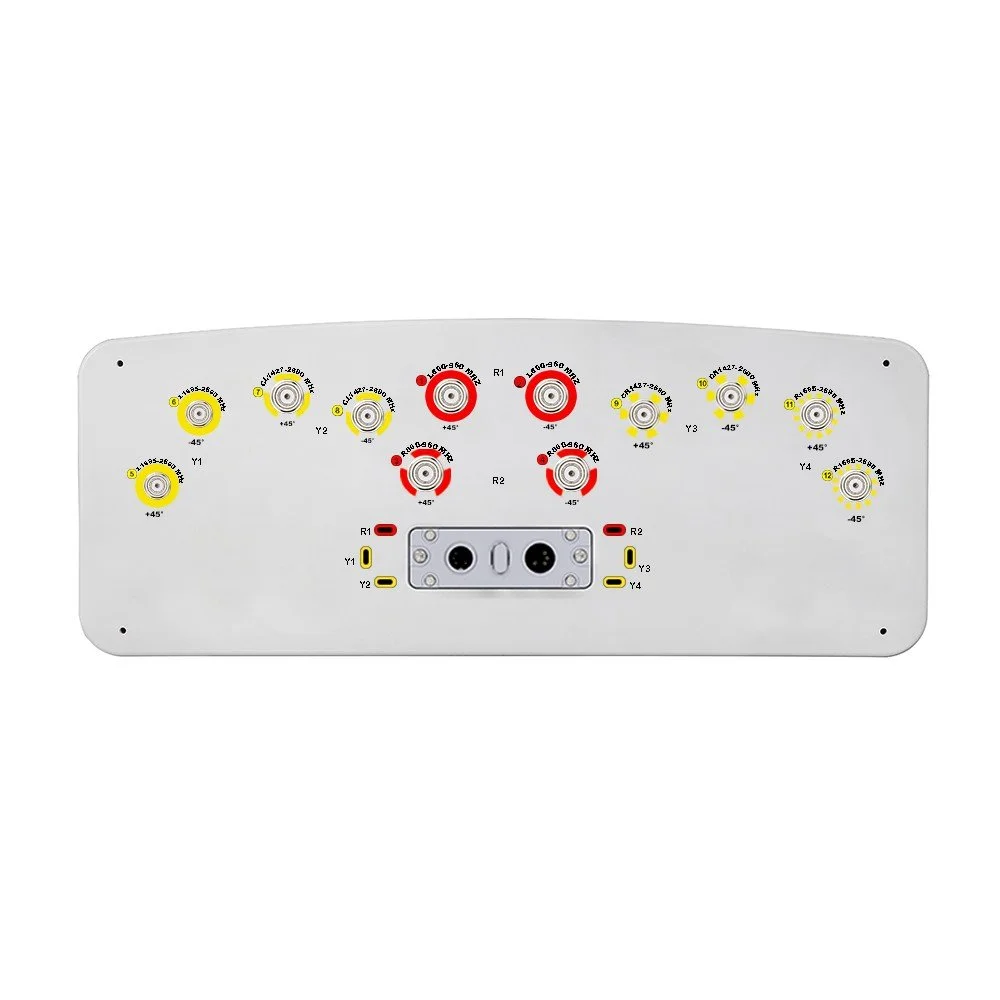
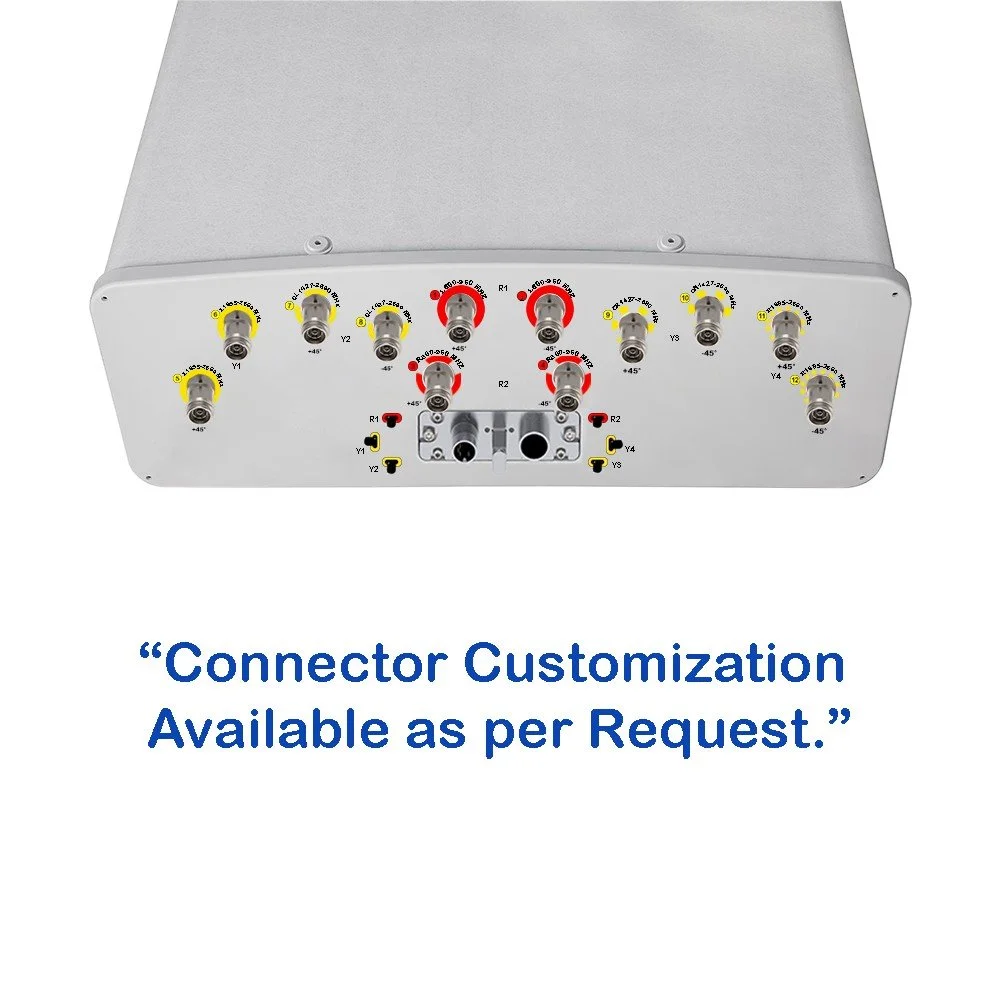
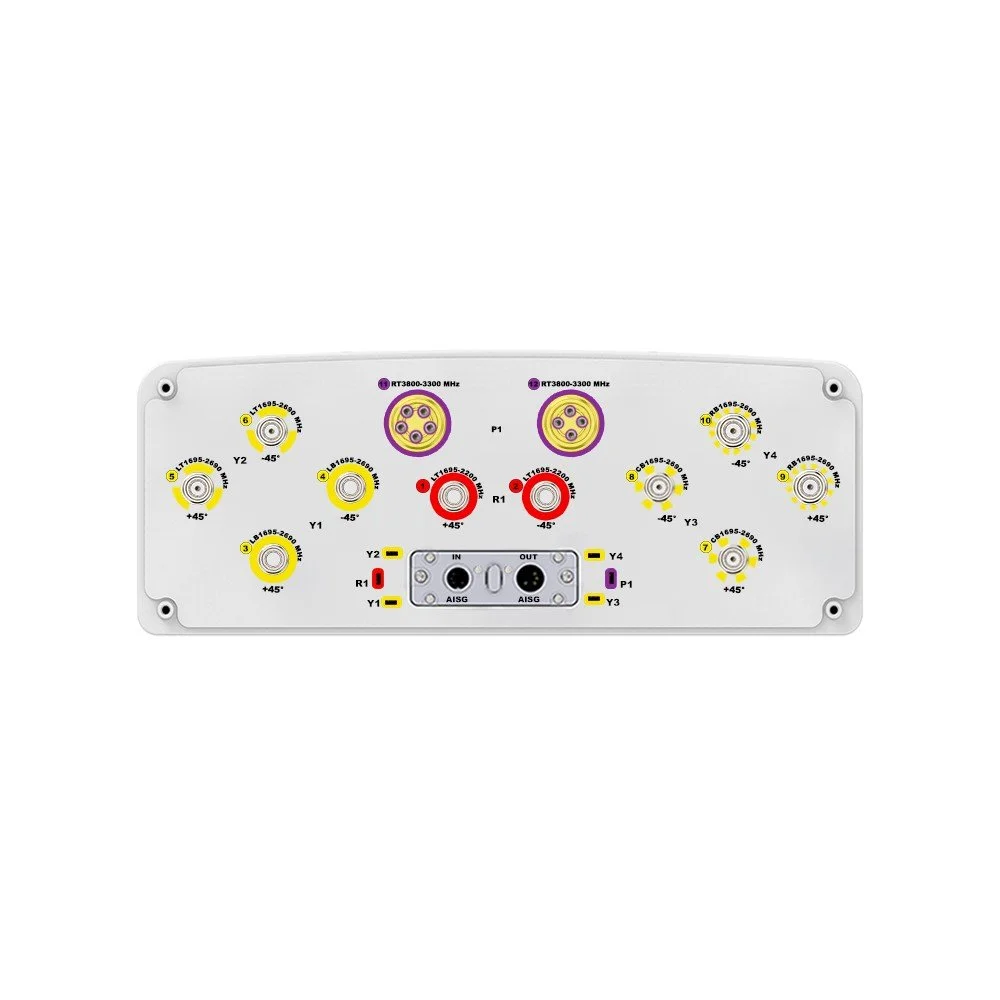
Connector Type (10 ×) 4.3/10 Female Connectors + (1 ×) MQ5 Male Connector + (1 ×) MQ4 Male Connector
Connector Position Bottom
Electrical Tilt Control Integrated Remote Electrical Tilt (RET)
Radome Material Fiberglass
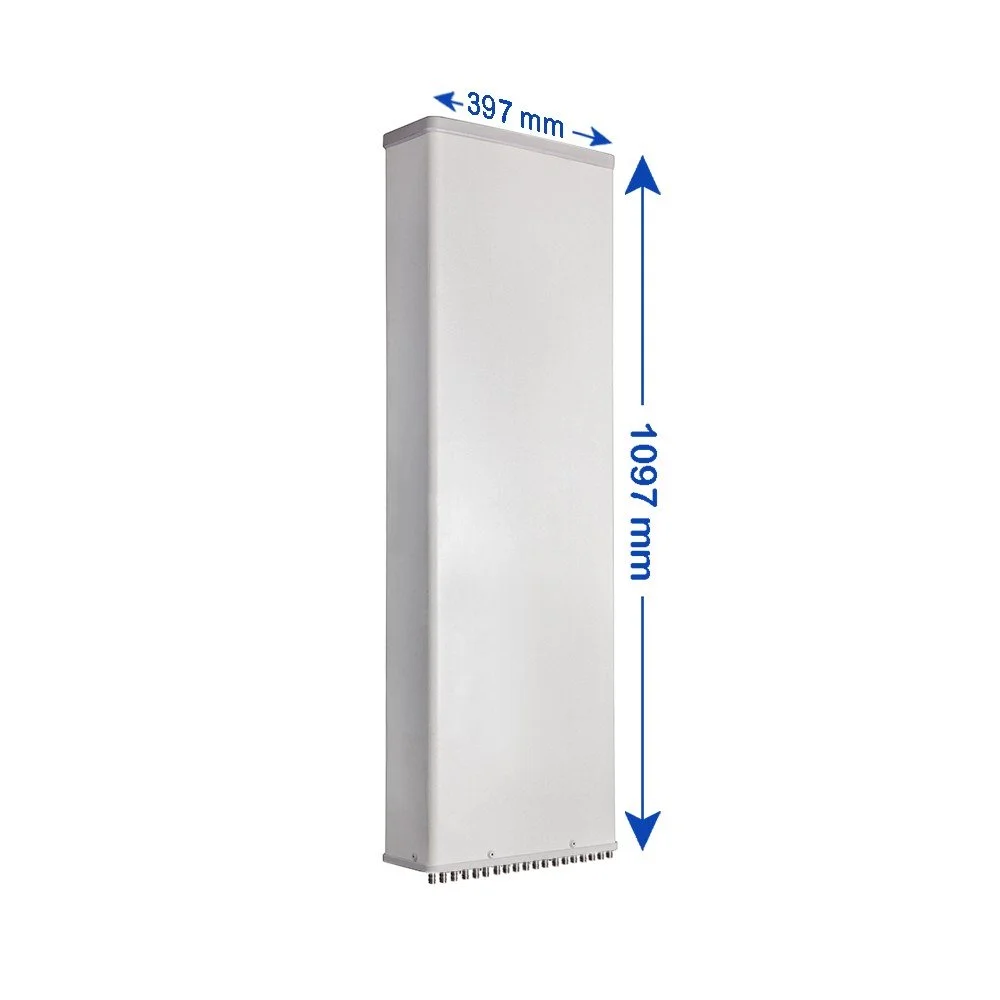
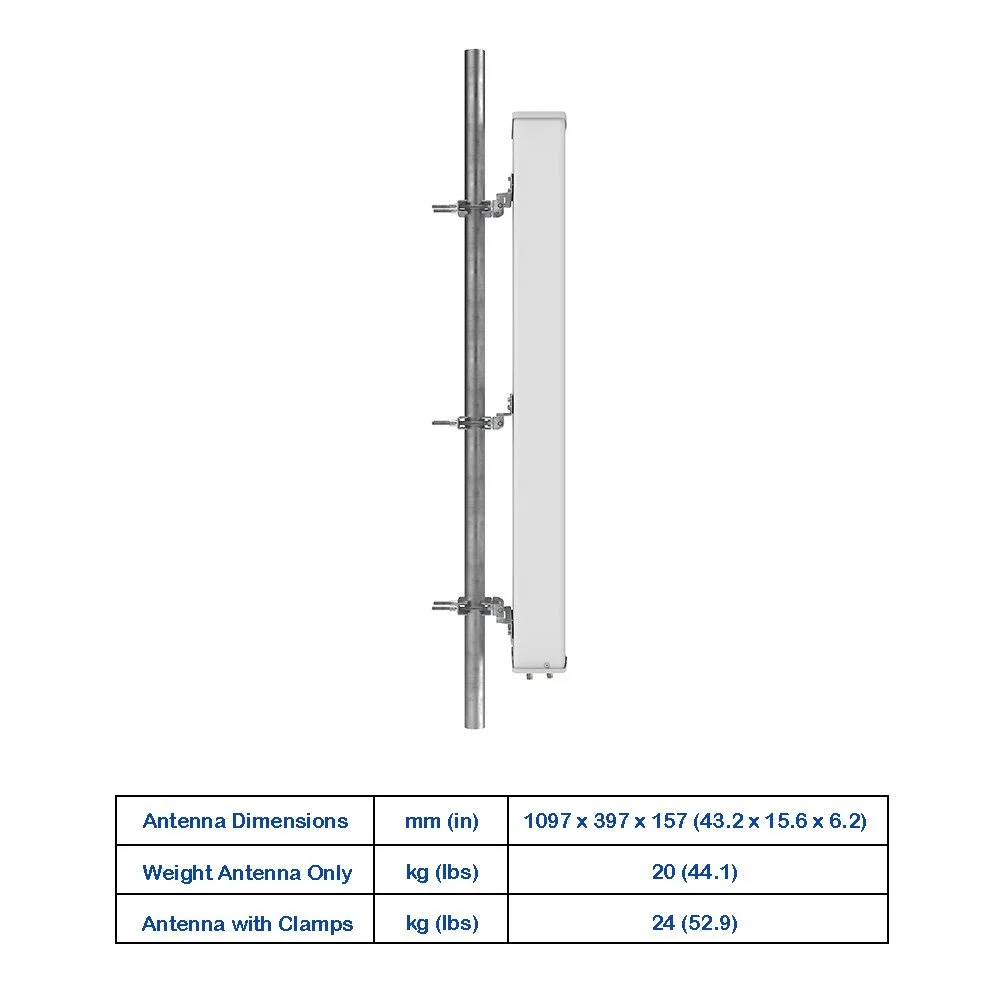
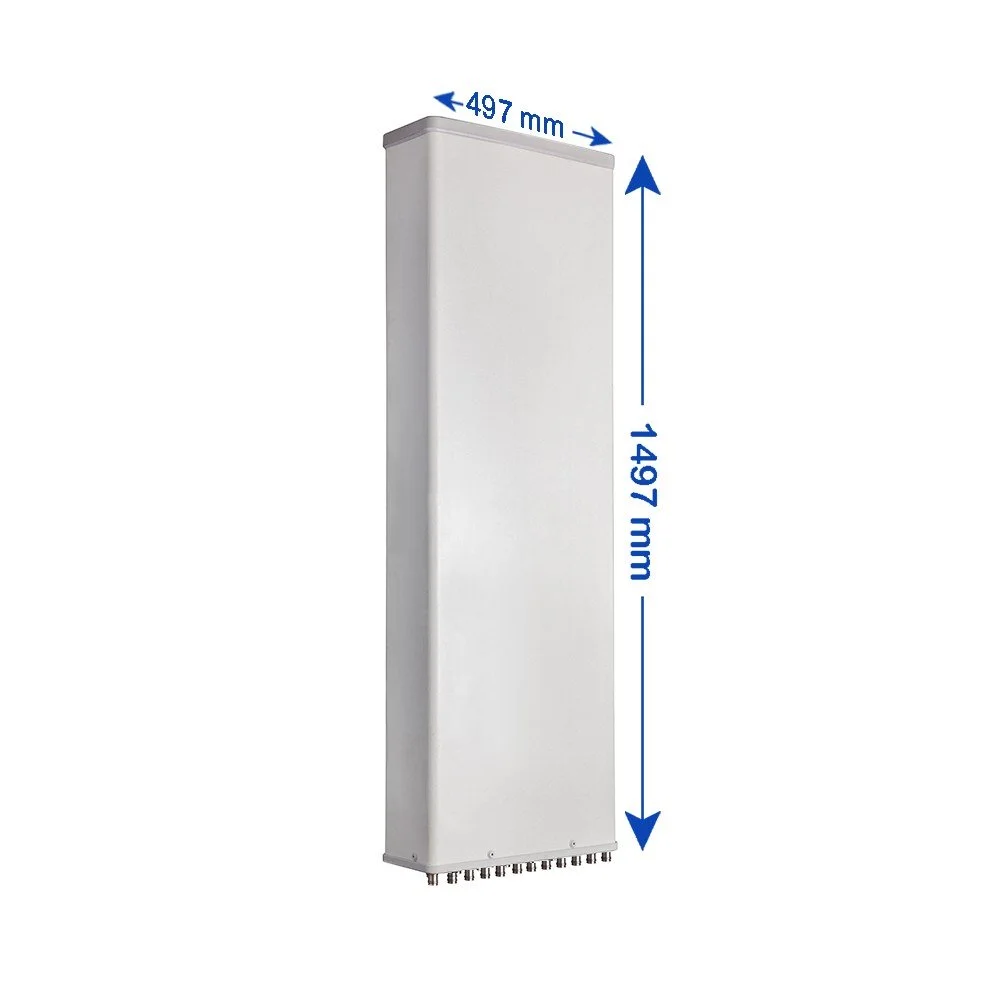
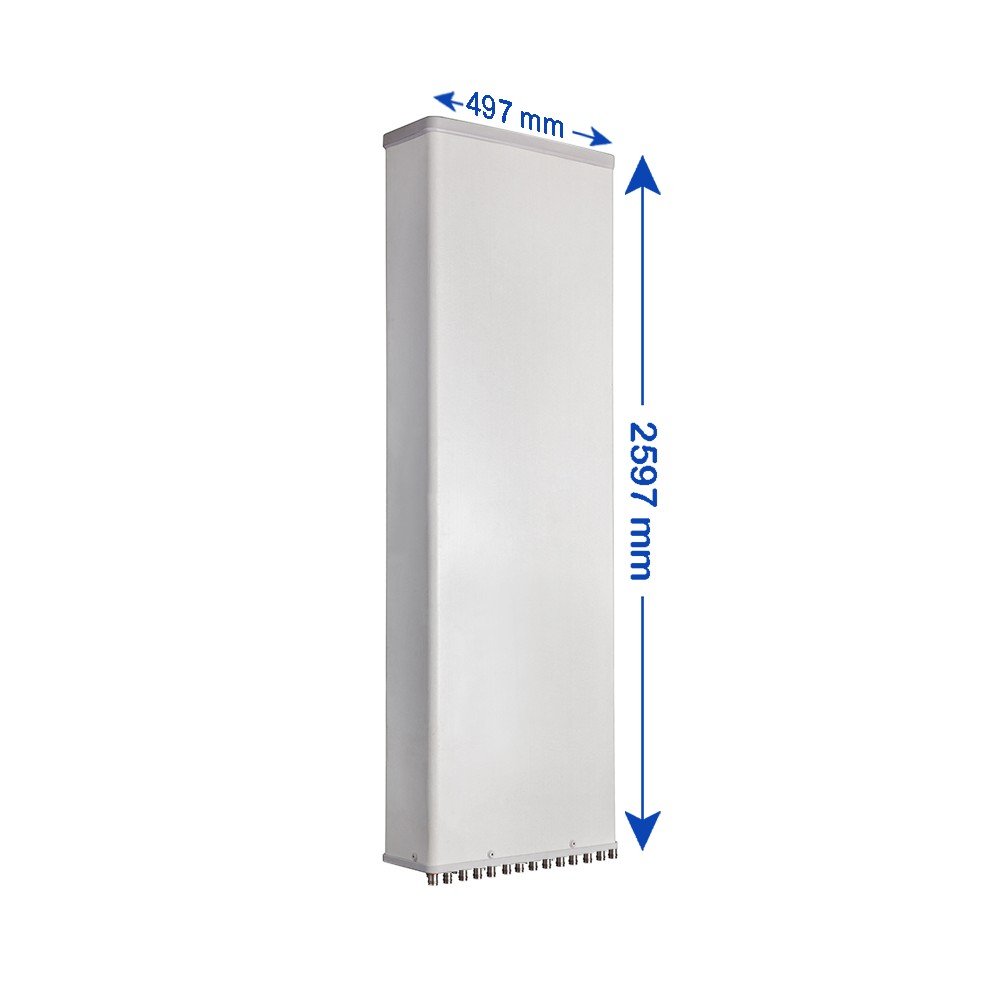
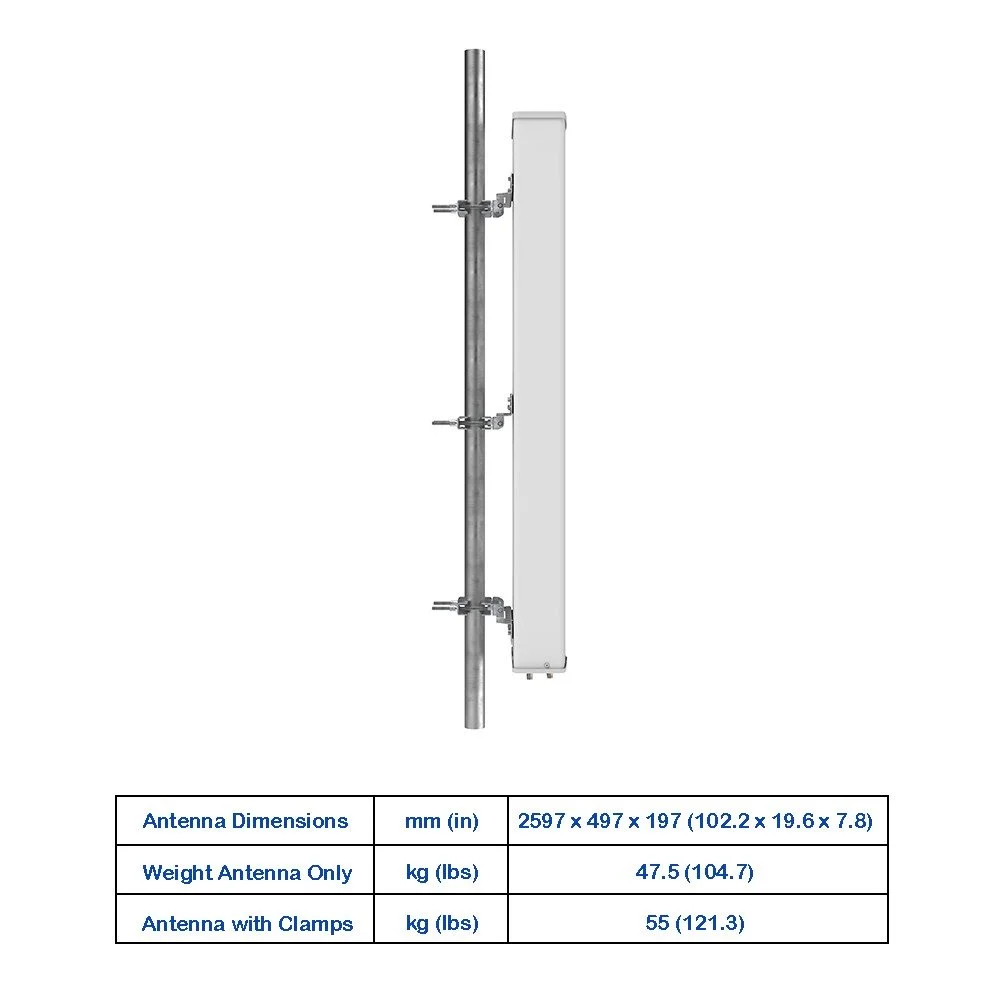
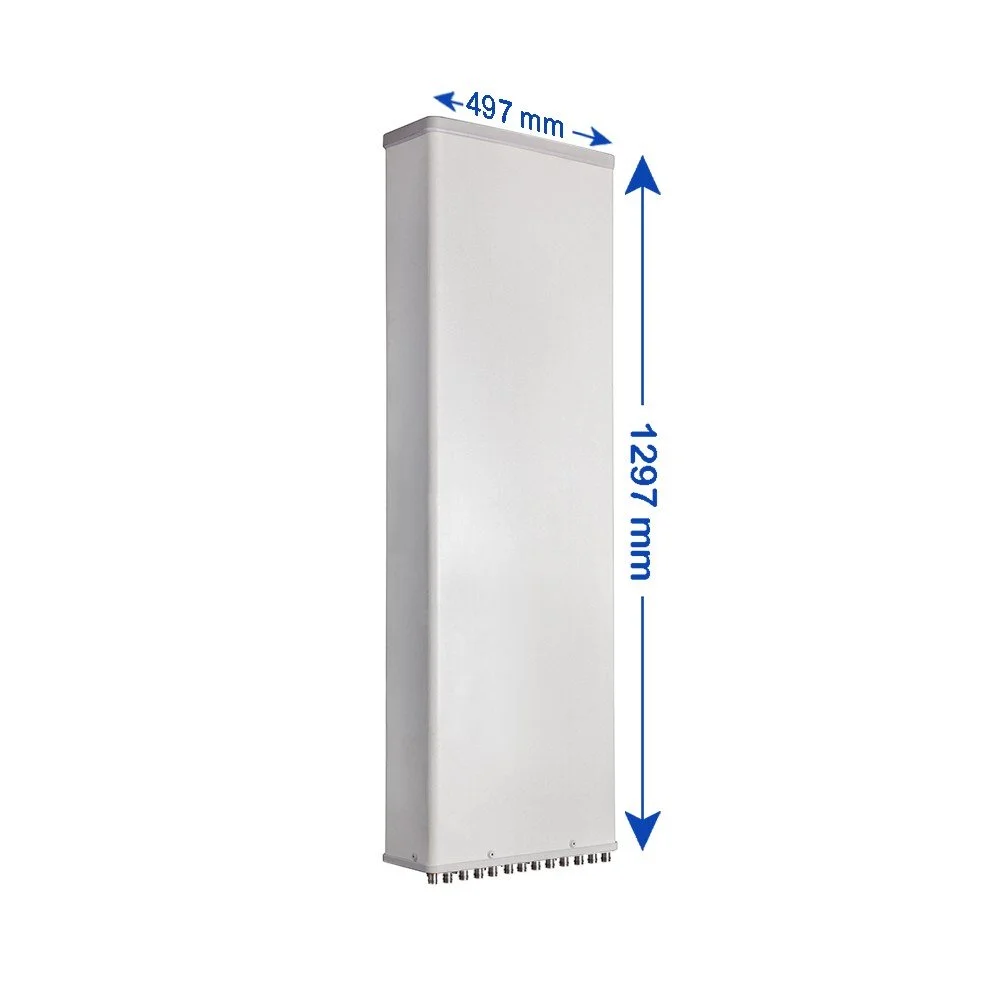
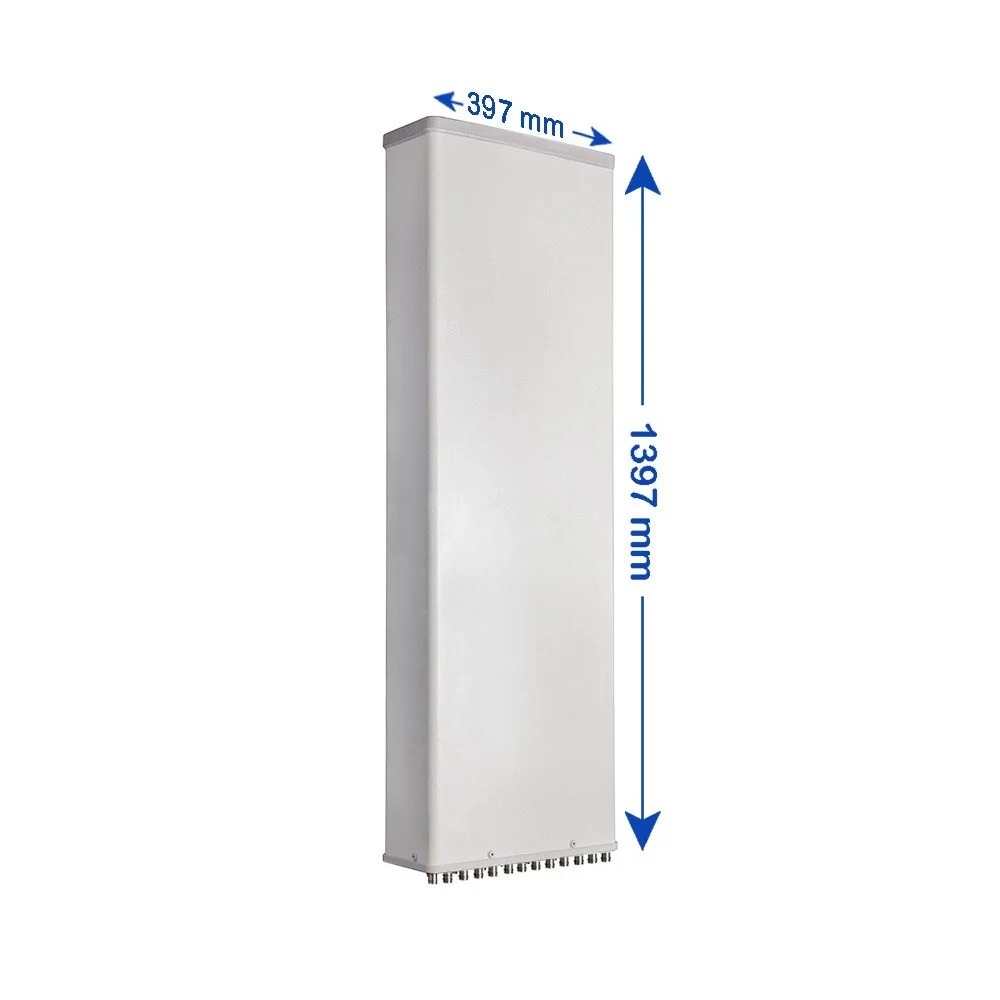
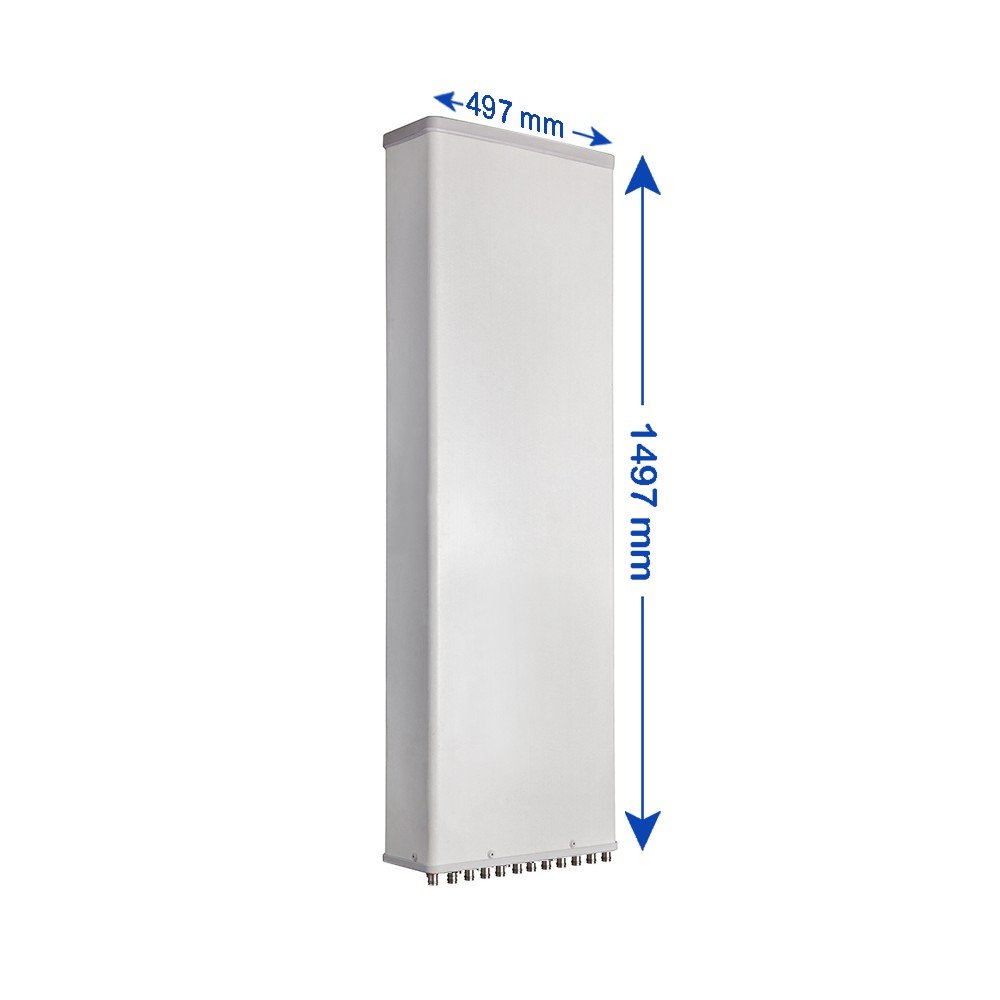
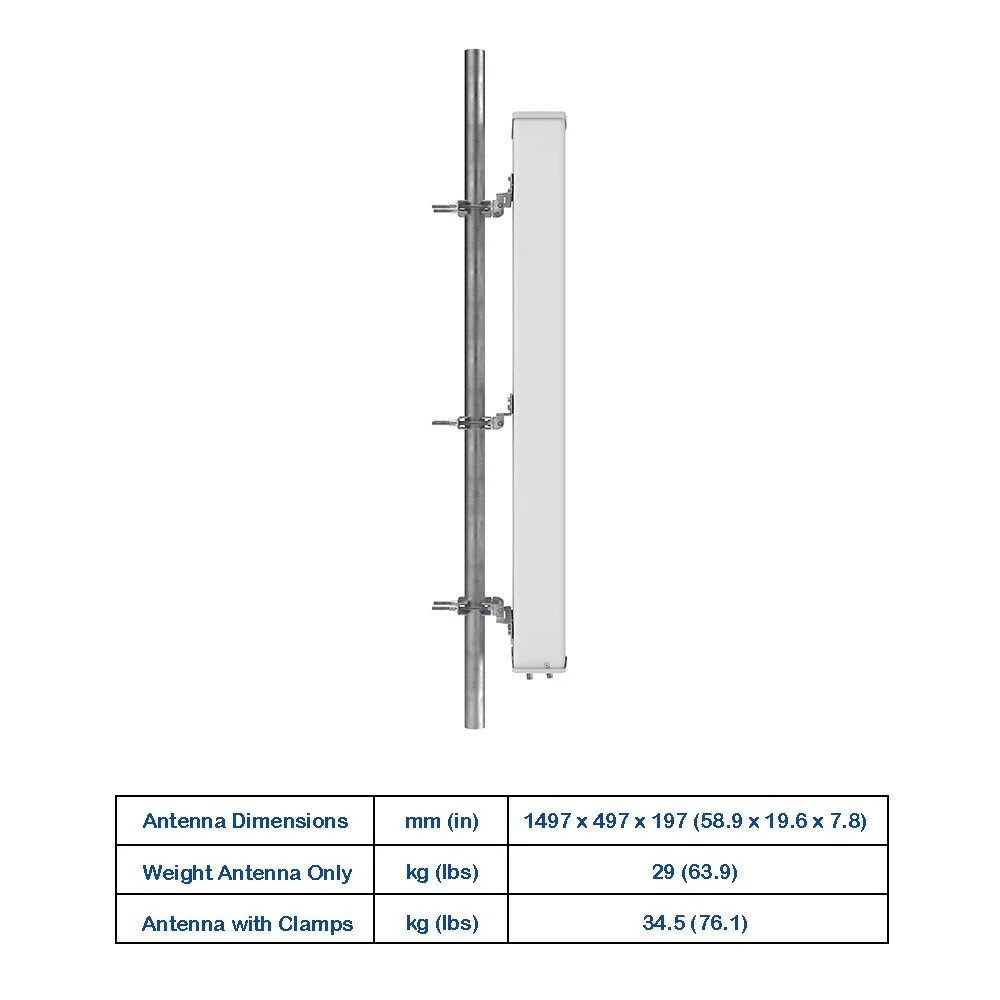
Antenna Dimensions (Height × Width × Depth) mm (in) 1097 × 397 × 157 mm (43.2 × 15.6 × 6.2 inches)
Antenna Weight (Antenna Only) kg (lbs) 20 kg (44.1 lbs)
Antenna Weight (with Clamps) kg (lbs) 24 kg (52.9 lbs)
Maximum Wind Speed Survival km/h (mph) 200 km/h (124.3 mph)
Wind Load at 150 km/h – Frontal N (lbf) 400 N (89.9 lbf)
Wind Load at 150 km/h – Rear N (lbf) 450 N (101.2 lbf)
Wind Load at 150 km/h – Lateral N (lbf) 200 N (45.0 lbf)
Operating Temperature Range °C (°F) -40 °C to +60 °C (-40 °F to 140 °F)