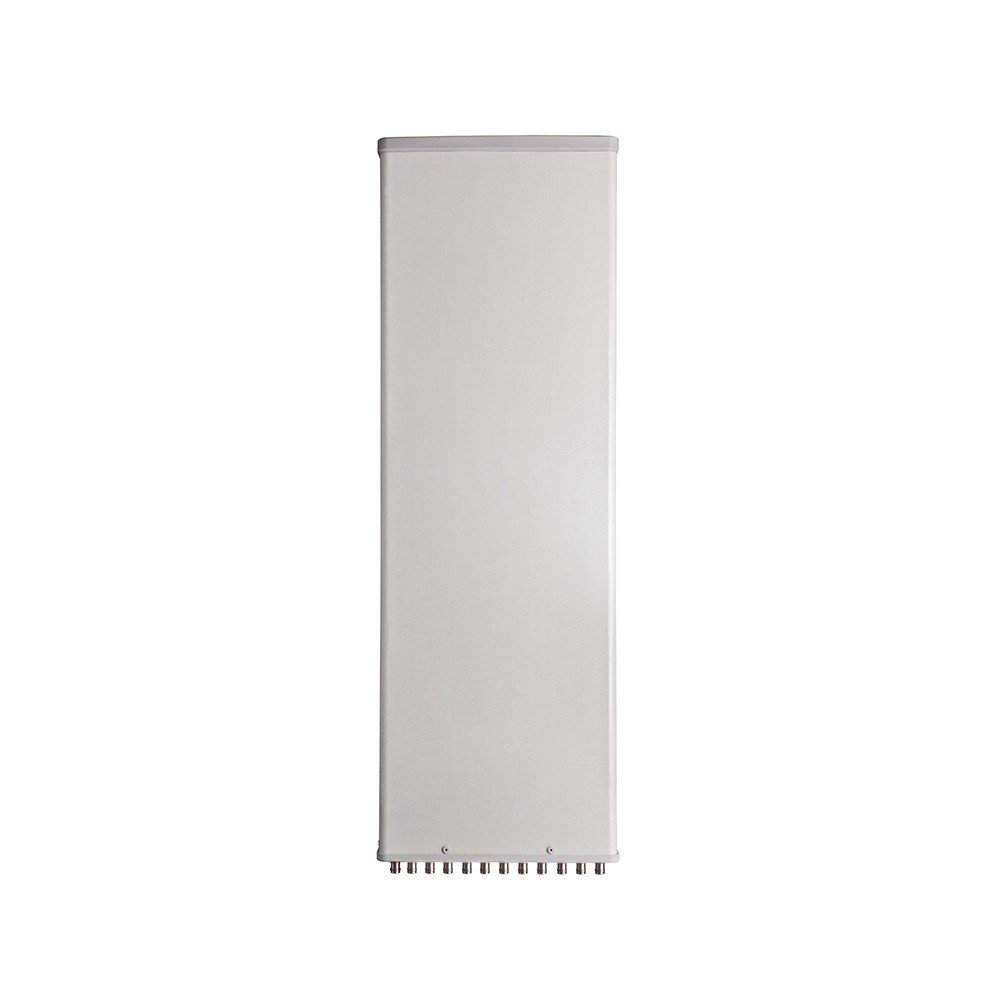
19-Port, TDD Hybrid Panel Antenna ( 690 - 3800 MHz )

₹0.00

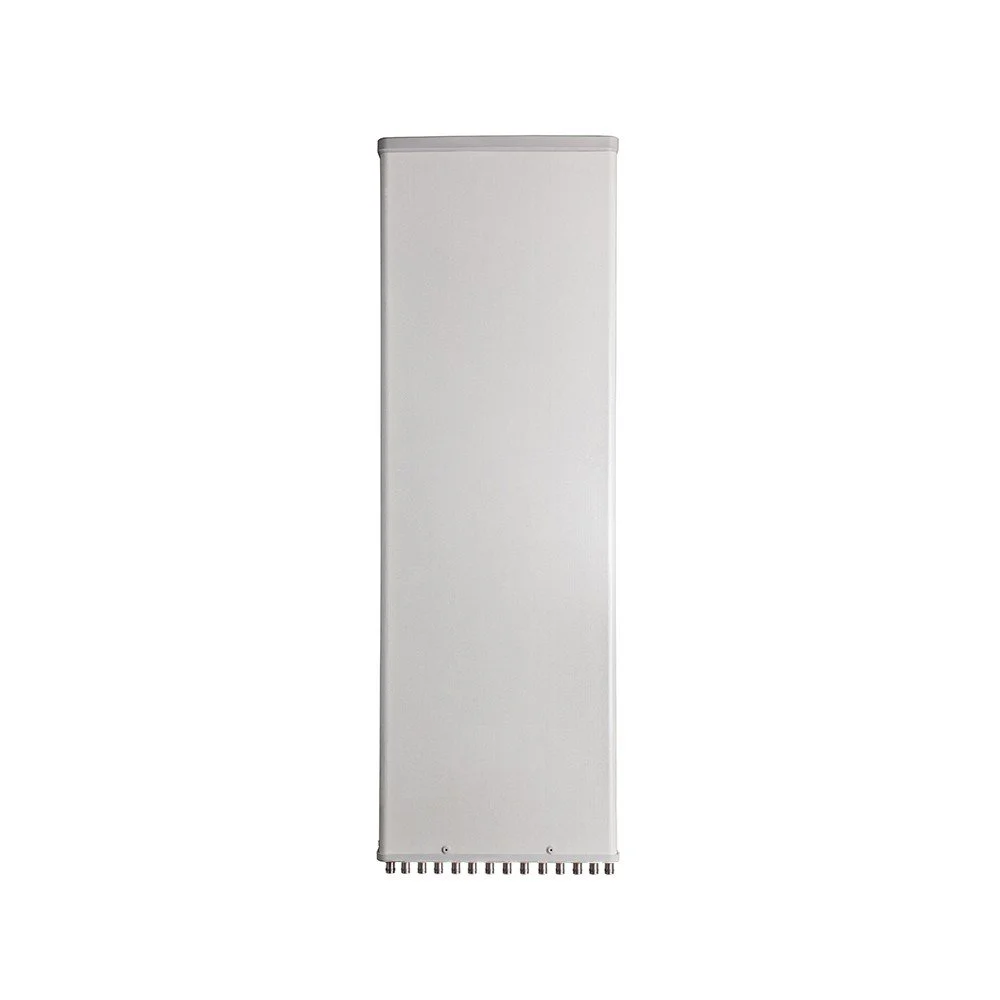
19-Port TDD Hybrid Panel Antenna (690–3800 MHz)

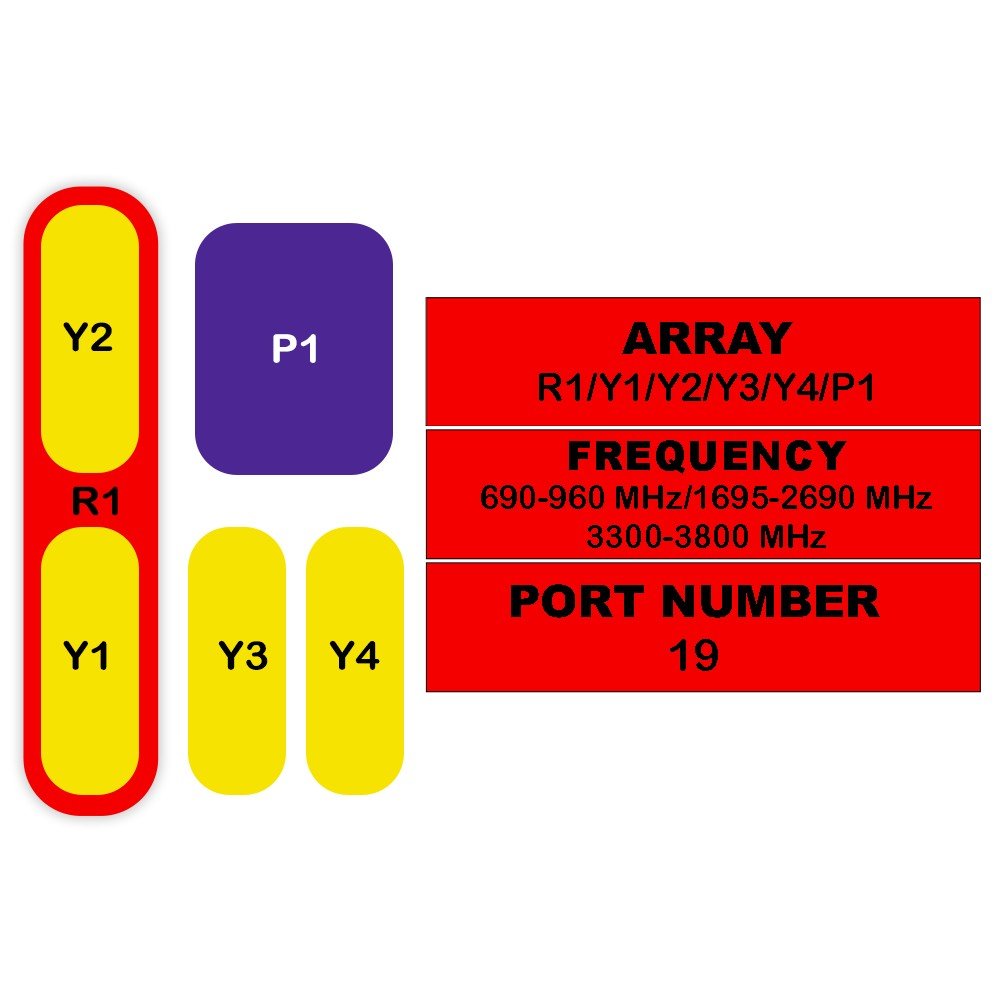
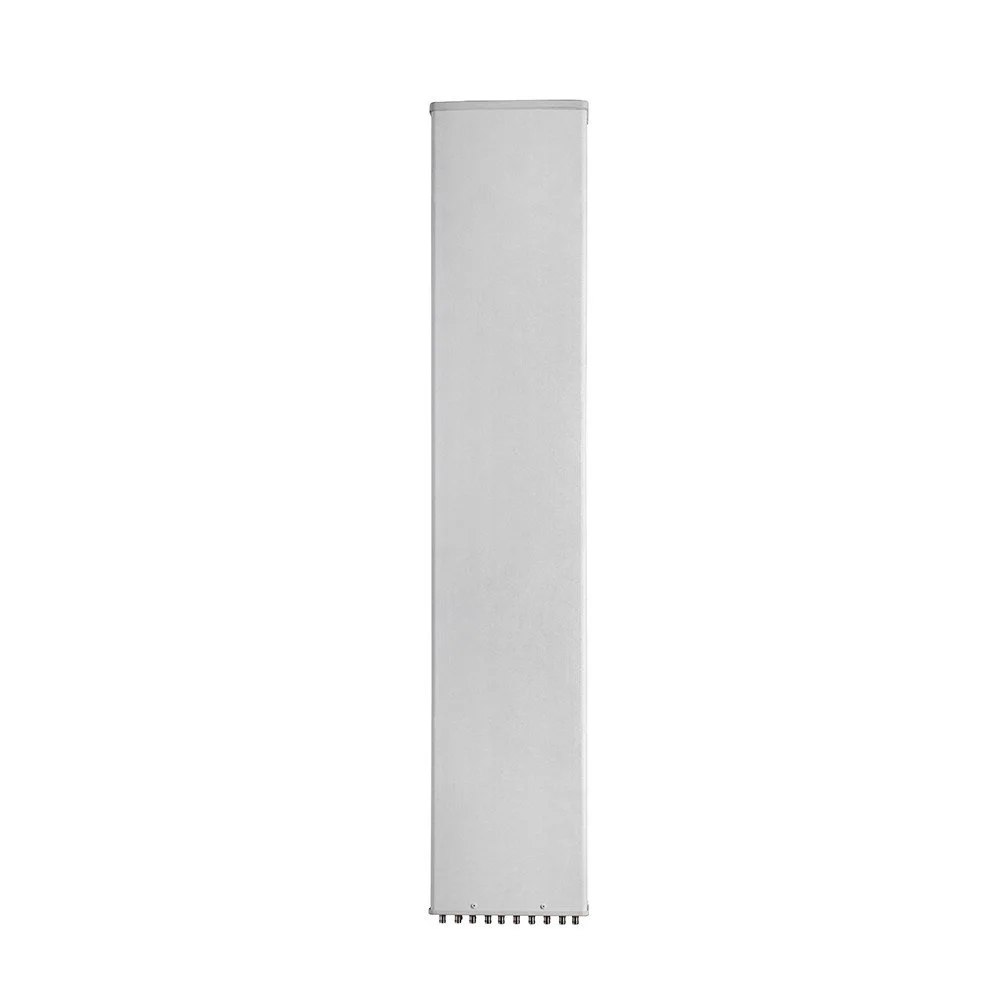
Overview This 19-port TDD hybrid panel antenna covers 690–3800 MHz and is engineered for dense 4G/5G TDD deployments where high capacity, beam diversity, and spectral efficiency are required. Combining multiple antenna ports in a compact panel form factor, it supports advanced MIMO configurations, dynamic TDD slot allocation, and efficient coexistence across low-, mid-, and upper-mid bands.

Key Features

  • Frequency range: 690–3800 MHz (continuous wideband coverage for low-band, mid-band, and upper mid-band)

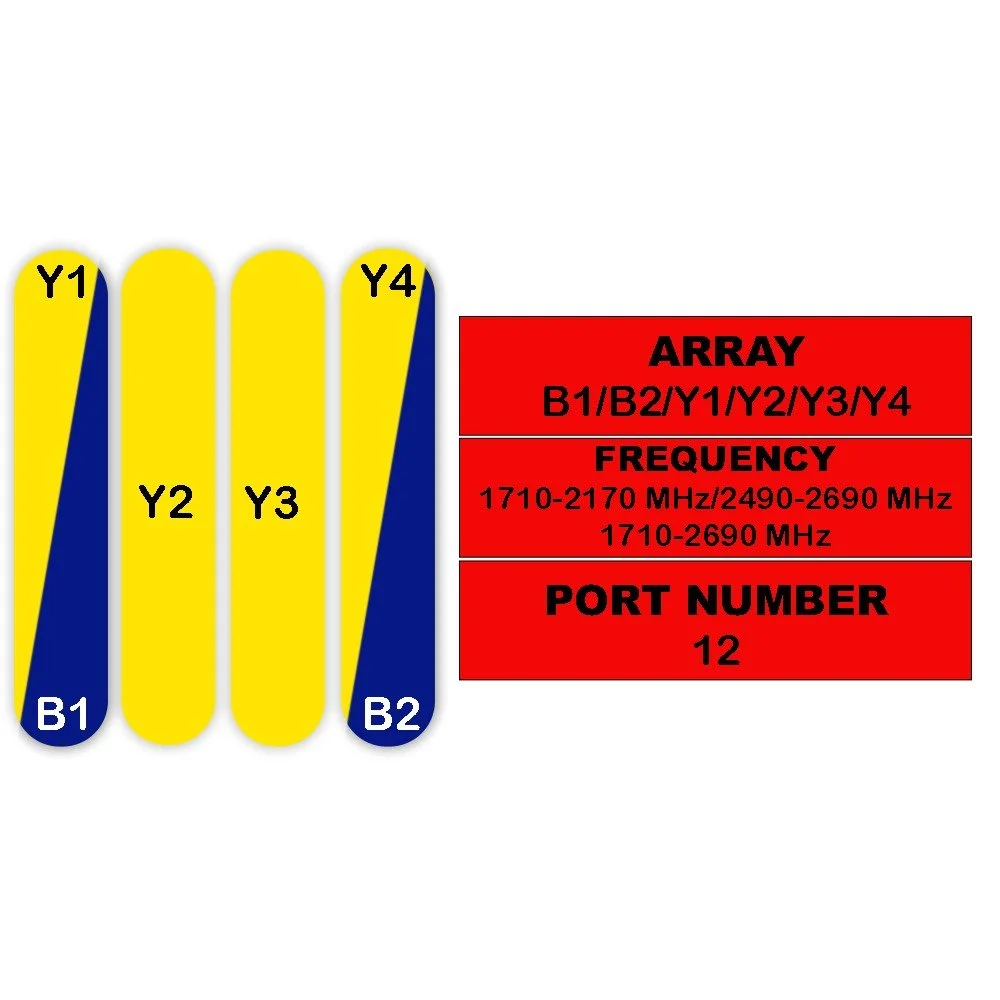
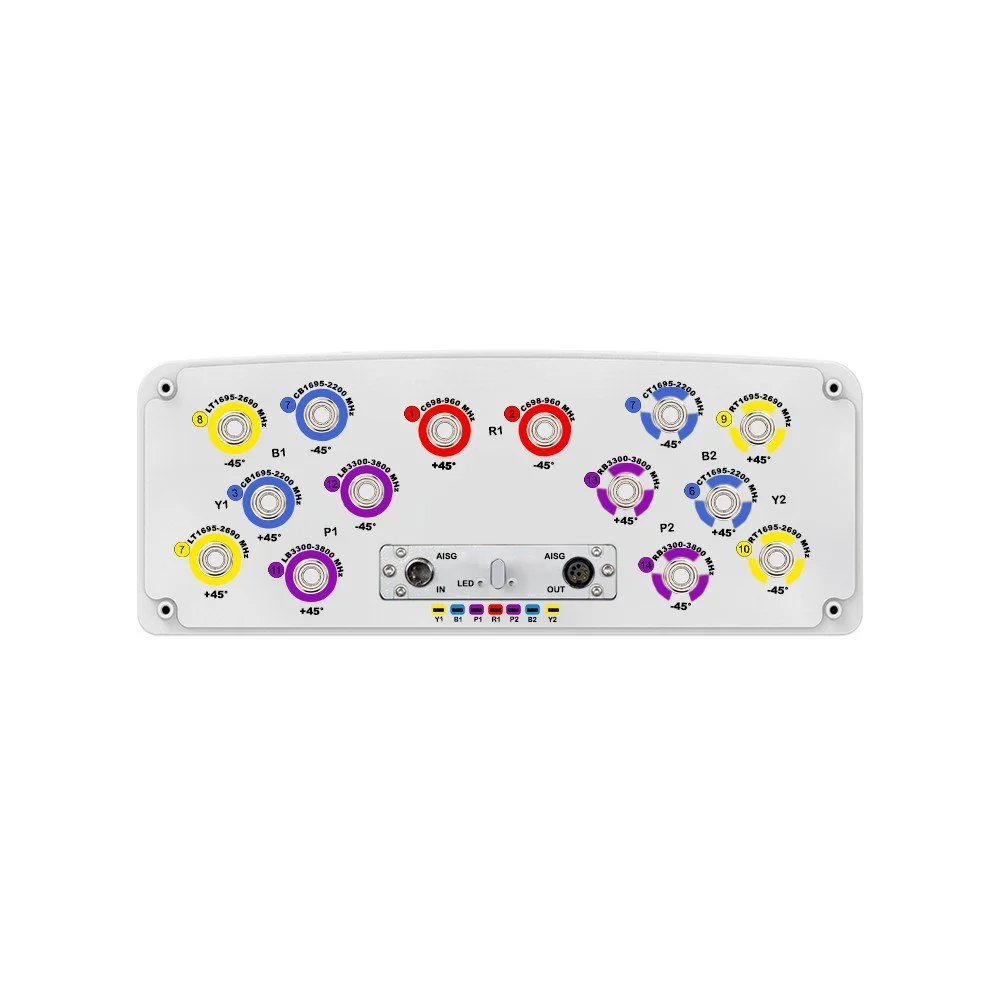
  • 19 ports: flexible port mapping for MIMO, sectorized patterns, and multi-band operation

  • TDD-optimized: low group delay and phase coherence across ports for reliable TDD synchronization and beamforming

  • High gain: optimized element patterns deliver sector-level gain and coverage consistency across bands

  • Compact, low-profile housing: slim, ruggedized panel suitable for rooftop, tower, and wall-mount installations

  • Wide beam control: sector pattern tailored to typical cell-site azimuth spreads; downtilt options available

  • High port isolation: minimizes inter-port coupling to preserve MIMO performance

  • Low VSWR: ensures efficient power transfer with common radio equipment

  • Environmental protection: IP65/IP67 rating and corrosion-resistant materials for long outdoor life

  • Lightning and surge protection options available

Technical Specifications (typical)

  • Frequency: 690–3800 MHz

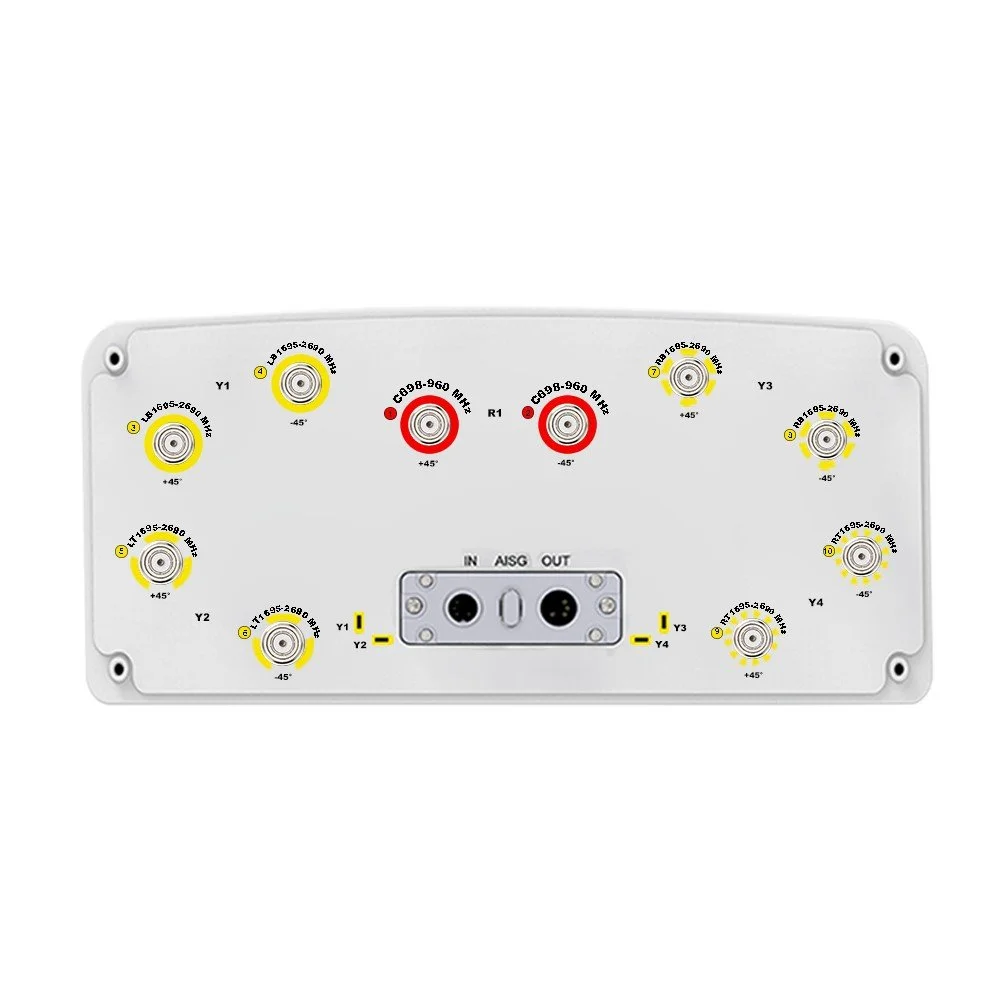
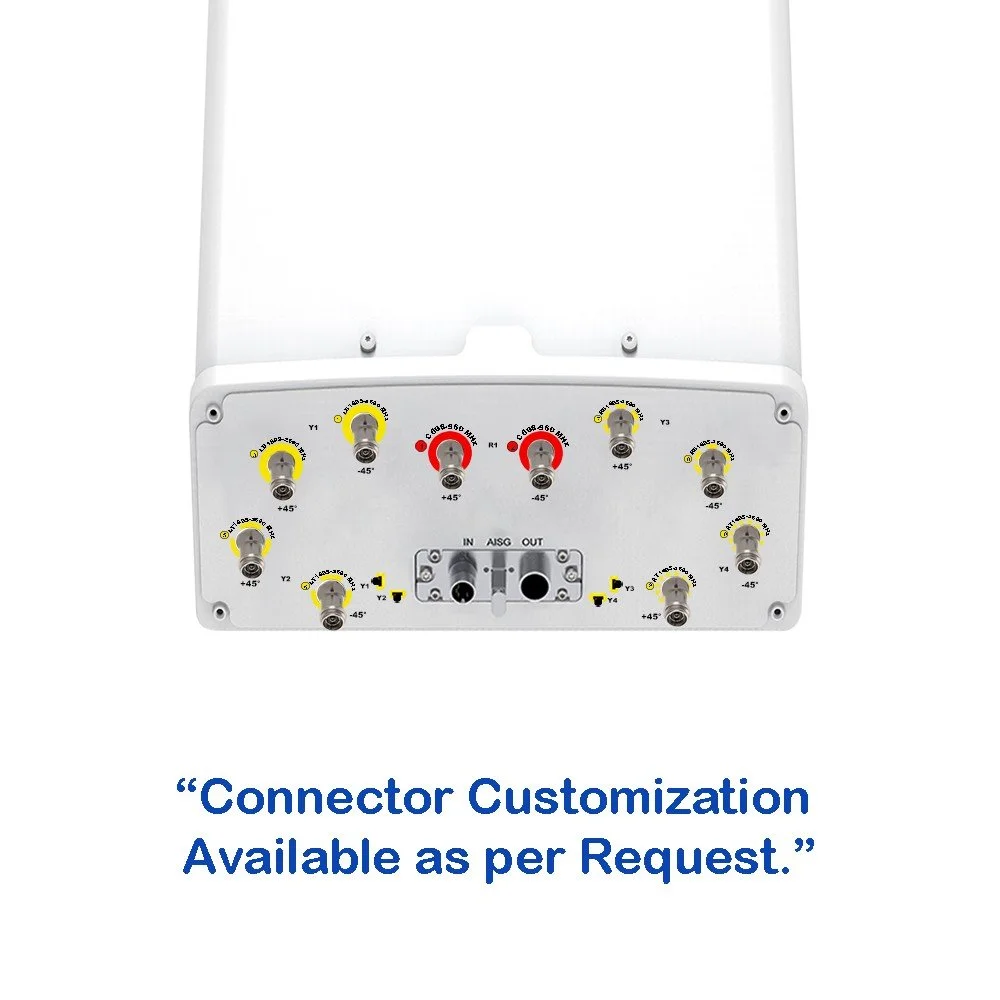
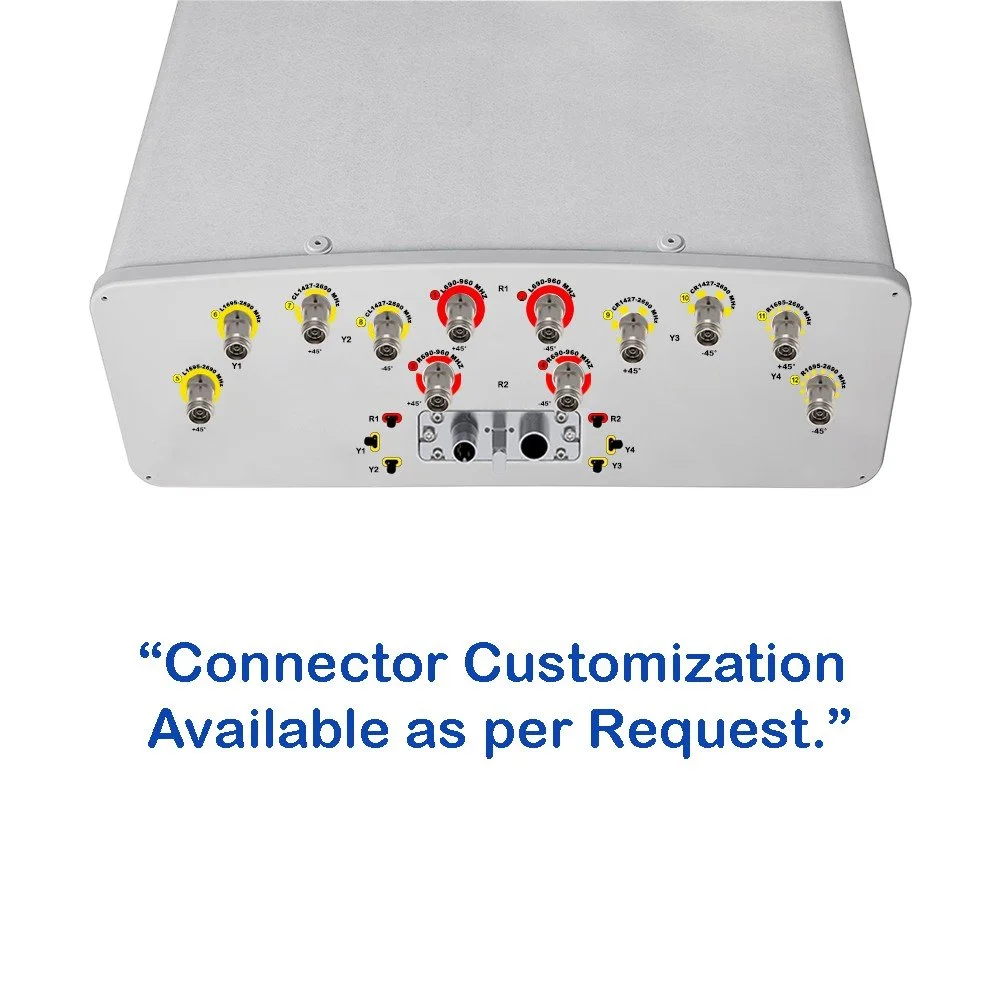
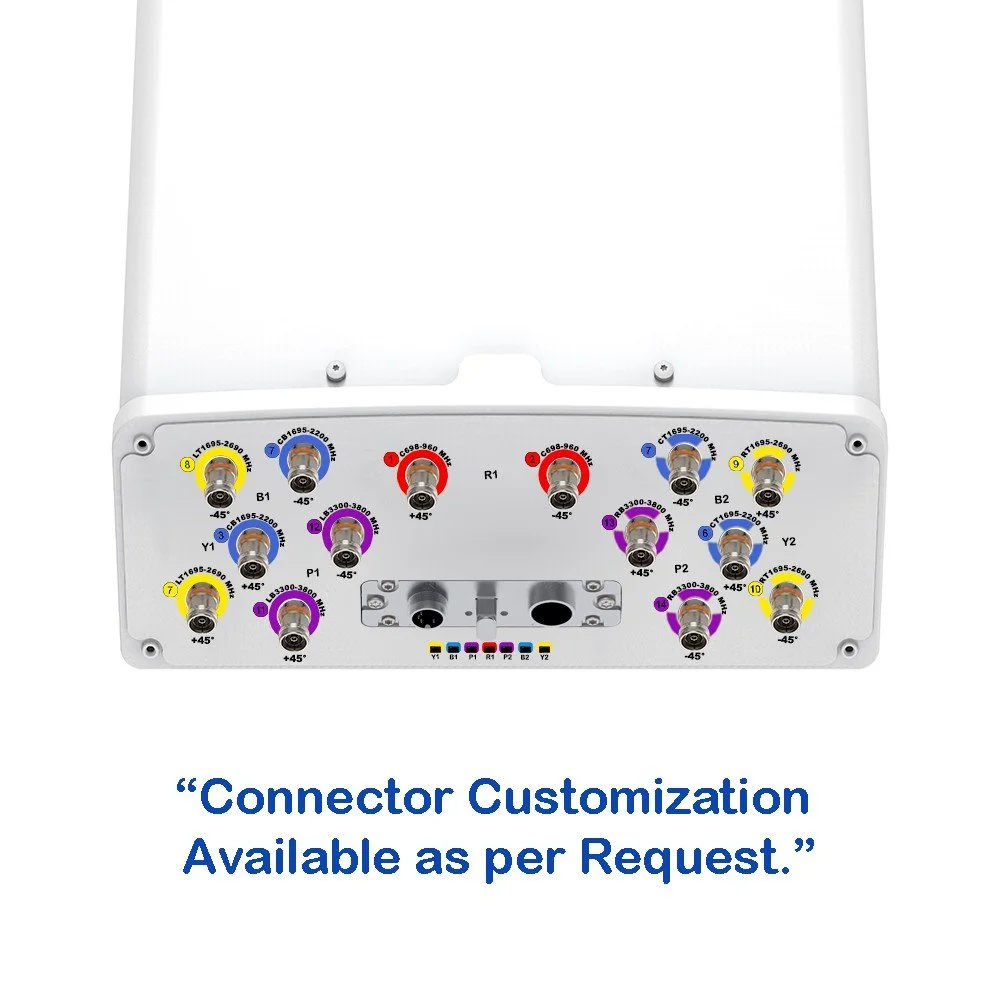
  • Ports: 19 coaxial connector ports (type configurable: 4.3-10, N-type, or SMA per order)

  • Gain: band-dependent (typical mid-band 6–12 dBi per element, sector-composite gain higher)

  • Horizontal beamwidth: sector-optimized (typical 65°–120° options)

  • Vertical beamwidth: dependent on downtilt configuration (narrow to moderate for sector coverage)

  • Polarization: dual linear or cross-polarized per port groups

  • Isolation: >25 dB typical between adjacent ports

  • Input VSWR: <1.8:1 typical across bands

  • Max power per port: per connector ratings, supports standard base station transmit power

  • Operating temperature: -40°C to +65°C

  • Humidity: 0–100% condensing

  • Ingress protection: IP65/IP67

  • Wind survival: industry-standard (consult datasheet for specific wind-load ratings)

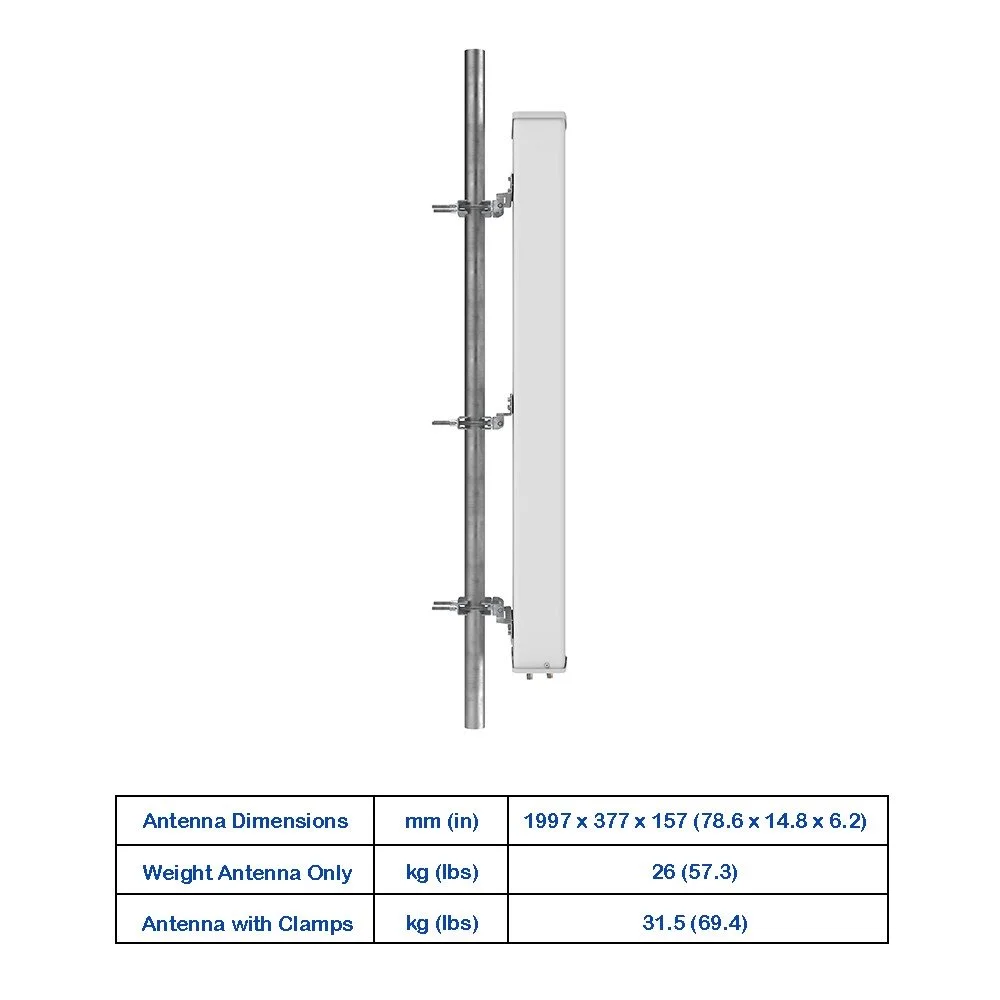
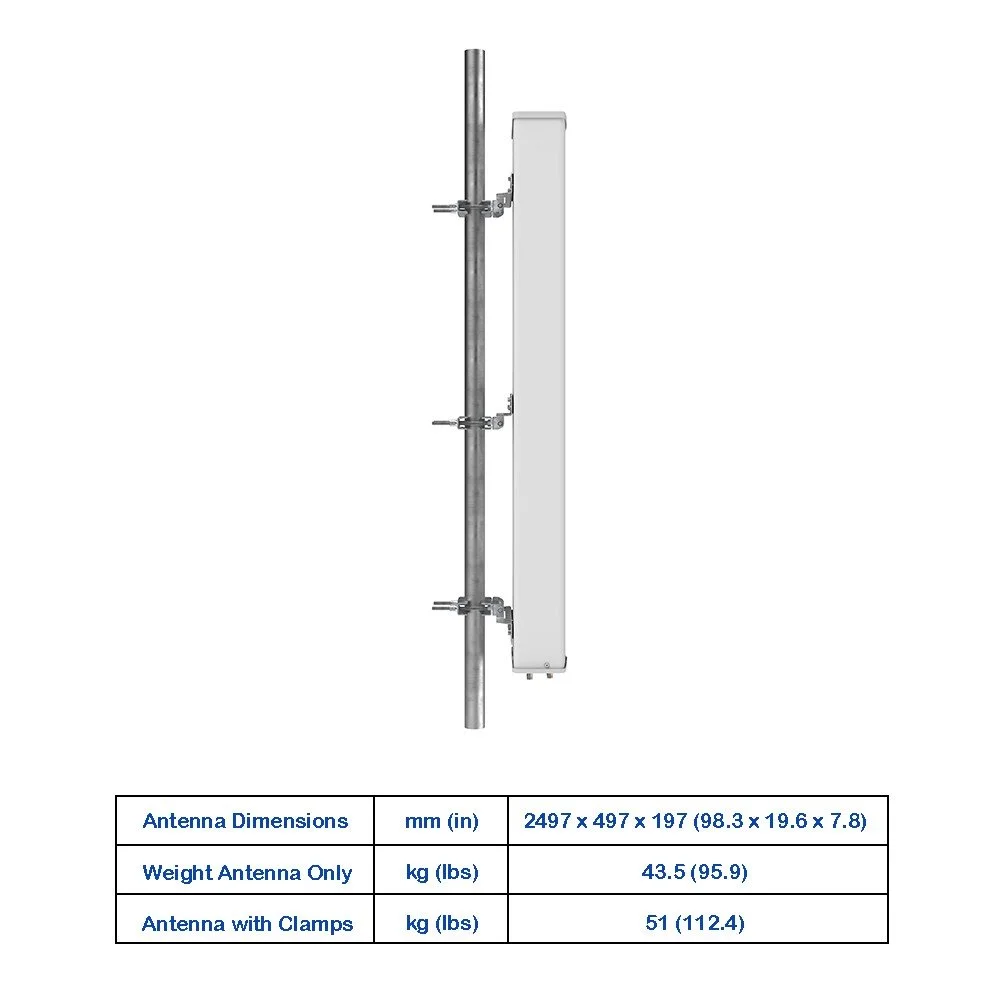
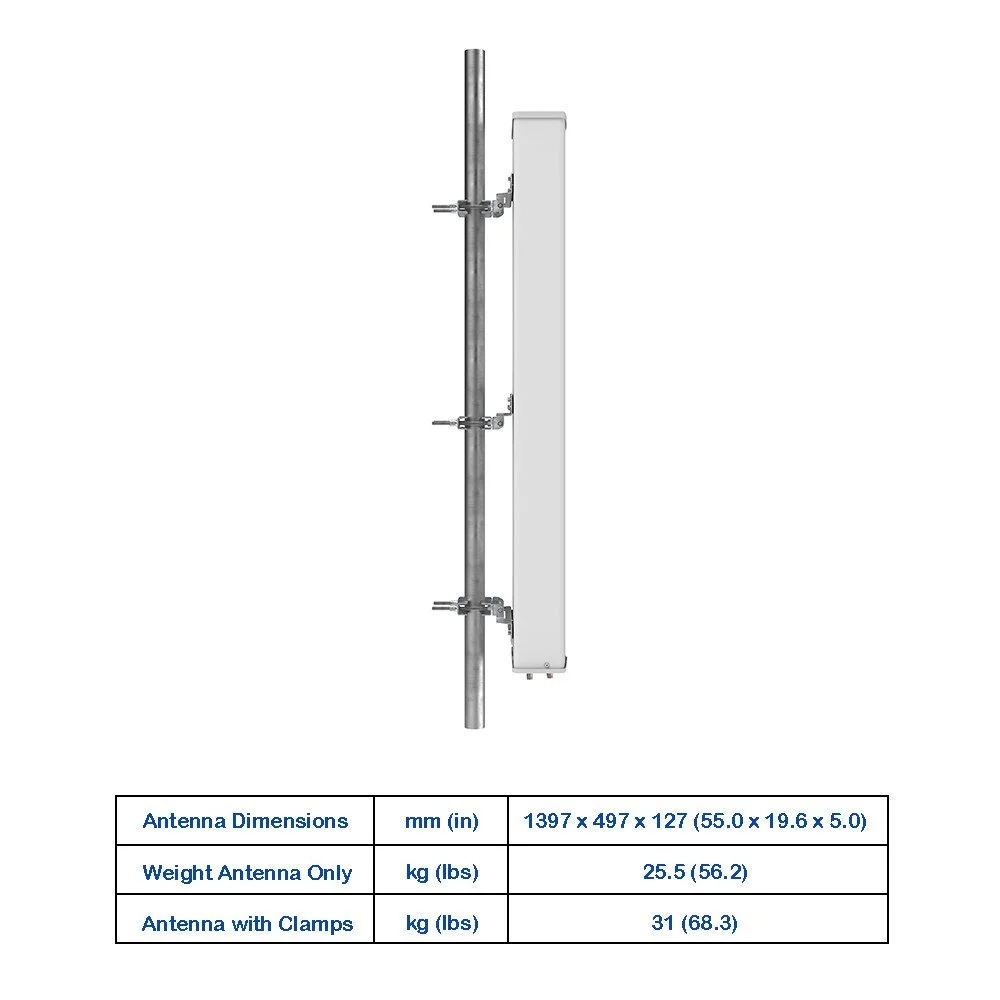
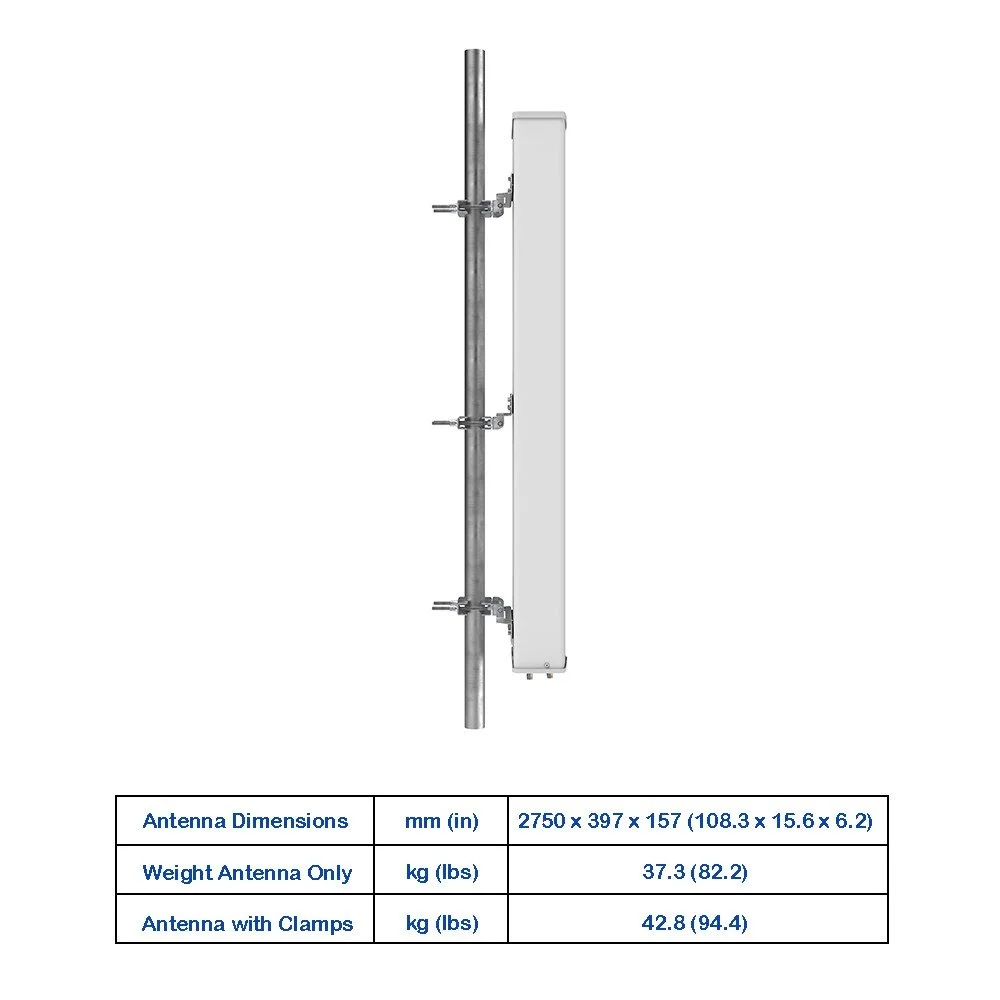
  • Mounting: adjustable tilt bracket for pole and wall mounting

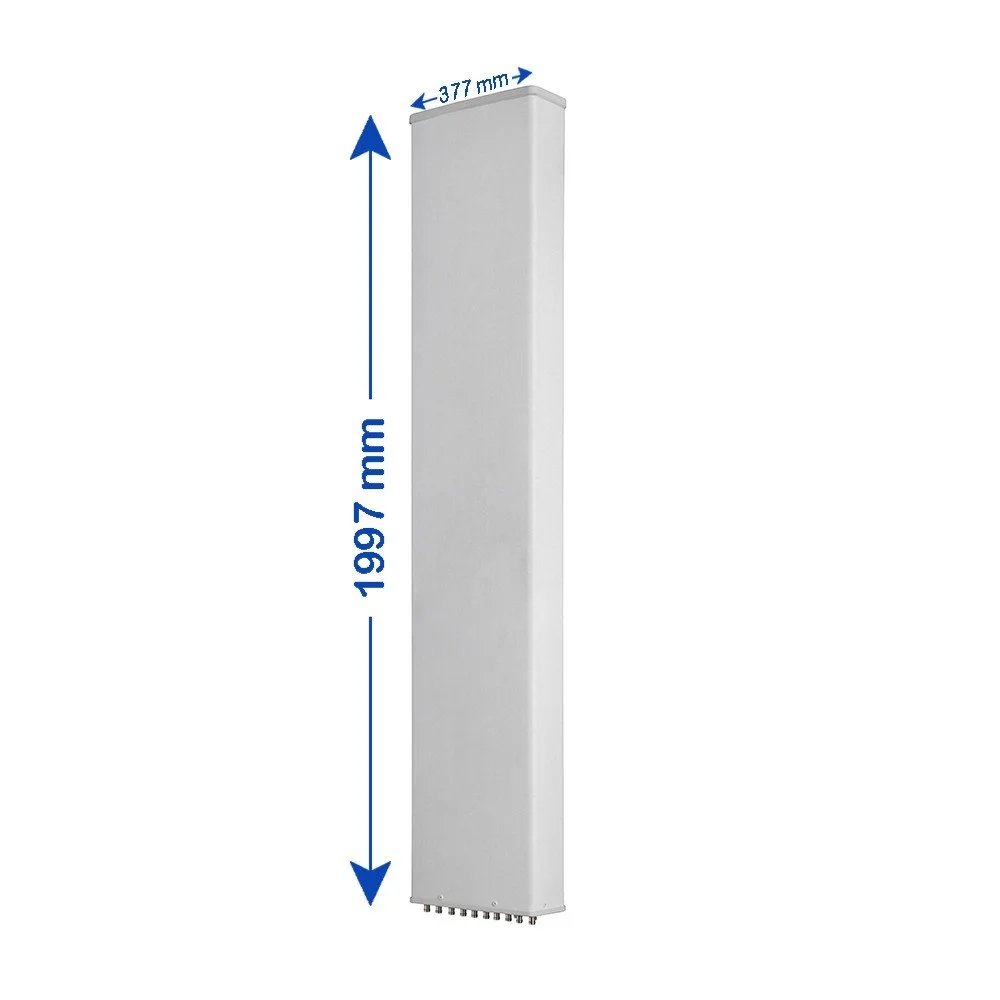
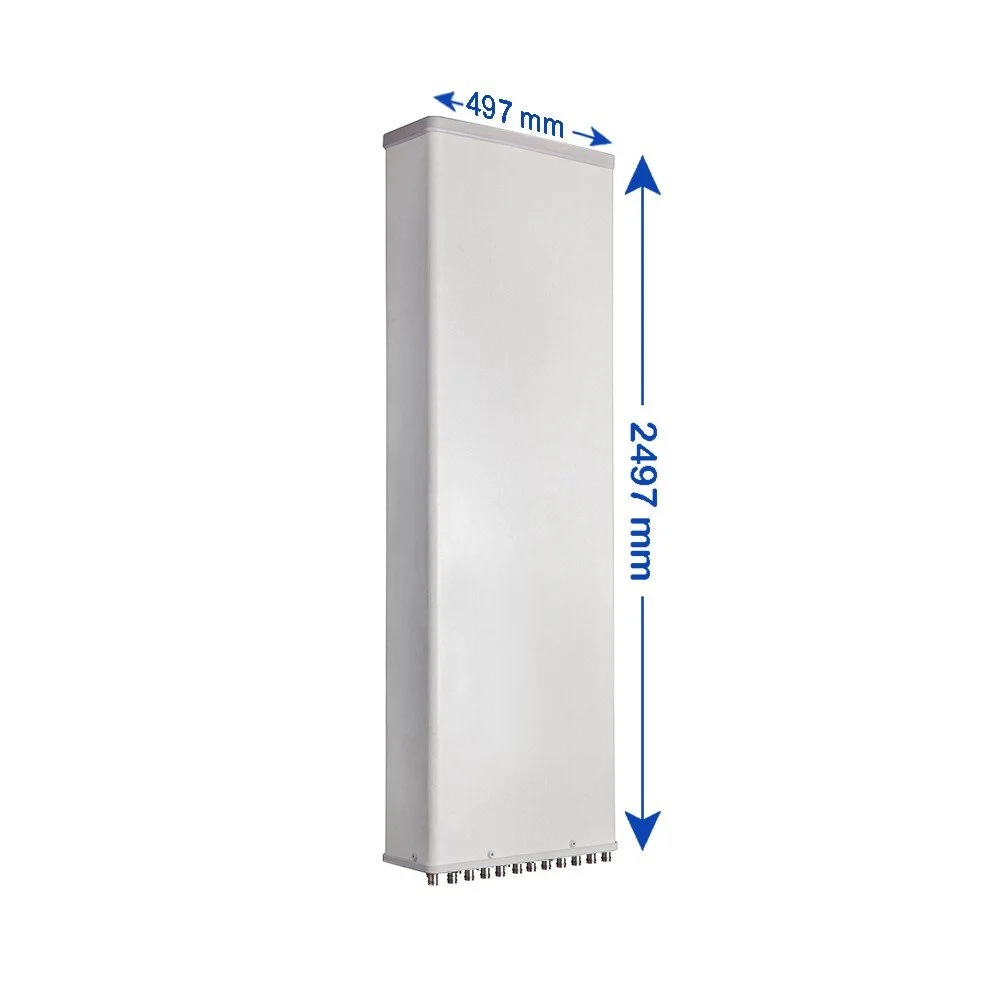
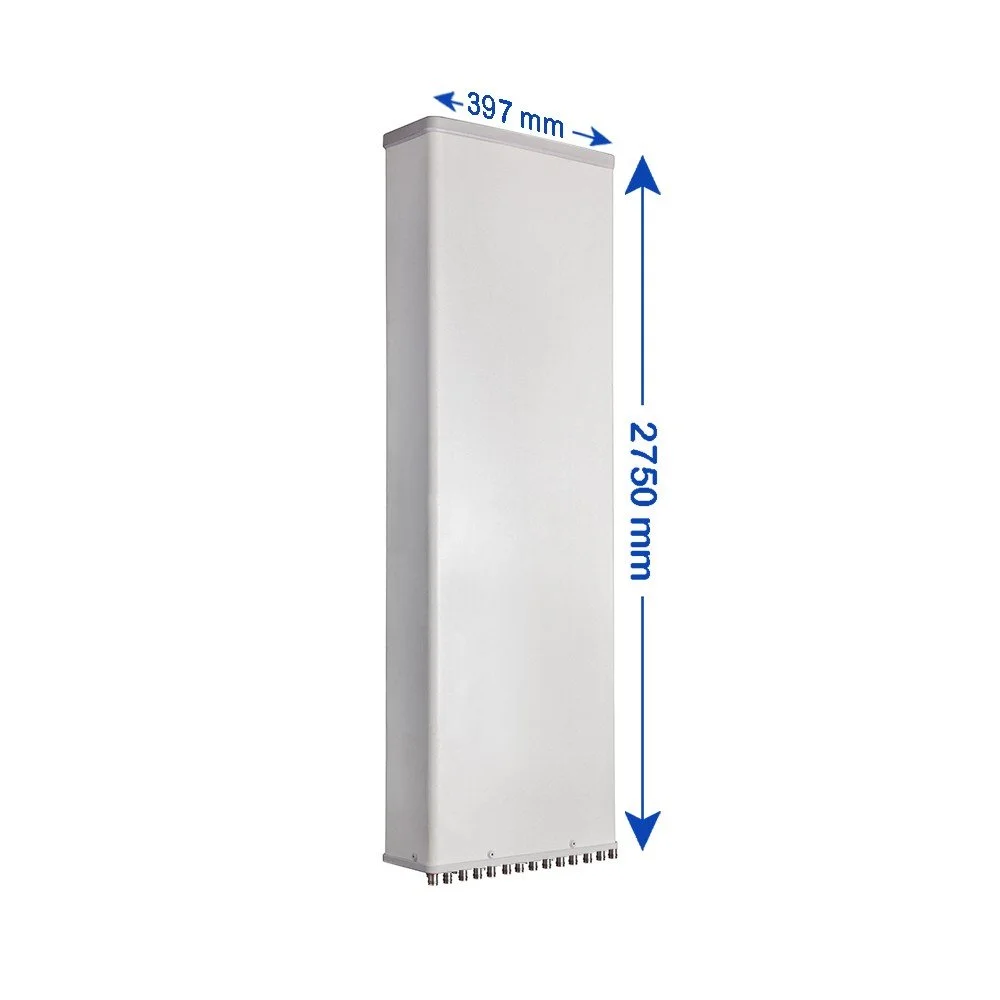
  • Weight and dimensions: compact design; contact factory for exact model measurements

Applications

  • Urban and suburban macro sectors needing multi-layer TDD capacity

  • Small cell aggregation where multi-port, multi-band coverage reduces site count

  • High-capacity venues (stadiums, campuses, transit hubs) requiring dense user throughput

  • Private LTE/5G networks and enterprise campuses

  • Co-location sites where flexible port assignment allows shared infrastructure across operators

Advantages

  • Band-agnostic design simplifies inventory and supports broad operator portfolios

  • 19-port configuration enables advanced MIMO and sector-splitting without multiple panels

  • TDD optimization reduces latency and improves spectral efficiency in time-shared uplink/downlink systems

  • Robust environmental specifications lower lifecycle costs and maintenance

Ordering Options and Customization

  • Connector types and cable lengths configurable per site requirements

  • Mechanical tilt and azimuth customization

  • Optional integrated surge protection modules and grounding kits

  • Color and mounting hardware variations available for aesthetic or site-fit needs

Documentation and Compliance

  • Supplied with installation manual, RF pattern files, and mechanical drawings

  • Compliance: CE, RoHS; other regional certifications available on request

Contact For model numbers, detailed RF plots, exact dimensions, and pricing, contact your MTT sales representative or authorized distributor. Provide target bands, mounting constraints, and radio interface preferences to receive a tailored recommendation.

19-Port TDD Hybrid Panel Antenna (690–3800 MHz)

Overview This 19-port TDD hybrid panel antenna covers 690–3800 MHz and is engineered for dense 4G/5G TDD deployments where high capacity, beam diversity, and spectral efficiency are required. Combining multiple antenna ports in a compact panel form factor, it supports advanced MIMO configurations, dynamic TDD slot allocation, and efficient coexistence across low-, mid-, and upper-mid bands.

Key Features

  • Frequency range: 690–3800 MHz (continuous wideband coverage for low-band, mid-band, and upper mid-band)

  • 19 ports: flexible port mapping for MIMO, sectorized patterns, and multi-band operation

  • TDD-optimized: low group delay and phase coherence across ports for reliable TDD synchronization and beamforming

  • High gain: optimized element patterns deliver sector-level gain and coverage consistency across bands

  • Compact, low-profile housing: slim, ruggedized panel suitable for rooftop, tower, and wall-mount installations

  • Wide beam control: sector pattern tailored to typical cell-site azimuth spreads; downtilt options available

  • High port isolation: minimizes inter-port coupling to preserve MIMO performance

  • Low VSWR: ensures efficient power transfer with common radio equipment

  • Environmental protection: IP65/IP67 rating and corrosion-resistant materials for long outdoor life

  • Lightning and surge protection options available

Technical Specifications (typical)

  • Frequency: 690–3800 MHz

  • Ports: 19 coaxial connector ports (type configurable: 4.3-10, N-type, or SMA per order)

  • Gain: band-dependent (typical mid-band 6–12 dBi per element, sector-composite gain higher)

  • Horizontal beamwidth: sector-optimized (typical 65°–120° options)

  • Vertical beamwidth: dependent on downtilt configuration (narrow to moderate for sector coverage)

  • Polarization: dual linear or cross-polarized per port groups

  • Isolation: >25 dB typical between adjacent ports

  • Input VSWR: <1.8:1 typical across bands

  • Max power per port: per connector ratings, supports standard base station transmit power

  • Operating temperature: -40°C to +65°C

  • Humidity: 0–100% condensing

  • Ingress protection: IP65/IP67

  • Wind survival: industry-standard (consult datasheet for specific wind-load ratings)

  • Mounting: adjustable tilt bracket for pole and wall mounting

  • Weight and dimensions: compact design; contact factory for exact model measurements

Applications

  • Urban and suburban macro sectors needing multi-layer TDD capacity

  • Small cell aggregation where multi-port, multi-band coverage reduces site count

  • High-capacity venues (stadiums, campuses, transit hubs) requiring dense user throughput

  • Private LTE/5G networks and enterprise campuses

  • Co-location sites where flexible port assignment allows shared infrastructure across operators

Advantages

  • Band-agnostic design simplifies inventory and supports broad operator portfolios

  • 19-port configuration enables advanced MIMO and sector-splitting without multiple panels

  • TDD optimization reduces latency and improves spectral efficiency in time-shared uplink/downlink systems

  • Robust environmental specifications lower lifecycle costs and maintenance

Ordering Options and Customization

  • Connector types and cable lengths configurable per site requirements

  • Mechanical tilt and azimuth customization

  • Optional integrated surge protection modules and grounding kits

  • Color and mounting hardware variations available for aesthetic or site-fit needs

Documentation and Compliance

  • Supplied with installation manual, RF pattern files, and mechanical drawings

  • Compliance: CE, RoHS; other regional certifications available on request

Contact For model numbers, detailed RF plots, exact dimensions, and pricing, contact your MTT sales representative or authorized distributor. Provide target bands, mounting constraints, and radio interface preferences to receive a tailored recommendation.

Electrical Specifications
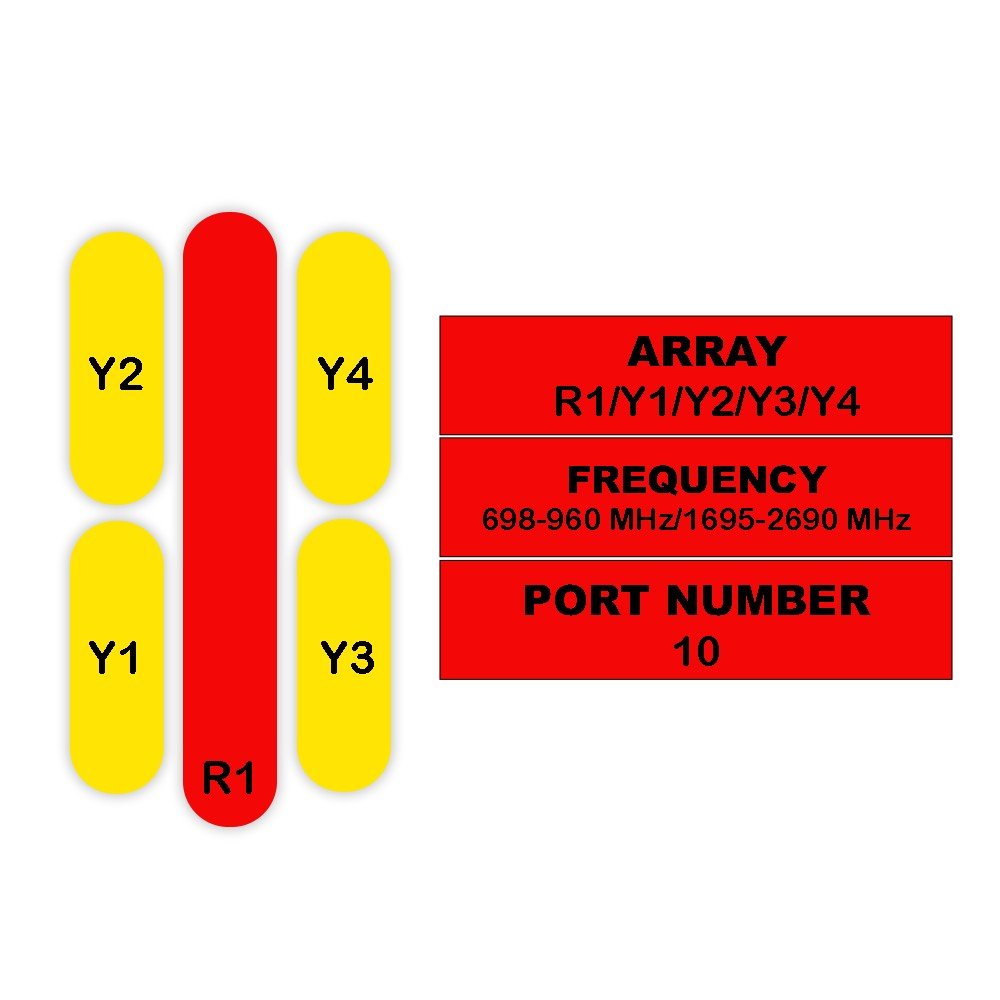
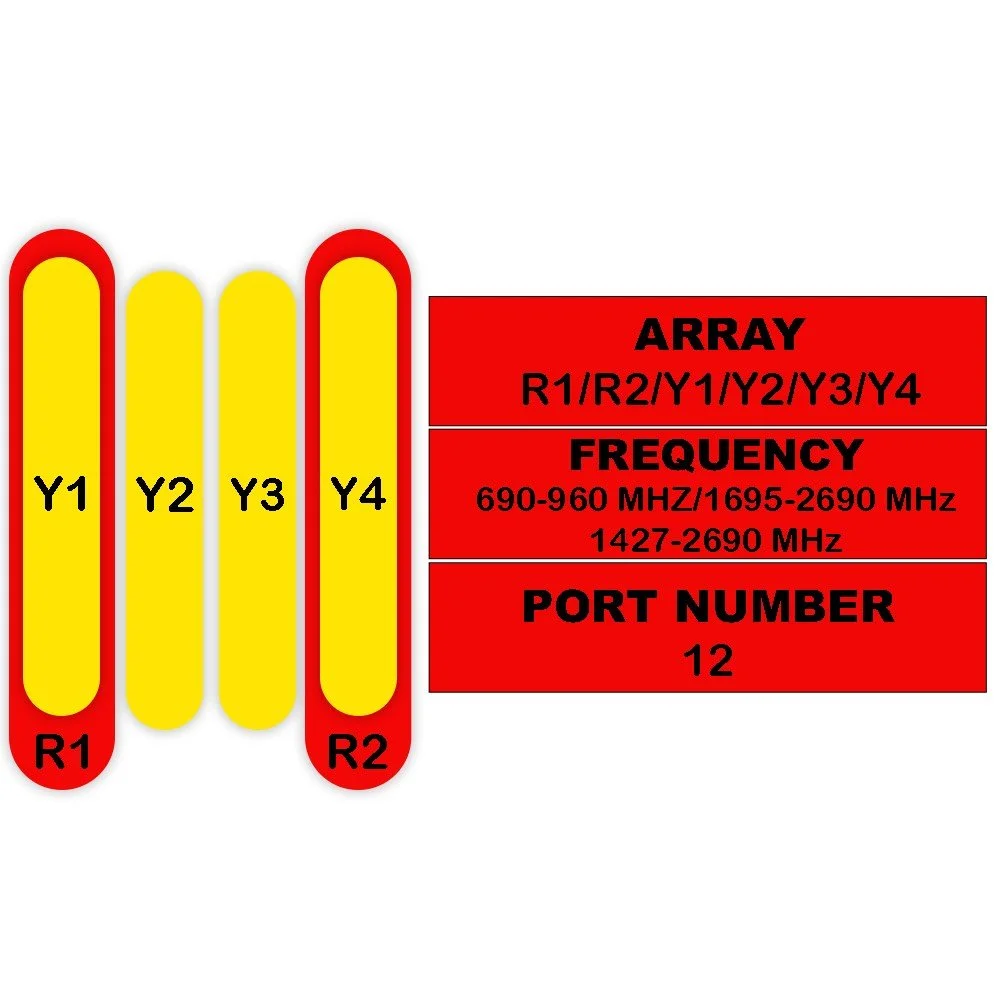
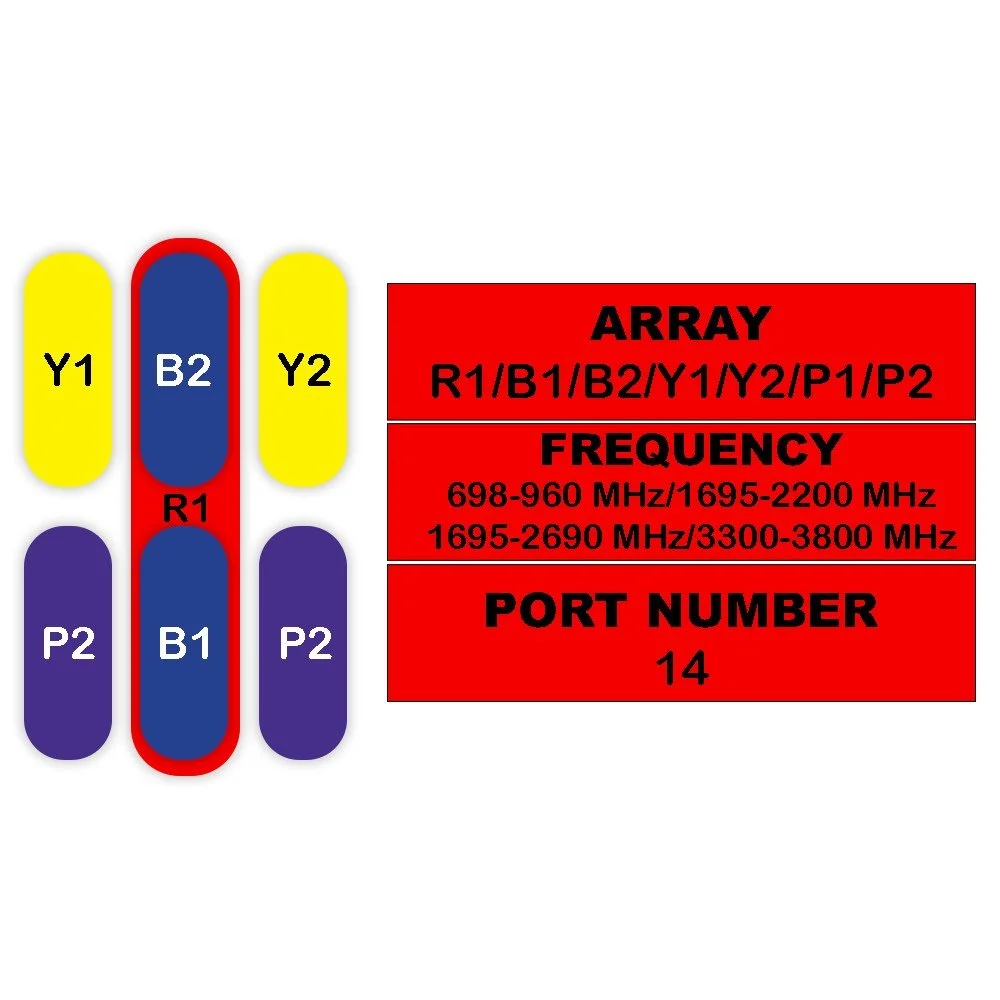
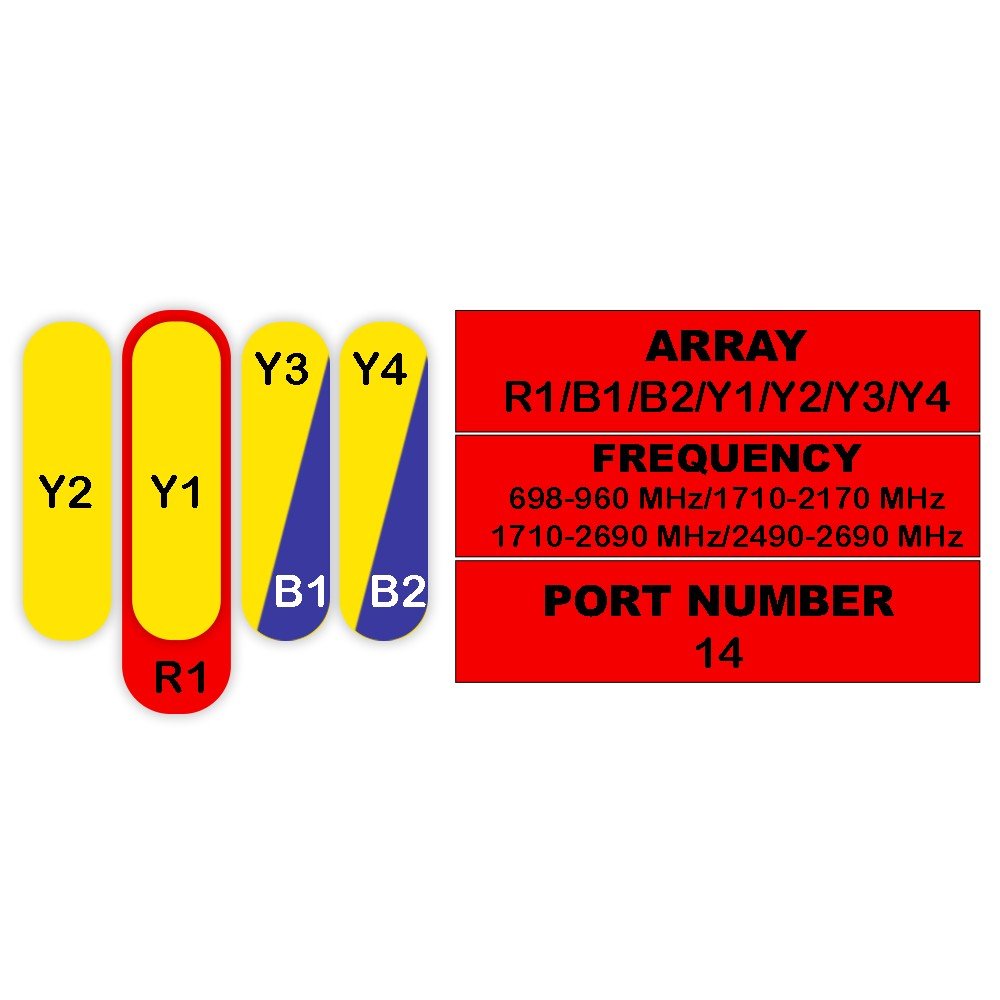
Electrical specifications for R1 and Y1 / Y2 antenna models including gain, beamwidth, isolation, impedance and power ratings.
Parameter Unit R1 Y1 / Y2
690–960 MHz 1695–2690 MHz
690–806 790–894 880–960 1695–1880 1850–1990 1920–2170 2300–2400 2490–2690
Polarization ±45° ±45°
Gain (at Mid Tilt) dBi 13.814.214.7 1414.214.514.714.5
Gain (Over All Tilts) dBi 13.6 ± 0.614.0 ± 0.614.5 ± 0.6 13.8 ± 0.614.0 ± 0.514.3 ± 0.514.5 ± 0.514.3 ± 0.6
Horizontal Beamwidth degree 72 ± 4.869 ± 3.967 ± 4.1 68 ± 4.967 ± 4.764 ± 5.162 ± 5.560 ± 5.2
Vertical Beamwidth degree 16.5 ± 1.515.4 ± 1.114.3 ± 0.8 14.2 ± 1.013.4 ± 0.813 ± 0.811.2 ± 0.910.3 ± 0.9
Electrical Downtilt, Continuously Adjustable degree 2–16 2–12
First Upper Side Lobe Suppression (typical) dB > 15> 15> 15 > 15> 15> 15> 15> 15
Front-To-Back Ratio ±30° dB > 22> 23> 25 ≥ 23≥ 23> 24≥ 25≥ 25
Isolation (Cross-Polar) dB > 25 > 25
Isolation (Interband, typical) dB > 35 > 28 (Y1, Y2 // Y3, Y4); > 35 (Y1, Y2 // R1)
Impedance Ohm 50 50
VSWR < 1.5 < 1.5
Return Loss dB > 14 > 14
PIM3 (2x43 dBm Carrier) dBc < -153 < -153
Lightning Protection DC Ground DC Ground
Maximum Average Input Power per Port, at 50° C Ambient Temperature Watts 300 250
Electrical Specifications – Y3 / Y4
Electrical specifications for Y3 and Y4 antenna models including gain, beamwidth, isolation, impedance and power ratings.
Parameter Unit Y3 / Y4
1695–2690 MHz
1695–1880 1850–1990 1920–2170 2300–2400 2490–2690
Polarization ±45°
Gain (at Mid Tilt) dBi 14.0 14.2 14.5 14.8 14.7
Gain (Over All Tilts) dBi 13.8 ± 0.6 14.0 ± 0.5 14.3 ± 0.5 14.6 ± 0.5 14.5 ± 0.6
Horizontal Beamwidth degree 67 ± 4.9 65 ± 4.7 63 ± 5.1 59 ± 5.5 59 ± 5.2
Vertical Beamwidth degree 15.1 ± 1.1 14.1 ± 0.8 13.2 ± 0.8 11.5 ± 0.9 10.4 ± 0.9
Electrical Downtilt, Continuously Adjustable degree 2–12
First Upper Side Lobe Suppression (typical) dB > 15 > 15 > 15 > 15 > 15
Front-To-Back Ratio ±30° dB ≥ 23 ≥ 23 > 24 ≥ 25 ≥ 25
Isolation (Cross-Polar) dB > 25
Isolation (Interband, typical) dB > 28 (Y3, Y4 // Y1, Y2); > 35 (Y3, Y4 // R1)
Impedance Ohm 50
VSWR < 1.5
Return Loss dB > 14
PIM3 (2x43 dBm Carrier) dBc < -153
Lightning Protection DC Ground
Maximum Average Input Power per Port, at 50° C Ambient Temperature Watts 250
Electrical Specifications – Y3 / Y4
Electrical specifications for Y3 and Y4 antenna models including frequency range, gain, beamwidth, isolation, impedance and power ratings.
Parameter Unit Y3 / Y4
Frequency Range: 1695–2690 MHz
1695–1880 MHz 1850–1990 MHz 1920–2170 MHz 2300–2400 MHz 2490–2690 MHz
Frequency Range MHz 1695–1880 1850–1990 1920–2170 2300–2400 2490–2690
Polarization ±45°
Gain at Mid Tilt dBi 14.0 14.2 14.5 14.8 14.7
Gain Over All Tilts dBi 13.8 ± 0.6 14.0 ± 0.5 14.3 ± 0.5 14.6 ± 0.5 14.5 ± 0.6
Horizontal Beamwidth degree 67 ± 4.9 65 ± 4.7 63 ± 5.1 59 ± 5.5 59 ± 5.2
Vertical Beamwidth degree 15.1 ± 1.1 14.1 ± 0.8 13.2 ± 0.8 11.5 ± 0.9 10.4 ± 0.9
Electrical Downtilt, Continuously Adjustable degree 2–12
First Upper Side Lobe Suppression (typical) dB > 15 > 15 > 15 > 15 > 15
Front-To-Back Ratio ±30° dB ≥ 23 ≥ 23 > 24 ≥ 25 ≥ 25
Isolation Cross-Polar dB > 25
Isolation Interband (typical) dB > 28 (Y3, Y4 // Y1, Y2); > 35 (Y3, Y4 // R1)
Impedance Ohm 50
Voltage Standing Wave Ratio (VSWR) < 1.5
Return Loss dB > 14
Passive Intermodulation PIM3 (2 × 43 dBm Carrier) dBc < -153
Lightning Protection DC Ground
Maximum Average Input Power per Port, at 50° C Ambient Temperature Watts 250
Mechanical Specifications
Mechanical specifications including connector type, dimensions, weight, wind load and environmental ratings.
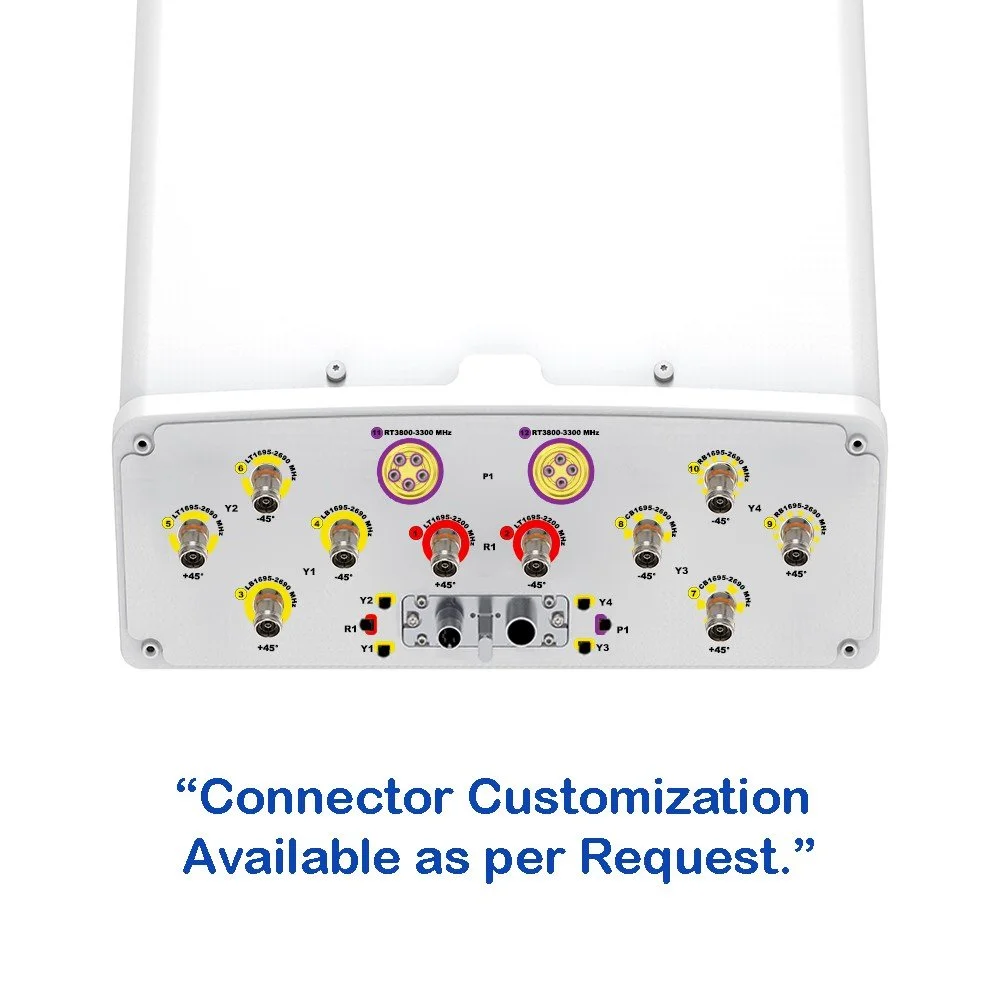
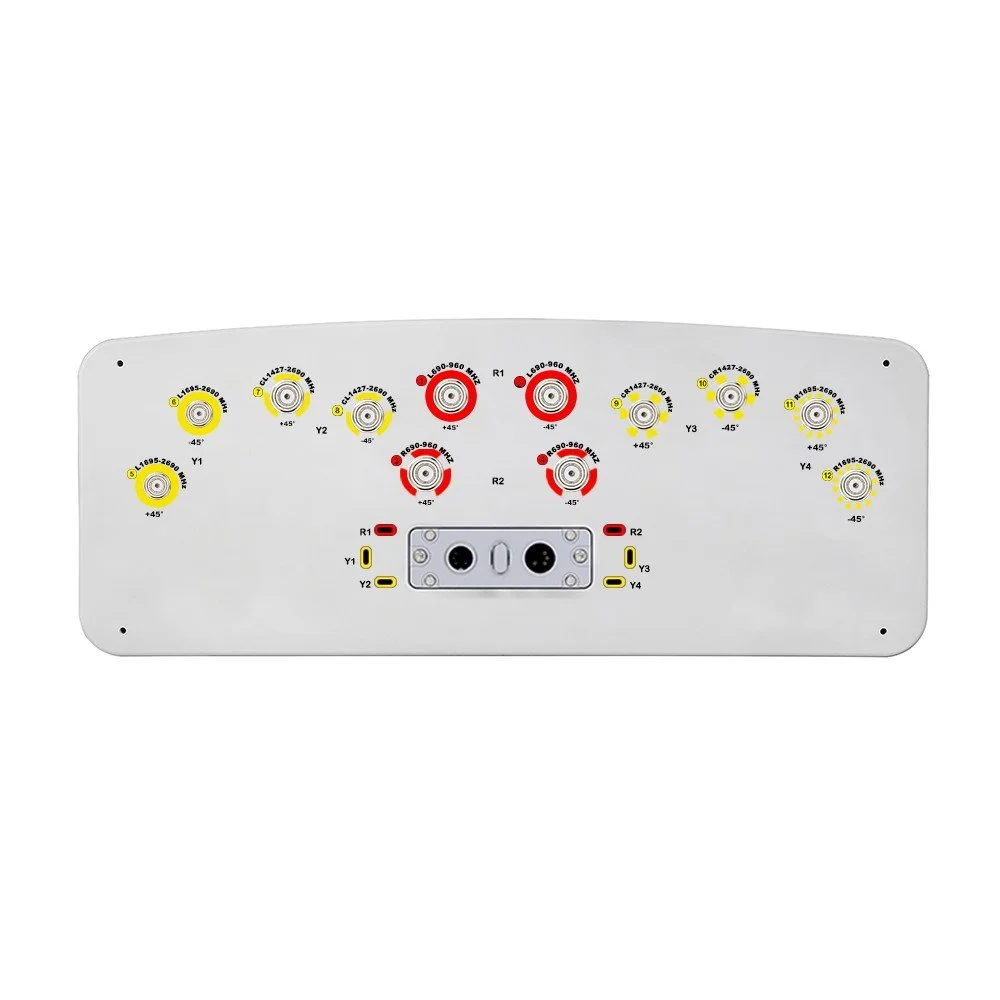
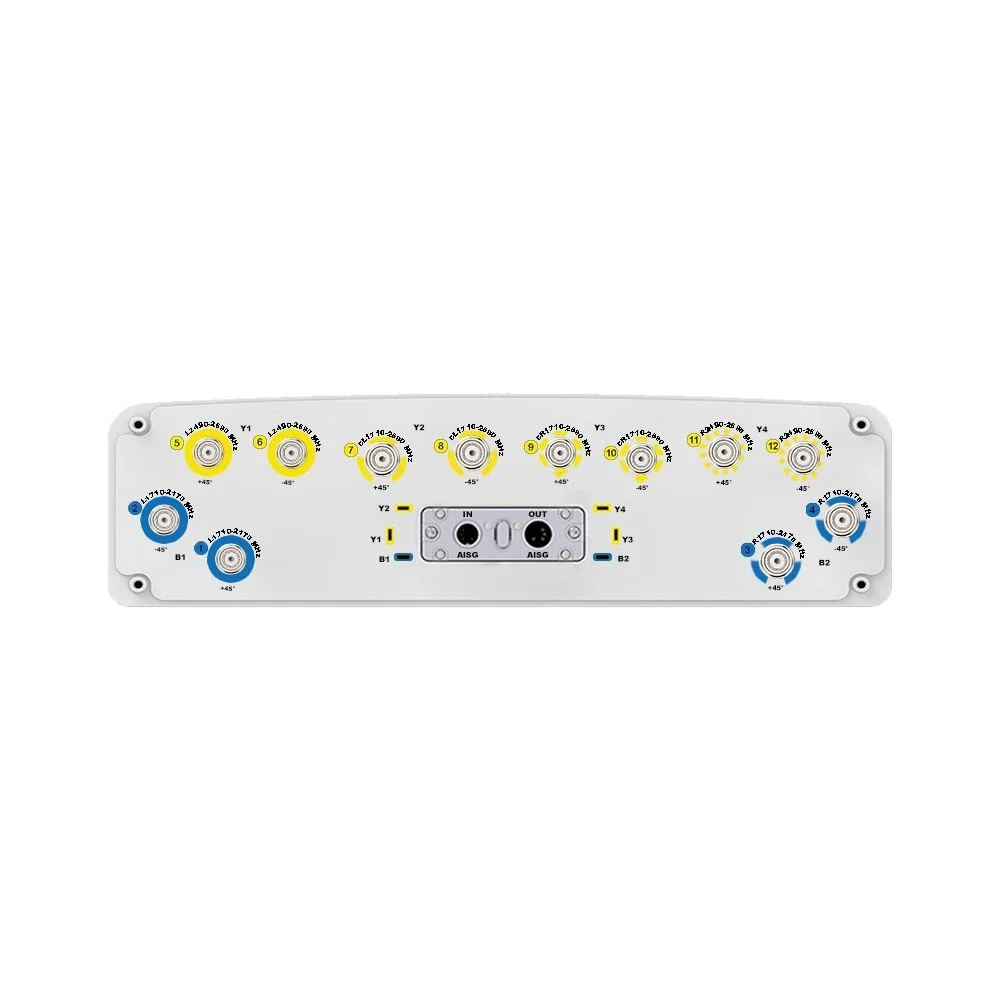
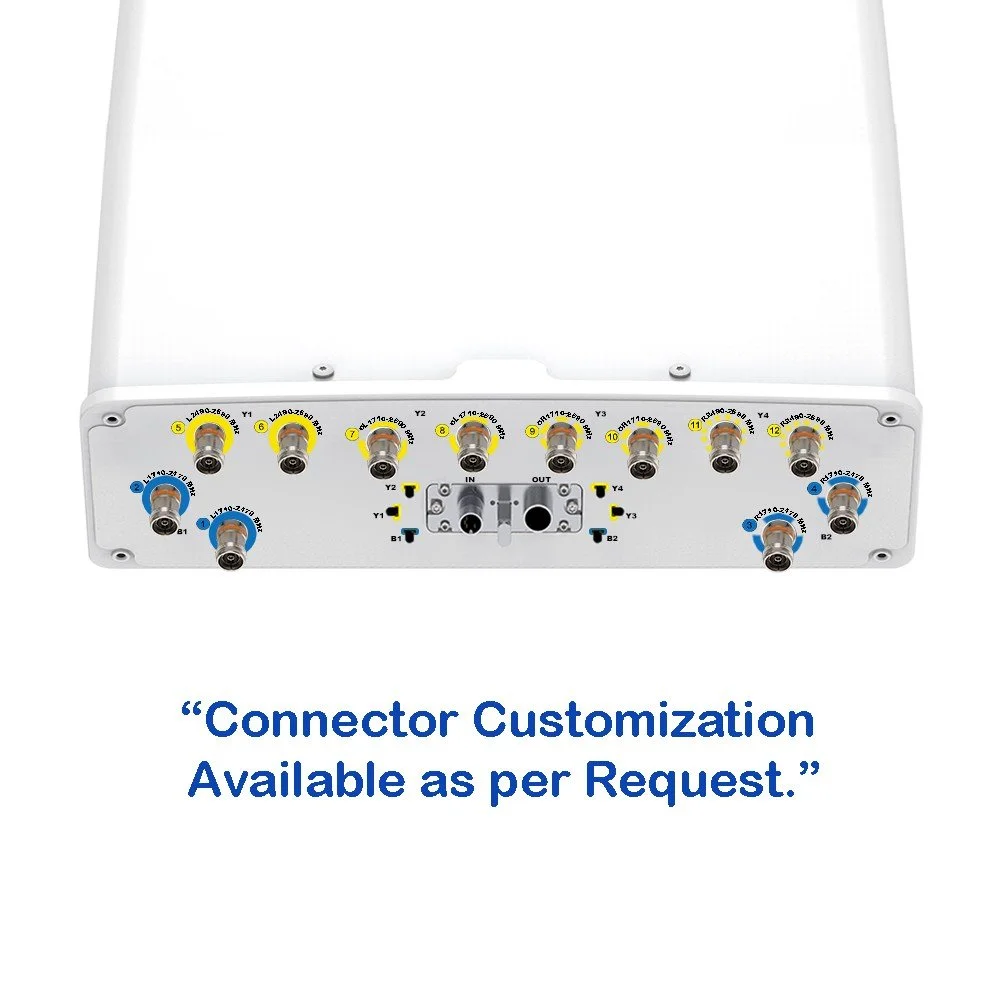
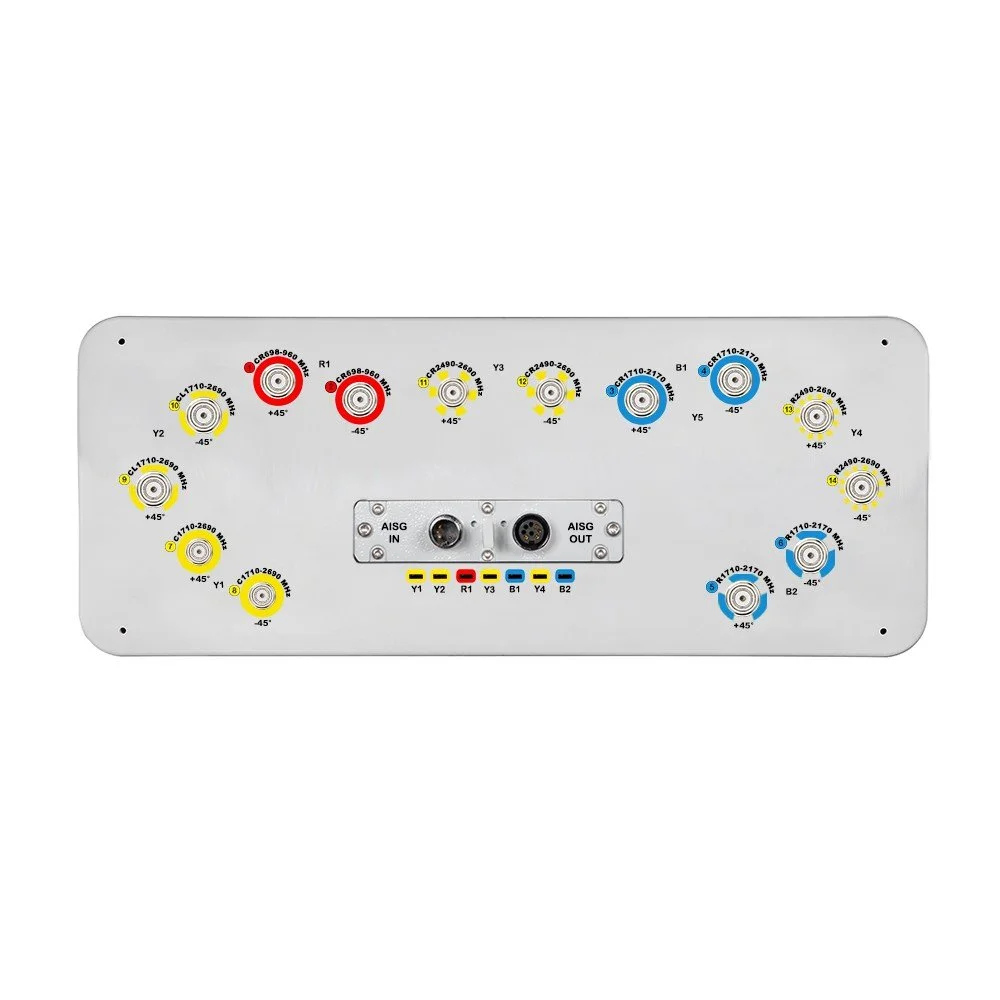
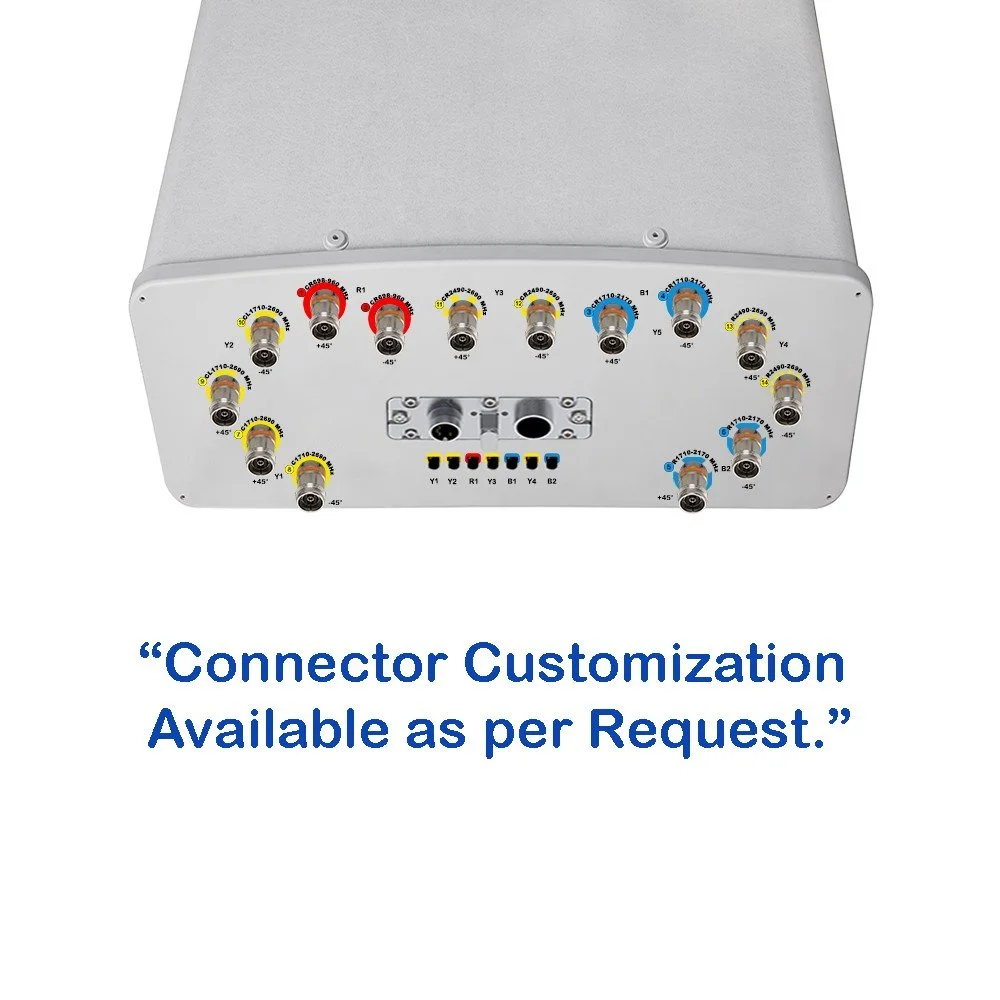
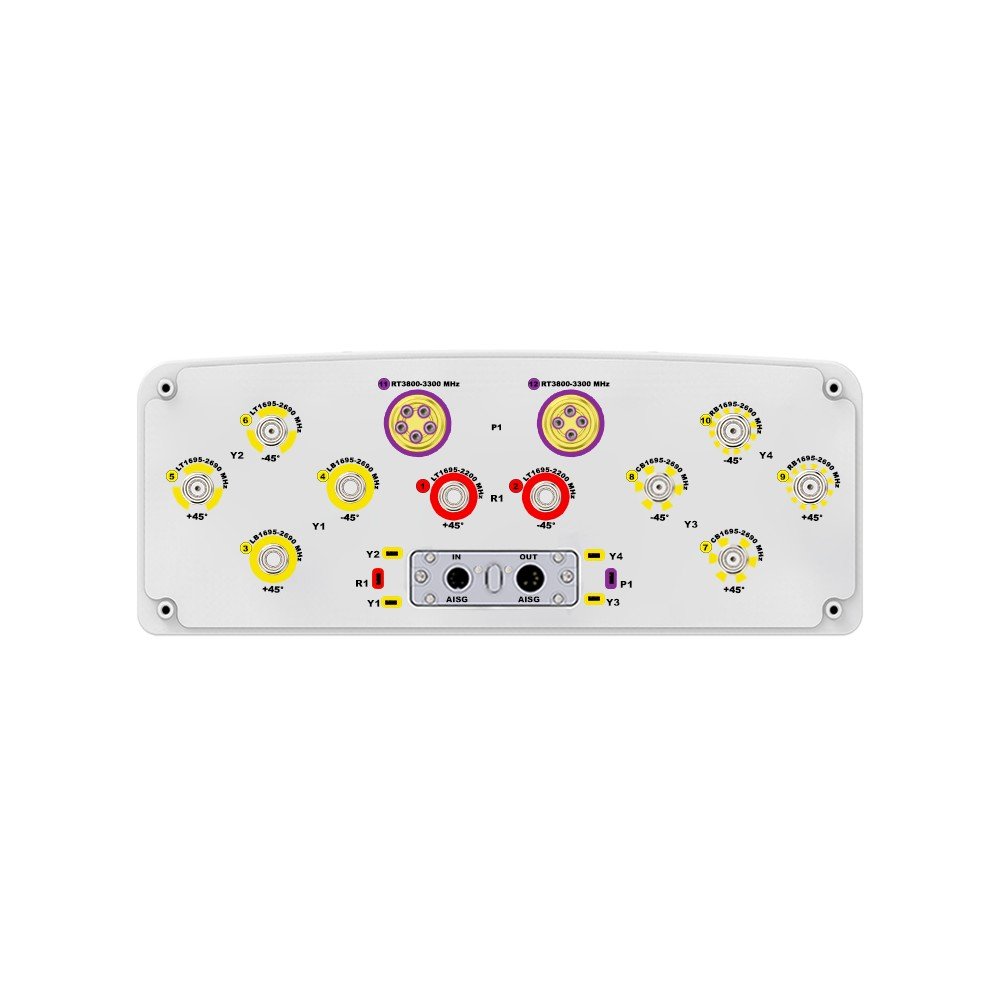
Connector Type (10 ×) 4.3/10 Female Connectors + (1 ×) MQ5 Male Connector + (1 ×) MQ4 Male Connector
Connector Position Bottom
Electrical Tilt Control Integrated Remote Electrical Tilt (RET)
Radome Material Fiberglass
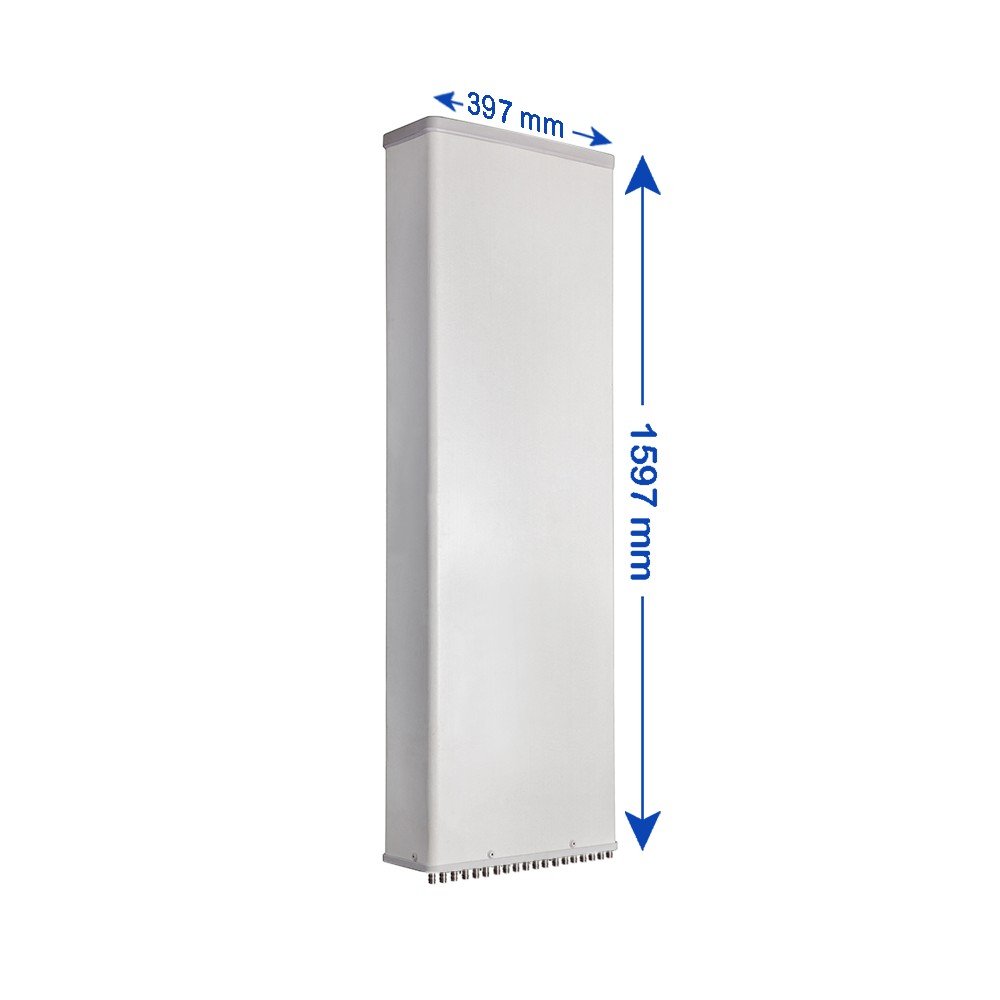
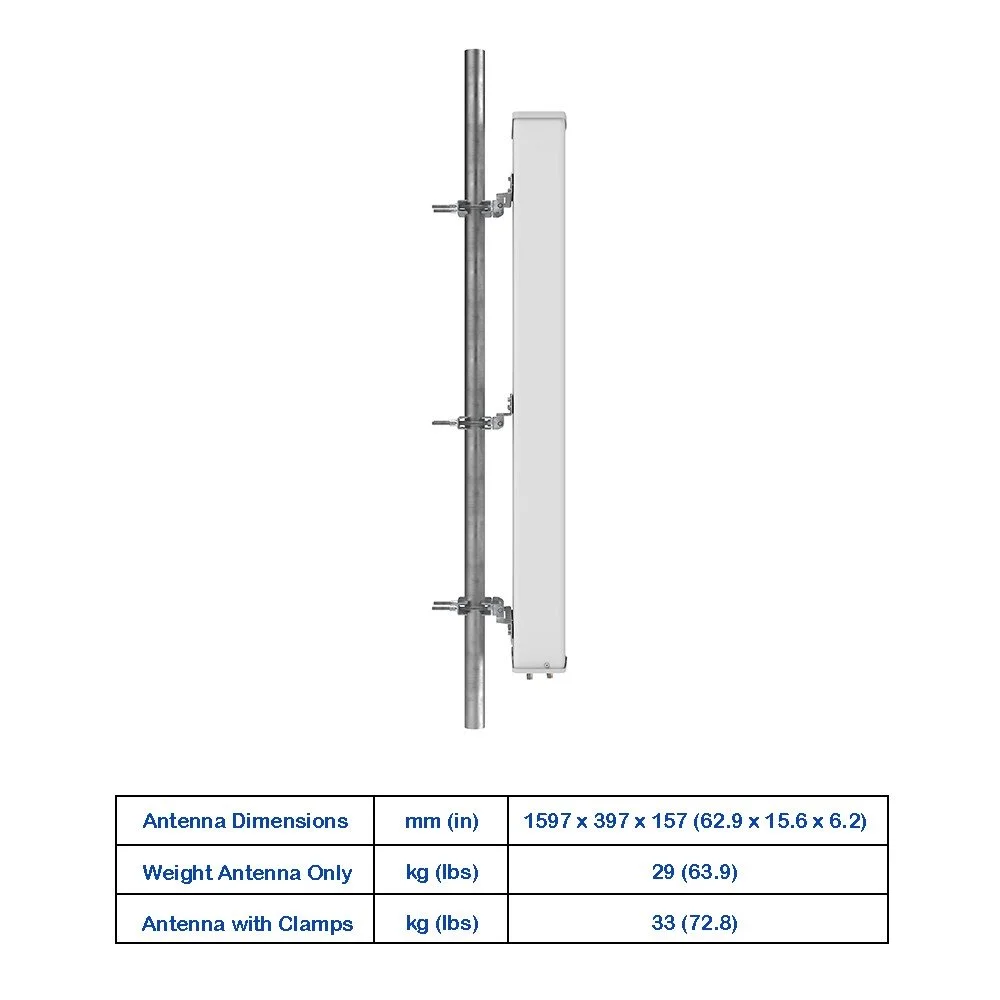
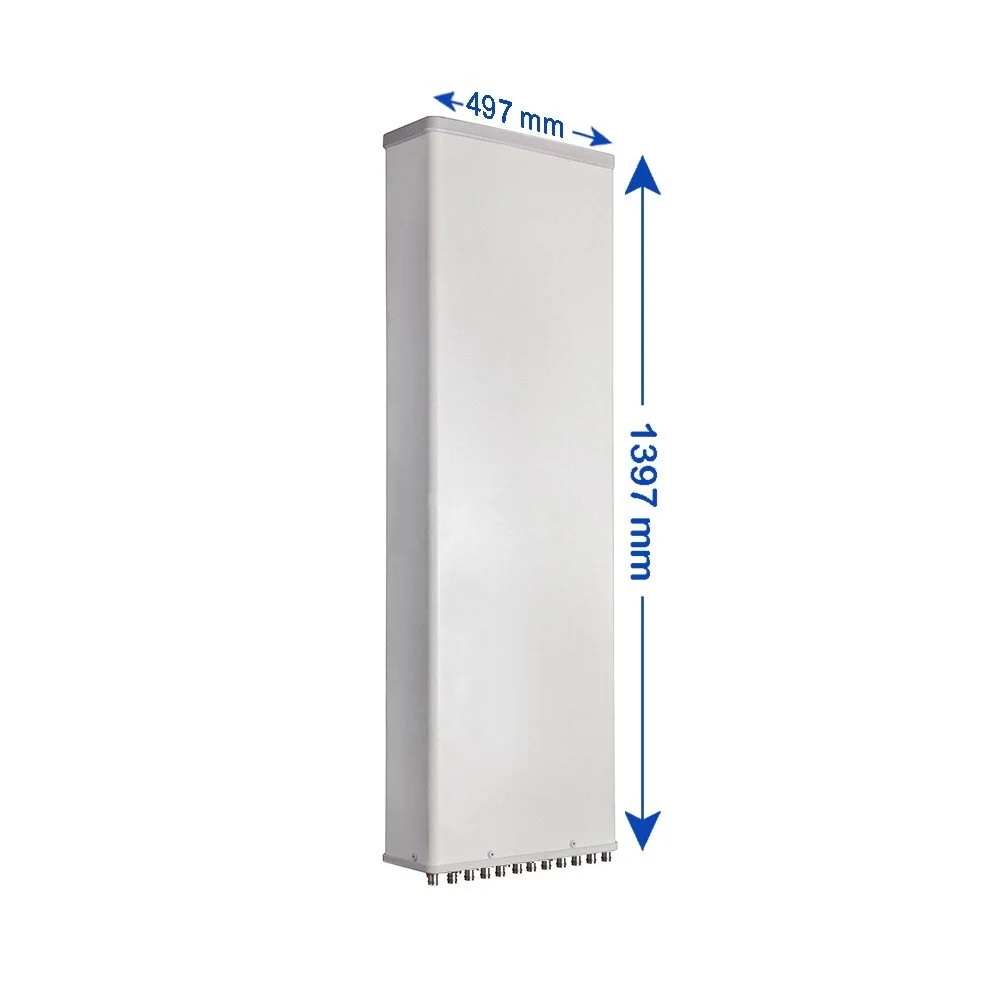
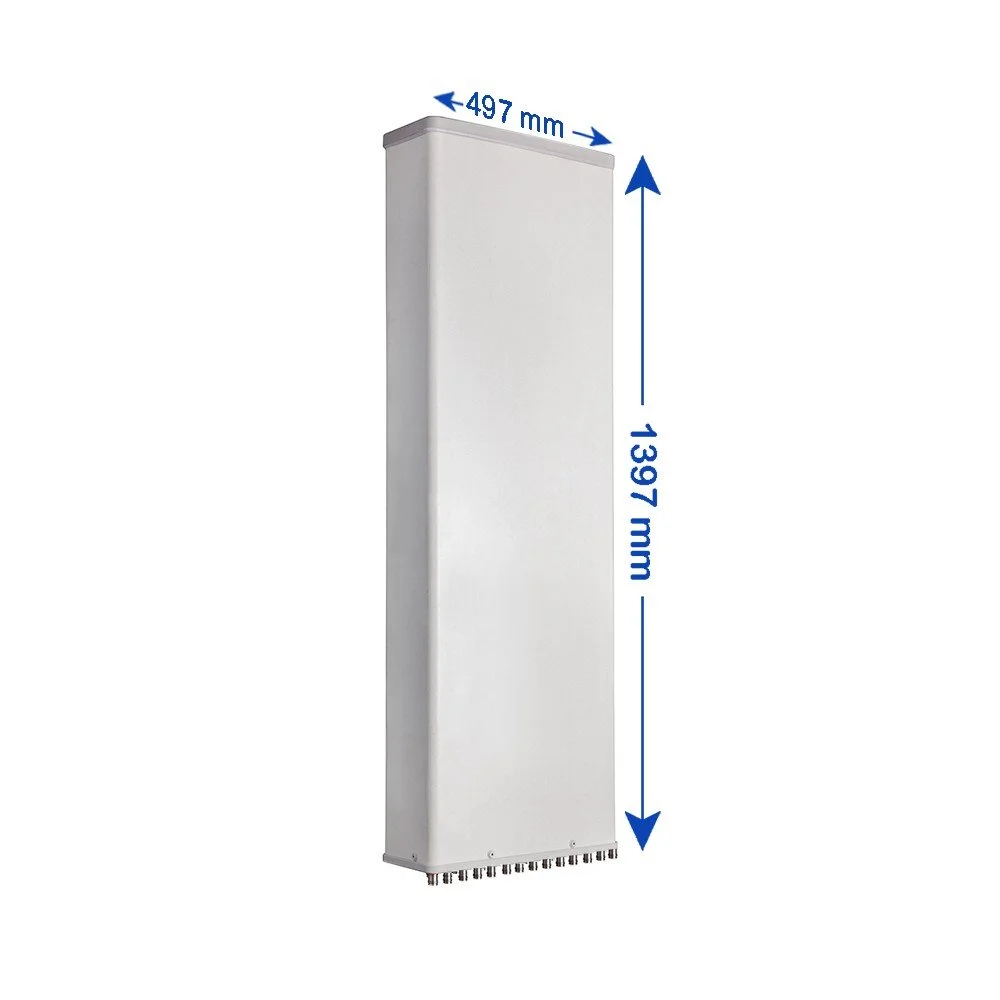
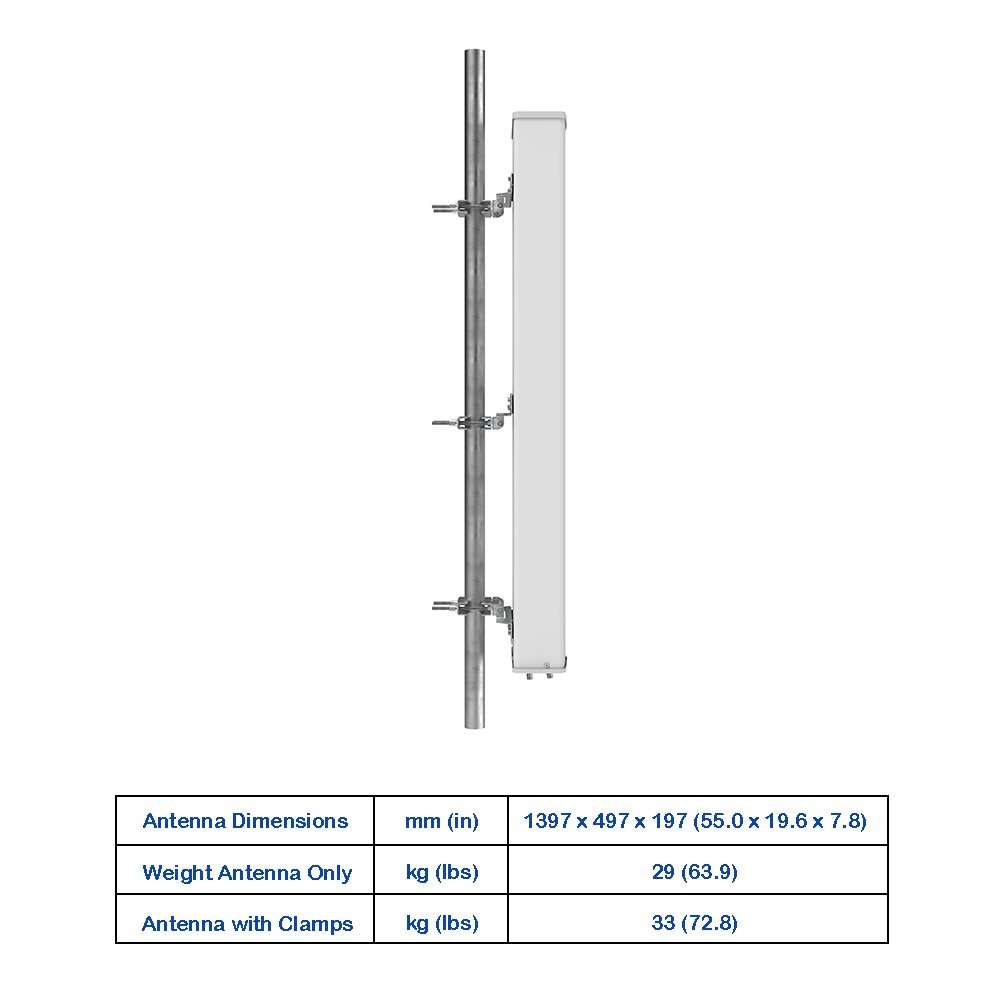
Antenna Dimensions (Height × Width × Depth) mm (in) 1597 × 397 × 157 mm (62.9 × 15.6 × 6.2 inches)
Antenna Weight (Antenna Only) kg (lbs) 29 kg (63.9 lbs)
Antenna Weight (with Clamps) kg (lbs) 33 kg (72.8 lbs)
Maximum Wind Speed Survival km/h (mph) 200 km/h (124.3 mph)
Wind Load at 150 km/h – Frontal N (lbf) 585 N (131.5 lbf)
Wind Load at 150 km/h – Rear N (lbf) 655 N (147.2 lbf)
Wind Load at 150 km/h – Lateral N (lbf) 285 N (64.1 lbf)
Operating Temperature Range °C (°F) -40 °C to +60 °C (-40 °F to 140 °F)