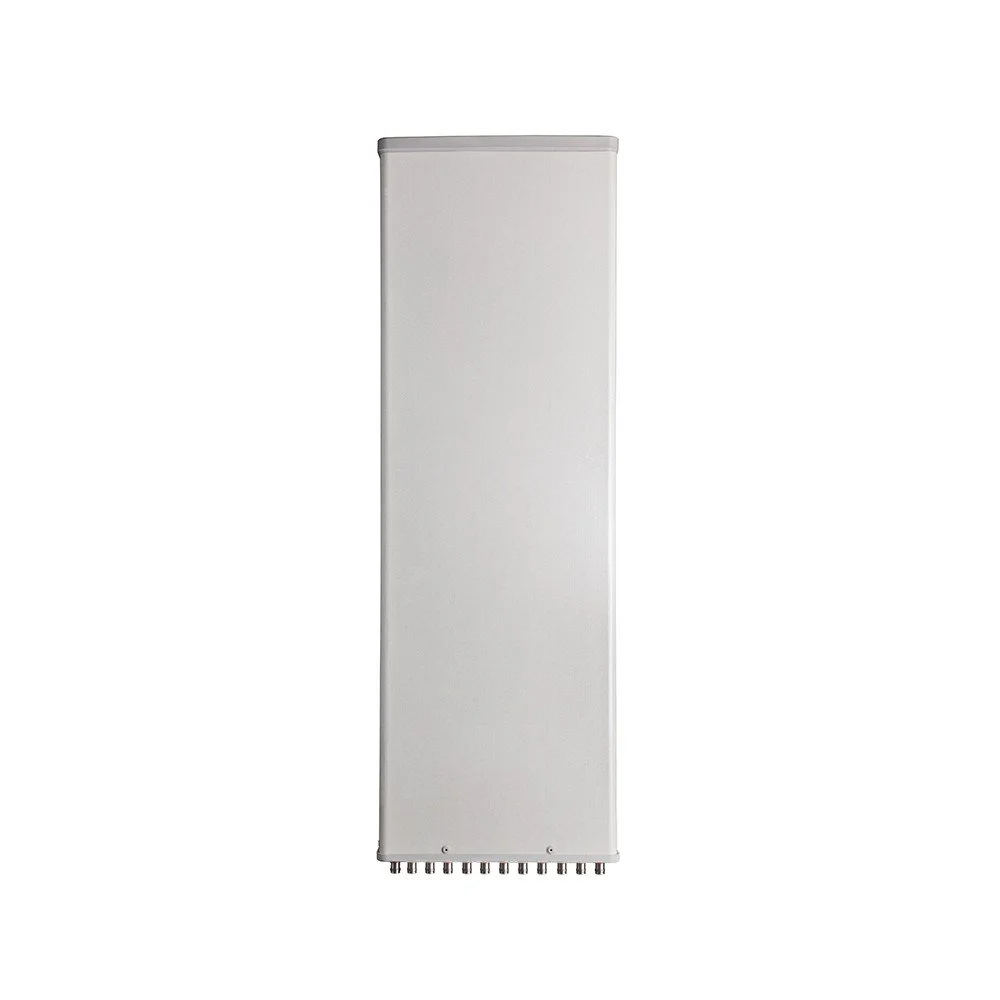
19-Port, TDD Hybrid Panel Antenna ( 690 - 3800 MHz )

₹0.00

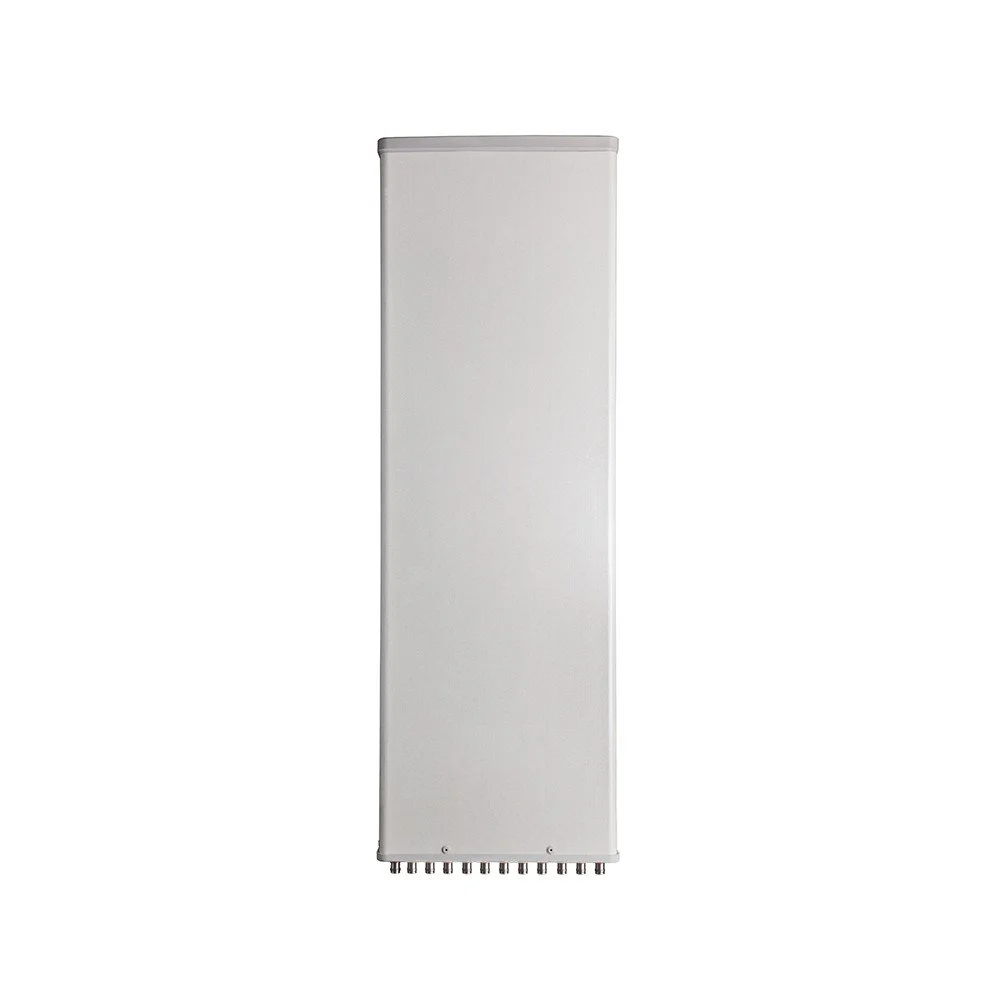
19-Port TDD Hybrid Panel Antenna (690–3800 MHz)

Overview

  • Frequency range: 690–3800 MHz (covers low-band, mid-band, and parts of upper mid/high bands)

  • Ports: 19 TDD-capable ports arranged for hybrid operation

  • Polarization: Dual linear (±45°) with combined/isolated port options

  • Gain: High, frequency-dependent (factory-configurable per port grouping)

  • Beamwidth: Sector-optimized (typical horizontal beamwidth options 60°, 90°, or 120° depending on model)

  • Mounting: Slim-profile wall or mast mount with integrated adjustable bracket

  • Environmental: IP67-rated radome, -40°C to +65°C operating range, corrosion-resistant materials

  • Standards: Designed for TDD deployments, supports carrier aggregation and MIMO topologies

Key Features

  • Multi-band, multi-port flexibility: 19 ports enable simultaneous support of multiple TDD bands and multiple-input multiple-output (MIMO) layers without external combiners, minimizing insertion loss and simplifying site architecture.

  • Hybrid architecture: Combines passive and active-like segregation to allocate ports to specific bands or operators, enabling shared-coverage scenarios and operator-neutral deployments.

  • High isolation: Carefully engineered port-to-port isolation reduces inter-port interference and cross-talk, improving TDD frame synchronization and uplink/downlink performance.

  • Low passive intermodulation (PIM): Precision connectors and materials reduce PIM, ensuring reliable performance in high-power, multi-carrier environments.

  • Wideband coverage: Continuous 690–3800 MHz operation supports LTE, 5G NR TDD bands, and legacy requirements with a single antenna installation.

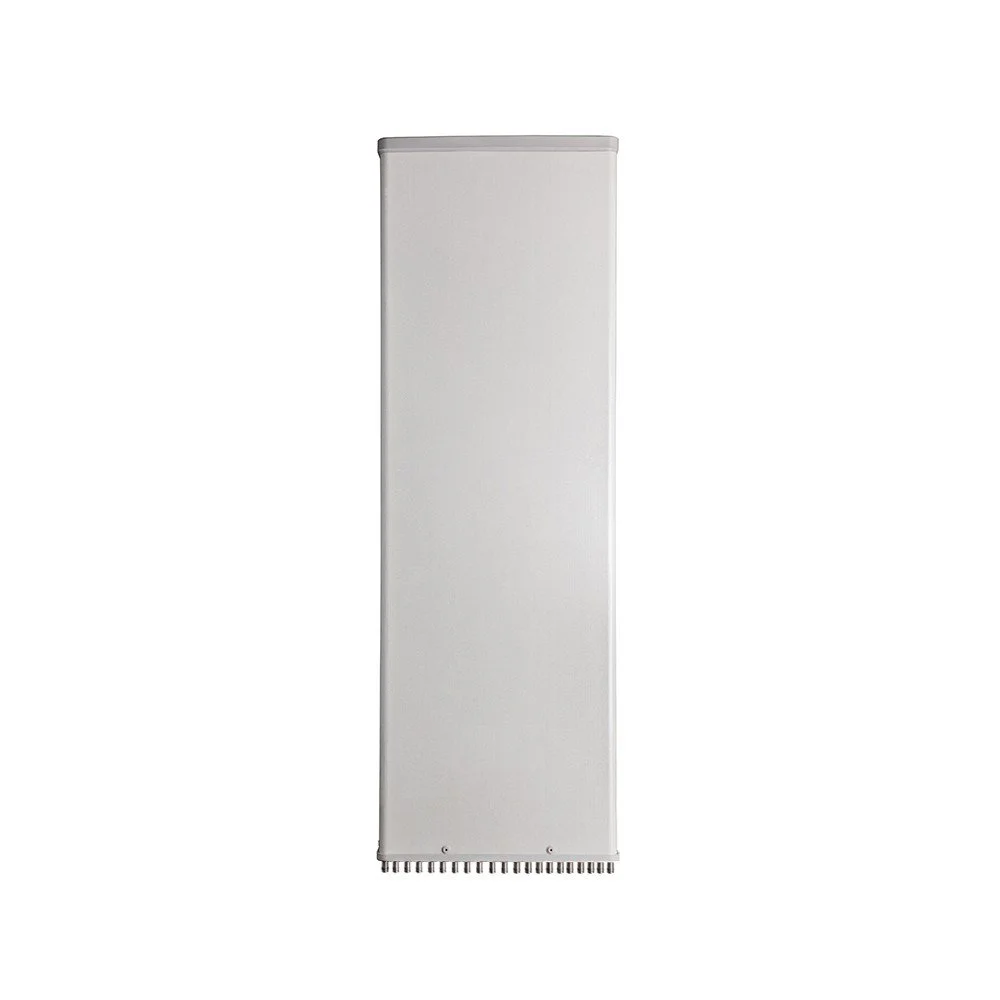
  • Compact form factor: Slim panel design reduces visual impact and wind load while accommodating 19 ports for dense MIMO and carrier aggregation use cases.

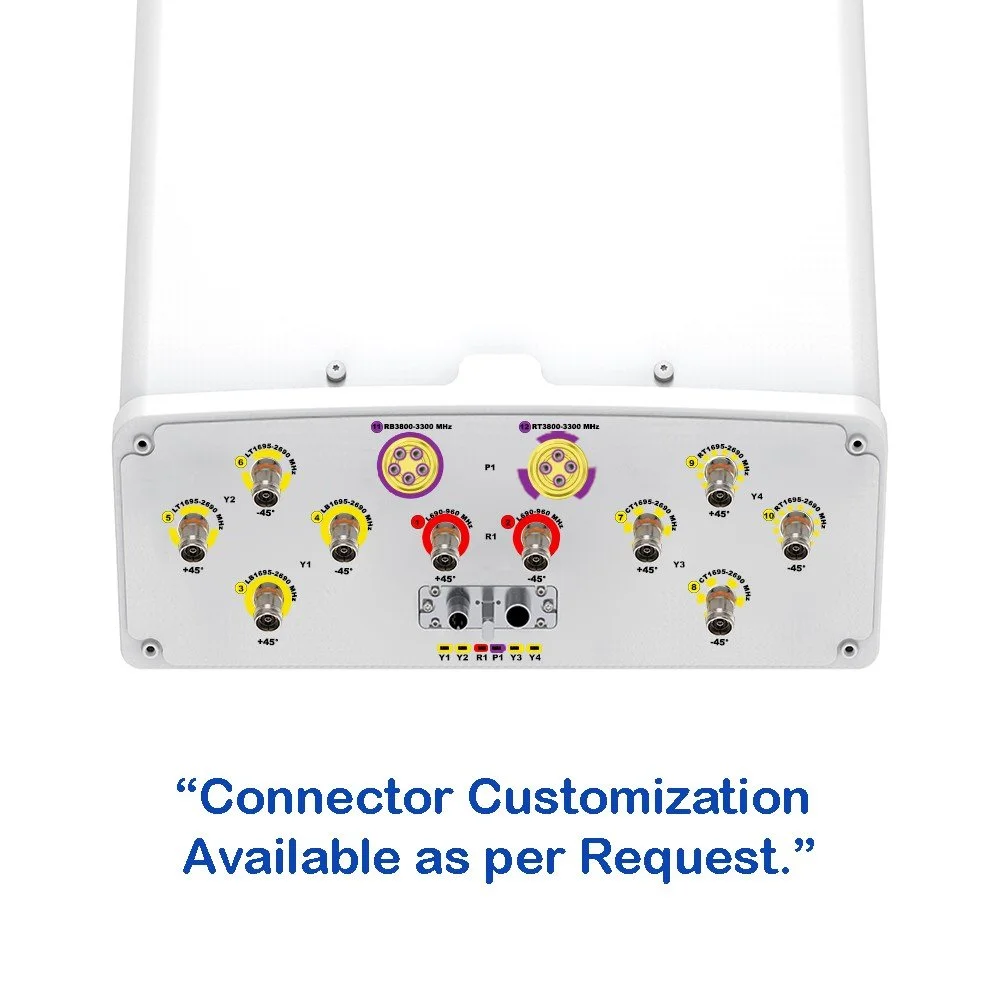
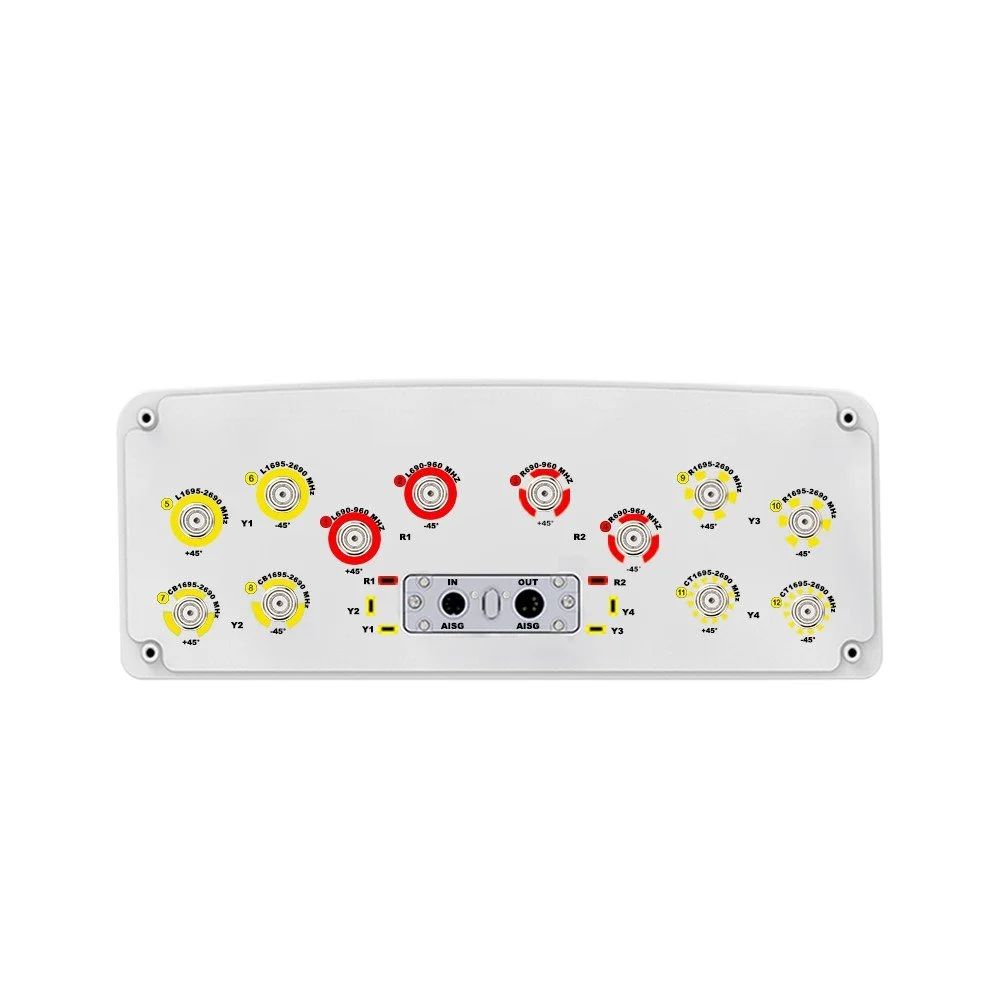
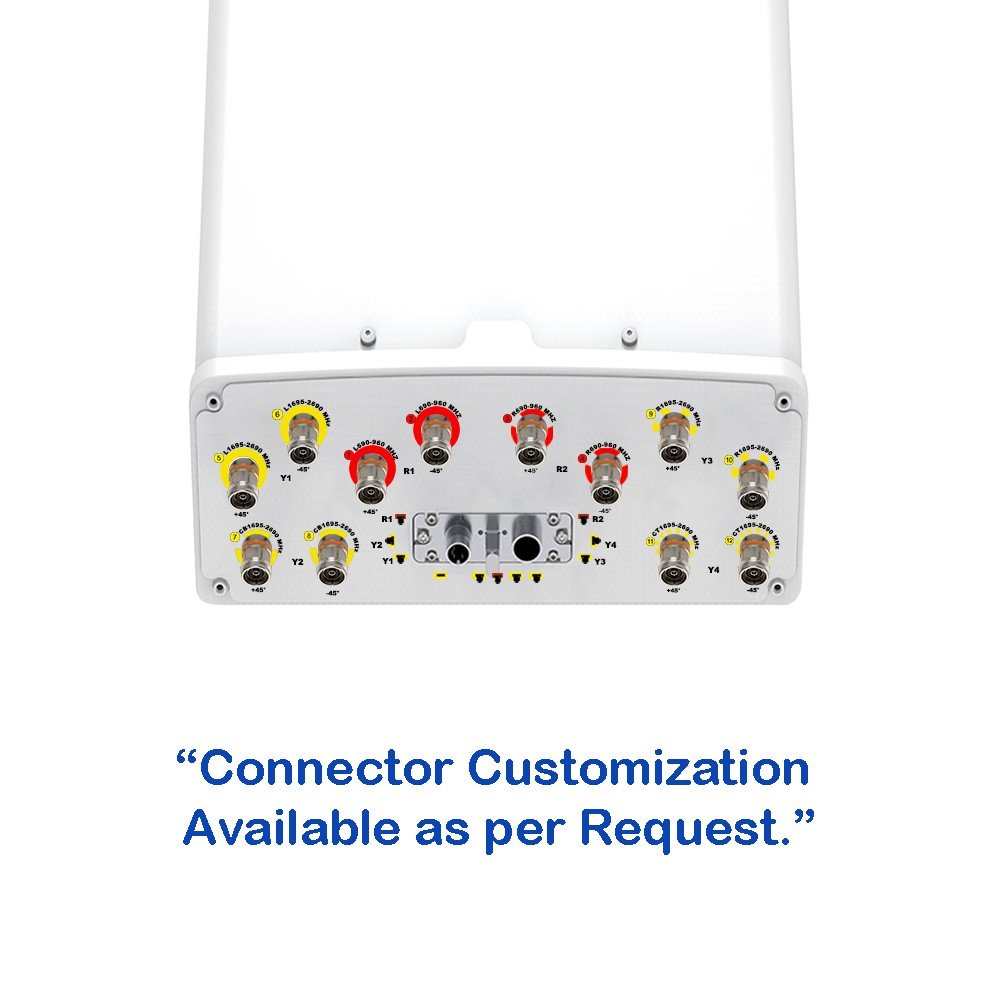
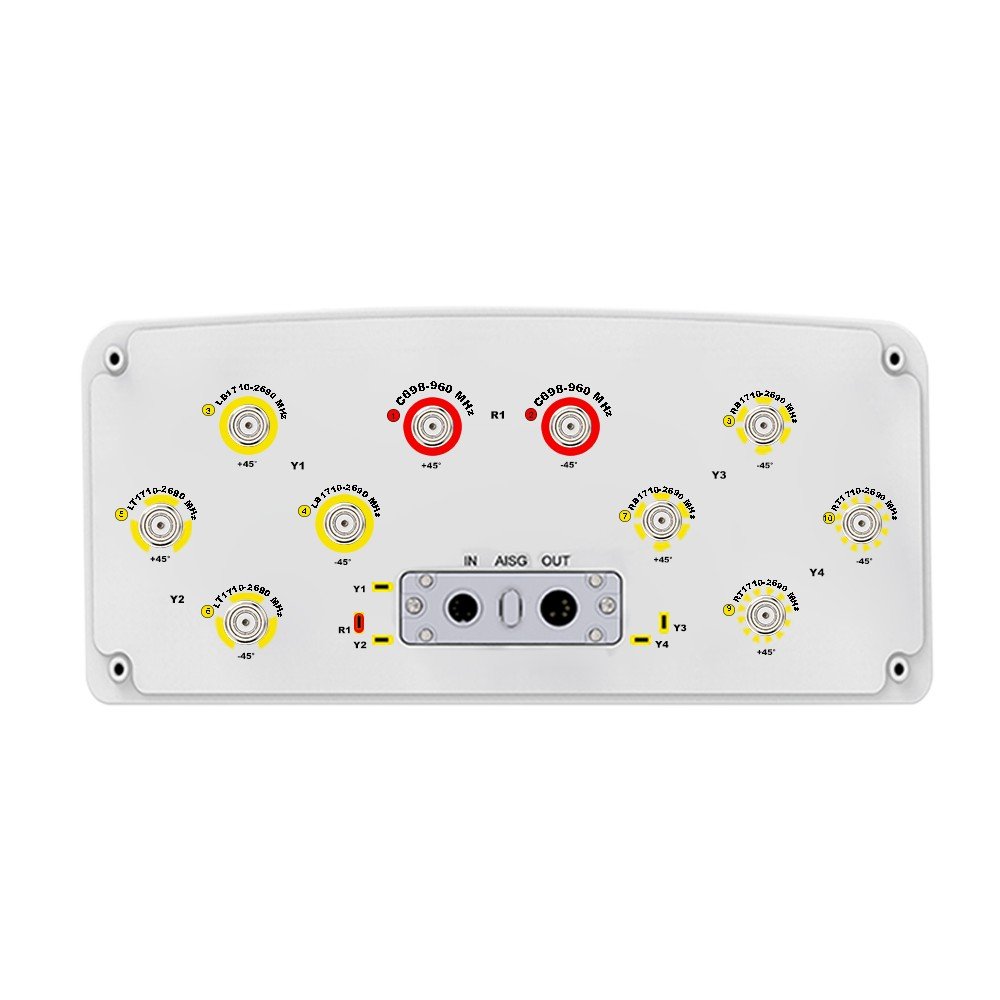
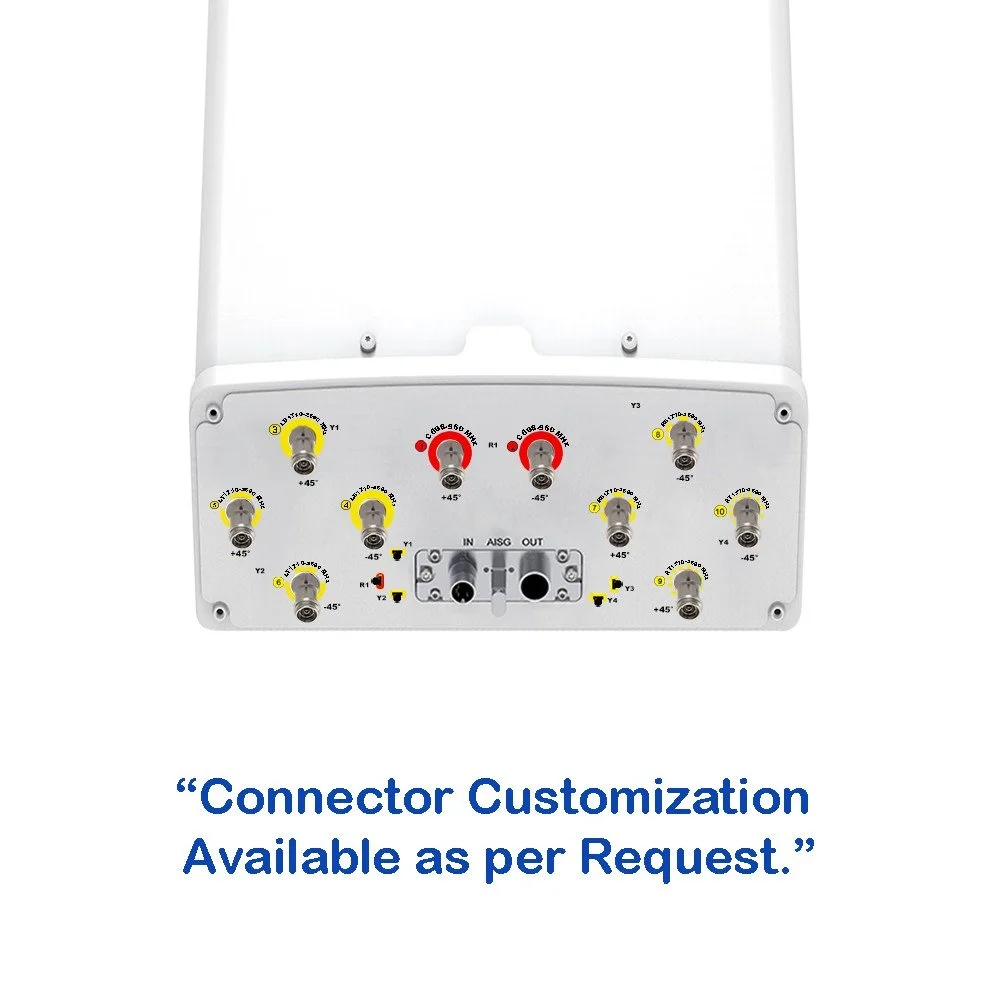
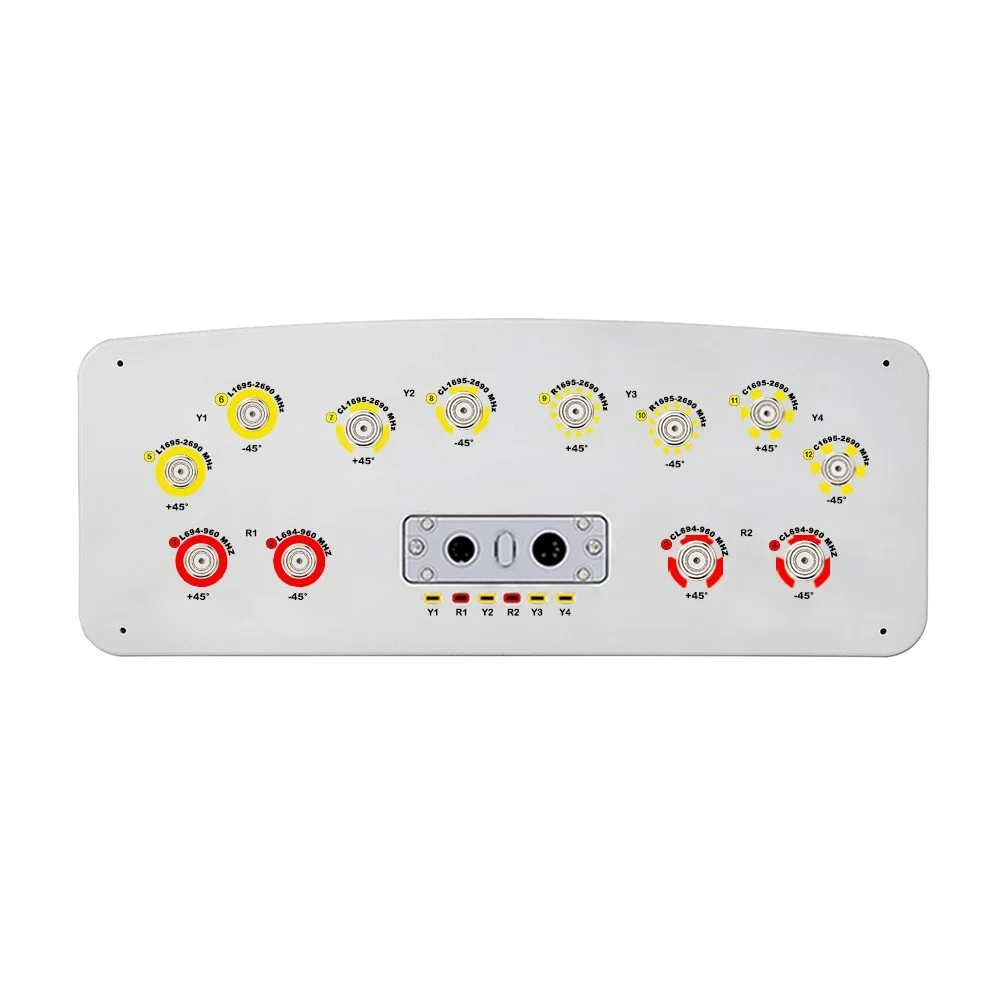
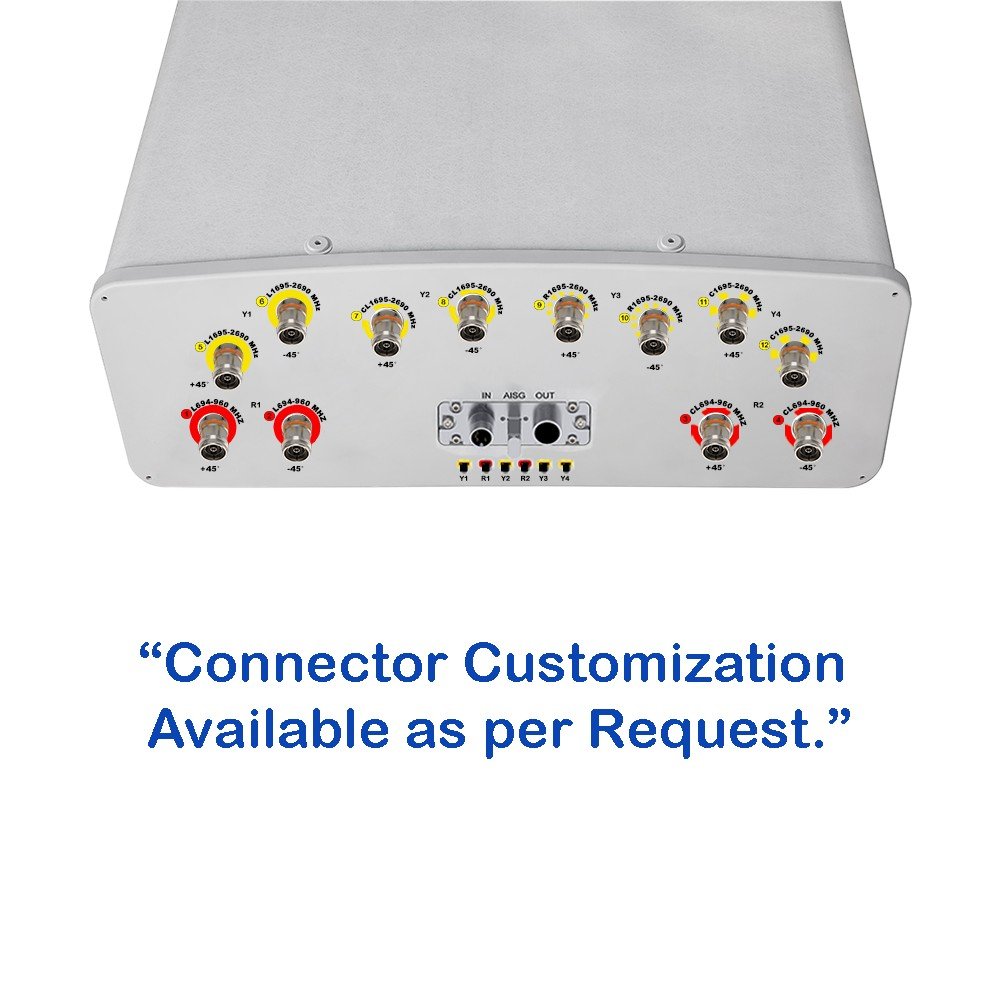
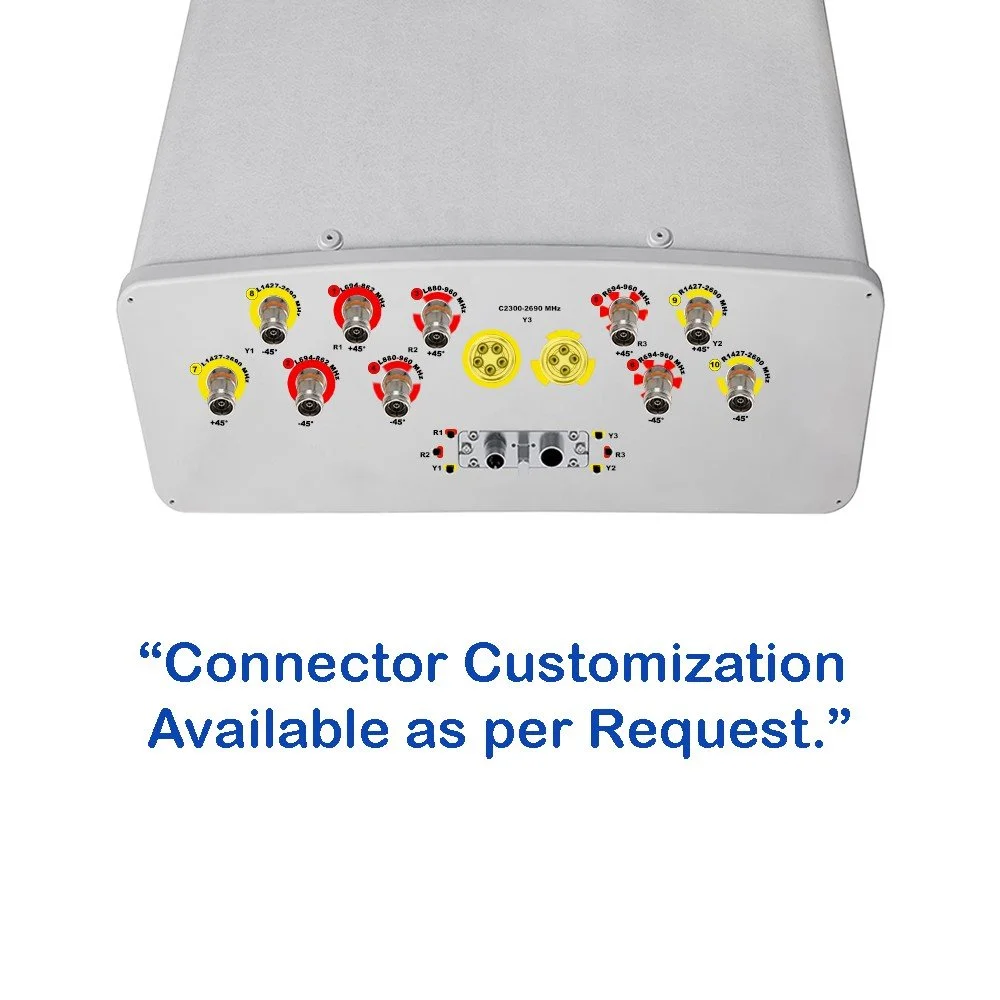
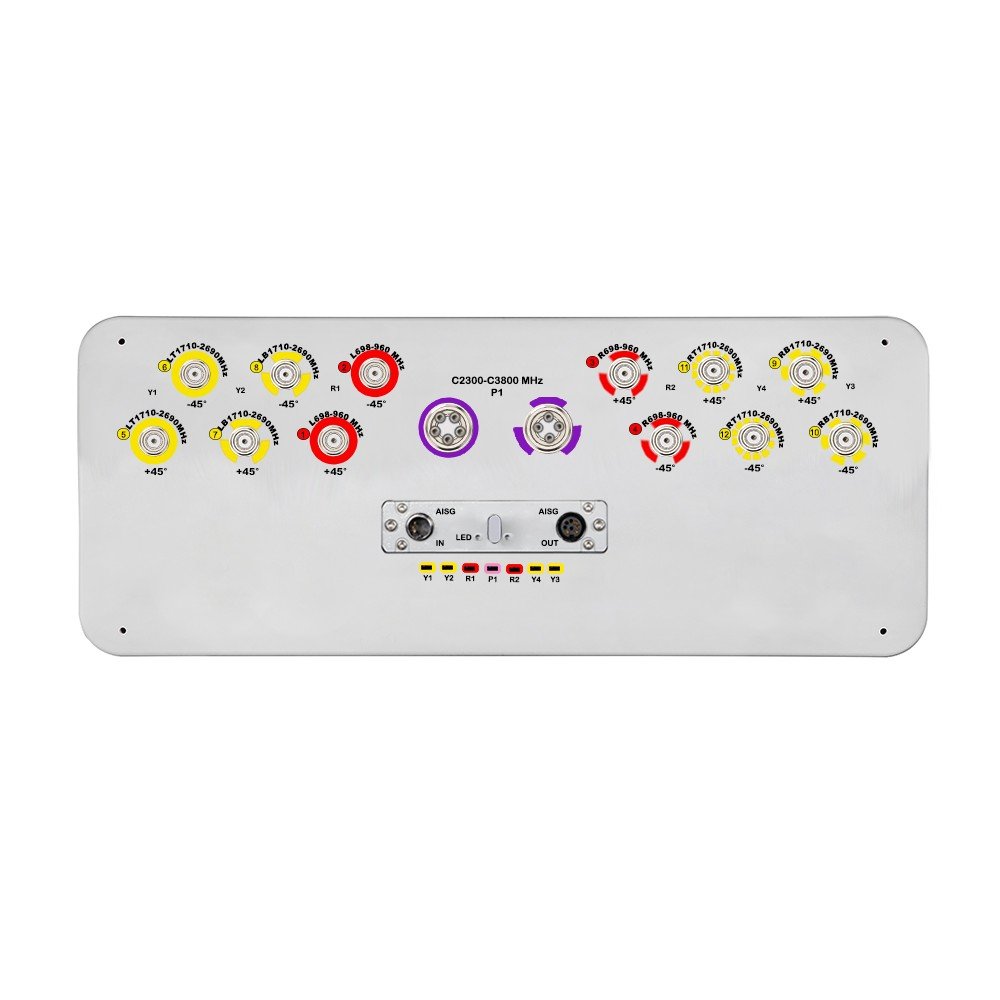
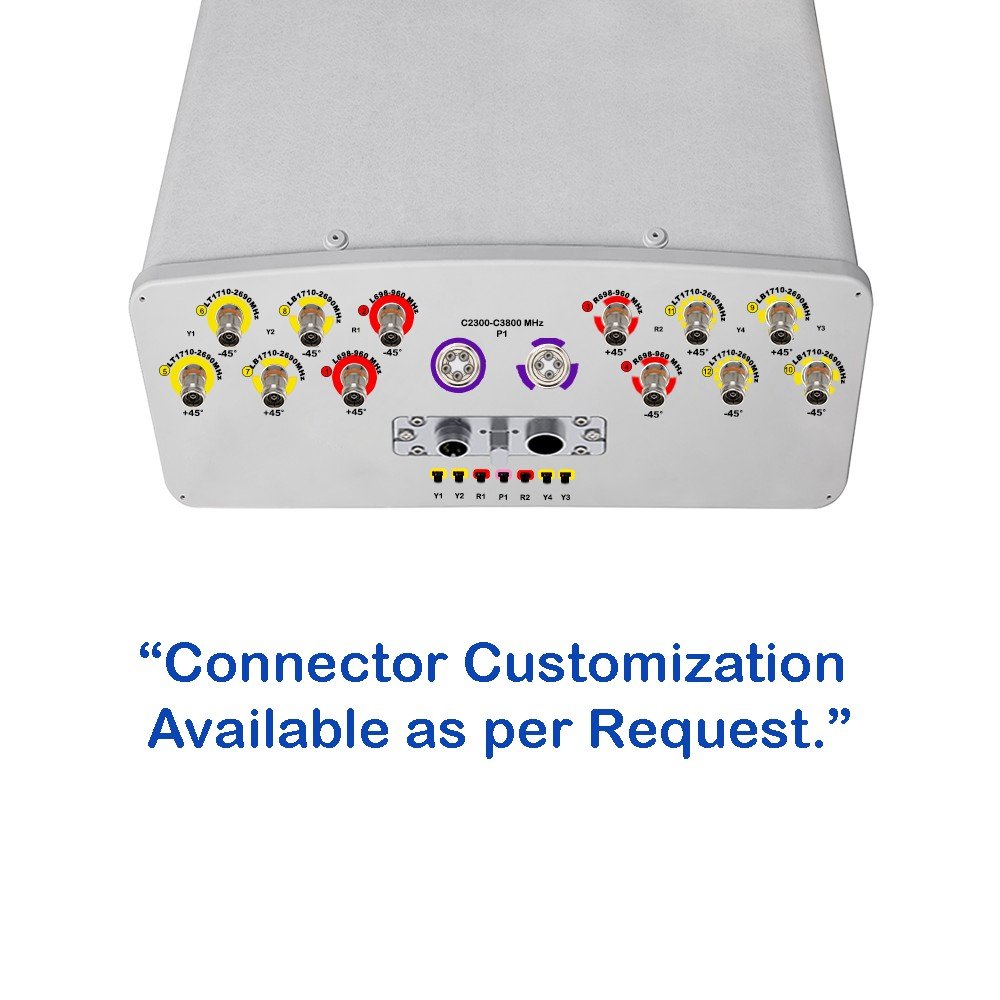
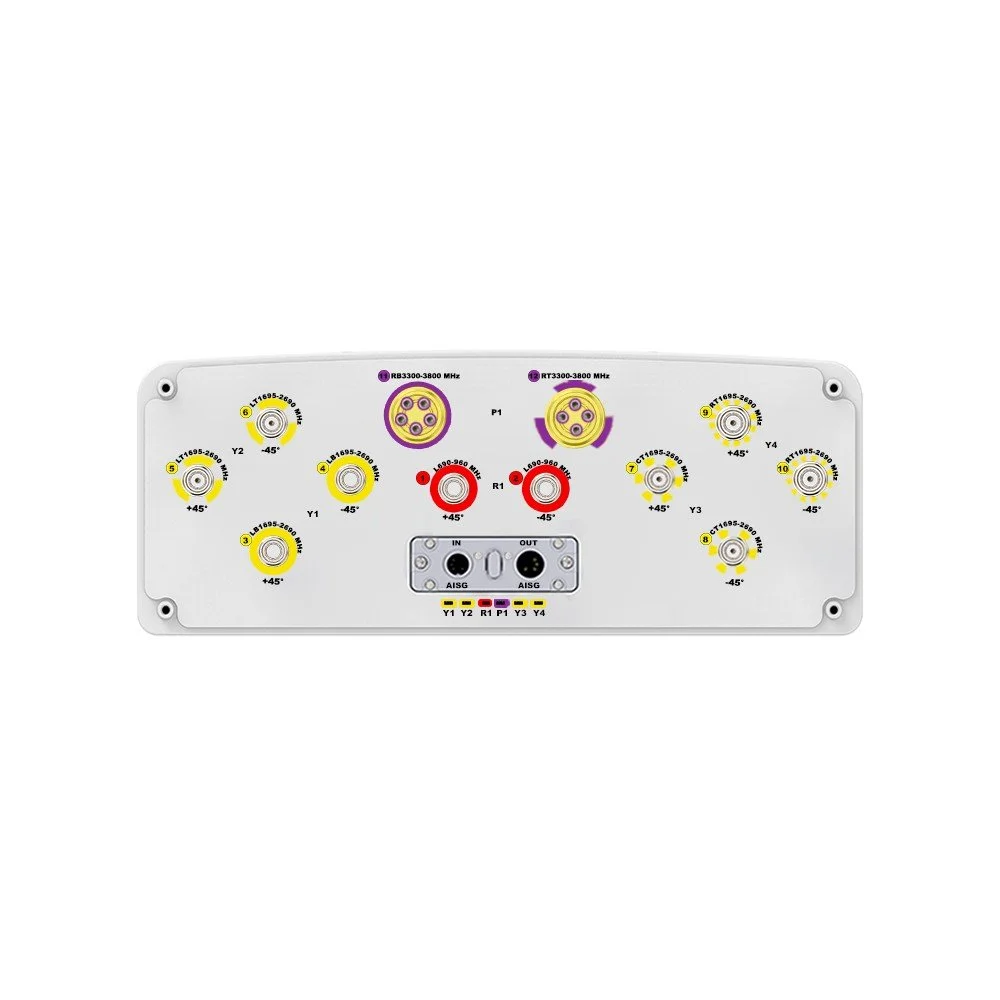
  • Easy deployment: Color-coded port labeling and port-mapping documentation simplify field installation and commissioning. Integrated grounding and lightning protection features improve site safety.

  • Environmental resilience: Rugged radome and internal sealing provide long-term reliability in coastal, desert, and urban environments.

Typical Applications

  • Urban and suburban macro sites requiring high-capacity TDD coverage across multiple bands

  • Neutral host and shared infrastructure sites where multiple operators or services need dedicated ports

  • Small cell aggregation points and DAS head-ends requiring broad frequency coverage with compact footprint

  • Upgrades from legacy single-band antennas to a consolidated wideband solution supporting LTE and 5G NR

Electrical Specifications (typical)

  • Frequency range: 690–3800 MHz

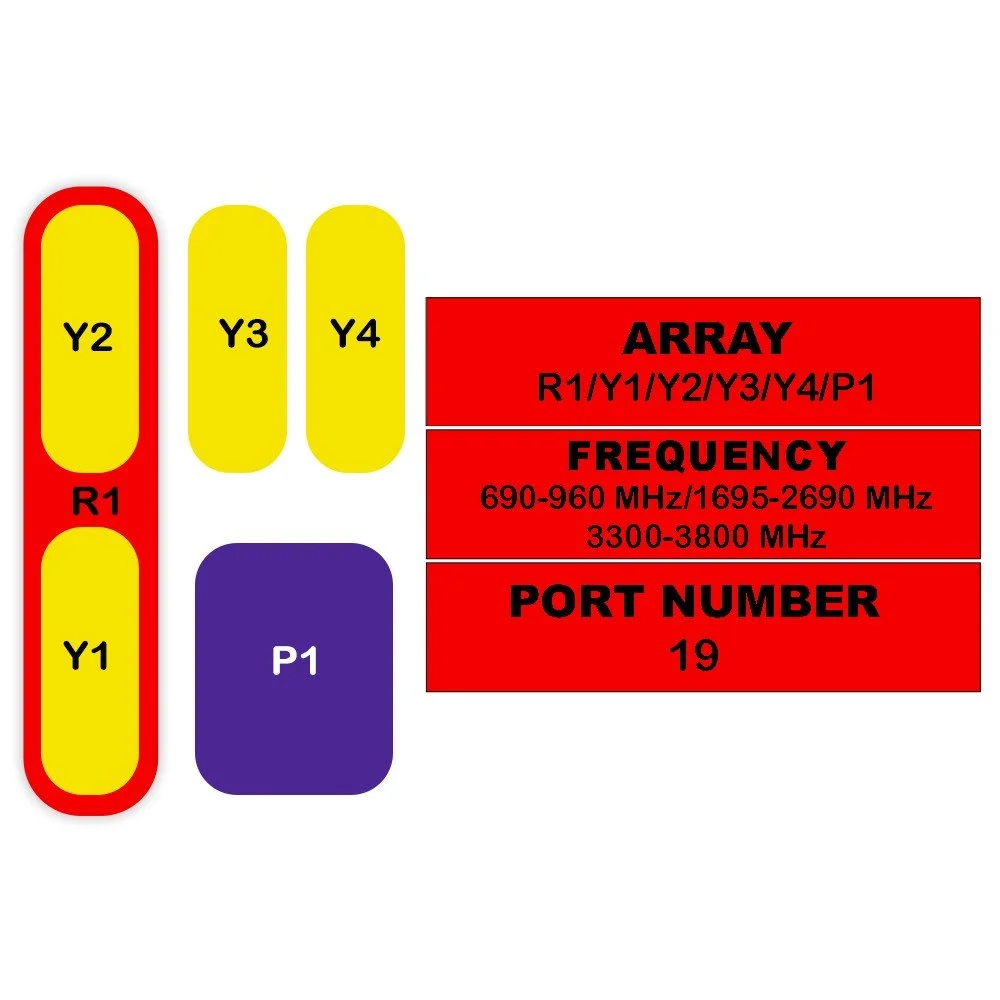
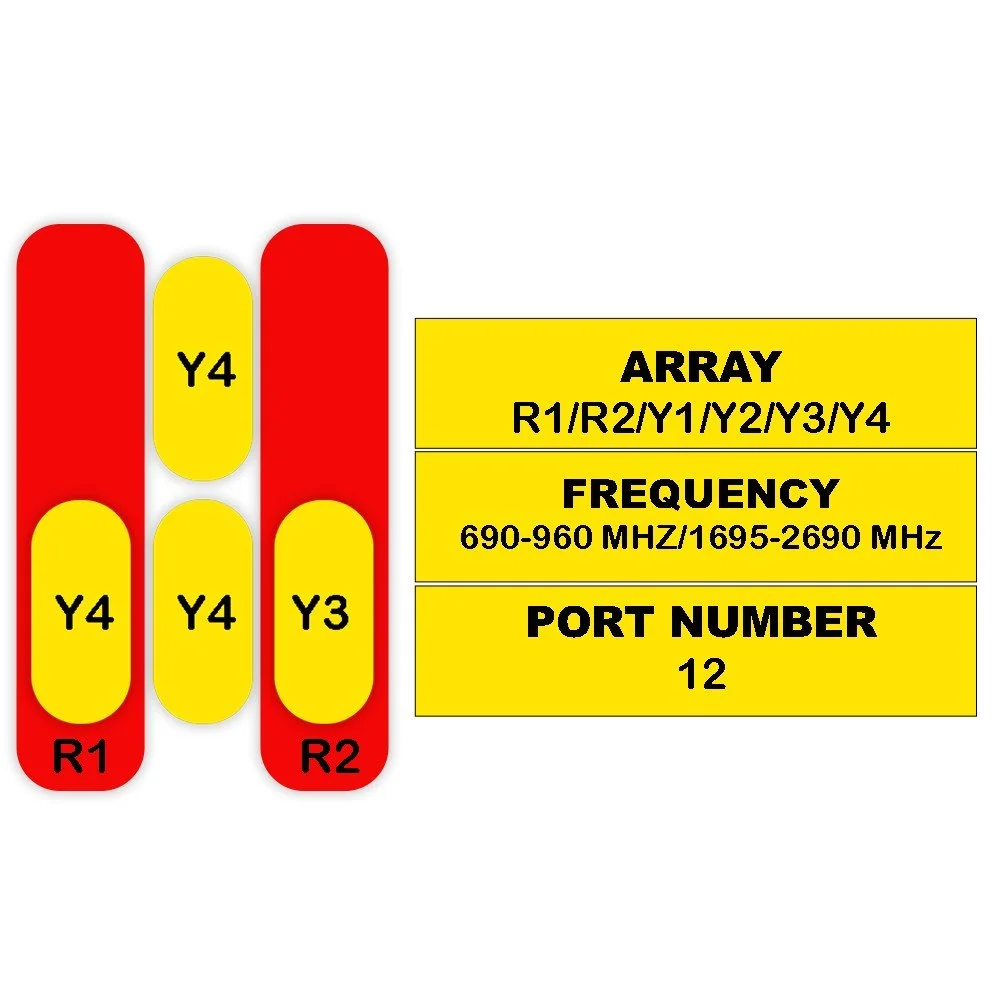
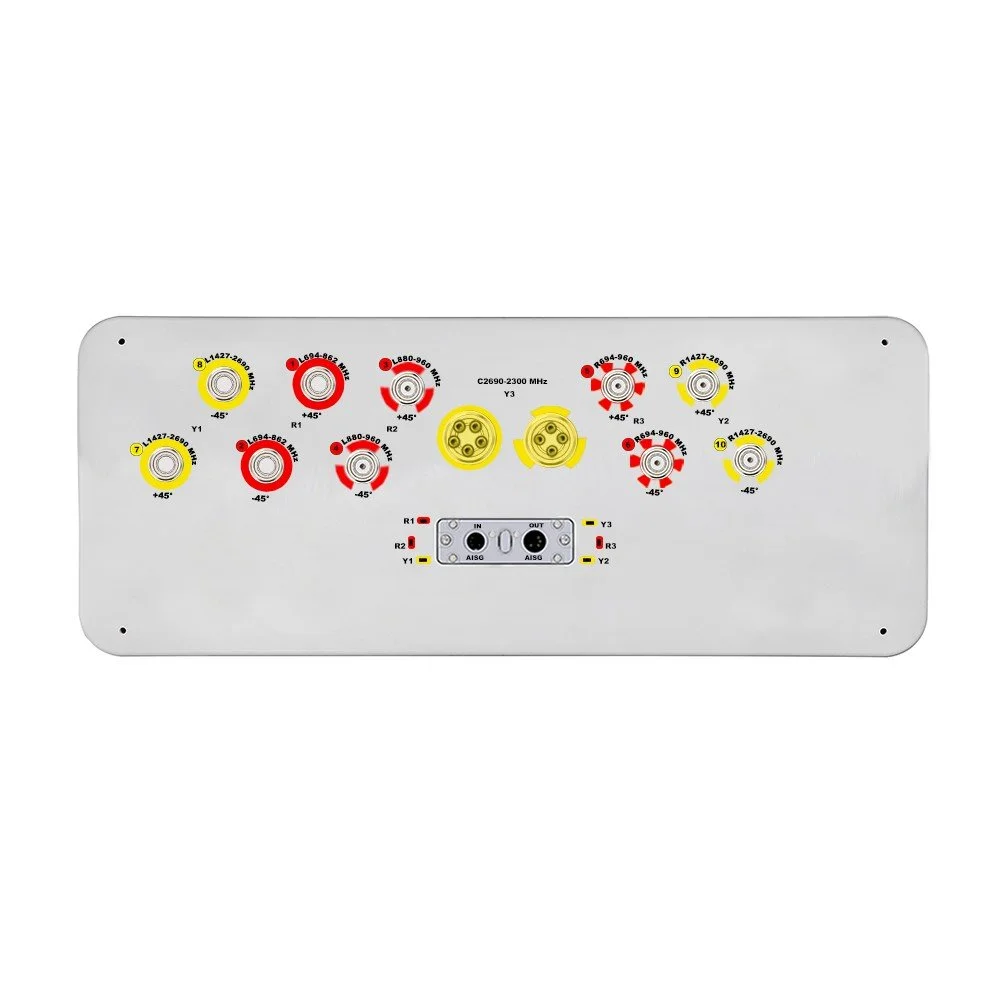
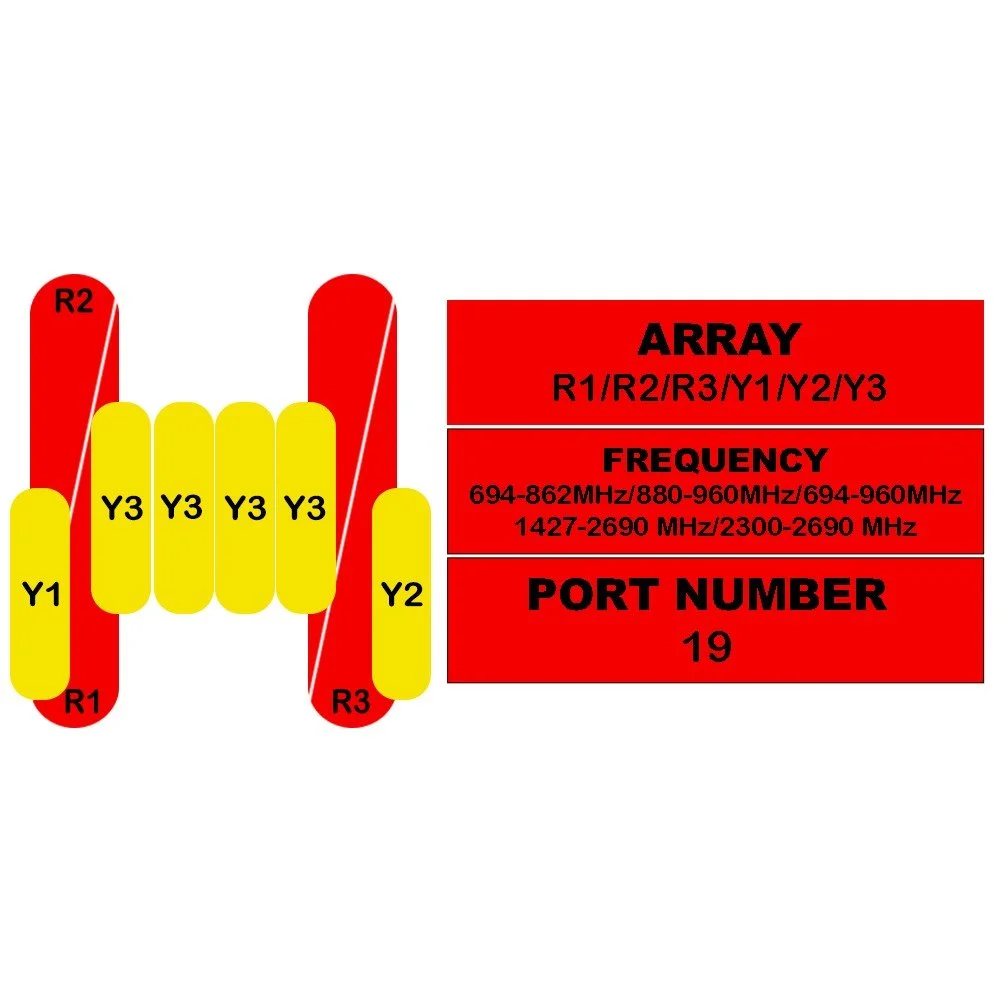
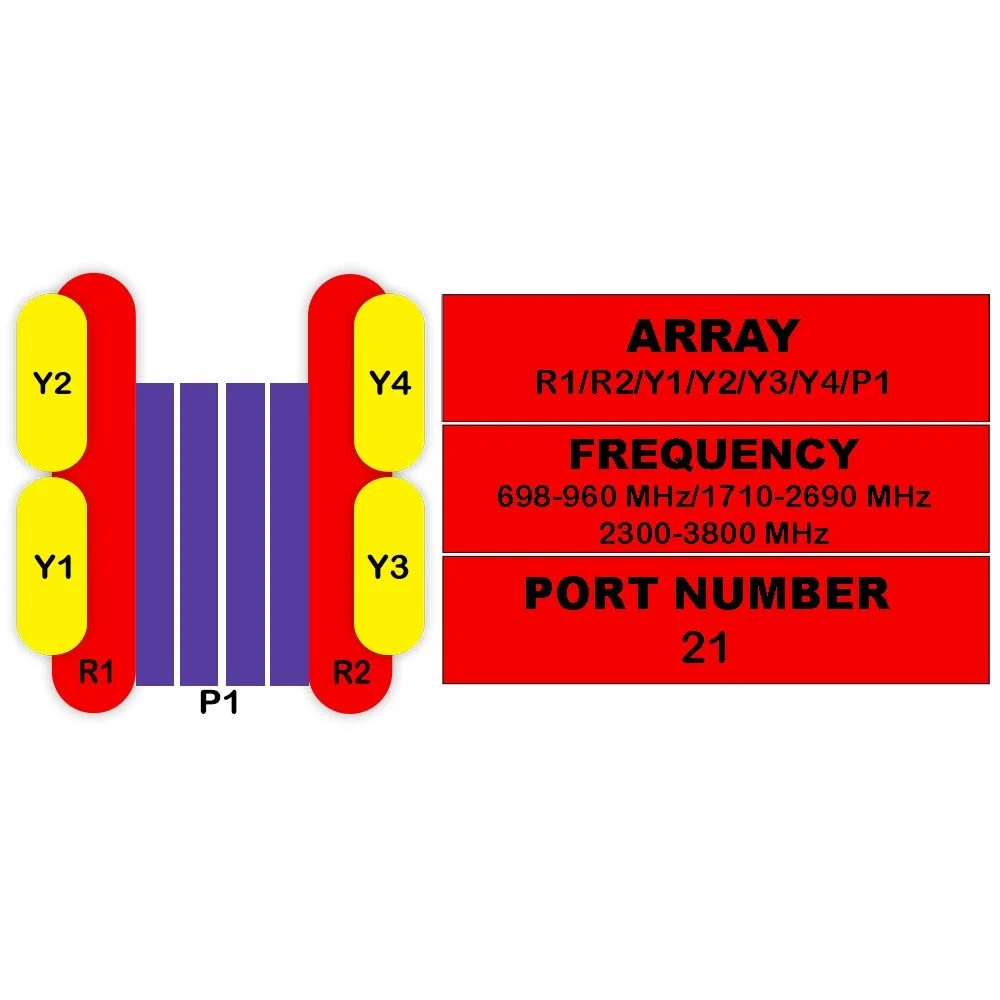
  • Number of ports: 19 (port grouping configurable: e.g., 3× low-band, 8× mid-band, 8× upper-mid)

  • Port impedance: 50 Ω

  • VSWR: ≤ 1.8:1 (typical, per band)

  • Port isolation: ≥ 25 dB (between adjacent ports), ≥ 30 dB (non-adjacent), frequency dependent

  • Gain: 6–18 dBi (band-dependent)

  • PIM: ≤ -155 dBc (2×43 dBm test)

  • Max input power per port: 200 W (site-specific derating may apply)

  • Polarization: Dual ±45° (cross-polar isolation ≥ 25 dB)

  • Connector type: Ruggedized 4.3-10 or N-type options (factory-specified)

Mechanical Specifications

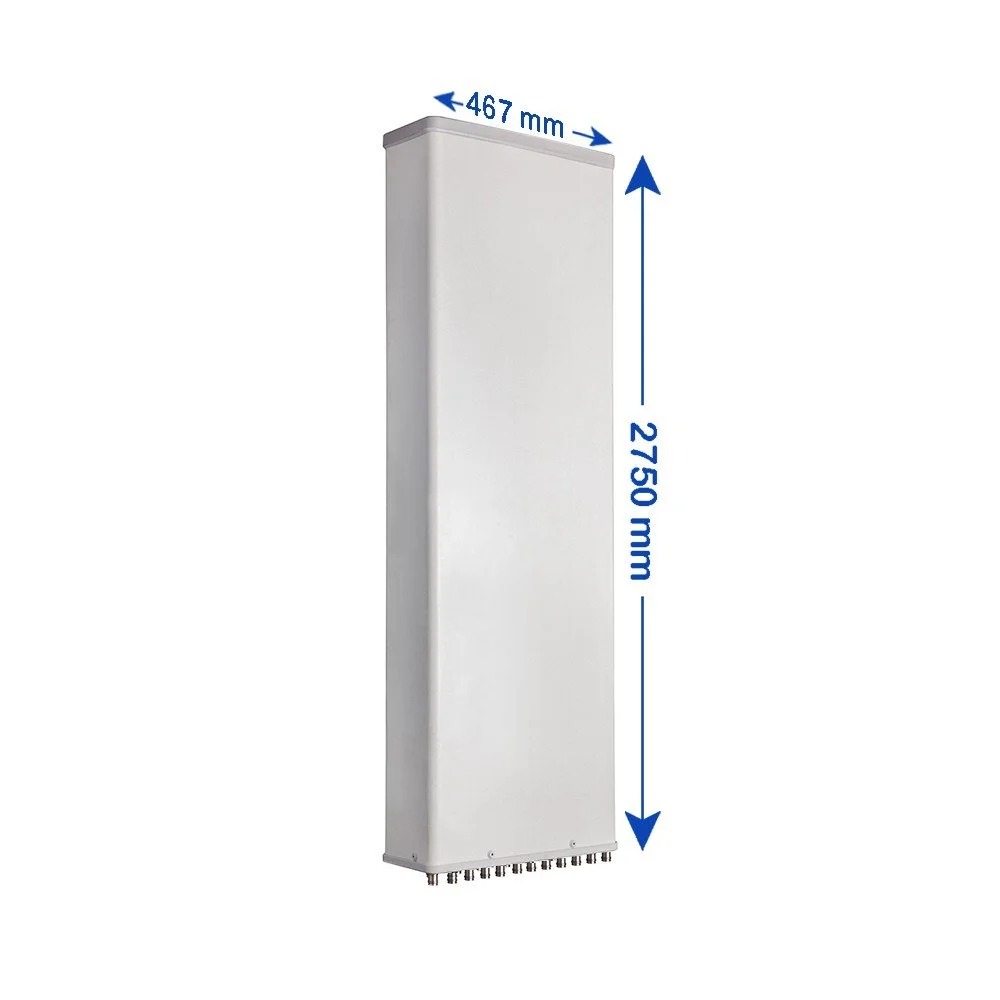
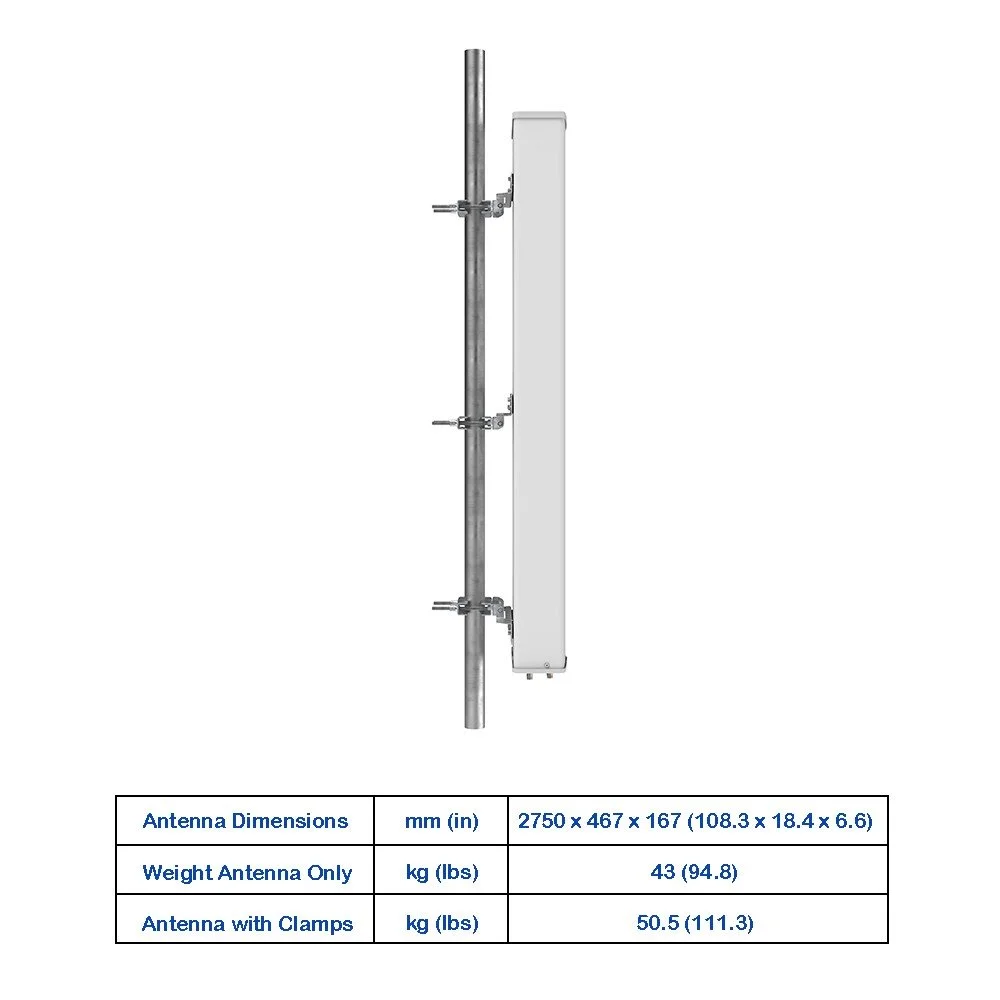
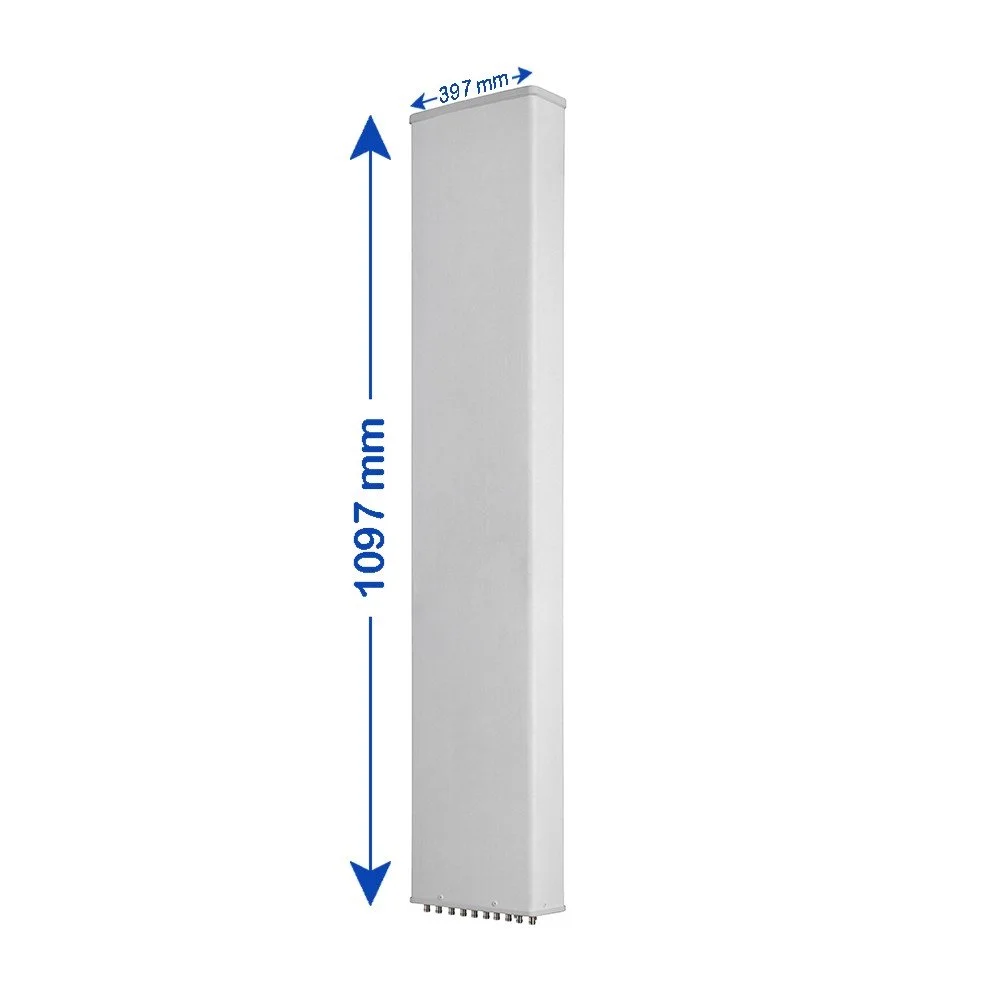
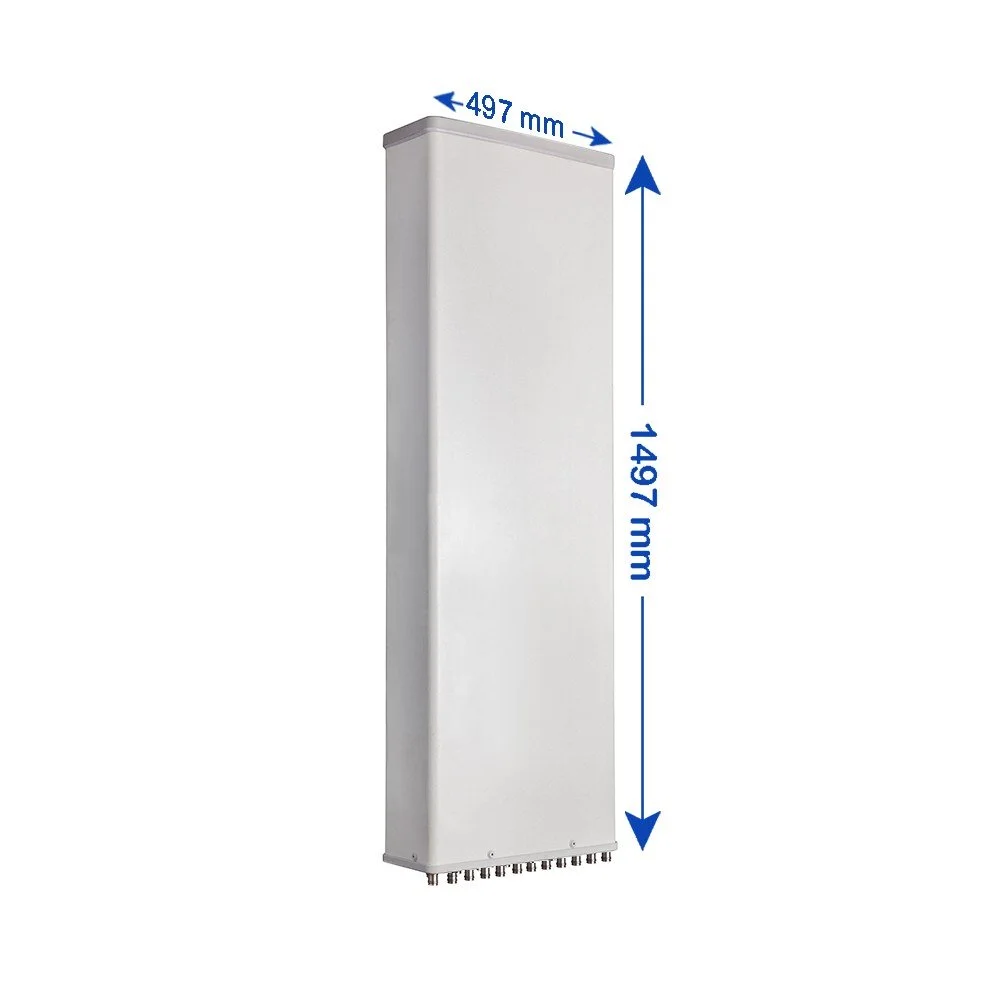
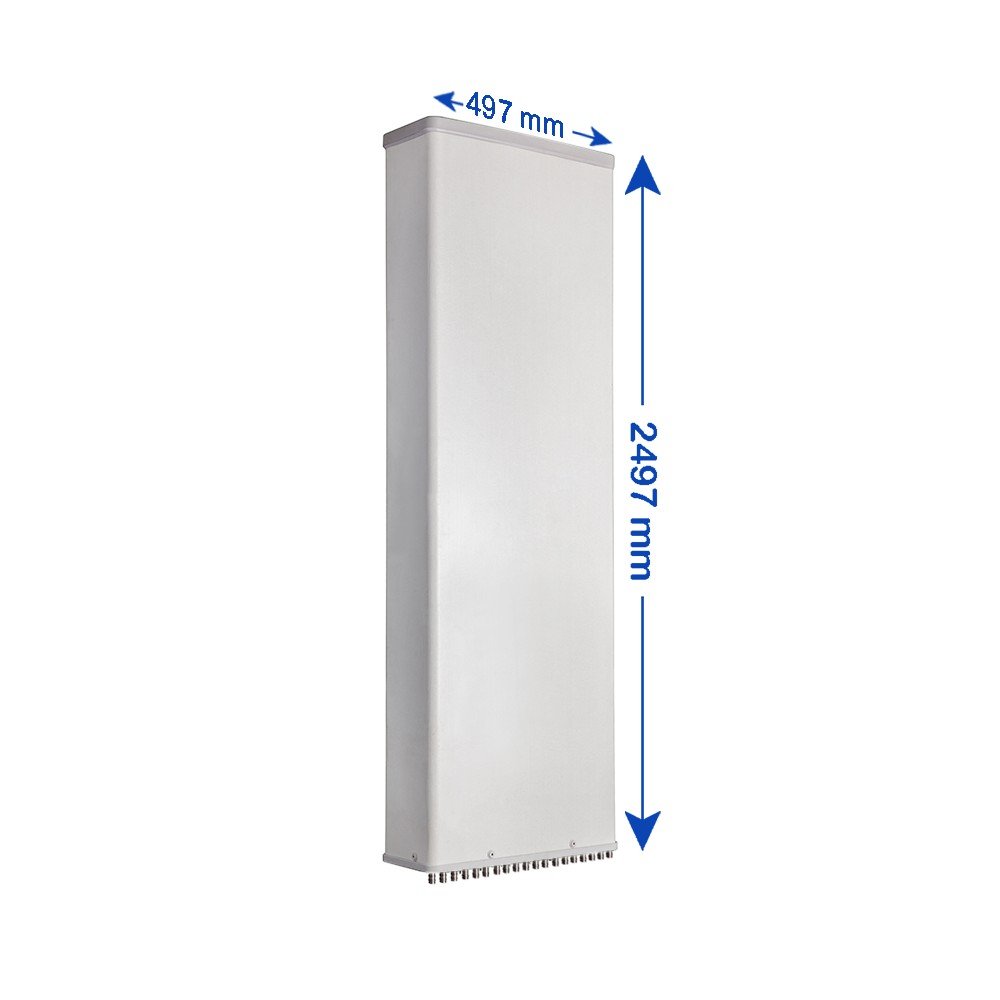
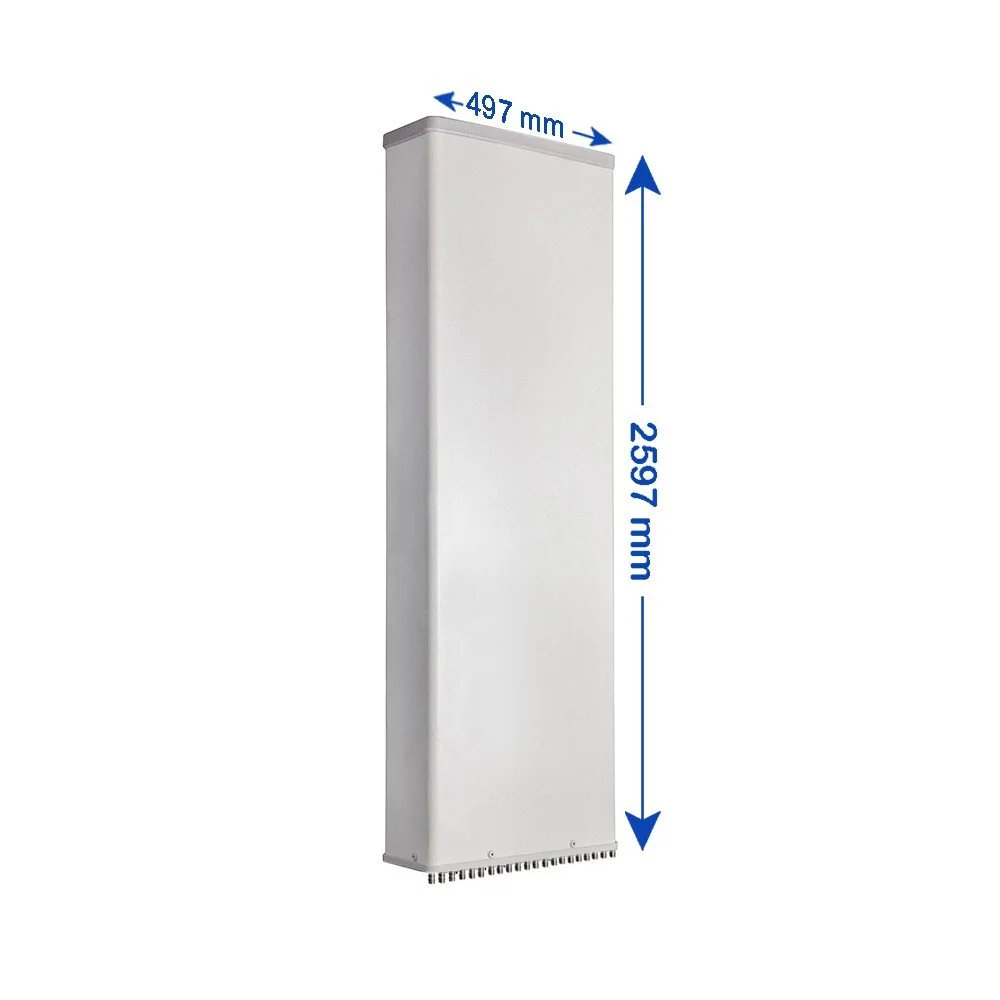
  • Dimensions: Slim panel — typical height 1.8–2.2 m, width ~0.25–0.45 m (model-dependent)

  • Weight: 12–22 kg depending on configuration and materials

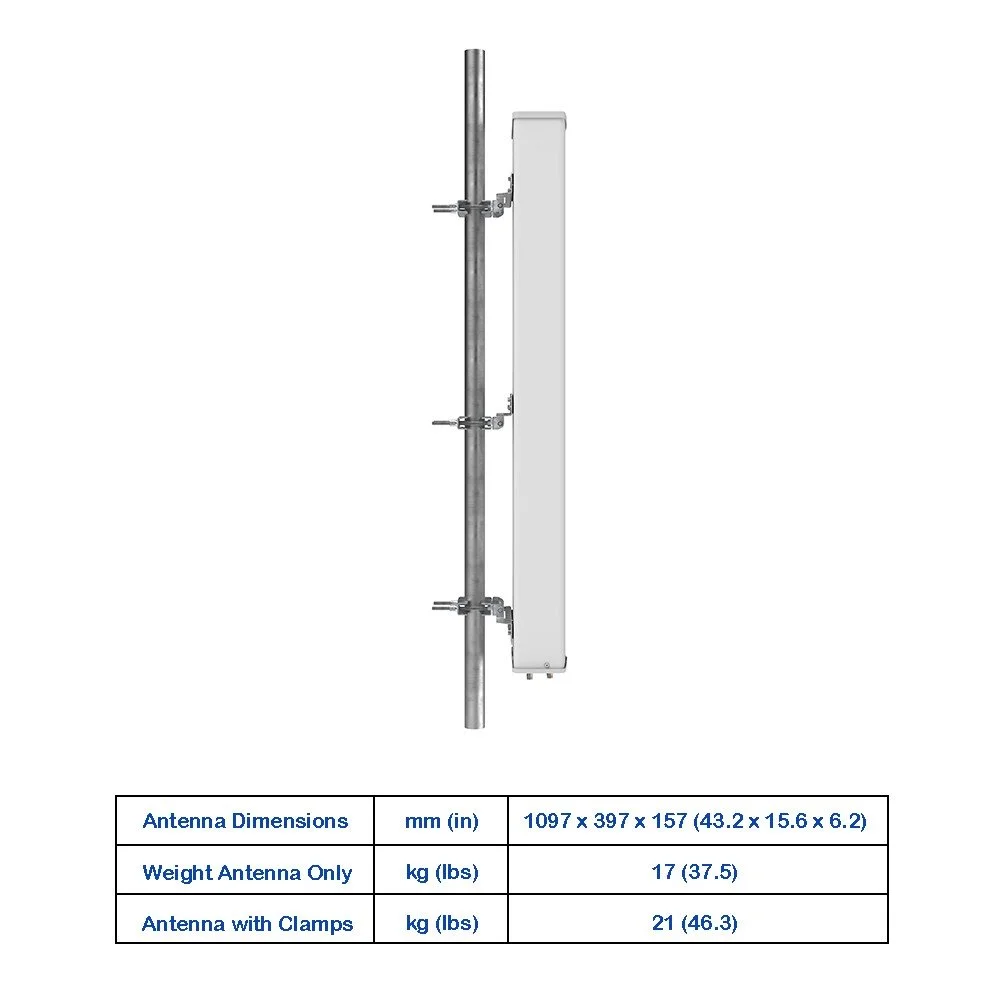
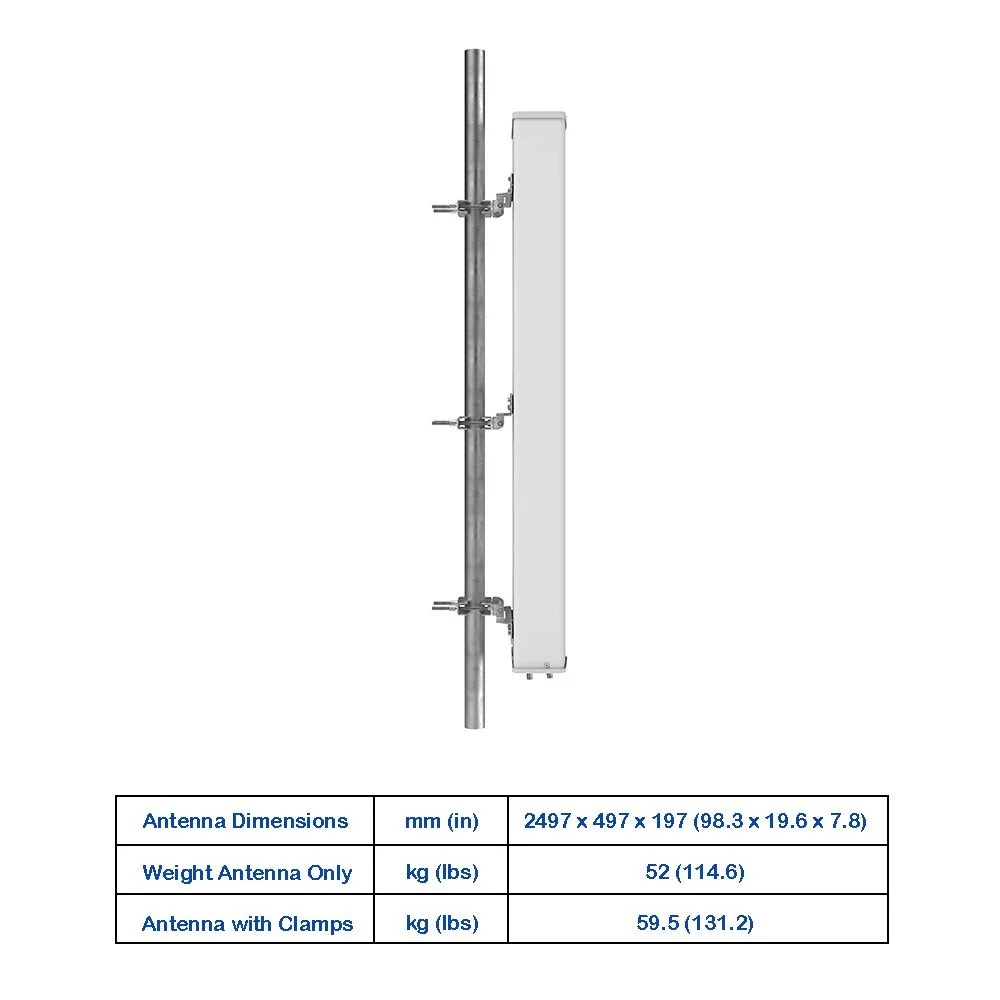
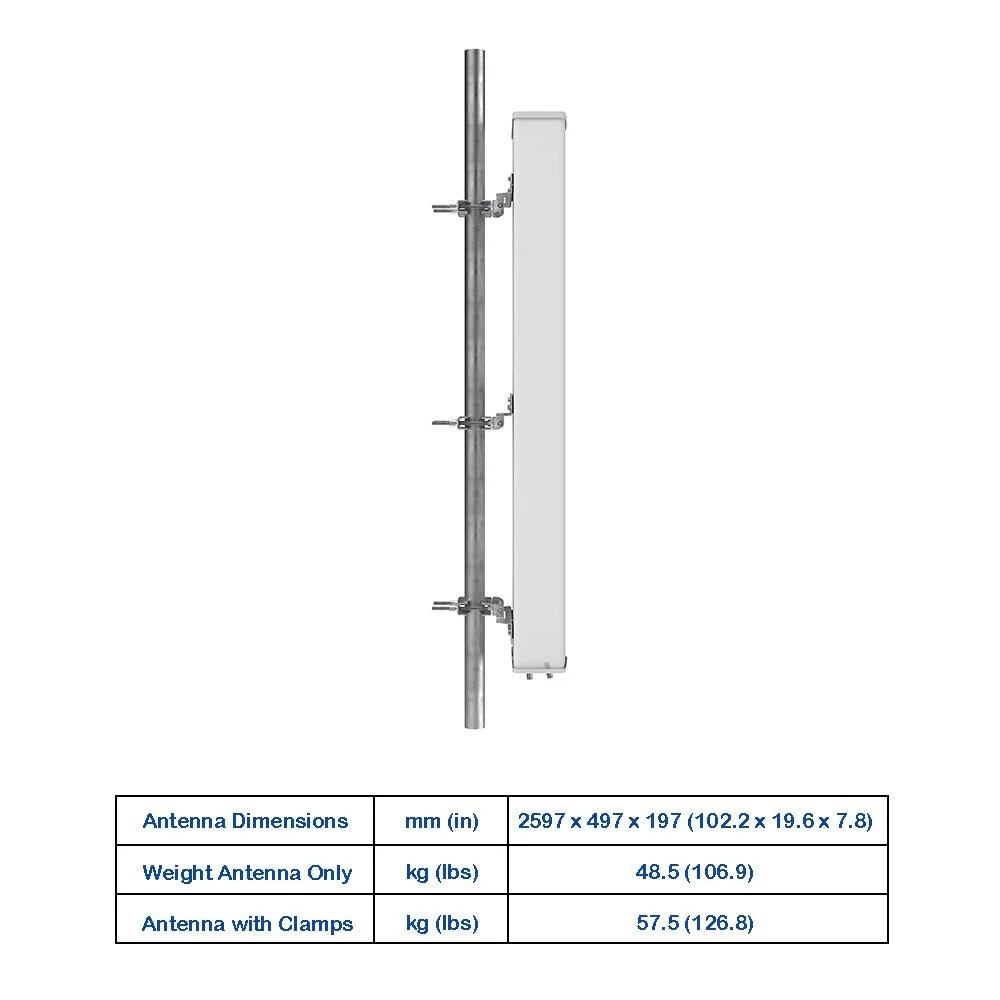
  • Mounting: Adjustable mast/wall bracket, wind survivability rating up to 200 km/h

  • Radome material: UV-stable, FRP/GFRP composite

  • Ingress protection: IP67

Package and Accessories

  • Antenna unit with factory-configured port mapping

  • Adjustable mounting bracket and hardware

  • Sealing boots for connectors

  • Grounding/lashing kit and labeling

  • Installation and port-mapping guide

Regulatory and Quality

  • Manufactured to ISO 9001 processes with RF performance testing

  • RoHS compliant

  • Environmental testing for salt fog, humidity, and temperature cycling

Ordering Notes

  • Specify desired port-to-band mapping at order (examples: dedicated low-band port group for 700/800 MHz; mid-band grouping for 2300/2600/3500 MHz)

  • Choose connector type and mounting option

  • Optional factory calibration and tuning for specific operator channel plans available

Contact sales with site parameters and desired band/port assignments to receive a model recommendation, port mapping diagram, and detailed electrical/mechanical data sheet.

19-Port TDD Hybrid Panel Antenna (690–3800 MHz)

Overview

  • Frequency range: 690–3800 MHz (covers low-band, mid-band, and parts of upper mid/high bands)

  • Ports: 19 TDD-capable ports arranged for hybrid operation

  • Polarization: Dual linear (±45°) with combined/isolated port options

  • Gain: High, frequency-dependent (factory-configurable per port grouping)

  • Beamwidth: Sector-optimized (typical horizontal beamwidth options 60°, 90°, or 120° depending on model)

  • Mounting: Slim-profile wall or mast mount with integrated adjustable bracket

  • Environmental: IP67-rated radome, -40°C to +65°C operating range, corrosion-resistant materials

  • Standards: Designed for TDD deployments, supports carrier aggregation and MIMO topologies

Key Features

  • Multi-band, multi-port flexibility: 19 ports enable simultaneous support of multiple TDD bands and multiple-input multiple-output (MIMO) layers without external combiners, minimizing insertion loss and simplifying site architecture.

  • Hybrid architecture: Combines passive and active-like segregation to allocate ports to specific bands or operators, enabling shared-coverage scenarios and operator-neutral deployments.

  • High isolation: Carefully engineered port-to-port isolation reduces inter-port interference and cross-talk, improving TDD frame synchronization and uplink/downlink performance.

  • Low passive intermodulation (PIM): Precision connectors and materials reduce PIM, ensuring reliable performance in high-power, multi-carrier environments.

  • Wideband coverage: Continuous 690–3800 MHz operation supports LTE, 5G NR TDD bands, and legacy requirements with a single antenna installation.

  • Compact form factor: Slim panel design reduces visual impact and wind load while accommodating 19 ports for dense MIMO and carrier aggregation use cases.

  • Easy deployment: Color-coded port labeling and port-mapping documentation simplify field installation and commissioning. Integrated grounding and lightning protection features improve site safety.

  • Environmental resilience: Rugged radome and internal sealing provide long-term reliability in coastal, desert, and urban environments.

Typical Applications

  • Urban and suburban macro sites requiring high-capacity TDD coverage across multiple bands

  • Neutral host and shared infrastructure sites where multiple operators or services need dedicated ports

  • Small cell aggregation points and DAS head-ends requiring broad frequency coverage with compact footprint

  • Upgrades from legacy single-band antennas to a consolidated wideband solution supporting LTE and 5G NR

Electrical Specifications (typical)

  • Frequency range: 690–3800 MHz

  • Number of ports: 19 (port grouping configurable: e.g., 3× low-band, 8× mid-band, 8× upper-mid)

  • Port impedance: 50 Ω

  • VSWR: ≤ 1.8:1 (typical, per band)

  • Port isolation: ≥ 25 dB (between adjacent ports), ≥ 30 dB (non-adjacent), frequency dependent

  • Gain: 6–18 dBi (band-dependent)

  • PIM: ≤ -155 dBc (2×43 dBm test)

  • Max input power per port: 200 W (site-specific derating may apply)

  • Polarization: Dual ±45° (cross-polar isolation ≥ 25 dB)

  • Connector type: Ruggedized 4.3-10 or N-type options (factory-specified)

Mechanical Specifications

  • Dimensions: Slim panel — typical height 1.8–2.2 m, width ~0.25–0.45 m (model-dependent)

  • Weight: 12–22 kg depending on configuration and materials

  • Mounting: Adjustable mast/wall bracket, wind survivability rating up to 200 km/h

  • Radome material: UV-stable, FRP/GFRP composite

  • Ingress protection: IP67

Package and Accessories

  • Antenna unit with factory-configured port mapping

  • Adjustable mounting bracket and hardware

  • Sealing boots for connectors

  • Grounding/lashing kit and labeling

  • Installation and port-mapping guide

Regulatory and Quality

  • Manufactured to ISO 9001 processes with RF performance testing

  • RoHS compliant

  • Environmental testing for salt fog, humidity, and temperature cycling

Ordering Notes

  • Specify desired port-to-band mapping at order (examples: dedicated low-band port group for 700/800 MHz; mid-band grouping for 2300/2600/3500 MHz)

  • Choose connector type and mounting option

  • Optional factory calibration and tuning for specific operator channel plans available

Contact sales with site parameters and desired band/port assignments to receive a model recommendation, port mapping diagram, and detailed electrical/mechanical data sheet.

Electrical Specifications
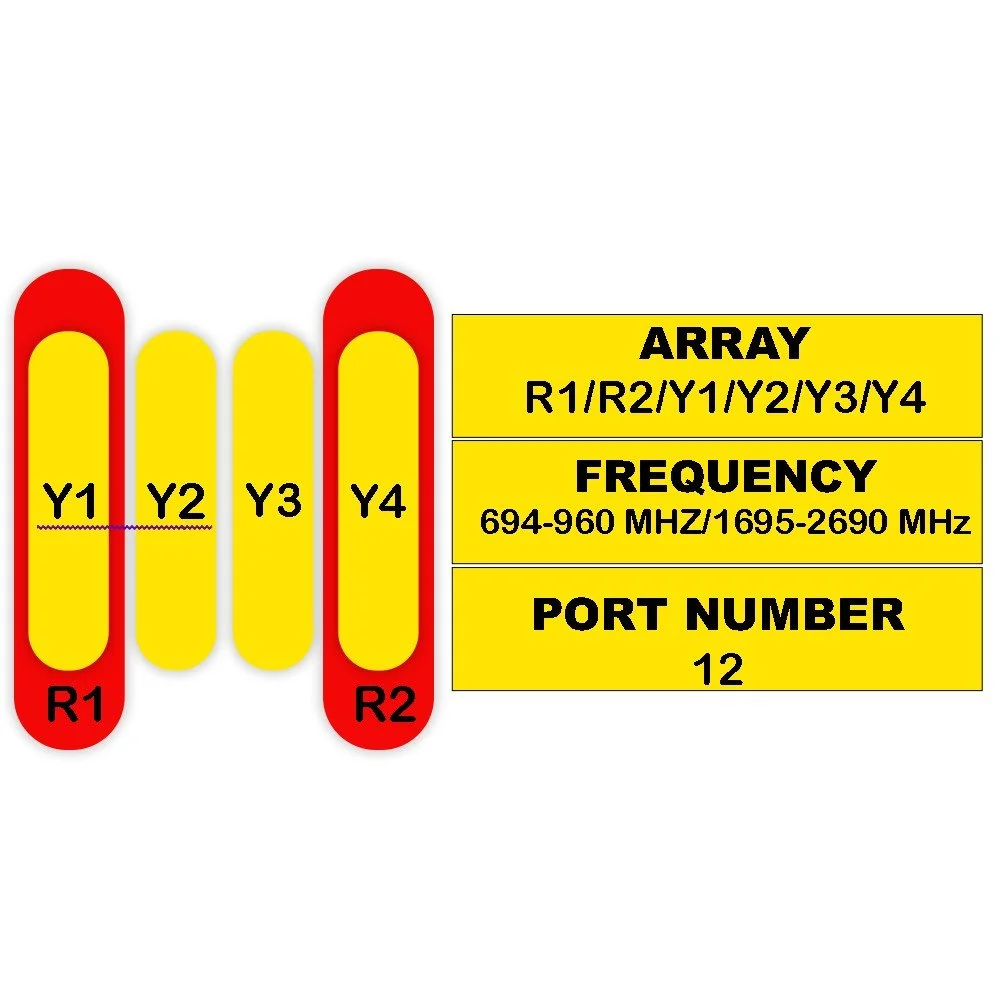
Electrical specifications comparison for R1 and Y1 antenna models including gain, beamwidth, isolation and power ratings.
Parameter Unit R1 (690–960 MHz) Y1 (1695–2690 MHz)
690-806 790-894 880-960 1695-1880 1850-1990 1920-2170 2300-2400 2490-2690
Polarization ±45° ±45°
Gain (Mid Tilt) dBi 14.815.215.7 15.515.816.116.416.4
Gain (All Tilts) dBi 14.6 ± 0.615.0 ± 0.615.5 ± 0.6 15.3 ± 0.515.6 ± 0.515.9 ± 0.5 16.2 ± 0.516.2 ± 0.5
Horizontal Beamwidth degree 72 ± 4.569 ± 4.166 ± 4.5 67 ± 7.565 ± 7.562 ± 7.0 63 ± 7.062 ± 7.5
Vertical Beamwidth degree 11.6 ± 1.110.4 ± 0.99.4 ± 0.9 9.5 ± 0.68.8 ± 0.68.2 ± 0.6 7.2 ± 0.56.5 ± 0.4
Electrical Downtilt (Continuous) degree 2–12 2–12
Tilt Accuracy degree < 1< 1< 1 < 1< 1< 1< 1< 1
Upper Side Lobe Suppression (1st) dB ≥ 16≥ 16≥ 16 > 15> 15> 15> 15> 15
Front-to-Back Ratio (±30°) dB ≥ 22≥ 23≥ 25 ≥ 23≥ 23> 24≥ 25≥ 25
Cross Polar Discrimination (Boresight) dB ≥ 17≥ 18≥ 17 > 16> 16> 17> 17> 17
Cross Polar Discrimination (Sector) dB ≥ 8≥ 7≥ 6 > 4> 6> 6> 5> 3
Isolation (Cross-Polar) dB > 26 > 26
Isolation (Port-to-Port) dB > 28 > 28
Impedance Ohm 50 50
VSWR < 1.5 < 1.5
Return Loss dB > 14 > 14
PIM3 (2×43 dBm) dBc < -150 < -150
Lightning Protection DC Ground DC Ground
Max Avg Input Power (50°C) Watts 250 200
Electrical Specifications – Y2 / Y3 / Y4
Electrical specifications for Y2, Y3, and Y4 antenna models covering 1695–2690 MHz frequency range including gain, beamwidth, isolation and power ratings.
Parameter Unit 1695-1880 1850-1990 1920-2170 2300-2400 2490-2690
Frequency Range MHz 1695–2690
Polarization ±45°
Gain (Mid Tilt) dBi 15.115.415.716.016.0
Gain (All Tilts) dBi 14.9 ± 0.515.2 ± 0.5 15.5 ± 0.515.8 ± 0.515.8 ± 0.5
Horizontal Beamwidth degree 67 ± 7.565 ± 7.5 62 ± 7.063 ± 7.062 ± 7.5
Vertical Beamwidth degree 9.5 ± 0.68.8 ± 0.6 8.2 ± 0.67.2 ± 0.56.5 ± 0.4
Electrical Downtilt (Continuous) degree 2–12
Tilt Accuracy degree < 1< 1< 1< 1< 1
Upper Side Lobe Suppression (1st) dB > 16> 16> 16> 16> 16
Upper Side Lobe Suppression (20° Sector) dB > 15> 15> 15> 15> 15
Front-to-Back Ratio (±30°) dB ≥ 23≥ 23> 24≥ 25≥ 24
Cross Polar Discrimination (Boresight) dB > 16> 16> 17> 17> 17
Cross Polar Discrimination (Sector) dB > 4> 6> 6> 5> 3
Isolation (Cross-Polar) dB > 26
Isolation (Port-to-Port) dB > 28
Impedance Ohm 50
VSWR < 1.5
Return Loss dB > 14
PIM3 (2×43 dBm) dBc < -150
Lightning Protection DC Ground
Max Avg Input Power (50°C) Watts 200
P1 Antenna Electrical Specifications covering 3300–3600 MHz and 3600–3800 MHz including beam performance, isolation, calibration, and electrical parameters.
Parameter Unit 3300–3600 MHz 3600–3800 MHz
Polarization ±45° ±45°
Electrical Downtilt (Adjustable) degree 2–12 2–12
Single Column Beam Gain dBi 15.5 ± 1 15.7 ± 1
Single Column Horizontal Beamwidth degree 75 ± 10 65 ± 10
Single Column Vertical Beamwidth (3 dB) degree 5.8 ± 0.6 5.5 ± 0.6
Single Column Cross-Polar Ratio (Boresight) dB ≥ 15 ≥ 15
Single Column First Upper Side Lobe Suppression dB ≥ 15 ≥ 15
Single Column Front-To-Back Ratio dB ≥ 25 ≥ 25
Broadcast Beam Gain (65°) dBi 17.0 ± 0.6 17.2 ± 0.6
Broadcast Beam Horizontal Beamwidth degree 65 65
Broadcast Beam Vertical Beamwidth (3 dB) degree 5.8 ± 0.6 5.5 ± 0.6
Broadcast Beam Cross-Polar Ratio (Boresight) dB ≥ 15 ≥ 15
Broadcast Beam First Upper Side Lobe Suppression dB ≥ 15 ≥ 15
Broadcast Beam Front-To-Back Ratio dB ≥ 27 ≥ 27
Service Beam (0°) Direct Gain dBi 21 ± 0.5 21.2 ± 0.5
Service Beam (0°) 3 dB Horizontal Beamwidth degree < 25 < 25
Service Beam (0°) Cross Polar Ratio dB ≥ 18 ≥ 18
Service Beam (0°) Front-To-Back Ratio dB ≥ 30 ≥ 30
Service Beam (±30°) Direct Gain dBi 18 18.2
Service Beam (±30°) 3 dB Horizontal Beamwidth degree < 30 < 30
Coupling Factor (Calibration to Antenna Port) dB -26 ± 2 -26 ± 2
Max Amplitude Tolerance (Calibration to Input) dB ≤ 0.7 ≤ 0.7
Max Phase Tolerance (Calibration to Input) degree ≤ 9 ≤ 9
Ports VSWR < 1.5 < 1.5
Average Power Capacity W 40 40
Co-Polar Isolation Between Ports dB ≥ 20 ≥ 20
Cross-Polar Isolation Between Ports dB ≥ 20 ≥ 20
Impedance Ohm 50 50
VSWR < 1.5 < 1.5
Return Loss dB > 14 > 14
PIM3 (2×43 dBm Carrier) dBc < -143 < -143
Lightning Protection DC Ground DC Ground
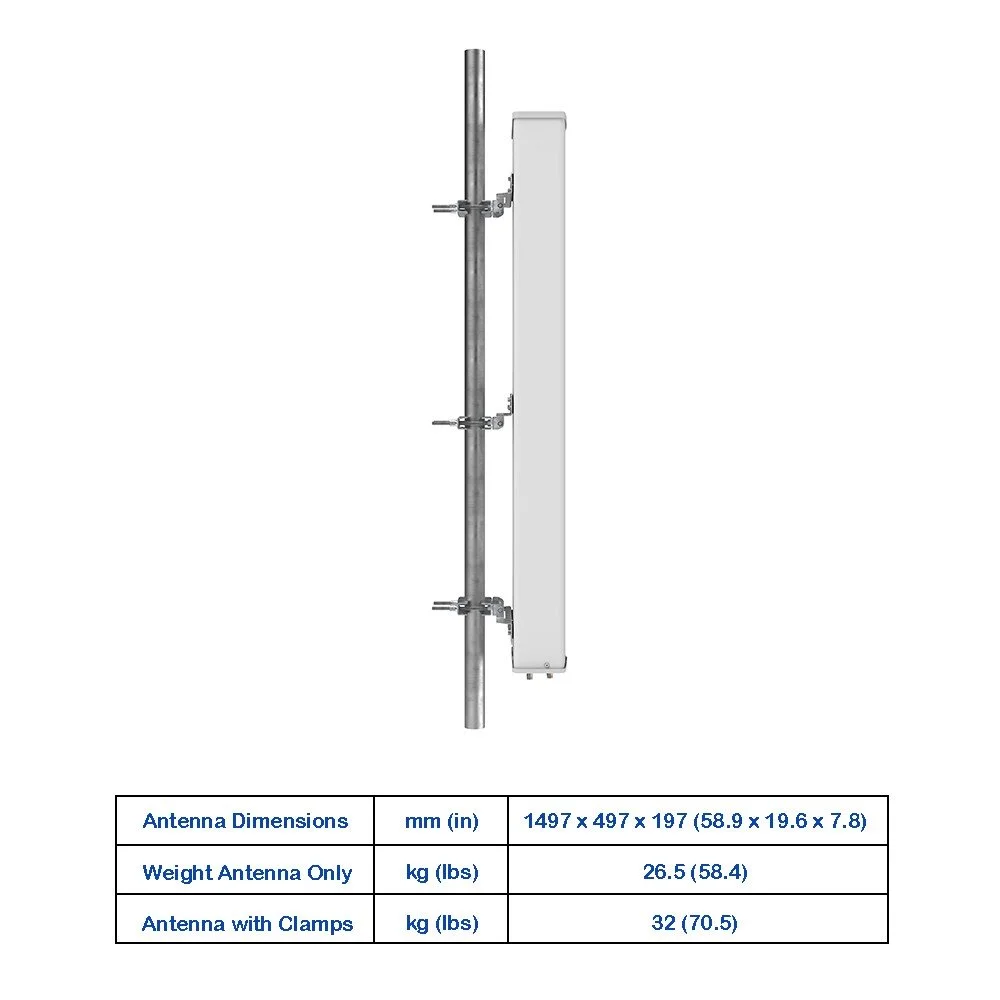
Mechanical Specifications
Mechanical specifications including connector type, dimensions, weight, wind load, and operating temperature.
Parameter Sub-Category Unit Specification
Connector Type (10x) 4.3/10 Female + (1x) MQ5 + (1x) MQ4 Male
Connector Position Bottom
Electrical Tilt Control Integrated RET
Radome Material Fiberglass
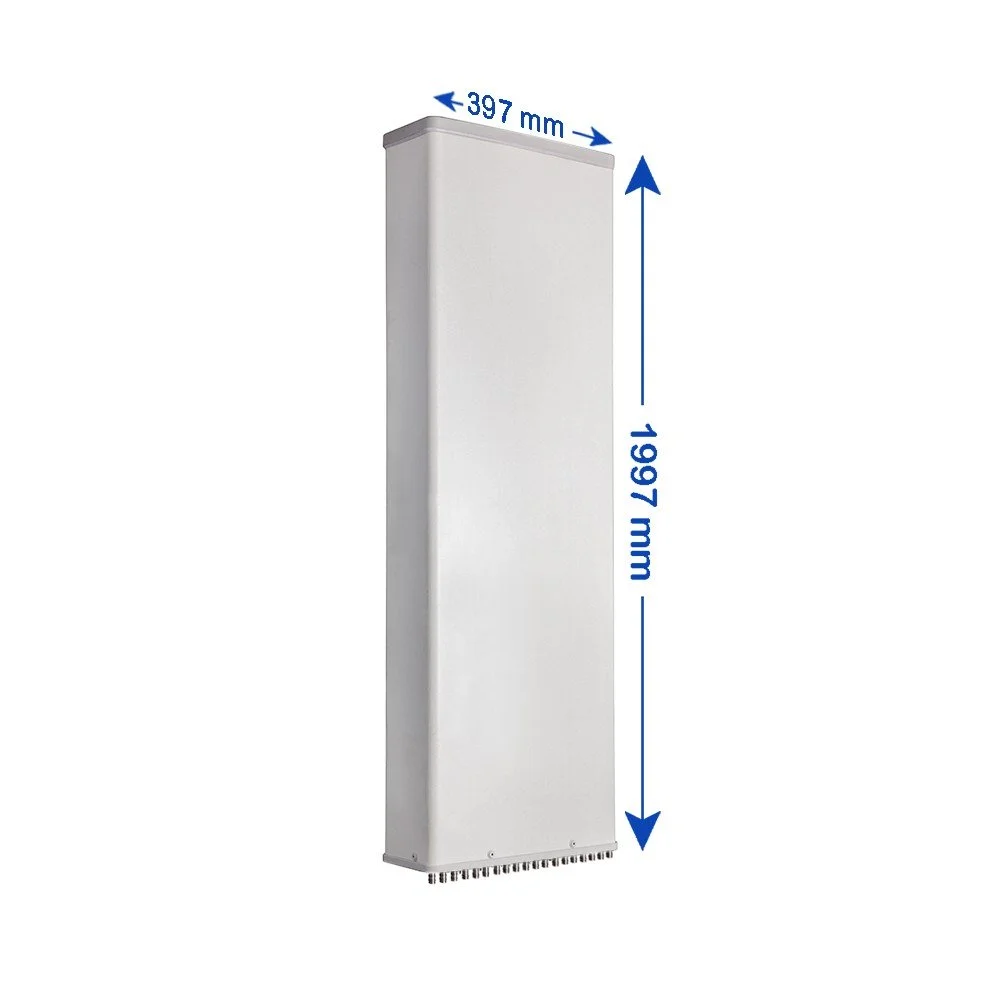
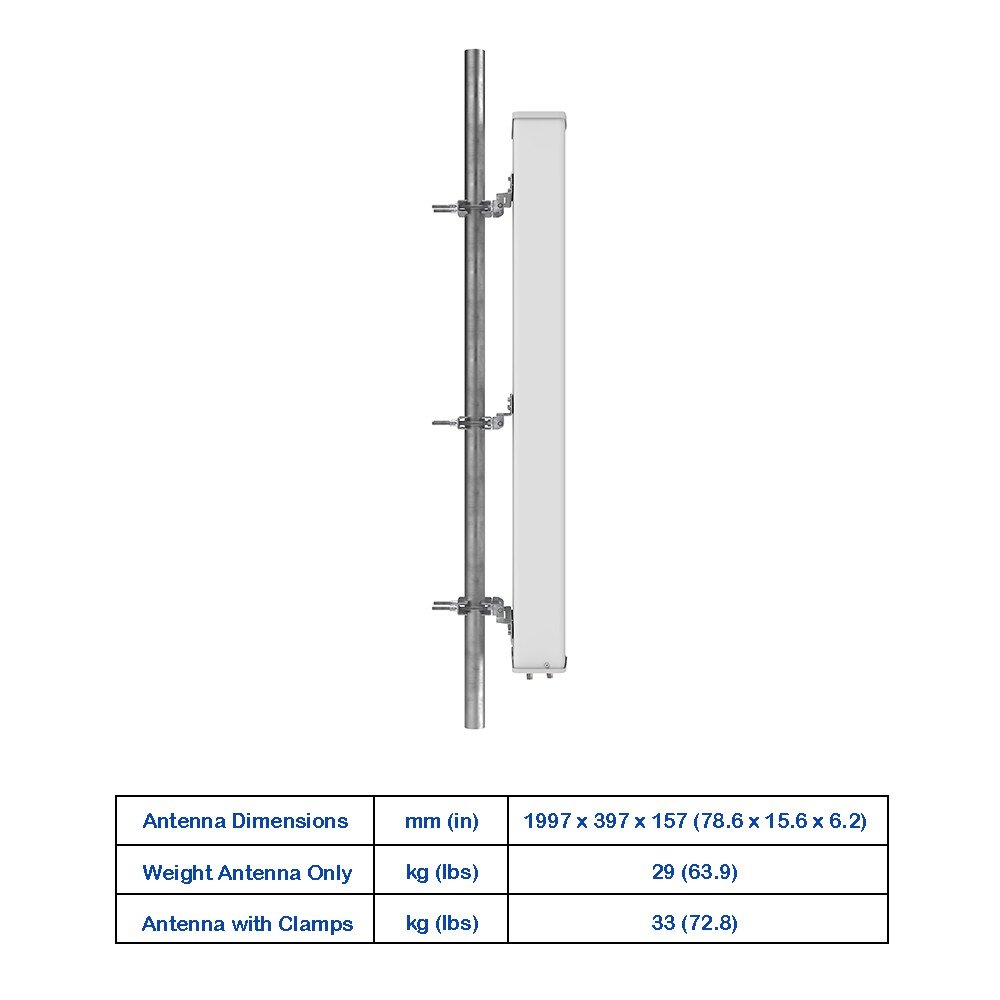
Antenna Dimensions (H × W × D) mm (in) 1997 × 397 × 157 (78.6 × 15.6 × 6.2)
Antenna Weight Antenna Only kg (lbs) 29 (63.9)
Antenna Weight With Clamps kg (lbs) 33 (72.8)
Maximum Wind Speed km/h (mph) 200 (124.3)
Wind Load at 150 km/h Frontal N (lbf) 735 (165.2)
Wind Load at 150 km/h Rear N (lbf) 820 (184.3)
Wind Load at 150 km/h Lateral N (lbf) 360 (80.9)
Operating Temperature °C (°F) -40 to +60 (-40 to 140)