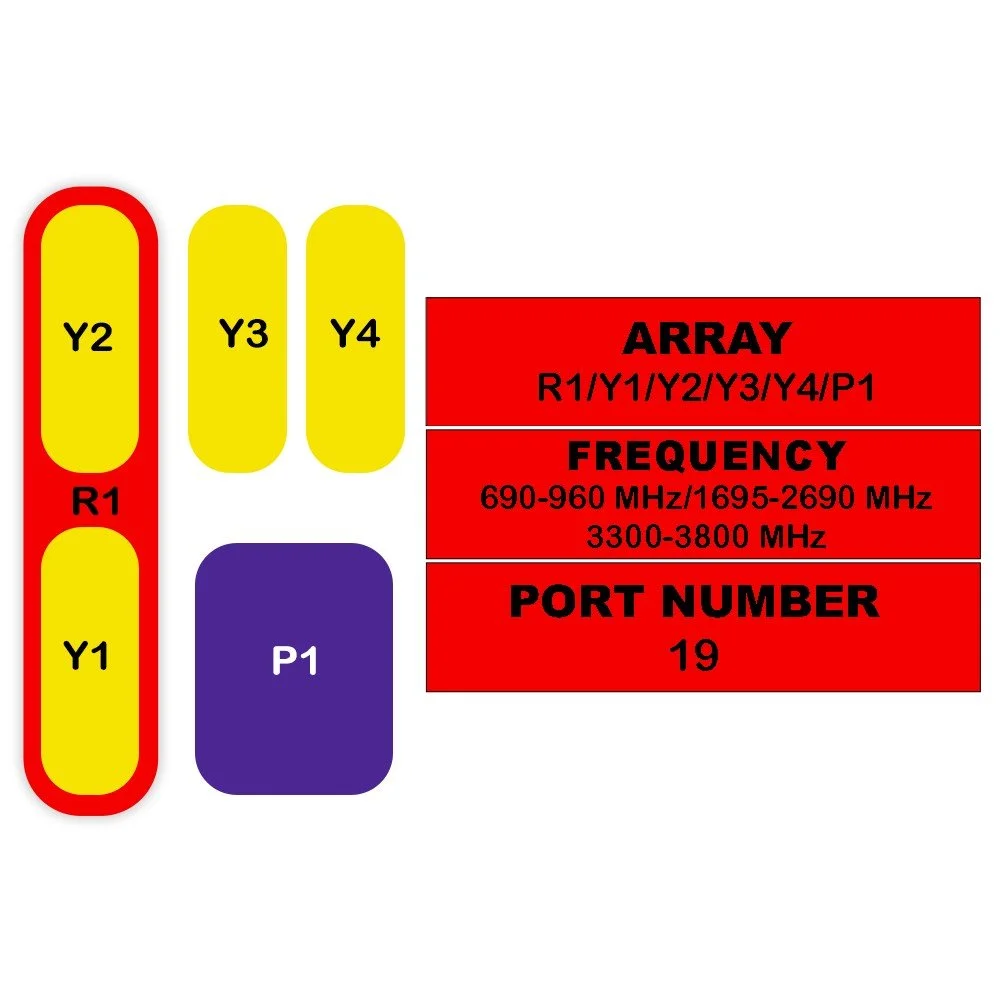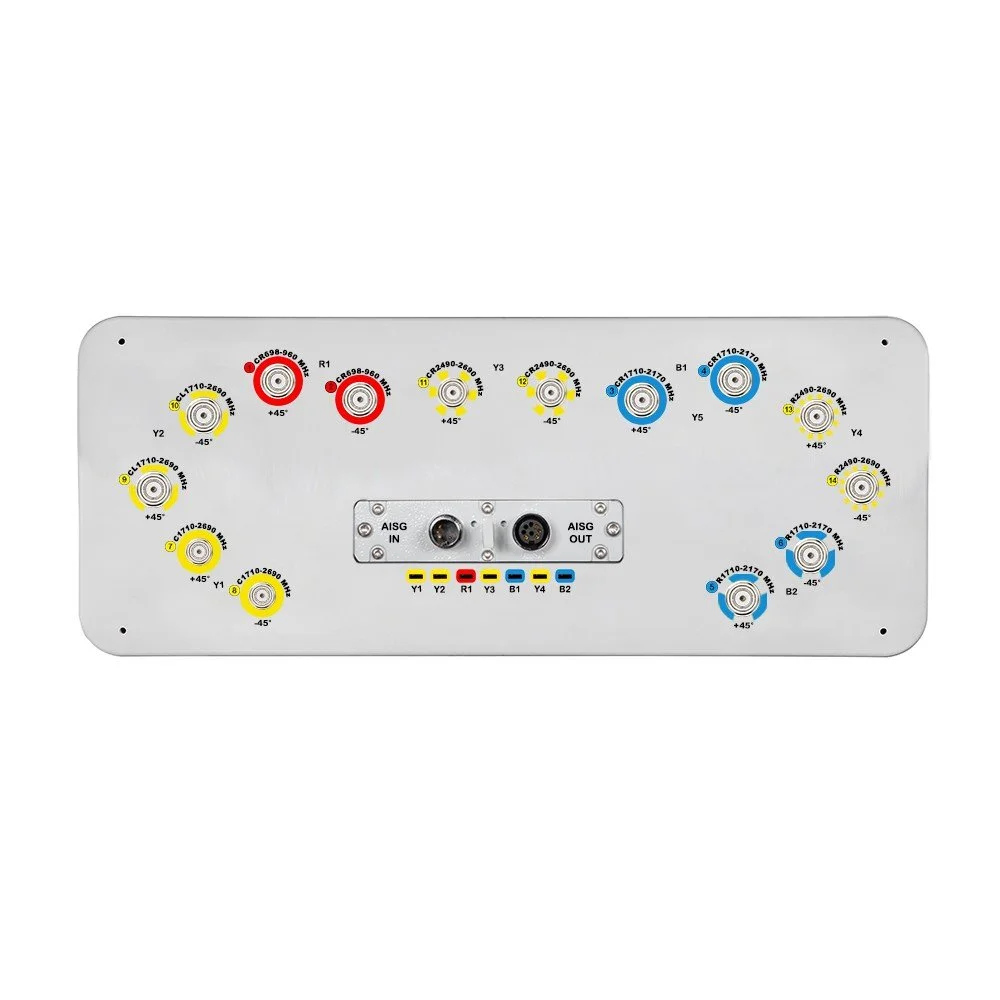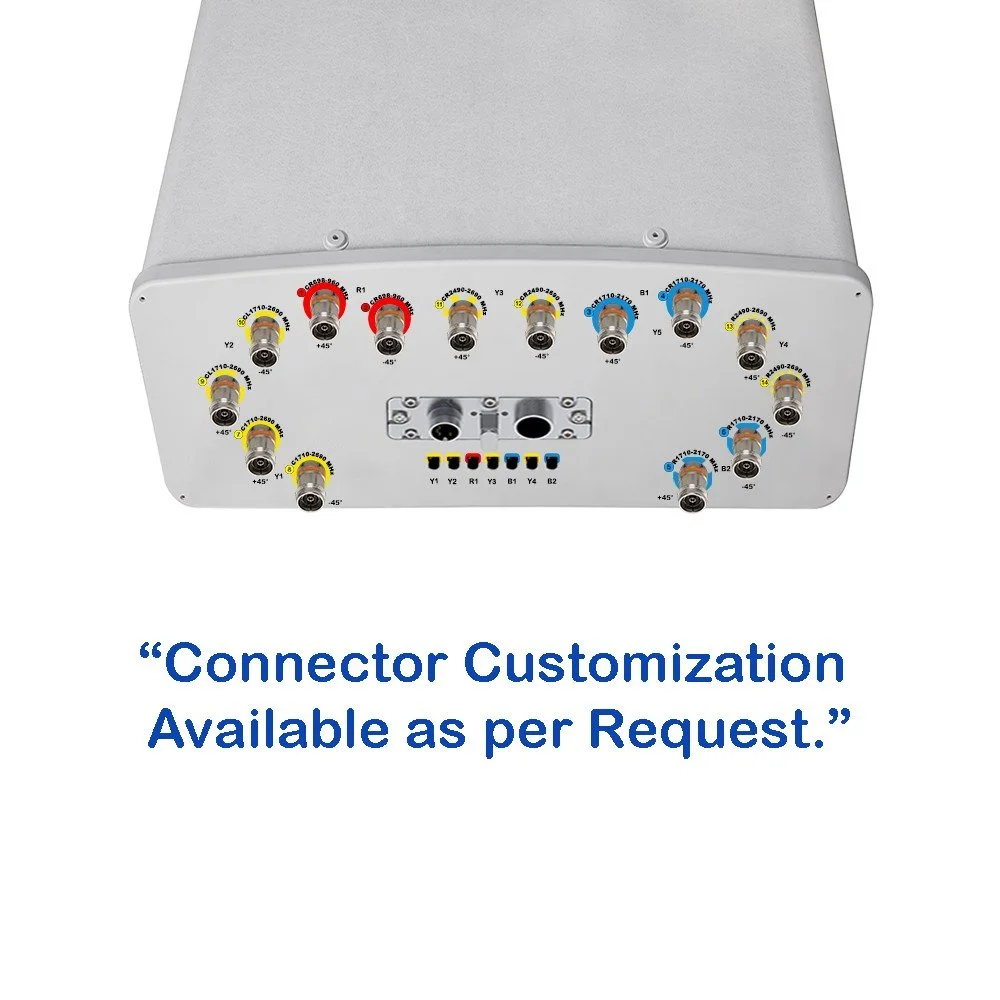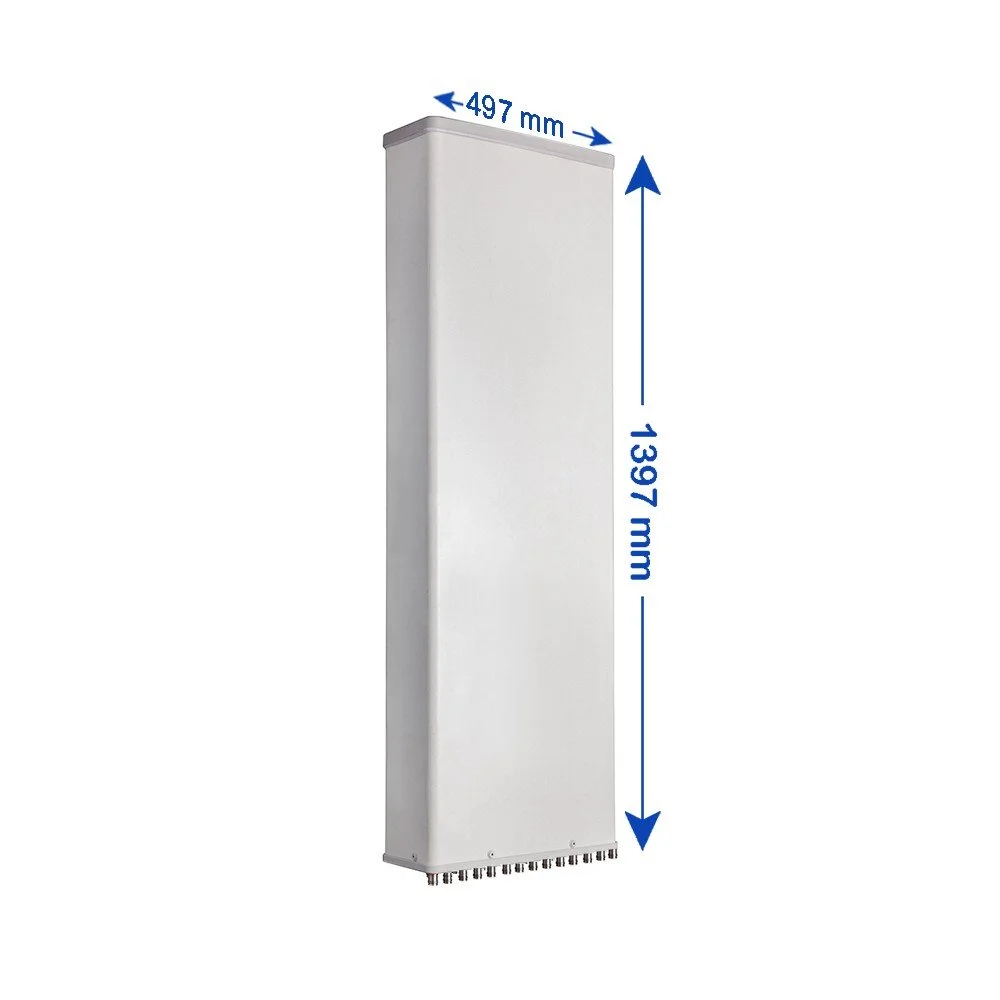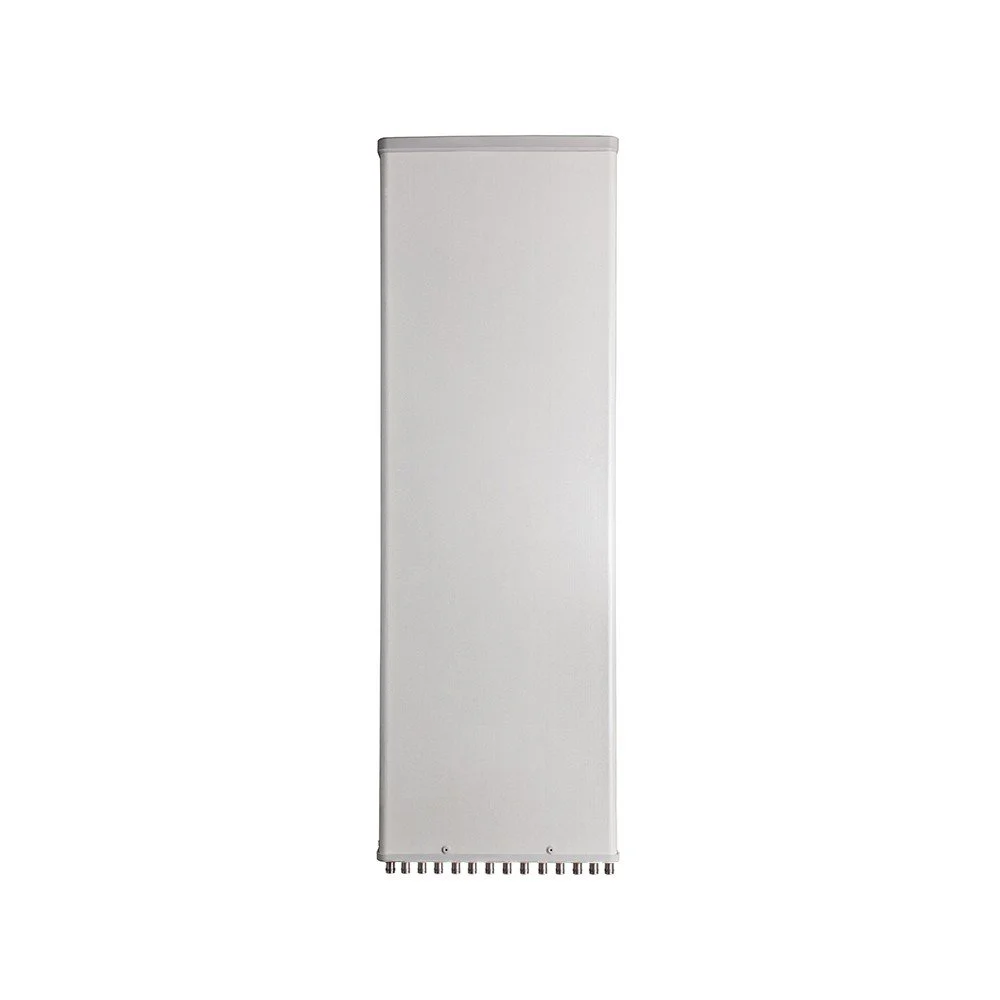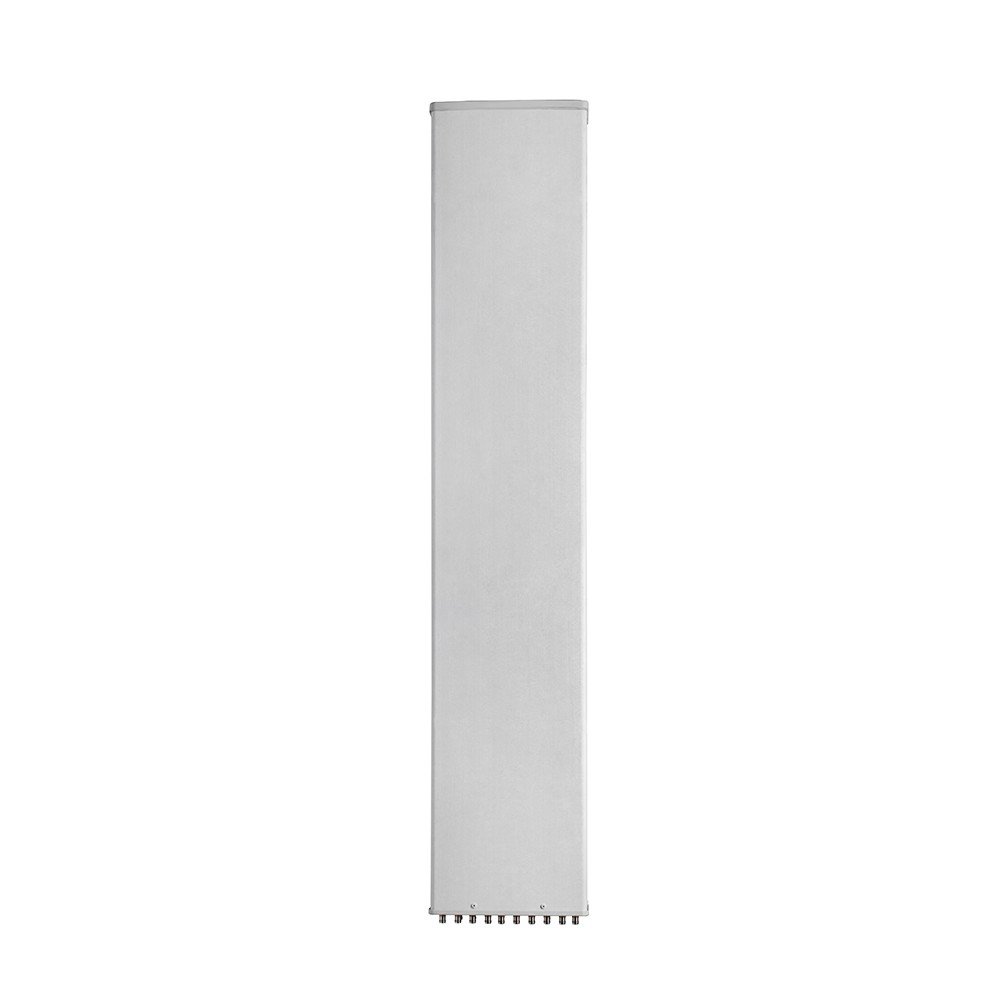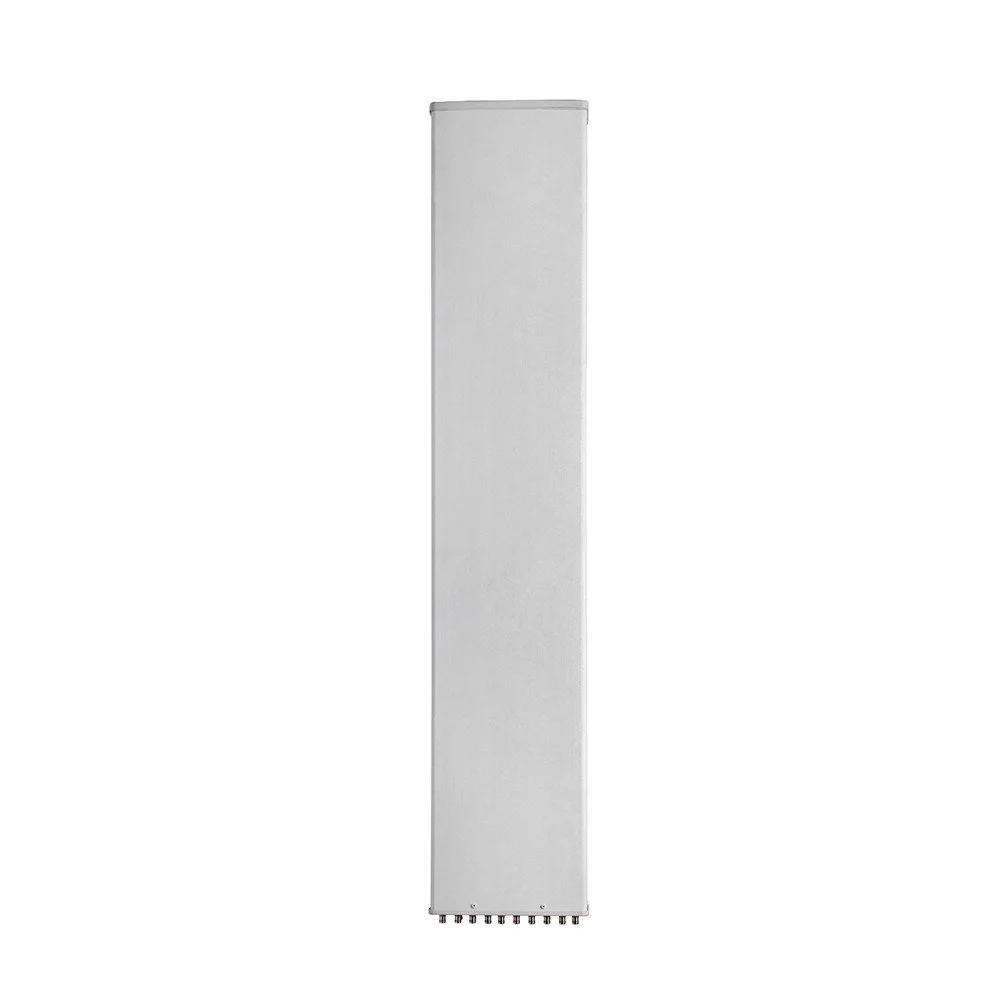
19-Port, TDD Hybrid Panel Antenna ( 690 - 3800 MHz )

₹0.00

19-Port TDD Hybrid Panel Antenna Frequency Range: 690 – 3800 MHz Polarization: Dual (±45°) hybrid-fed TDD Ports: 19 active RF ports with integrated hybrid network Gain: Frequency-dependent, optimized across bands (see typical gain table below) Beamwidth: Sectorized azimuth patterns with controlled elevation tilt VSWR: ≤ 1.8:1 (typical) Isolation: ≥ 25 dB between adjacent ports Front-to-Back Ratio: ≥ 25 dB (typical) Impedance: 50 Ω nominal Maximum Input Power: 200 W per port (maximum) Connector Type: Robust N-type (female) or SMA options available on request Mounting: Universal pole-mount bracket, tilt adjustable (mechanical ±10°) Mechanical

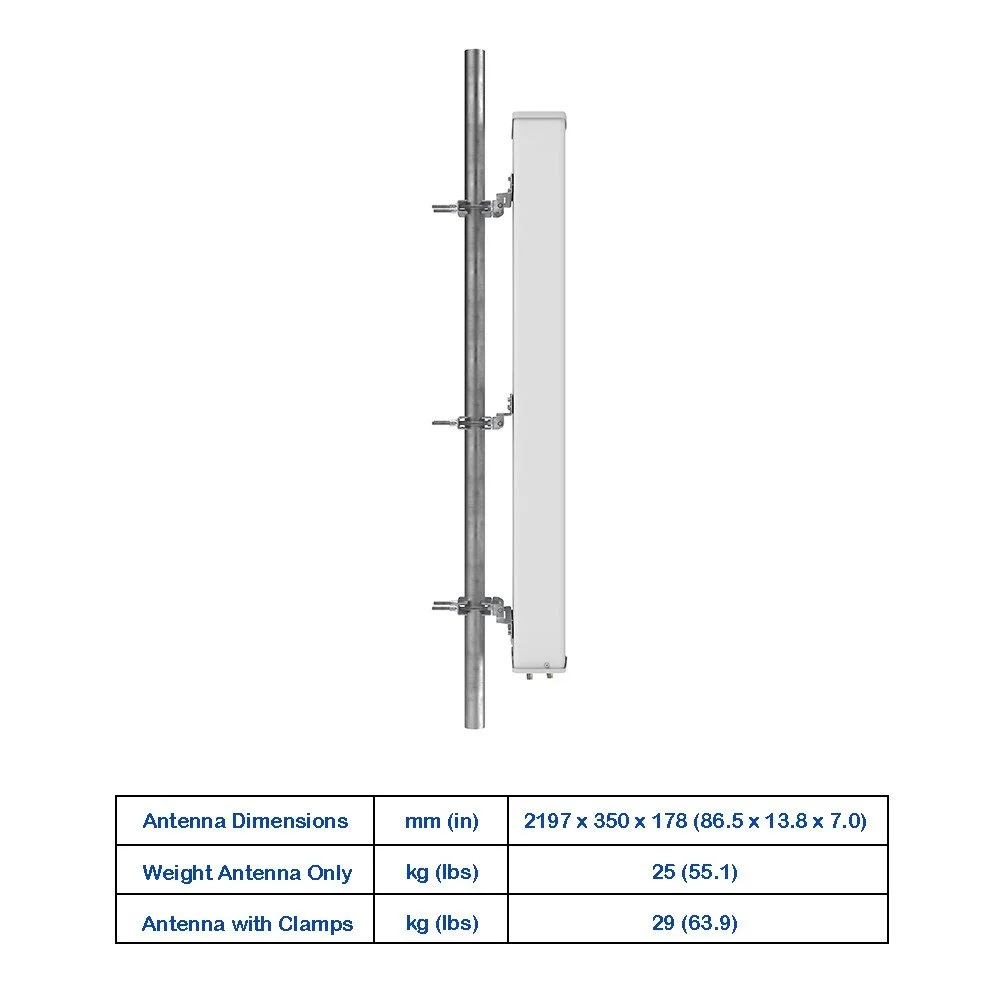
  • Dimensions: Compact low-profile enclosure optimized for rooftop and tower installations

  • Weight: Lightweight composite radome for simplified handling and reduced wind load

  • Radome Material: UV-stable, weather-resistant polymer

  • Ingress Protection: IP65 or better (environmental sealing for outdoor use)

  • Operating Temperature: -40°C to +65°C Electrical & Performance Features

  • Wideband coverage: Single-aperture operation across 690–3800 MHz, supporting 5G NR TDD bands, LTE TDD bands, CBRS, and legacy carriers where applicable

  • Hybrid-fed architecture: Integrated hybrid network combines multiple antenna elements to provide sectorized beams and improved port isolation, enabling efficient TDD MIMO and beam management

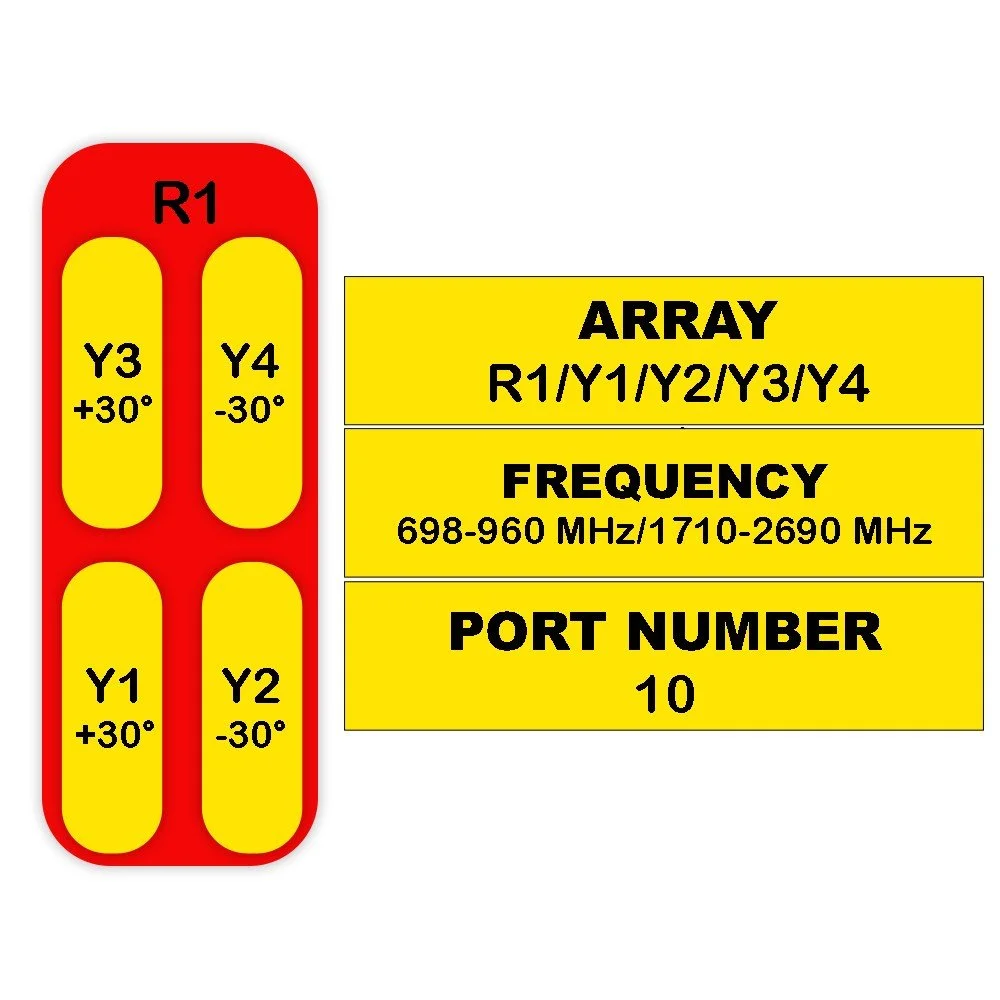
  • 19-port configuration: Ideal for dense macro sites and compact multi-sector deployments — supports multi-layer MIMO (e.g., 4x4 or higher depending on port mapping) and sector aggregation without multiple physically separate panels

  • Multi-band optimization: Each port and the hybrid feed network tuned to deliver consistent radiation patterns, gain, and beam tilt across the full frequency range

  • Low axial ratio and stable polarization over frequency range for improved link reliability

  • Consistent electrical downtilt across bands and low pattern ripple for minimized inter-site interference Installation & Integration

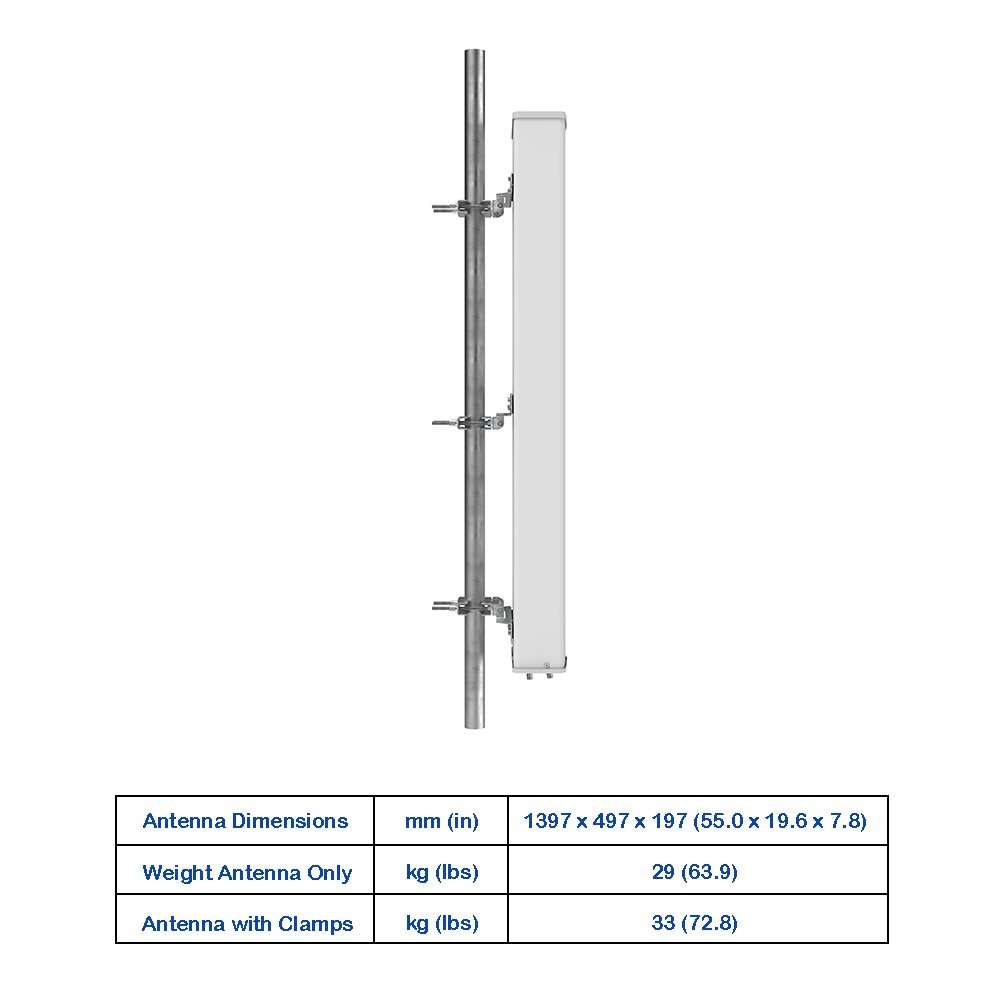
  • Quick-mount bracket: Designed for fast alignment and secure installation on monopoles and lattice towers

  • Remote electrical tilt (RET) ready: Internal mechanical provision and interface for integration with common RET actuators and controllers

  • Cable management: Integrated cable routing channels and strain relief points for N-female connectors

  • Field-updatable: Serviceable feed assembly and replaceable cables/connector modules to simplify maintenance and upgrades Environmental & Compliance

  • Lightning protection: Integrated DC short and grounding provisions; optional gas discharge tube (GDT) surge protection modules per port

  • RoHS and REACH compliant components

  • Vibration and wind-load rated per industry standards for macro cell antennas Typical Use Cases

  • High-capacity TDD macro sites requiring compact multi-sector coverage

  • Multi-band consolidation where a single antenna must serve LTE TDD, CBRS, and 5G NR

  • Dense urban or stadium deployments needing many RF ports with tight isolation Ordering Options & Accessories

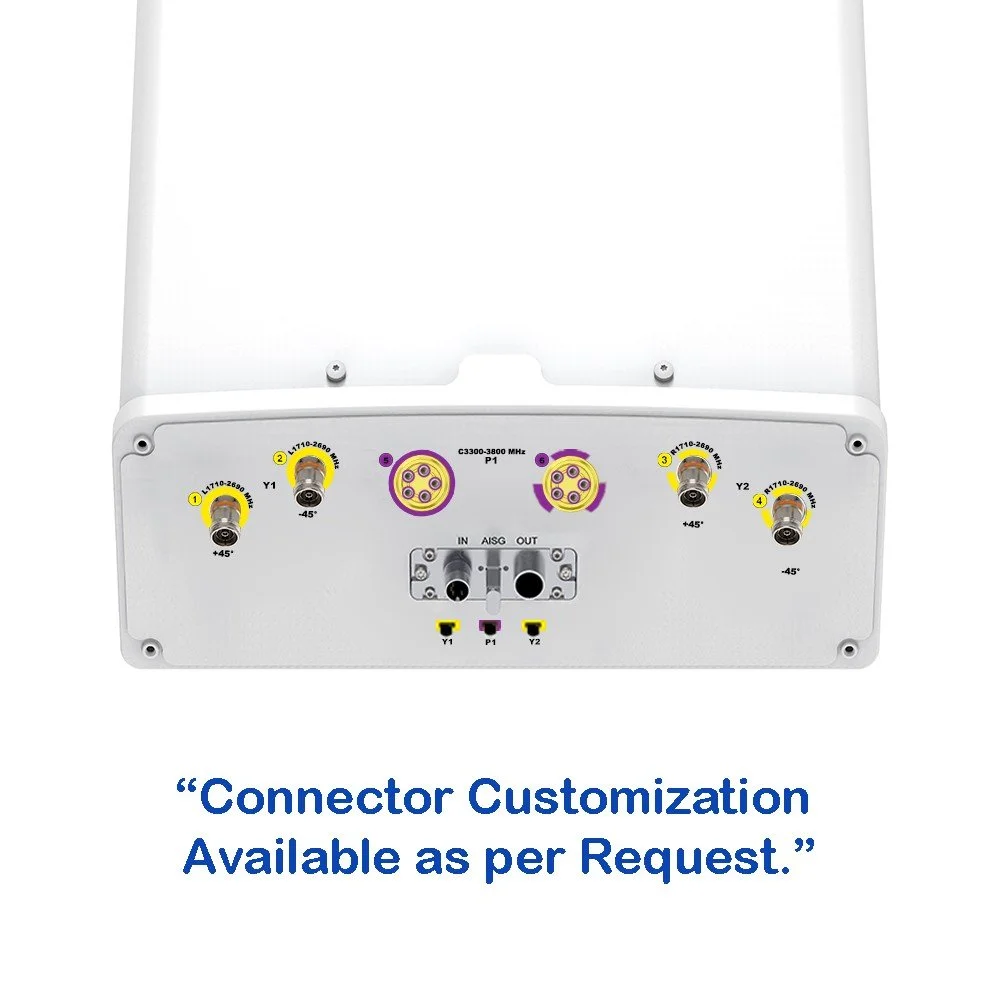
  • Connector type selection (N-female standard; SMA optional)

  • RET actuator kit (motorized) and control interface

  • Lightning/Grounding kits and surge protection modules per-port

  • Custom mounting adapters for nonstandard poles or platforms Performance Table (typical)

  • 698–960 MHz: Gain ~7–9 dBi, Azimuth beamwidth ~65°–85°

  • 1700–2200 MHz: Gain ~8–10 dBi, Azimuth beamwidth ~40°–60°

  • 2300–2700 MHz: Gain ~9–11 dBi, Azimuth beamwidth ~30°–45°

  • 3300–3800 MHz: Gain ~10–12 dBi, Azimuth beamwidth ~20°–35° Note: Values above are indicative. Final specifications are provided with product datasheet and are subject to site-specific tuning. Why

19-Port TDD Hybrid Panel Antenna Frequency Range: 690 – 3800 MHz Polarization: Dual (±45°) hybrid-fed TDD Ports: 19 active RF ports with integrated hybrid network Gain: Frequency-dependent, optimized across bands (see typical gain table below) Beamwidth: Sectorized azimuth patterns with controlled elevation tilt VSWR: ≤ 1.8:1 (typical) Isolation: ≥ 25 dB between adjacent ports Front-to-Back Ratio: ≥ 25 dB (typical) Impedance: 50 Ω nominal Maximum Input Power: 200 W per port (maximum) Connector Type: Robust N-type (female) or SMA options available on request Mounting: Universal pole-mount bracket, tilt adjustable (mechanical ±10°) Mechanical

  • Dimensions: Compact low-profile enclosure optimized for rooftop and tower installations

  • Weight: Lightweight composite radome for simplified handling and reduced wind load

  • Radome Material: UV-stable, weather-resistant polymer

  • Ingress Protection: IP65 or better (environmental sealing for outdoor use)

  • Operating Temperature: -40°C to +65°C Electrical & Performance Features

  • Wideband coverage: Single-aperture operation across 690–3800 MHz, supporting 5G NR TDD bands, LTE TDD bands, CBRS, and legacy carriers where applicable

  • Hybrid-fed architecture: Integrated hybrid network combines multiple antenna elements to provide sectorized beams and improved port isolation, enabling efficient TDD MIMO and beam management

  • 19-port configuration: Ideal for dense macro sites and compact multi-sector deployments — supports multi-layer MIMO (e.g., 4x4 or higher depending on port mapping) and sector aggregation without multiple physically separate panels

  • Multi-band optimization: Each port and the hybrid feed network tuned to deliver consistent radiation patterns, gain, and beam tilt across the full frequency range

  • Low axial ratio and stable polarization over frequency range for improved link reliability

  • Consistent electrical downtilt across bands and low pattern ripple for minimized inter-site interference Installation & Integration

  • Quick-mount bracket: Designed for fast alignment and secure installation on monopoles and lattice towers

  • Remote electrical tilt (RET) ready: Internal mechanical provision and interface for integration with common RET actuators and controllers

  • Cable management: Integrated cable routing channels and strain relief points for N-female connectors

  • Field-updatable: Serviceable feed assembly and replaceable cables/connector modules to simplify maintenance and upgrades Environmental & Compliance

  • Lightning protection: Integrated DC short and grounding provisions; optional gas discharge tube (GDT) surge protection modules per port

  • RoHS and REACH compliant components

  • Vibration and wind-load rated per industry standards for macro cell antennas Typical Use Cases

  • High-capacity TDD macro sites requiring compact multi-sector coverage

  • Multi-band consolidation where a single antenna must serve LTE TDD, CBRS, and 5G NR

  • Dense urban or stadium deployments needing many RF ports with tight isolation Ordering Options & Accessories

  • Connector type selection (N-female standard; SMA optional)

  • RET actuator kit (motorized) and control interface

  • Lightning/Grounding kits and surge protection modules per-port

  • Custom mounting adapters for nonstandard poles or platforms Performance Table (typical)

  • 698–960 MHz: Gain ~7–9 dBi, Azimuth beamwidth ~65°–85°

  • 1700–2200 MHz: Gain ~8–10 dBi, Azimuth beamwidth ~40°–60°

  • 2300–2700 MHz: Gain ~9–11 dBi, Azimuth beamwidth ~30°–45°

  • 3300–3800 MHz: Gain ~10–12 dBi, Azimuth beamwidth ~20°–35° Note: Values above are indicative. Final specifications are provided with product datasheet and are subject to site-specific tuning. Why

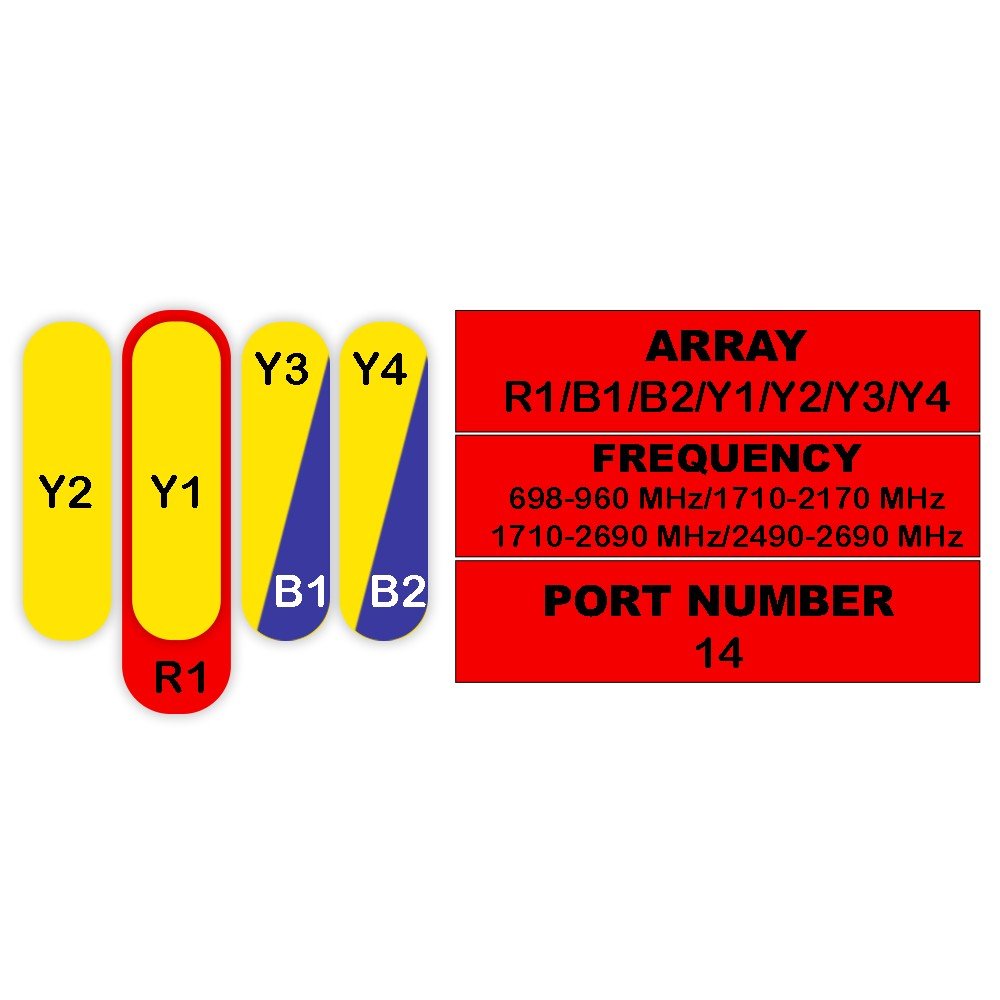
Electrical Specifications
Electrical specifications for R1 and Y1 antenna models including frequency range, gain, beamwidth, isolation, and power ratings.
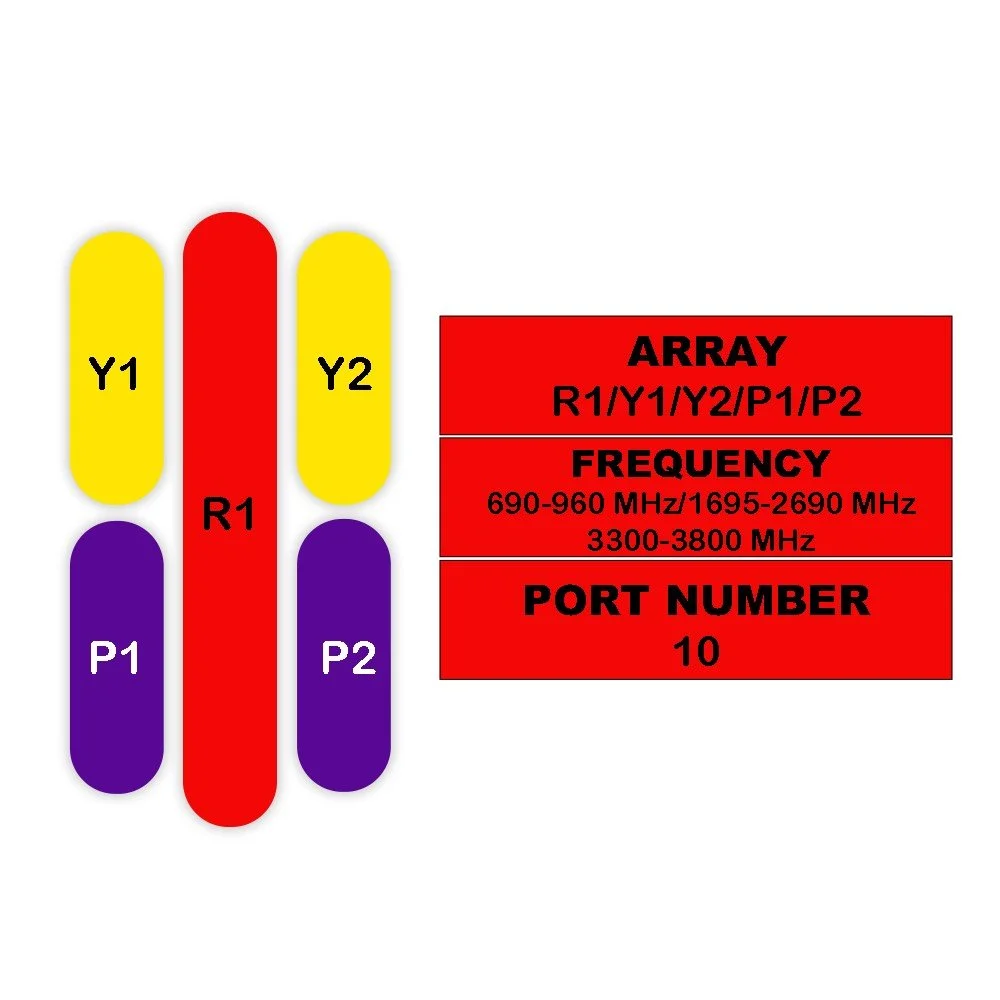
Parameter Unit 690-806 790-894 880-960 1695-1880 1850-1990 1920-2170 2300-2400 2490-2690
Polarization ±45° ±45°
Gain (Mid Tilt) dBi 15.816.216.7 16.61717.417.417.4
Gain (All Tilts) dBi 15.6 ± 0.616.0 ± 0.616.5 ± 0.6 16.4 ± 0.516.8 ± 0.517.2 ± 0.5 17.2 ± 0.517.2 ± 0.5
Horizontal Beamwidth degree 72 ± 4.569 ± 4.166 ± 4.5 67 ± 7.565 ± 7.562 ± 7.0 63 ± 7.062 ± 7.5
Vertical Beamwidth degree 8.8 ± 1.17.8 ± 0.97.2 ± 0.9 6.8 ± 0.66.4 ± 0.66.0 ± 0.6 5.2 ± 0.54.8 ± 0.4
Electrical Downtilt (Continuous) degree 2–12 2–12
Tilt Accuracy degree < 1< 1< 1 < 1< 1< 1< 1< 1
Upper Side Lobe Suppression (1st) dB ≥ 16≥ 16≥ 16 > 16> 16> 16> 16> 16
Front-to-Back Ratio (±30°) dB ≥ 22≥ 23≥ 25 ≥ 23≥ 23> 24≥ 25≥ 24
Cross Polar Discrimination dB ≥ 8≥ 7≥ 6 > 4> 6> 6> 5> 3
Isolation (Cross-Polar) dB > 26 > 26
Isolation (Port-to-Port) dB > 28 > 28
Impedance Ohm 50 50
VSWR < 1.5 < 1.5
Return Loss dB > 14 > 14
PIM3 (2×43 dBm) dBc < -150 < -150
Lightning Protection DC Ground DC Ground
Max Avg Input Power (50°C) Watts 250 200
Electrical Specifications – Y2 / Y3 / Y4
Electrical specifications for Y2, Y3, and Y4 antenna models covering 1695–2690 MHz frequency range.
Parameter Unit 1695-1880 1850-1990 1920-2170 2300-2400 2490-2690
Frequency Range MHz 1695–2690
Polarization ±45°
Gain (Mid Tilt) dBi 16.216.617.017.017.0
Gain (All Tilts) dBi 16.0 ± 0.516.4 ± 0.5 16.8 ± 0.516.8 ± 0.516.8 ± 0.5
Horizontal Beamwidth degree 67 ± 7.565 ± 7.5 62 ± 7.063 ± 7.062 ± 7.5
Vertical Beamwidth degree 6.8 ± 0.66.4 ± 0.6 6.0 ± 0.65.2 ± 0.54.8 ± 0.4
Electrical Downtilt (Continuous) degree 2–12
Tilt Accuracy degree < 1< 1< 1< 1< 1
Upper Side Lobe Suppression (1st) dB > 16> 16> 16> 16> 16
Upper Side Lobe Suppression (20° Sector) dB > 15> 15> 15> 15> 15
Front-to-Back Ratio (±30°) dB ≥ 23≥ 23> 24≥ 25≥ 24
Cross Polar Discrimination (Boresight) dB > 16> 16> 17> 17> 17
Cross Polar Discrimination (Sector) dB > 4> 6> 6> 5> 3
Isolation (Cross-Polar) dB > 26
Isolation (Port-to-Port) dB > 28
Impedance Ohm 50
VSWR < 1.5
Return Loss dB > 14
PIM3 (2×43 dBm Carrier) dBc < -150
Lightning Protection DC Ground
Max Avg Input Power (50°C) Watts 200
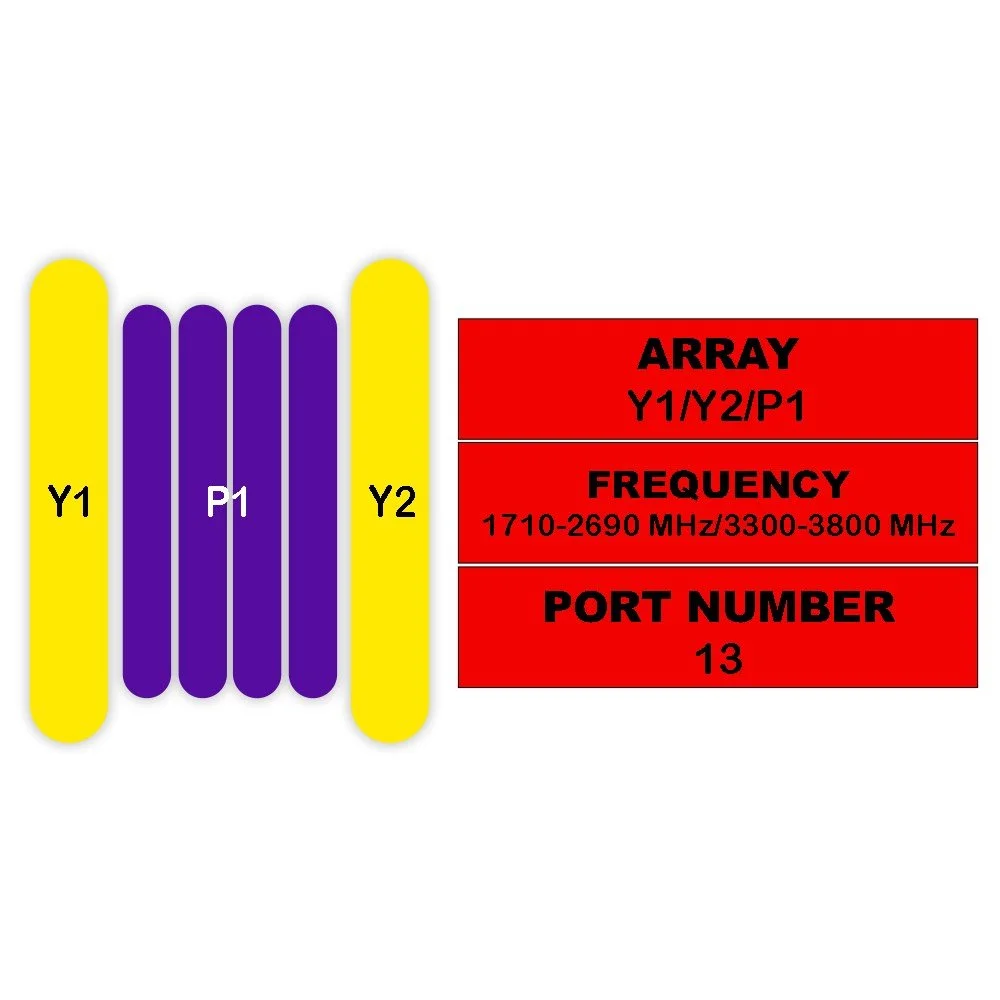
Electrical Specifications – P1
Electrical specifications for P1 antenna covering 3300–3800 MHz including beam configurations, isolation, and electrical parameters.
Parameter Unit 3300-3600 3600-3800
Frequency Range MHz 3300–3800
Polarization ±45°
Electrical Downtilt (Continuous) degree 2–12
Single Column Beam
GaindBi15.5 ± 115.7 ± 1
Horizontal Beamwidthdegree75 ± 1065 ± 10
Vertical Beamwidth (3 dB)degree5.8 ± 0.65.5 ± 0.6
Cross-Polar Ratio (Boresight)dB≥ 15≥ 15
First Upper Side Lobe SuppressiondB≥ 15≥ 15
Front-to-Back RatiodB≥ 25≥ 25
Broadcast Beam (65°)
GaindBi17.0 ± 0.617.2 ± 0.6
Horizontal Beamwidthdegree6565
Vertical Beamwidth (3 dB)degree5.8 ± 0.65.5 ± 0.6
Cross-Polar Ratio (Boresight)dB≥ 15≥ 15
First Upper Side Lobe SuppressiondB≥ 15≥ 15
Front-to-Back RatiodB≥ 27≥ 27
Service Beam
(0°) Direct Beam GaindBi21 ± 0.521.2 ± 0.5
(0°) Direct Beam 3 dB Horizontal BWdegree< 25< 25
(0°) Direct Beam Cross Polar RatiodB≥ 18≥ 18
(0°) Direct Beam Front-to-Back RatiodB≥ 30≥ 30
(±30°) Direct Beam GaindBi1818.2
(±30°) Direct Beam 3 dB Horizontal BWdegree< 30< 30
Calibration & Electrical Parameters
Coupling FactordB-26 ± 2
Max Amplitude TolerancedB≤ 0.7
Max Phase Tolerancedegree≤ 9
Ports VSWR< 1.5
Average Power CapacityW40
General Parameters
Co-Polar IsolationdB≥ 20
Cross-Polar IsolationdB≥ 25
ImpedanceOhm50
VSWR< 1.5
Return LossdB> 14
PIM3 (2×43 dBm)dBc< -143
Lightning ProtectionDC Ground
Mechanical Specifications
Mechanical specifications including connector type, dimensions, wind load, and operating temperature.
Parameter Sub-Category Unit Specification
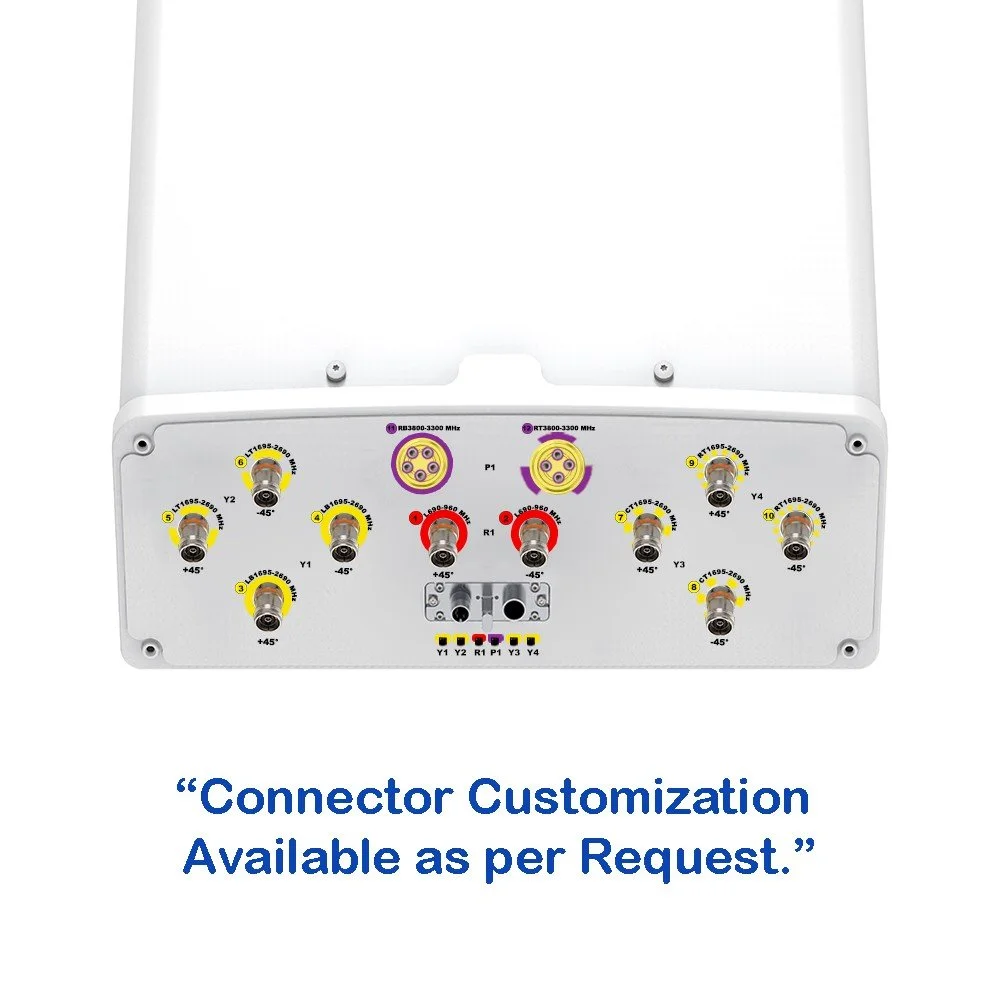
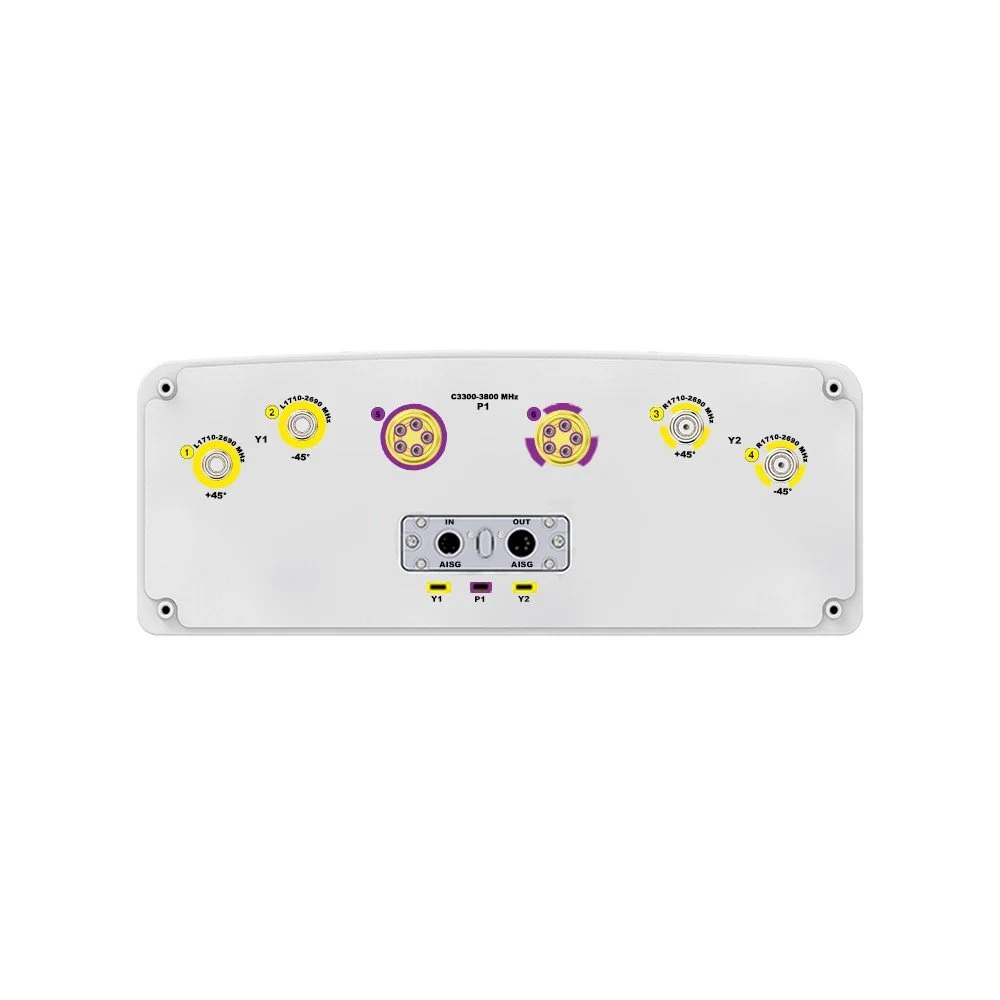
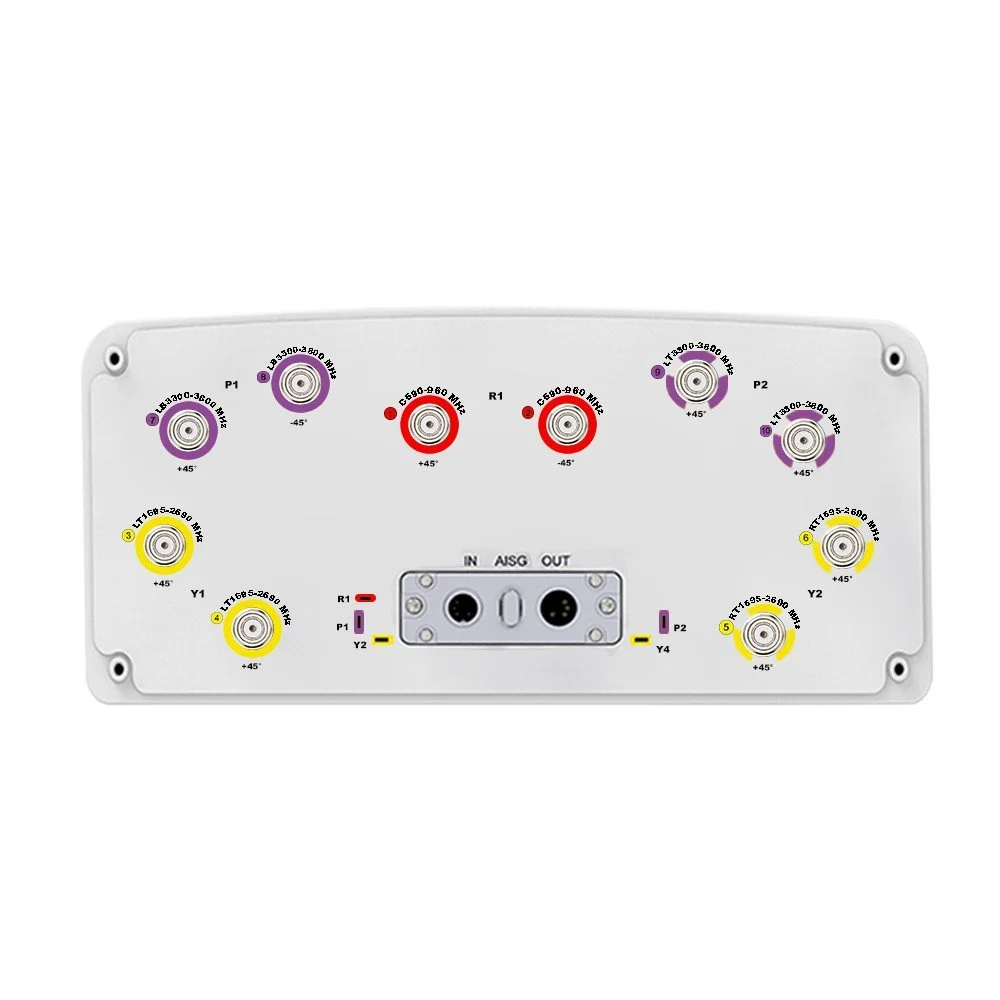
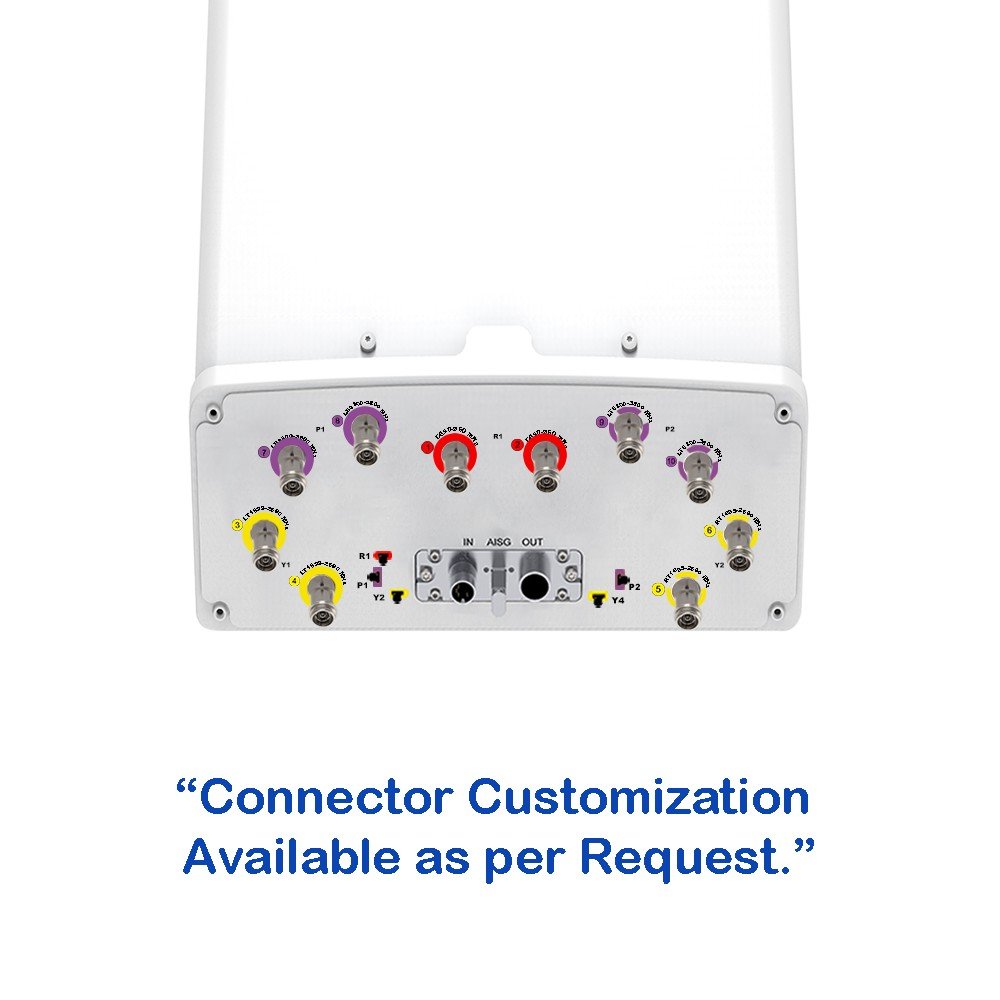
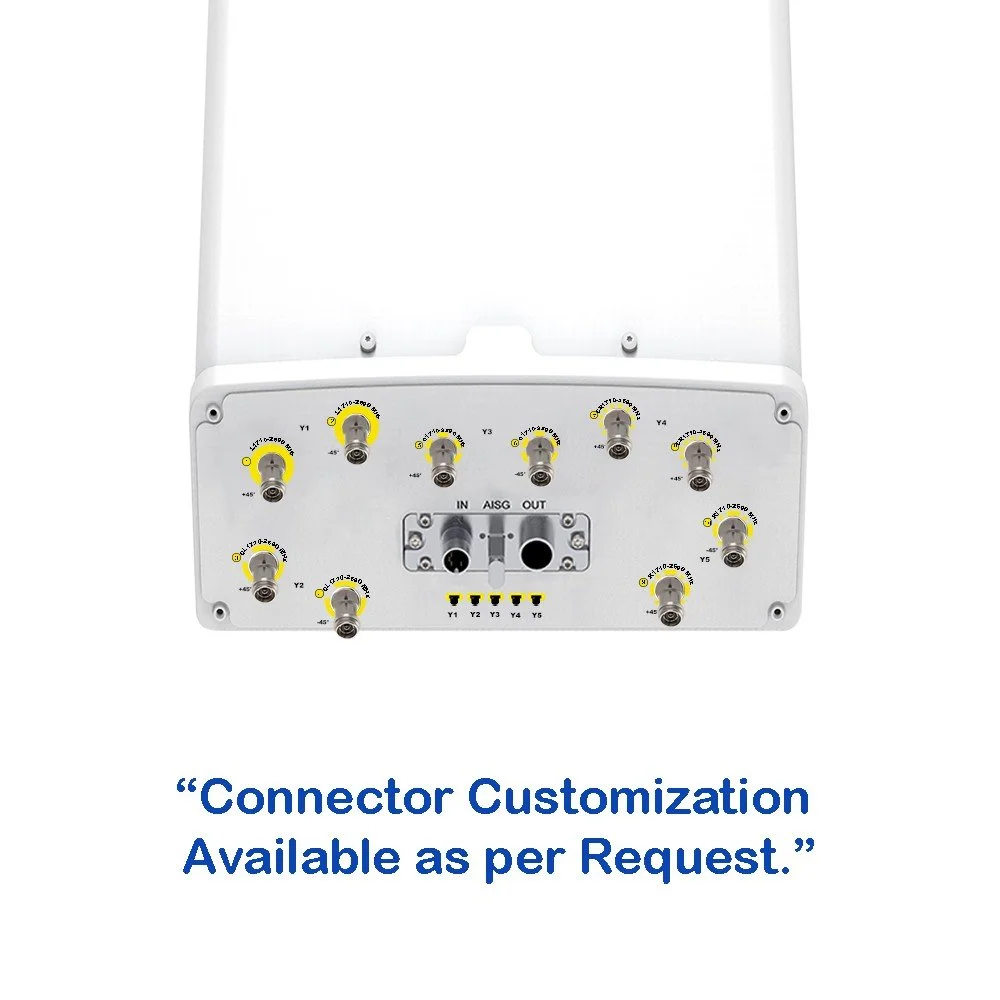
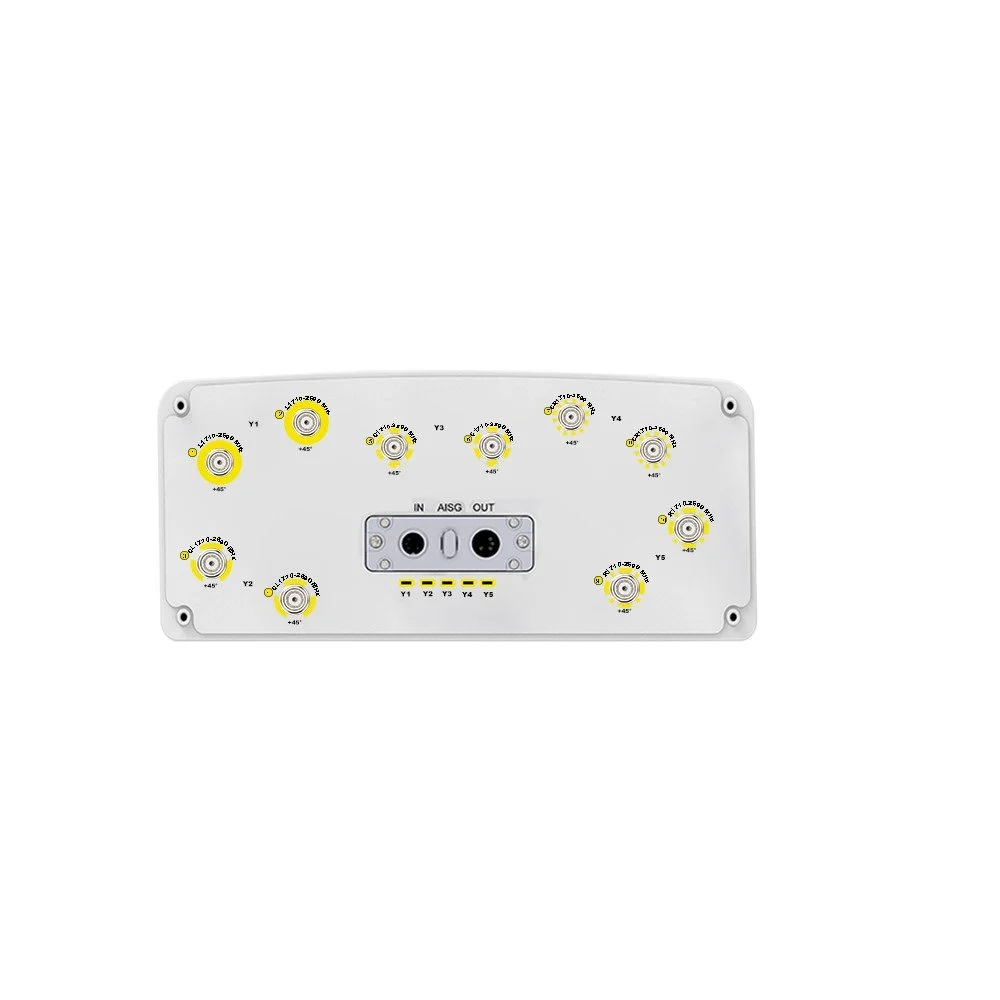
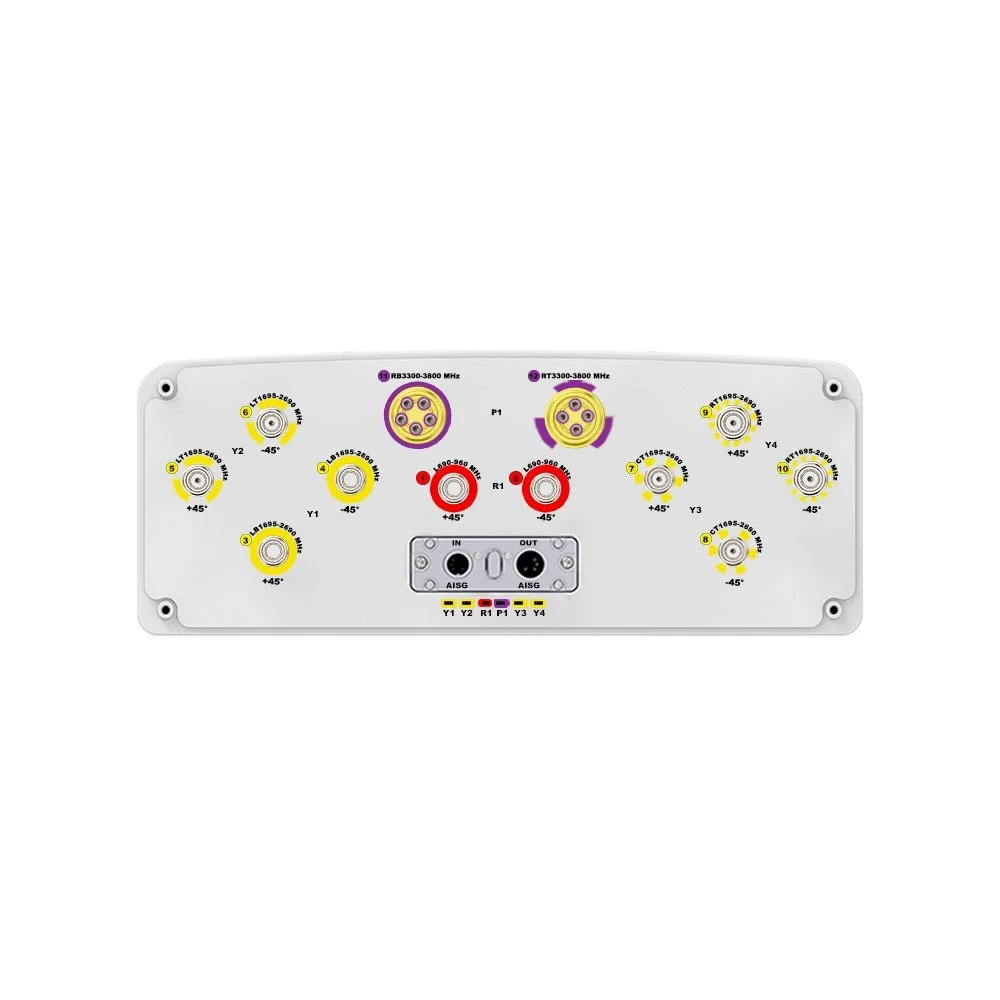
Connector Type (10×) 4.3/10 Female + (1×) MQ5 + (1×) MQ4 Male
Connector Position Bottom
Electrical Tilt Control Integrated RET
Radome Material Fiberglass
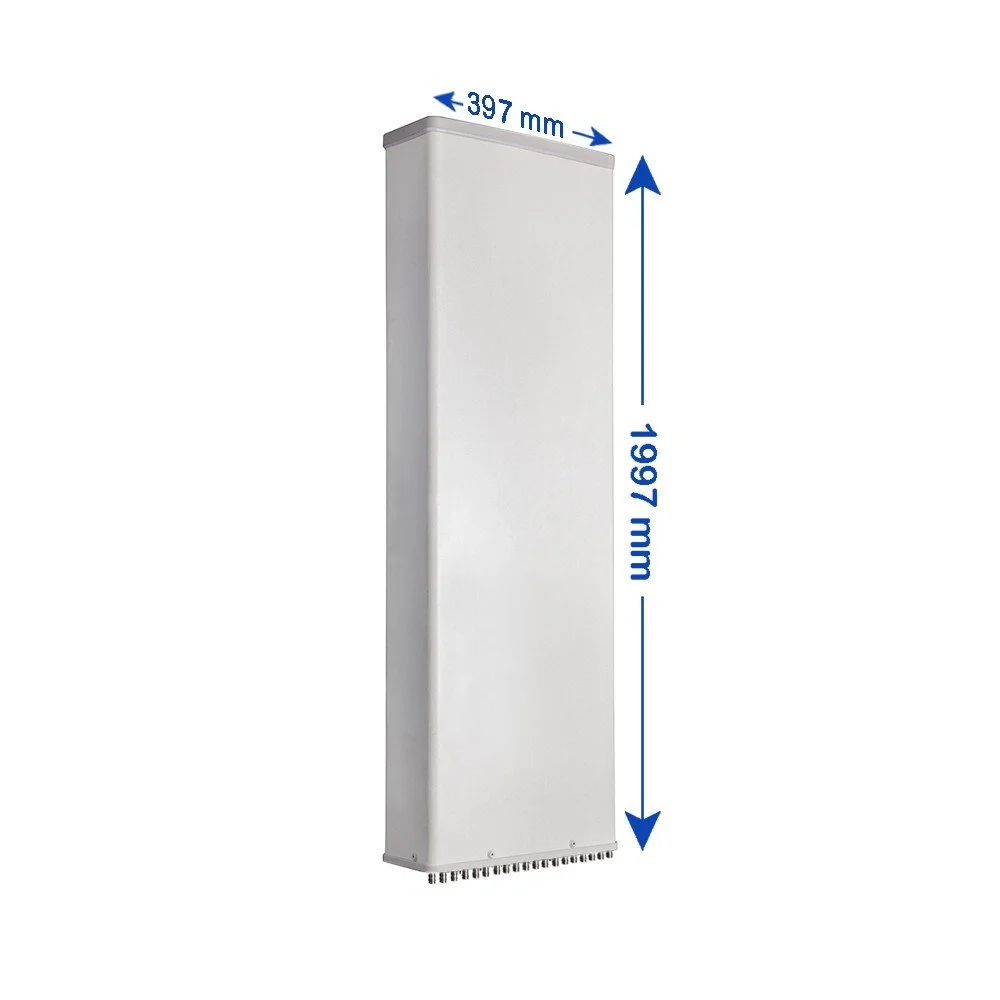
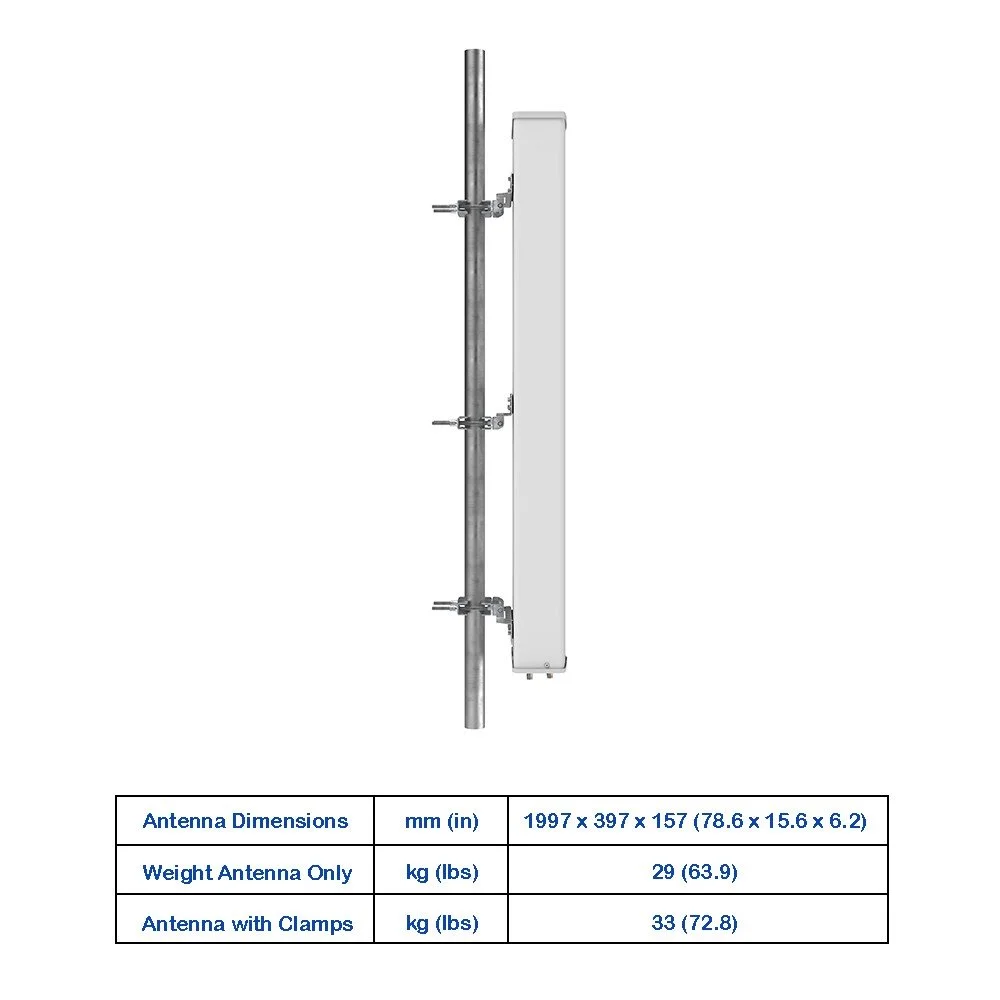
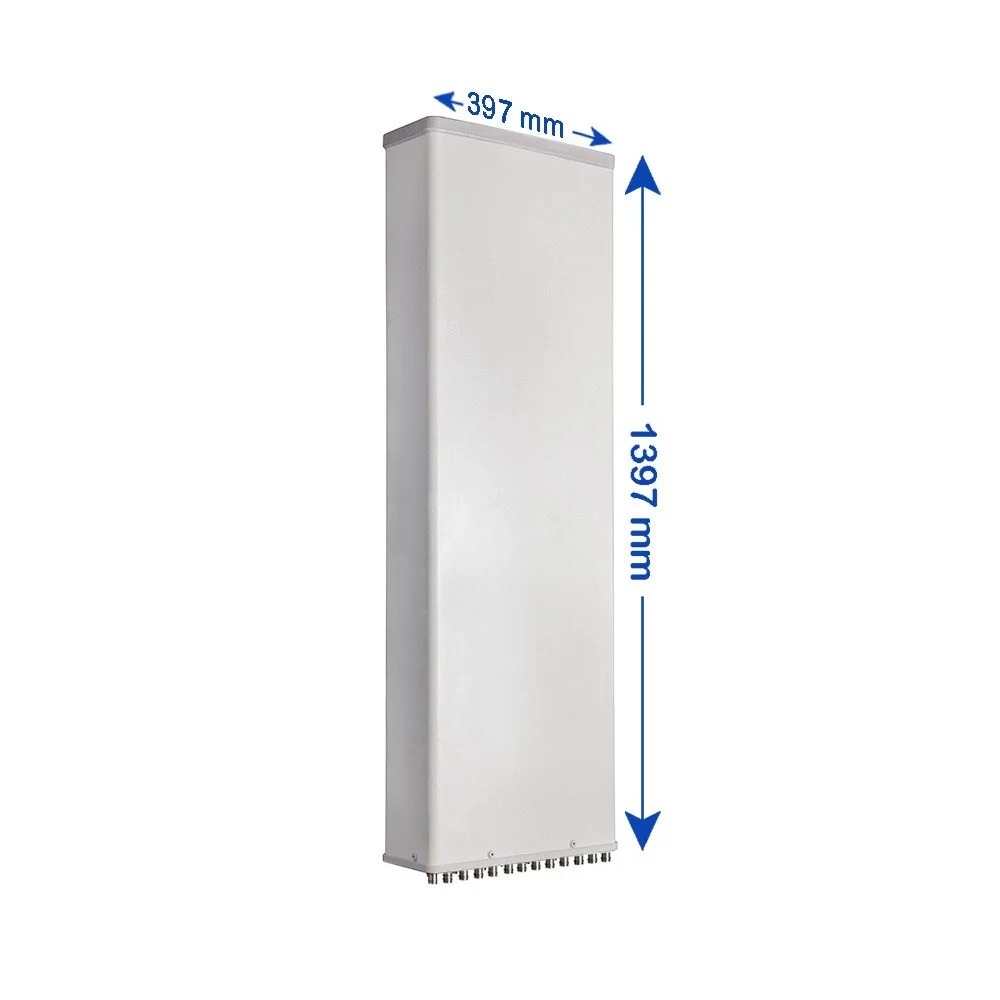
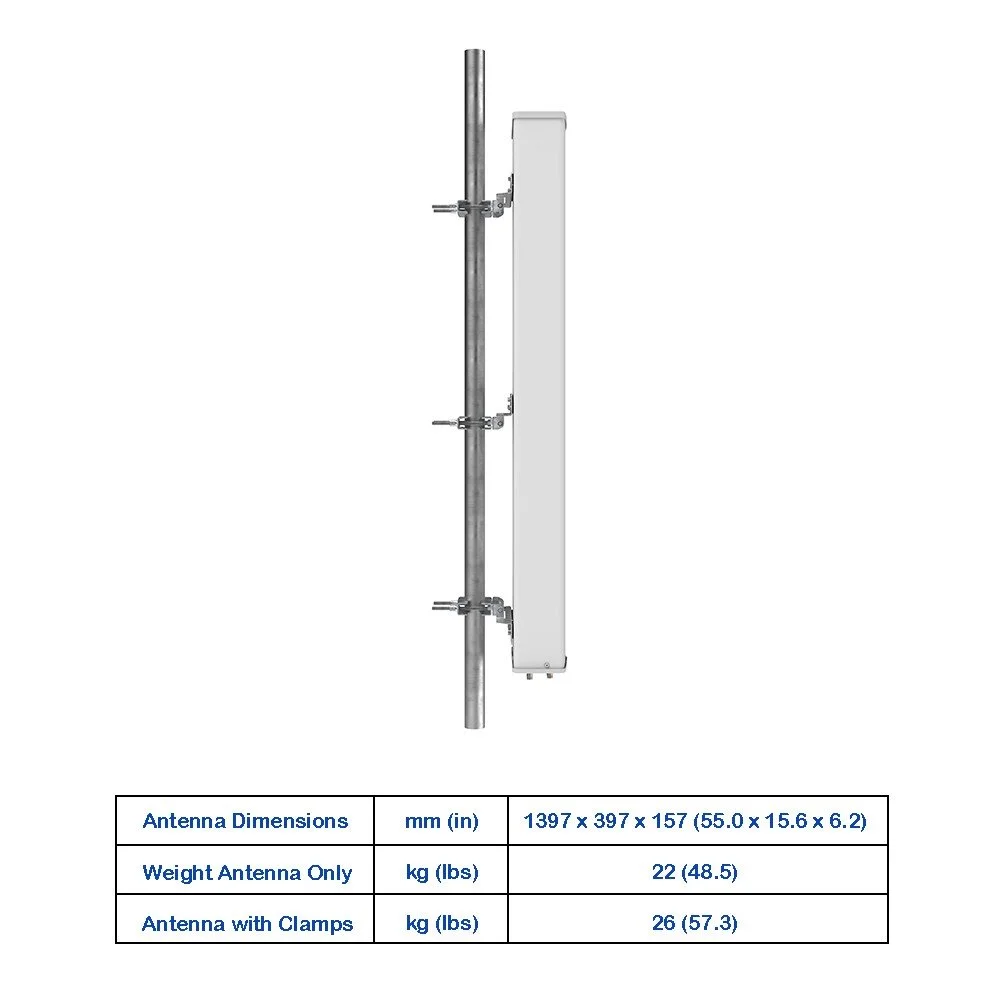
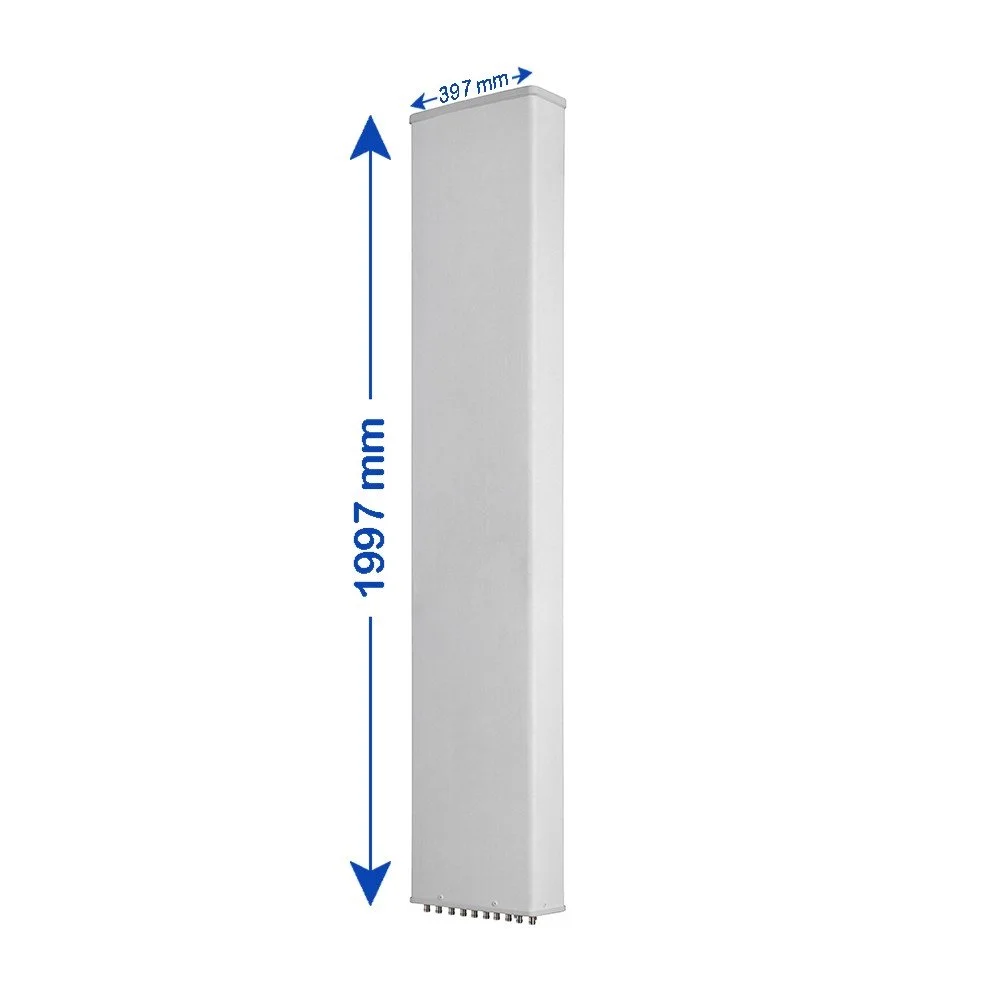
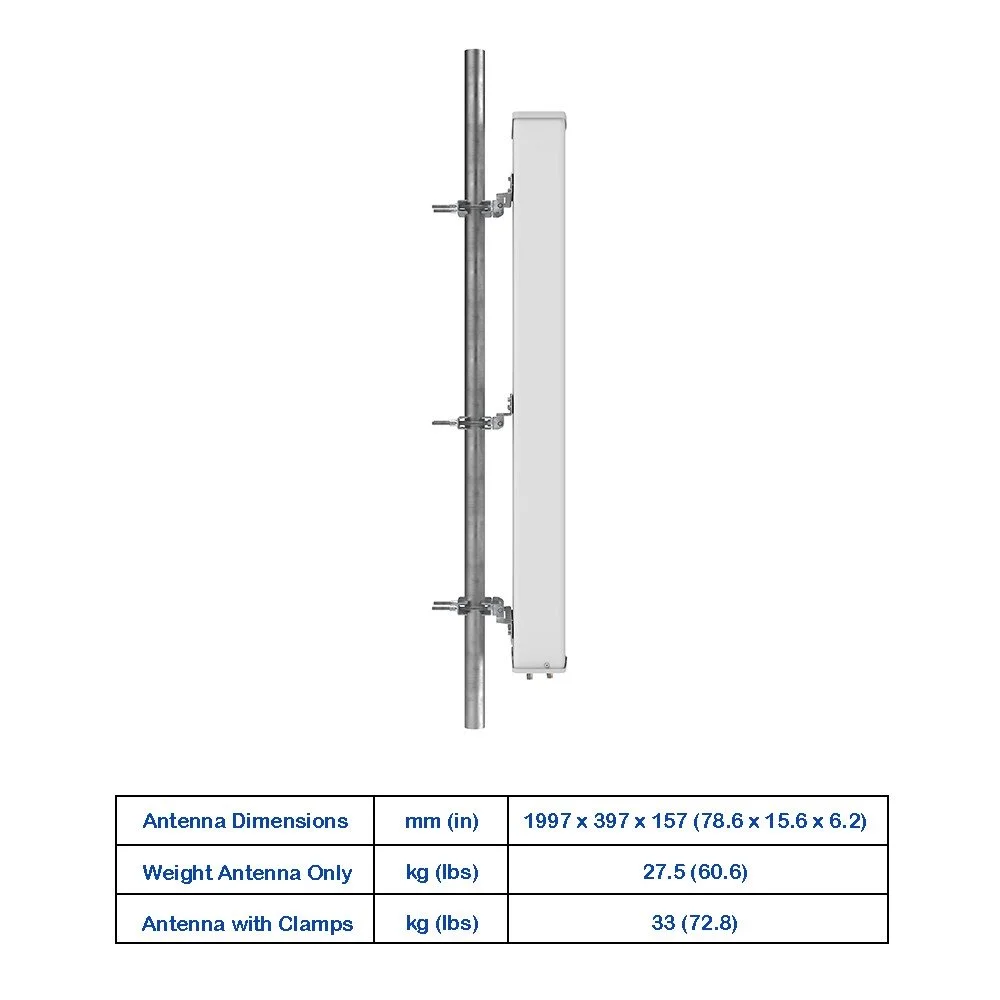
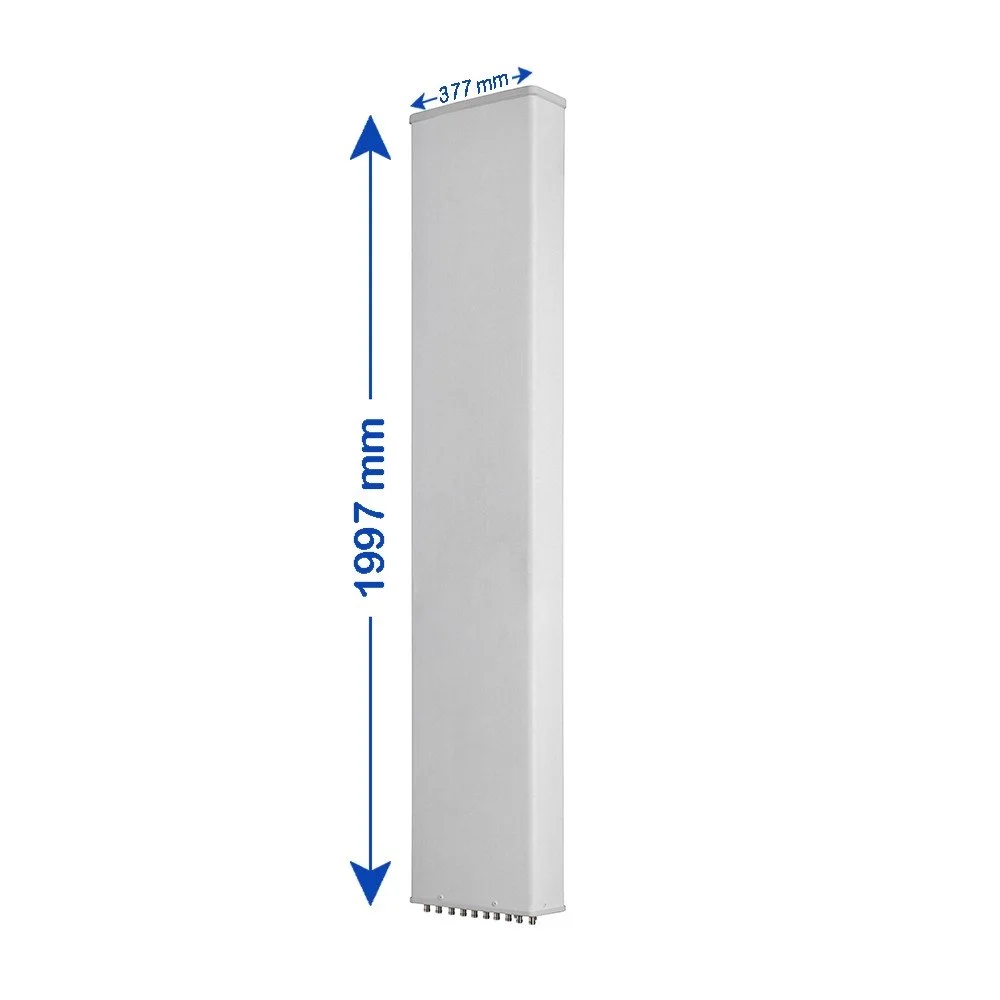
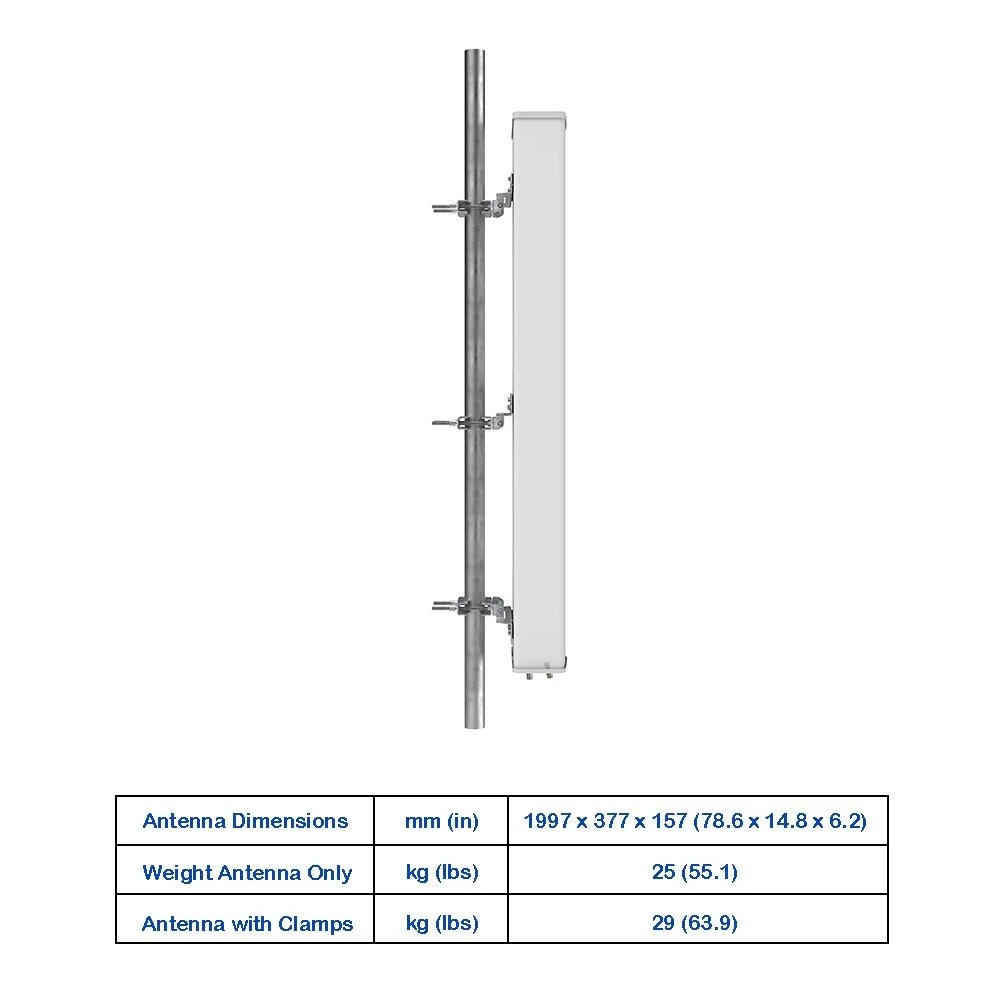
Antenna Dimensions (H × W × D) mm (in) 1997 × 397 × 157 (78.6 × 15.6 × 6.2)
Weight
Antenna Weight Antenna Only kg (lbs) 29 (63.9)
Antenna Weight With Clamps kg (lbs) 33 (72.8)
Maximum Wind Speed km/h (mph) 200 (124.3)
Wind Load at 150 km/h
Wind Load Frontal N (lbf) 735 (165.2)
Wind Load Rear N (lbf) 820 (184.3)
Wind Load Lateral N (lbf) 360 (80.9)
Operating Temperature °C (°F) -40 to +60 (-40 to 140)