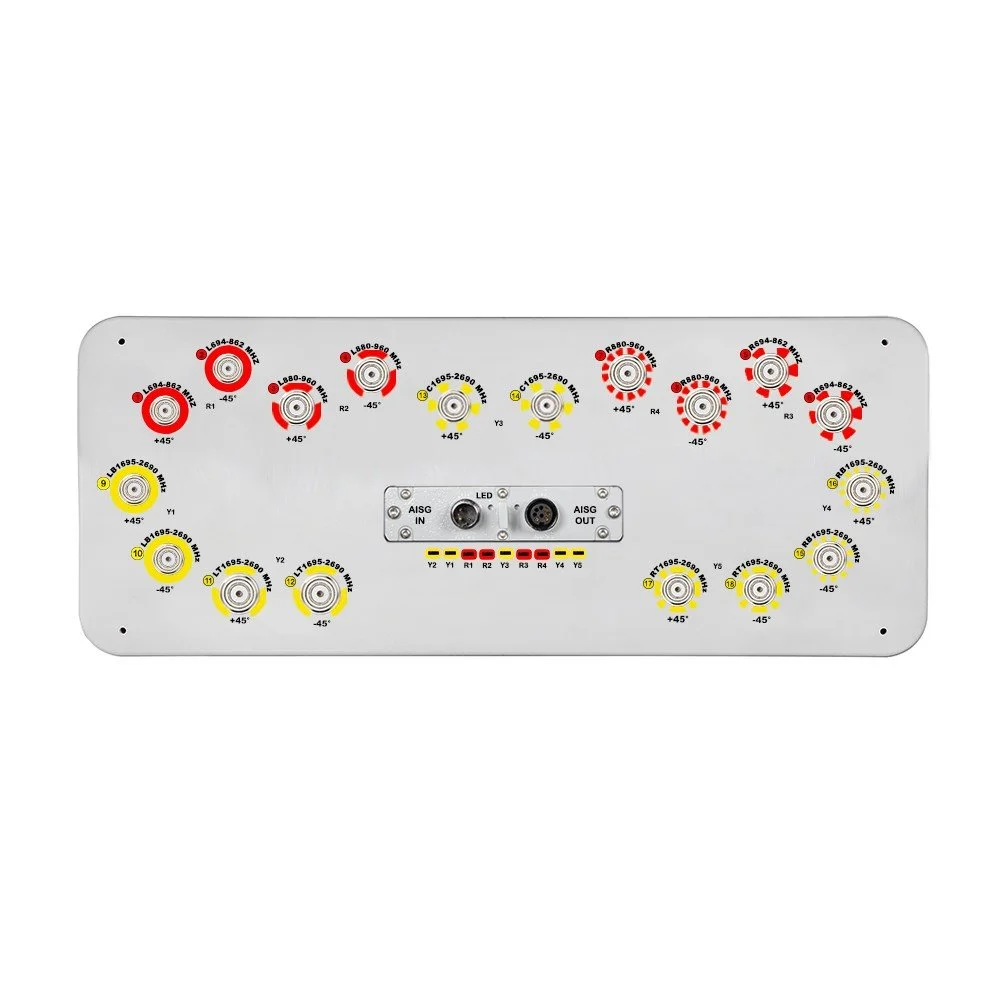
18-Port, Panel Sector Antenna ( 698 - 2690 MHz )

₹0.00

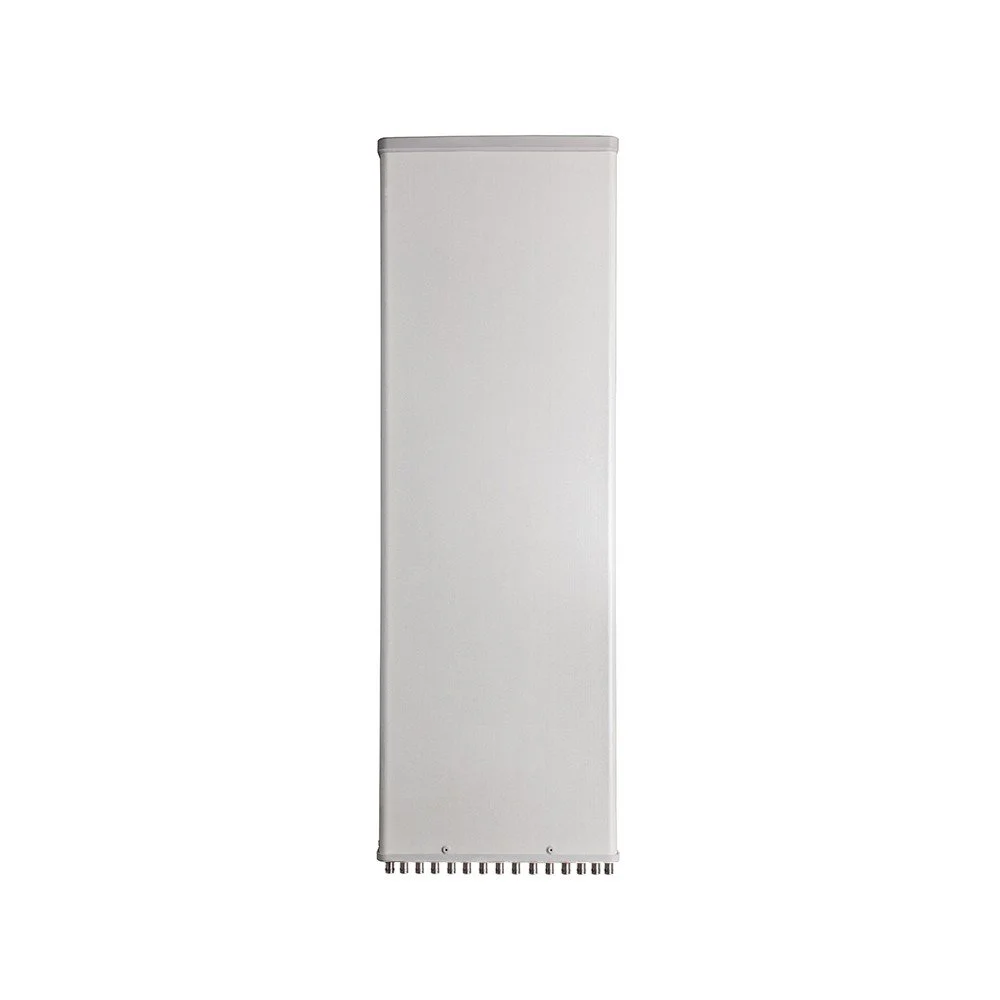
18-Port Panel Sector Antenna (698–2690 MHz)

Overview An advanced 18-port panel sector antenna engineered for dense multi-carrier, multi-sector deployments across 698–2690 MHz. Optimized for high isolation, low inter-port coupling, and precise pattern control to support MIMO, LTE, and legacy bands in a single compact enclosure. Ideal for urban and suburban macro sites, rooftop installations, and high-capacity enterprise deployments.

Key Features

  • Frequency range: 698–2690 MHz covering low-band, mid-band, and key cellular LTE bands.

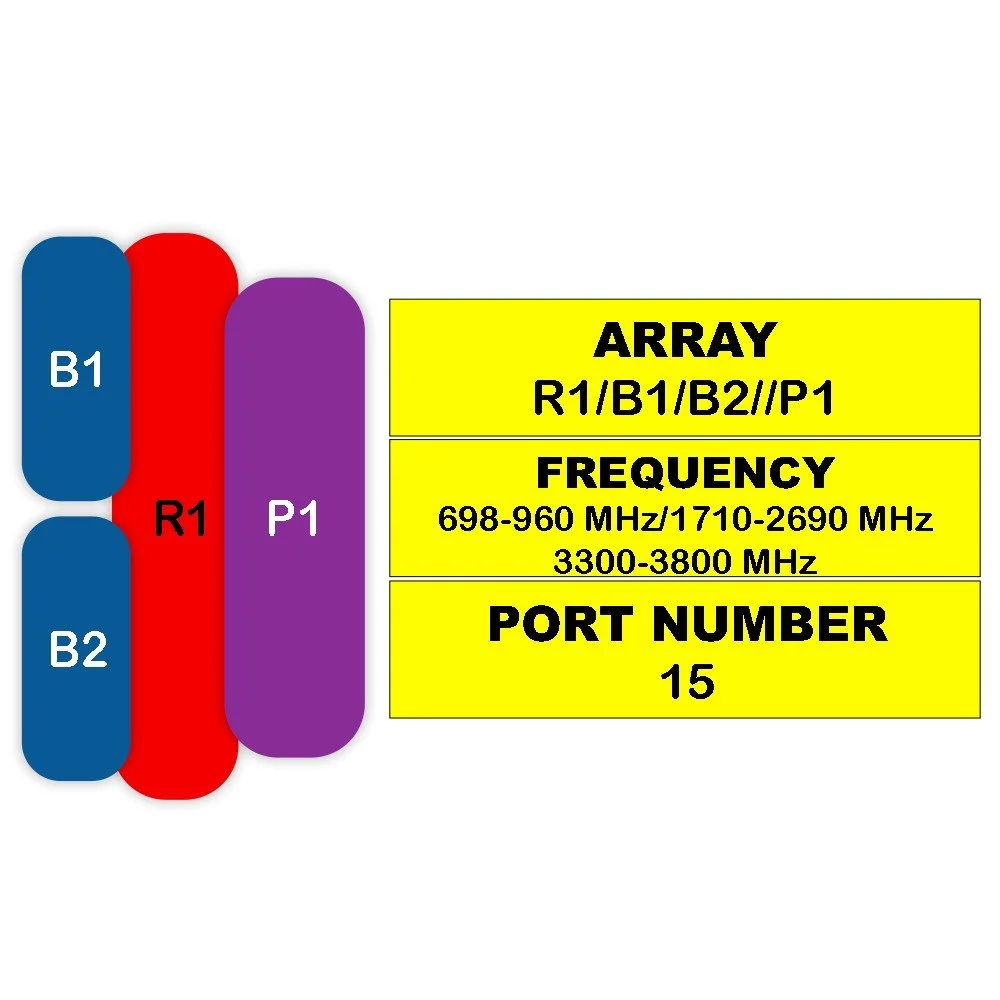
  • 18 RF ports arranged for flexible MIMO and sectorization configurations (configurable as 2x2/4x4/8x8 arrays depending on port mapping).

  • High port-to-port isolation to minimize inter-antenna interference and preserve MIMO performance.

  • Consistent radiation patterns and stable electrical tilt across the full frequency range for predictable coverage planning.

  • Low passive intermodulation (PIM) design to meet demanding carrier-grade performance requirements.

  • Rugged, weatherproof radome and mounting hardware rated for harsh outdoor environments (IP65 or higher).

  • Lightweight, low wind-load mechanical design for easier tower handling and reduced structural requirements.

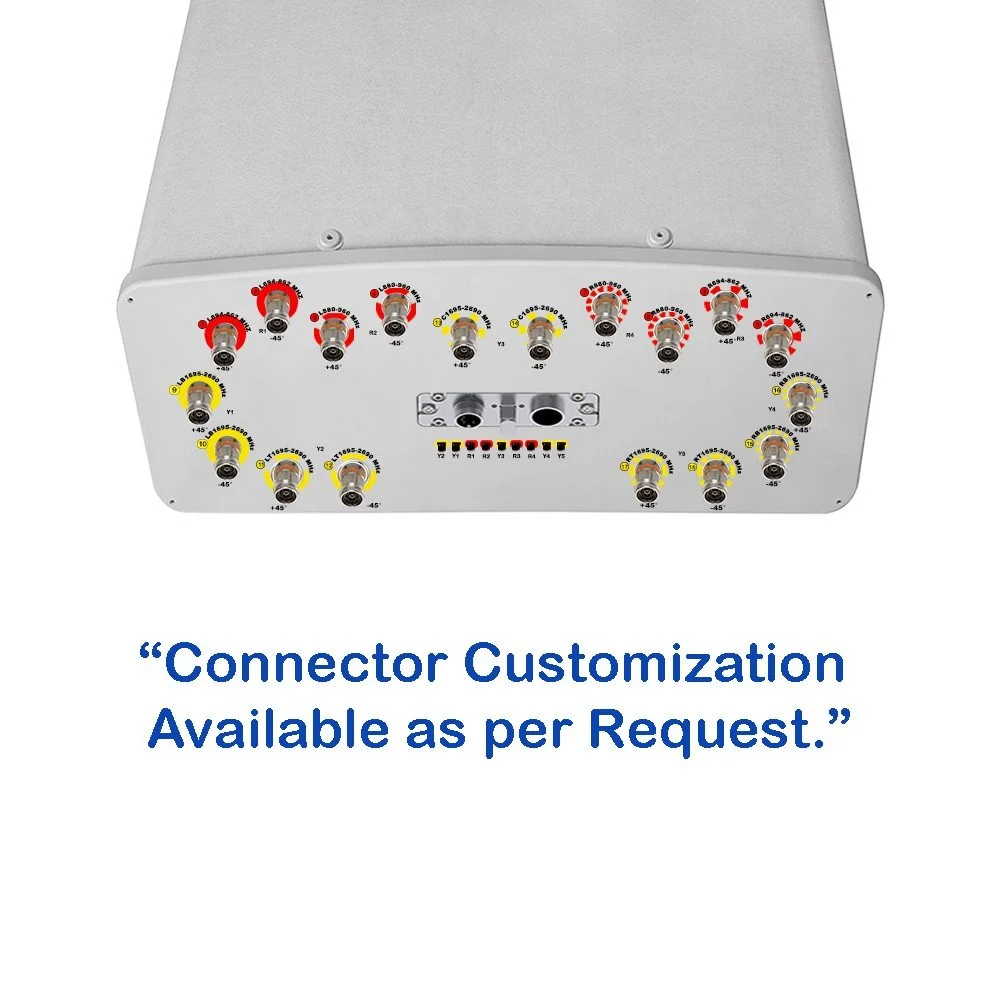
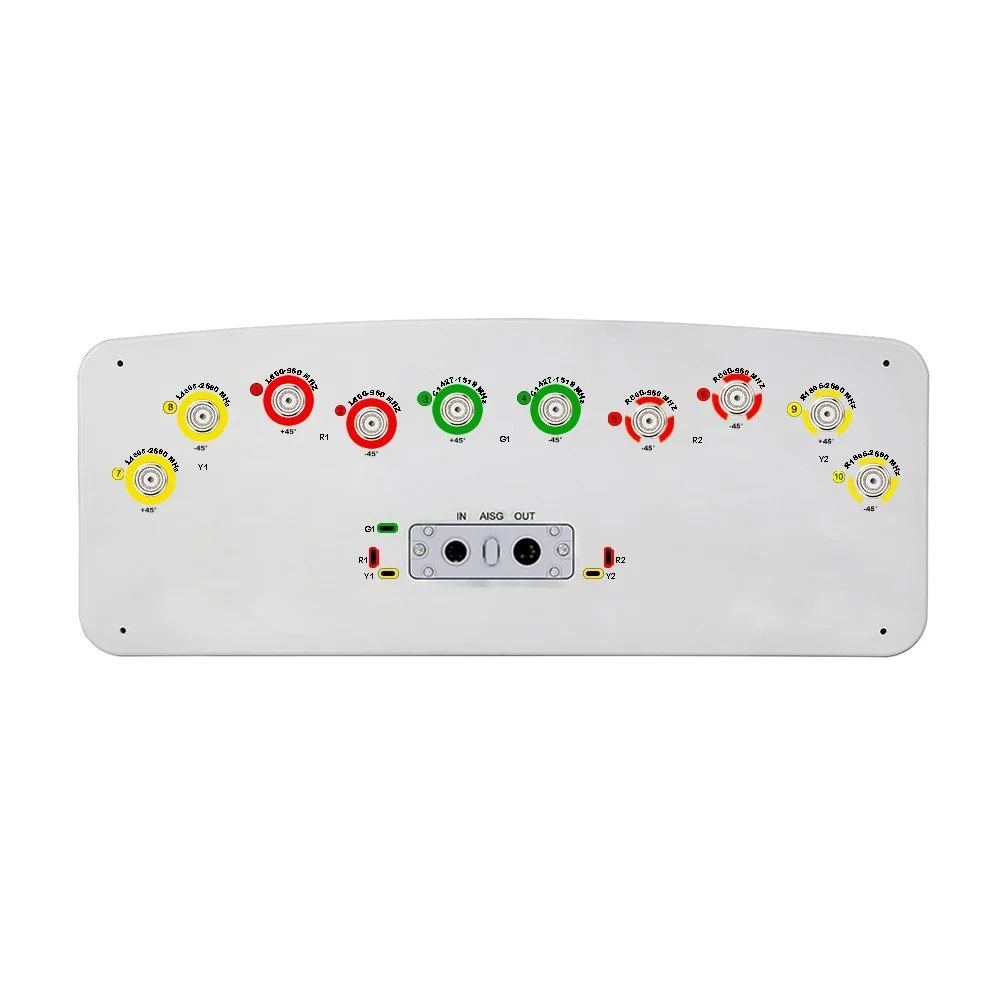
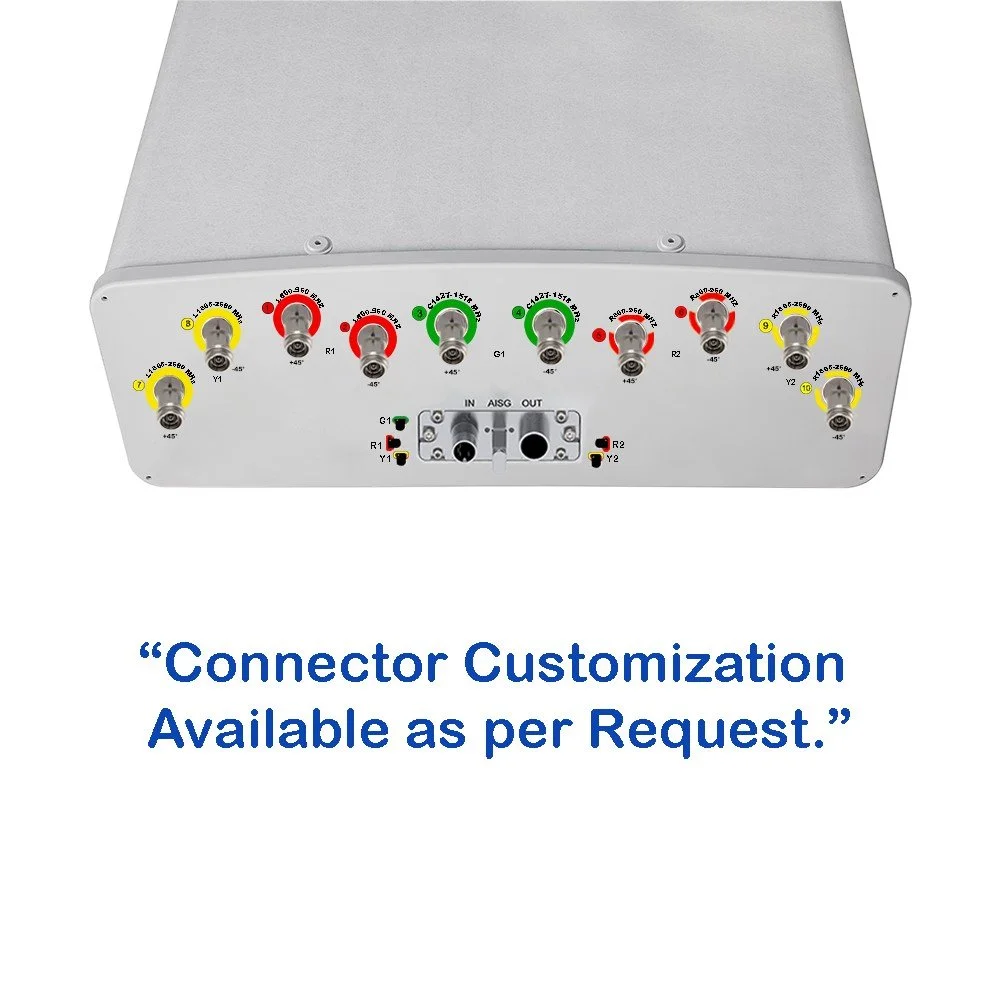
  • Integrated keying and labeling for simplified cable routing and commissioning.

  • Broadband coaxial connectors compatible with standard industry cables (connector type options available per ordering).

  • Optional integrated or remote electrical downtilt control (model dependent).

Typical Applications

  • Macro and midhaul sector sites requiring multi-band MIMO performance.

  • Capacity layer densification in urban and suburban areas.

  • Replacement or upgrade of legacy multi-antenna installations to support modern LTE aggregation and MIMO.

  • Neutral-host and shared infrastructure where multiple operators and carriers coexist on a single antenna.

Electrical Specifications (typical)

  • Frequency: 698–2690 MHz

  • Ports: 18

  • Polarization: Dual linear slant ±45° (port grouping) or as specified by configuration

  • Gain: Varies by band; typical mid-band values between 10–16 dBi (model-dependent)

  • Horizontal beamwidth: Configurable per deployment; typical sector beamwidths 65°–120° depending on port grouping and antenna tilt

  • Vertical beamwidth: Engineered for controlled elevation spread to match typical tower heights; varies with frequency

  • Port-to-port isolation: High (>25 dB typical between adjacent operational ports; model-dependent)

  • VSWR: ≤1.8:1 typical across bands

  • PIM: ≤ -153 dBc (two-tone, 2×20W) typical

  • Maximum input power per port: industry-standard power levels (consult model datasheet for exact rating)

Mechanical & Environmental

  • Radome: UV-stable, weatherproof polymer

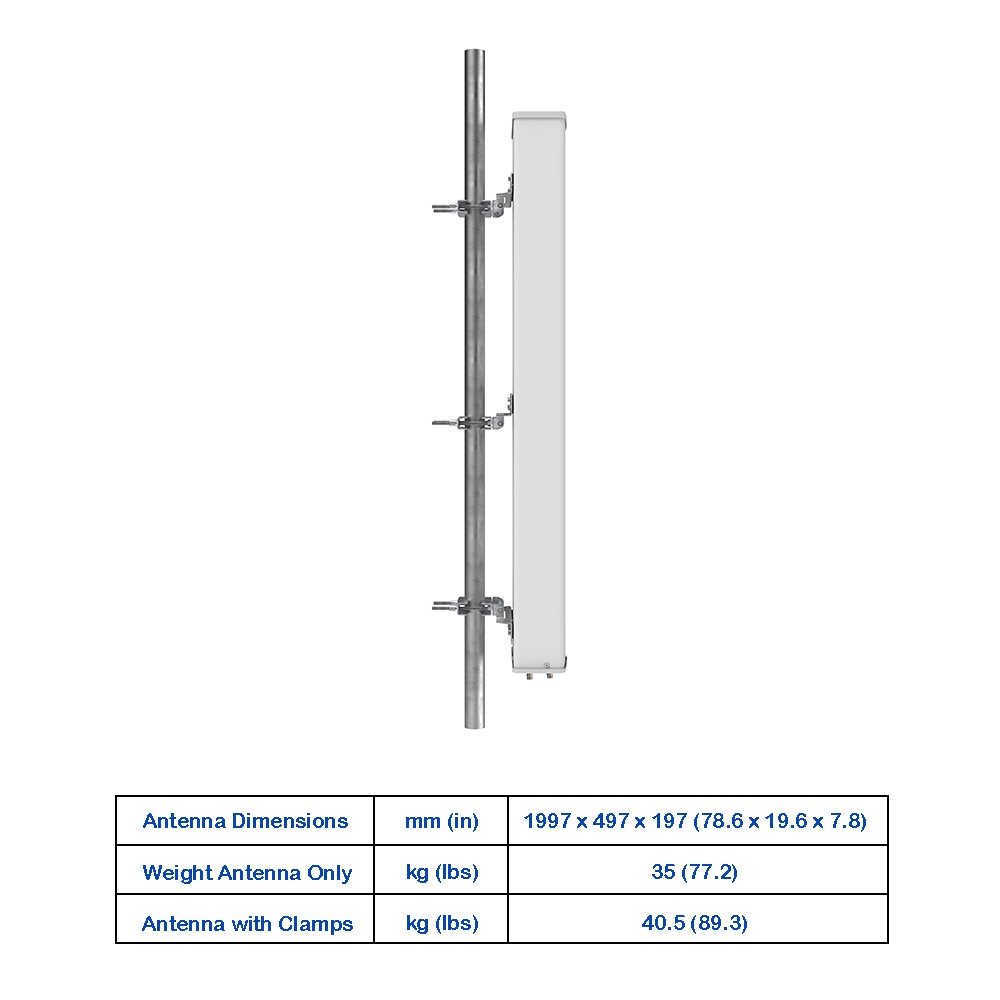
  • Mounting: Universal sector mount with adjustable azimuth and elevation; tower and wall mount kits available

  • Wind load: Low-profile design with rated wind survival per model (consult datasheet for values)

  • Weight: Lightweight—designed for reduced installation loads

  • Operating temperature: -40°C to +65°C (typical)

  • Ingress protection: IP65 or higher

Connector & Cabling Options

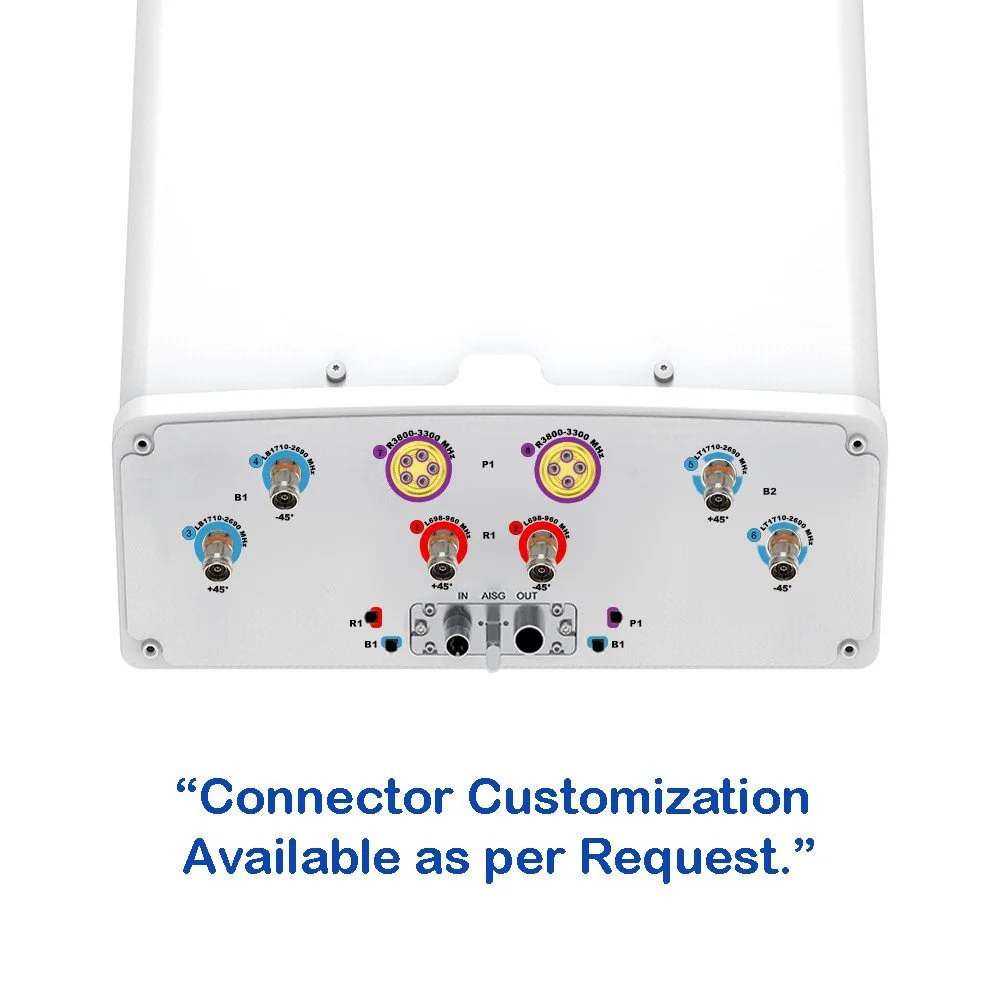
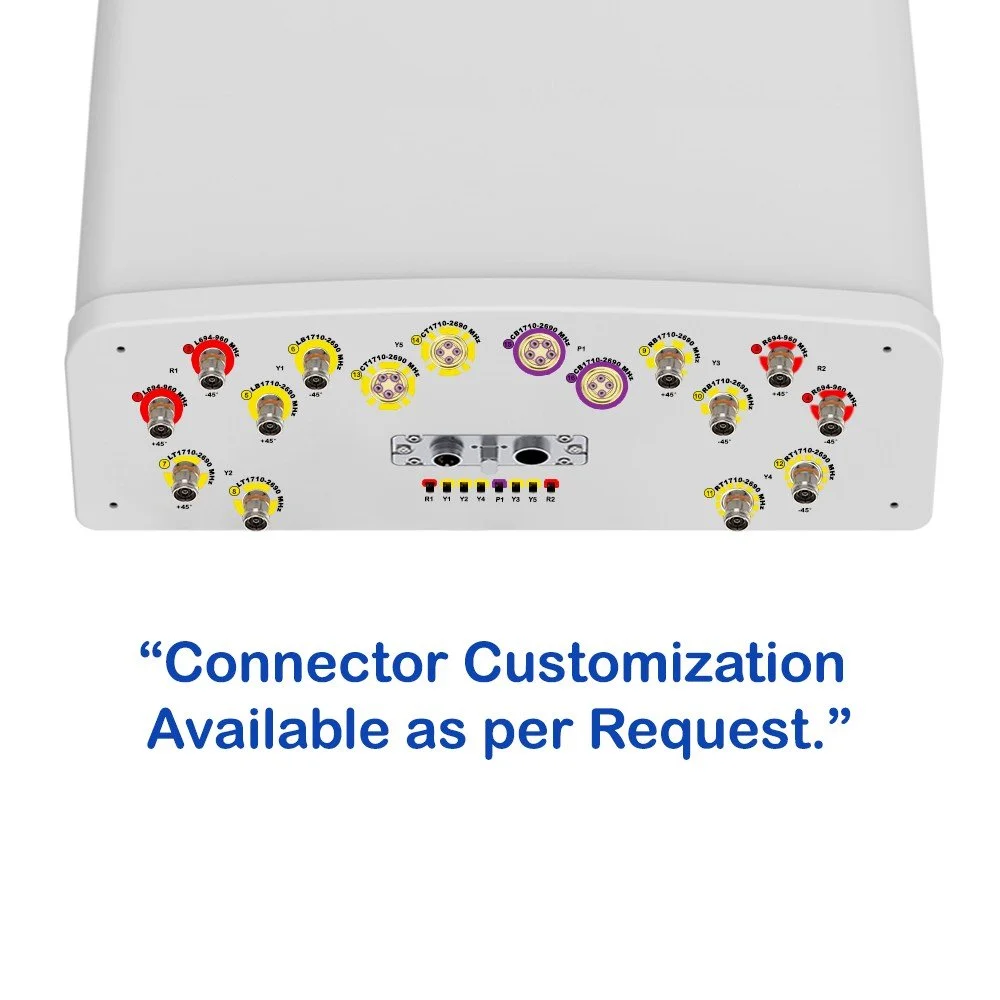
  • Standard connector types available (N-type, 4.3-10, or others per order)

  • Factory-terminated cable assemblies available for streamlined installation

  • Clear labeling on each port for operator segregation and simplified commissioning

Regulatory & Compliance

  • Designed to meet carrier and industry requirements for RF safety, lightning protection, and electromagnetic compatibility. Specific certifications and compliance declarations available per model and region.

Ordering Information Specify frequency band range, connector type, port mapping (desired MIMO/sector configuration), mechanical mounting options, and optional features such as integrated tilt control or factory-terminated cables when ordering.

Contact your MTT representative with site requirements and desired port-to-sector mapping for a recommended configuration and full technical datasheet.

18-Port Panel Sector Antenna (698–2690 MHz)

Overview An advanced 18-port panel sector antenna engineered for dense multi-carrier, multi-sector deployments across 698–2690 MHz. Optimized for high isolation, low inter-port coupling, and precise pattern control to support MIMO, LTE, and legacy bands in a single compact enclosure. Ideal for urban and suburban macro sites, rooftop installations, and high-capacity enterprise deployments.

Key Features

  • Frequency range: 698–2690 MHz covering low-band, mid-band, and key cellular LTE bands.

  • 18 RF ports arranged for flexible MIMO and sectorization configurations (configurable as 2x2/4x4/8x8 arrays depending on port mapping).

  • High port-to-port isolation to minimize inter-antenna interference and preserve MIMO performance.

  • Consistent radiation patterns and stable electrical tilt across the full frequency range for predictable coverage planning.

  • Low passive intermodulation (PIM) design to meet demanding carrier-grade performance requirements.

  • Rugged, weatherproof radome and mounting hardware rated for harsh outdoor environments (IP65 or higher).

  • Lightweight, low wind-load mechanical design for easier tower handling and reduced structural requirements.

  • Integrated keying and labeling for simplified cable routing and commissioning.

  • Broadband coaxial connectors compatible with standard industry cables (connector type options available per ordering).

  • Optional integrated or remote electrical downtilt control (model dependent).

Typical Applications

  • Macro and midhaul sector sites requiring multi-band MIMO performance.

  • Capacity layer densification in urban and suburban areas.

  • Replacement or upgrade of legacy multi-antenna installations to support modern LTE aggregation and MIMO.

  • Neutral-host and shared infrastructure where multiple operators and carriers coexist on a single antenna.

Electrical Specifications (typical)

  • Frequency: 698–2690 MHz

  • Ports: 18

  • Polarization: Dual linear slant ±45° (port grouping) or as specified by configuration

  • Gain: Varies by band; typical mid-band values between 10–16 dBi (model-dependent)

  • Horizontal beamwidth: Configurable per deployment; typical sector beamwidths 65°–120° depending on port grouping and antenna tilt

  • Vertical beamwidth: Engineered for controlled elevation spread to match typical tower heights; varies with frequency

  • Port-to-port isolation: High (>25 dB typical between adjacent operational ports; model-dependent)

  • VSWR: ≤1.8:1 typical across bands

  • PIM: ≤ -153 dBc (two-tone, 2×20W) typical

  • Maximum input power per port: industry-standard power levels (consult model datasheet for exact rating)

Mechanical & Environmental

  • Radome: UV-stable, weatherproof polymer

  • Mounting: Universal sector mount with adjustable azimuth and elevation; tower and wall mount kits available

  • Wind load: Low-profile design with rated wind survival per model (consult datasheet for values)

  • Weight: Lightweight—designed for reduced installation loads

  • Operating temperature: -40°C to +65°C (typical)

  • Ingress protection: IP65 or higher

Connector & Cabling Options

  • Standard connector types available (N-type, 4.3-10, or others per order)

  • Factory-terminated cable assemblies available for streamlined installation

  • Clear labeling on each port for operator segregation and simplified commissioning

Regulatory & Compliance

  • Designed to meet carrier and industry requirements for RF safety, lightning protection, and electromagnetic compatibility. Specific certifications and compliance declarations available per model and region.

Ordering Information Specify frequency band range, connector type, port mapping (desired MIMO/sector configuration), mechanical mounting options, and optional features such as integrated tilt control or factory-terminated cables when ordering.

Contact your MTT representative with site requirements and desired port-to-sector mapping for a recommended configuration and full technical datasheet.

Electrical Specifications
Electrical specifications including frequency ranges, gain, beamwidth, isolation, VSWR, return loss and power ratings.
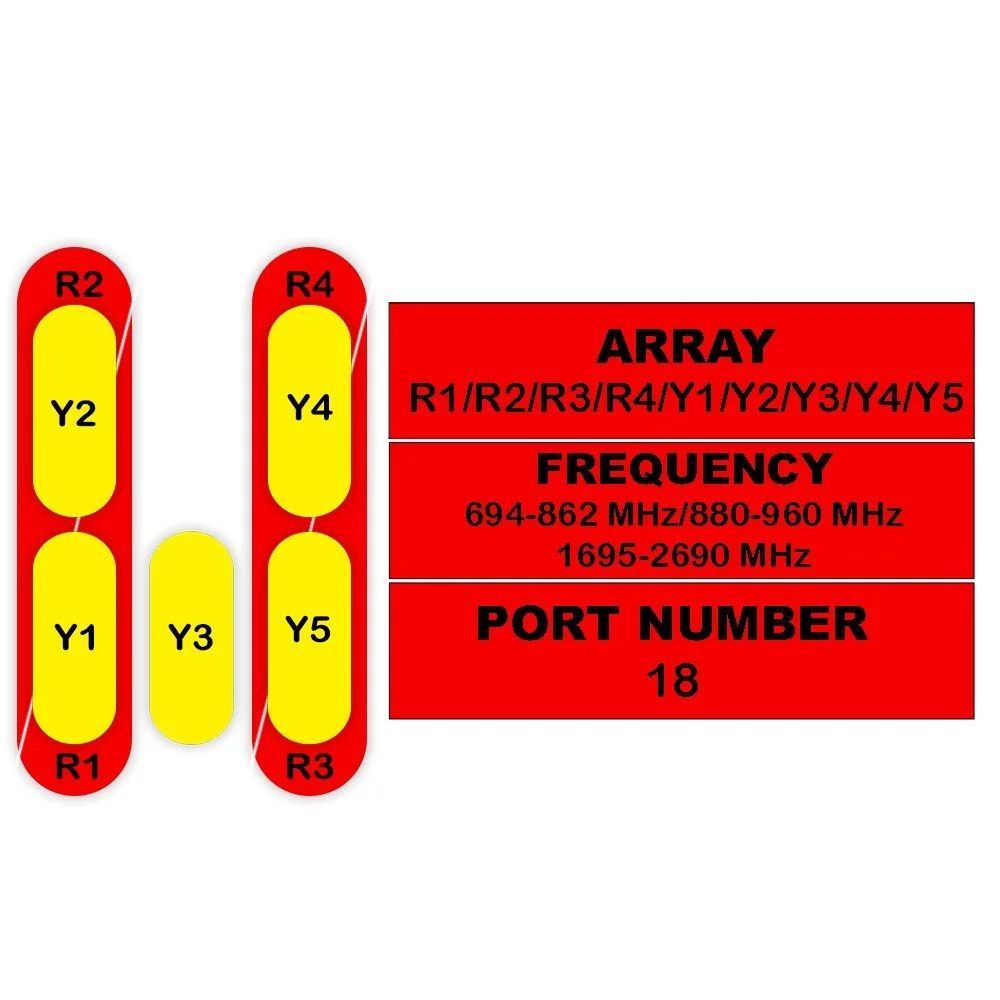
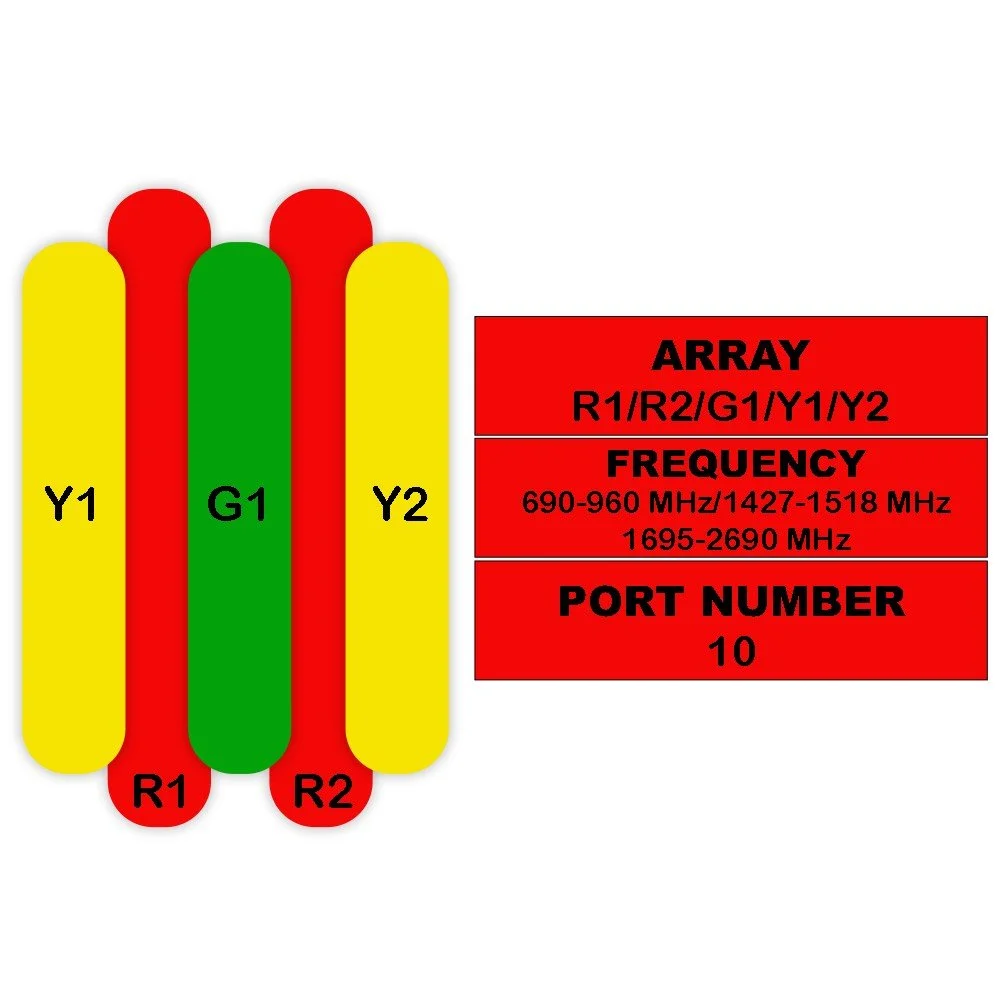
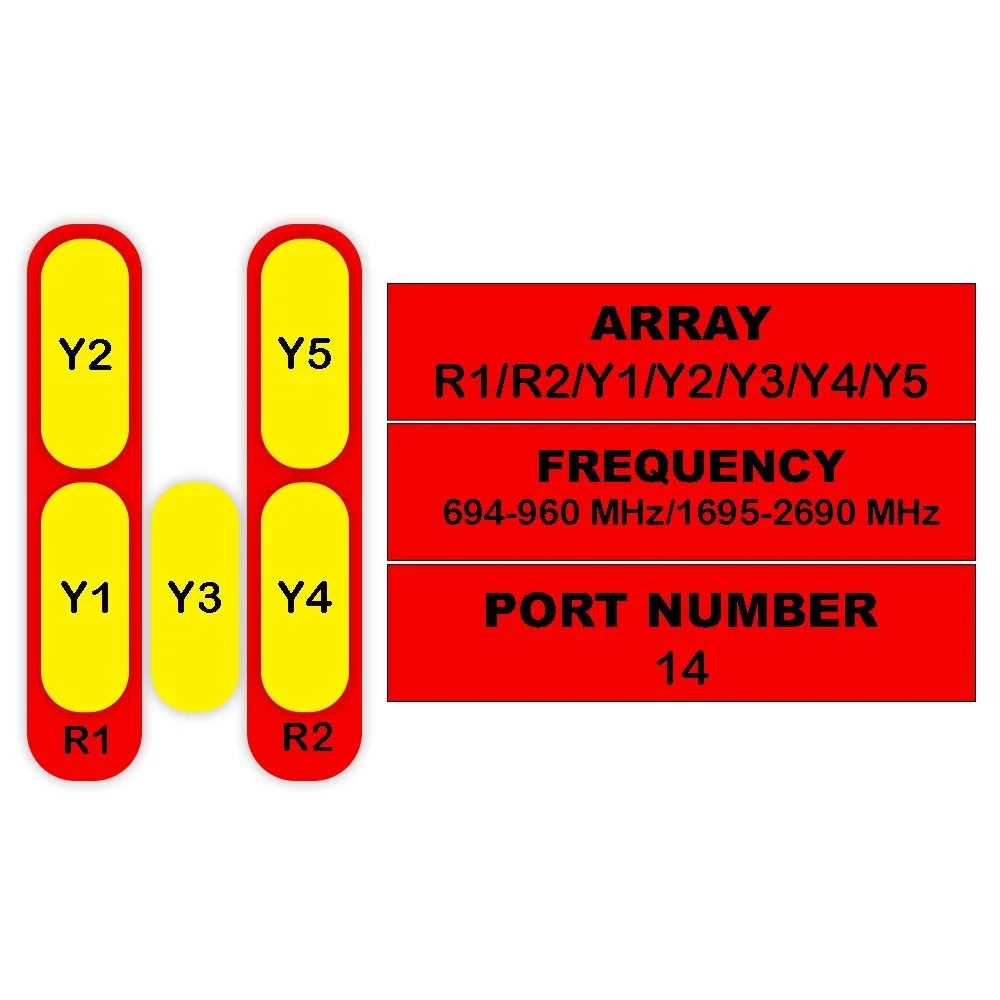
Parameter Unit R1 / R3 R2 / R4 Y1 / Y3 / Y4 Y2 / Y5
Frequency Range (MHz)
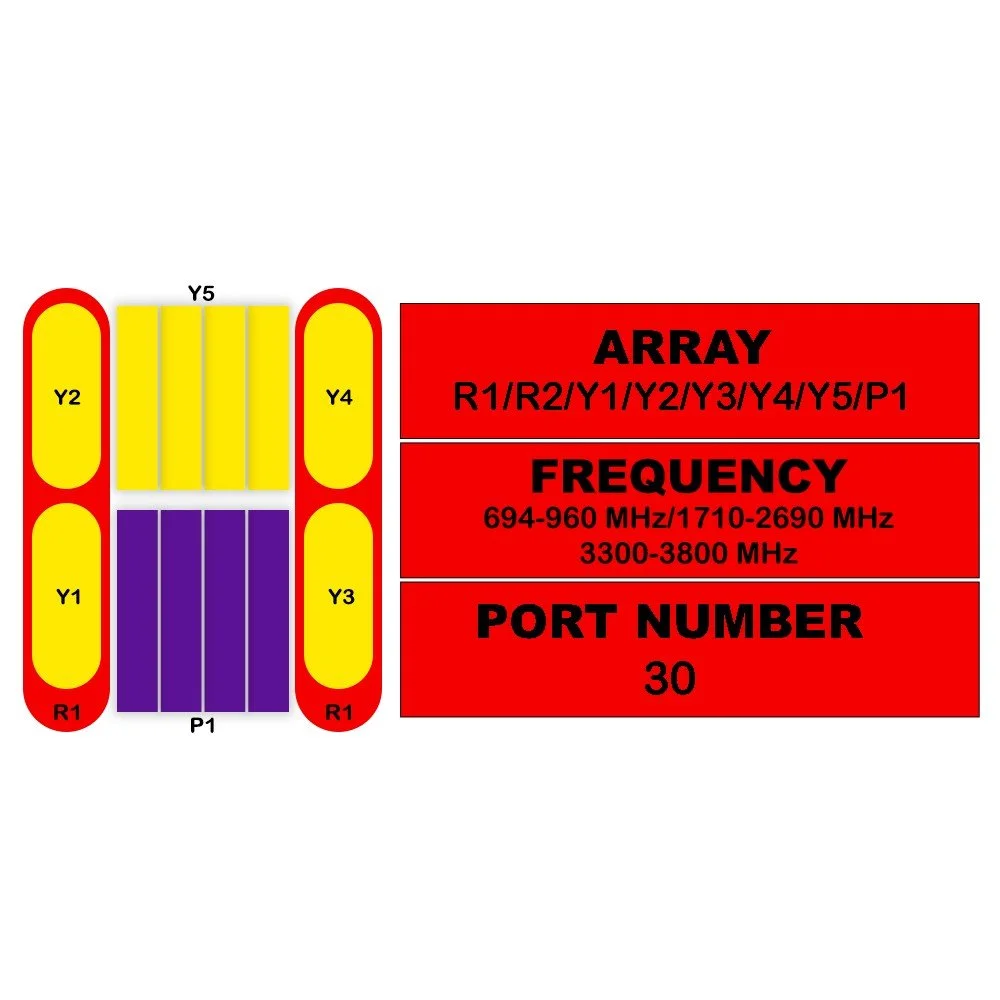
Low Band MHz 694–862 694–806 / 790–862 1695–2690 1695–2690
Polarization ±45° ±45° ±45° ±45°
Gain (dBi)
At Mid Tilt dBi 15.6 16.0 16.4 – 17.4 16.0 – 17.0
Over All Tilts dBi 15.4 ± 0.6 15.8 ± 0.6 16.2 – 17.2 ± 0.5 15.8 – 16.8 ± 0.5
Horizontal Beamwidth degree 65 ± 5.4 62 ± 5.6 58 – 60 ± 6.5 60 – 68 ± 6.5
Vertical Beamwidth degree 8.8 ± 0.9 7.8 ± 0.6 4.8 – 6.8 ± 0.6 4.8 – 6.8 ± 0.6
Electrical Downtilt degree 2–12 2–12 2–12 2–12
Tilt Accuracy degree < 1 < 1 < 1 < 1
Front-To-Back Ratio ±30° dB > 23 > 24 ≥ 24 – ≥ 25 ≥ 24 – ≥ 25
Cross Polar Discrimination (Boresight) dB > 18 > 18 > 16 – > 18 > 16 – > 18
Isolation (Cross-Polar) dB > 26 > 26 > 26 > 26
Impedance Ohm 50 50 50 50
VSWR < 1.5 < 1.5 < 1.5 < 1.5
Return Loss dB > 14 > 14 > 14 > 14
PIM3 (2×43 dBm Carrier) dBc < -150 < -150 < -150 < -150
Lightning Protection DC Ground
Maximum Average Input Power per Port (50°C) Watts 200 200 200 200
Mechanical Specifications
Mechanical specifications including connector type, electrical tilt control, dimensions, weight, wind load and operating temperature.
Parameter Unit Specification
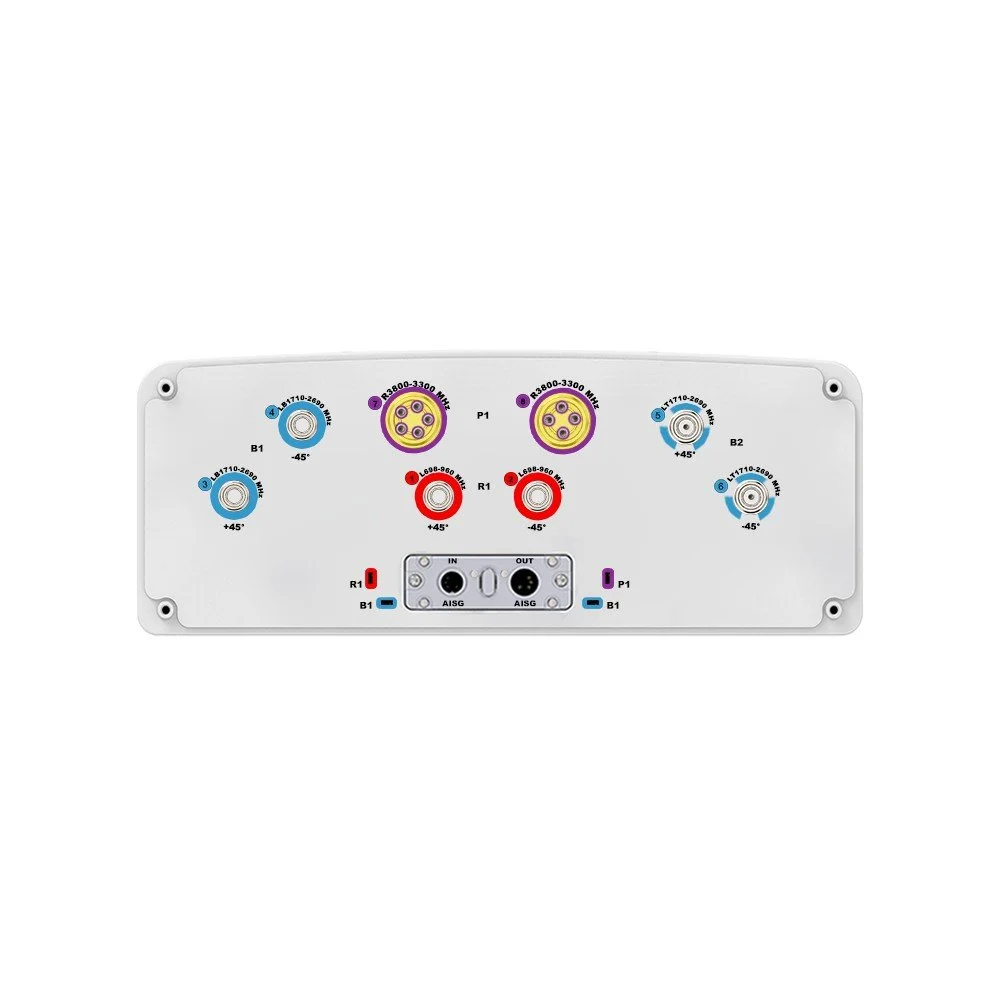
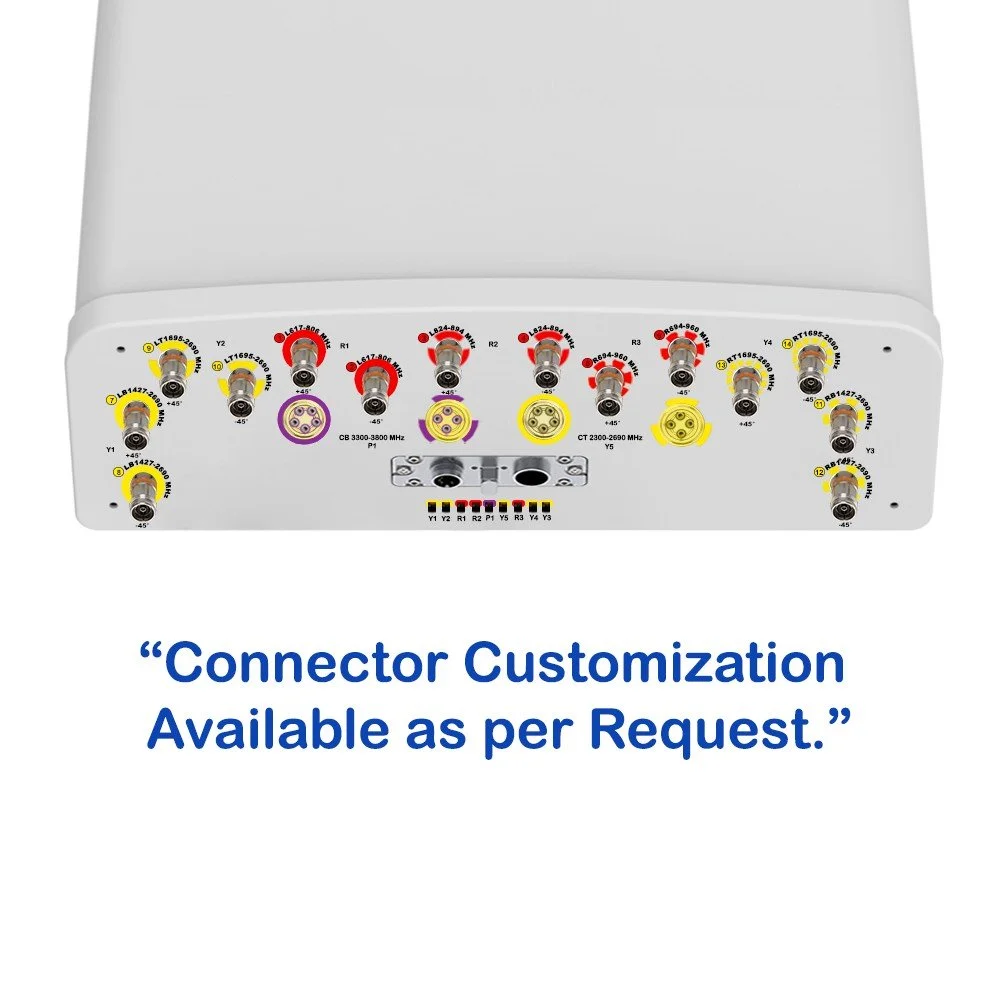
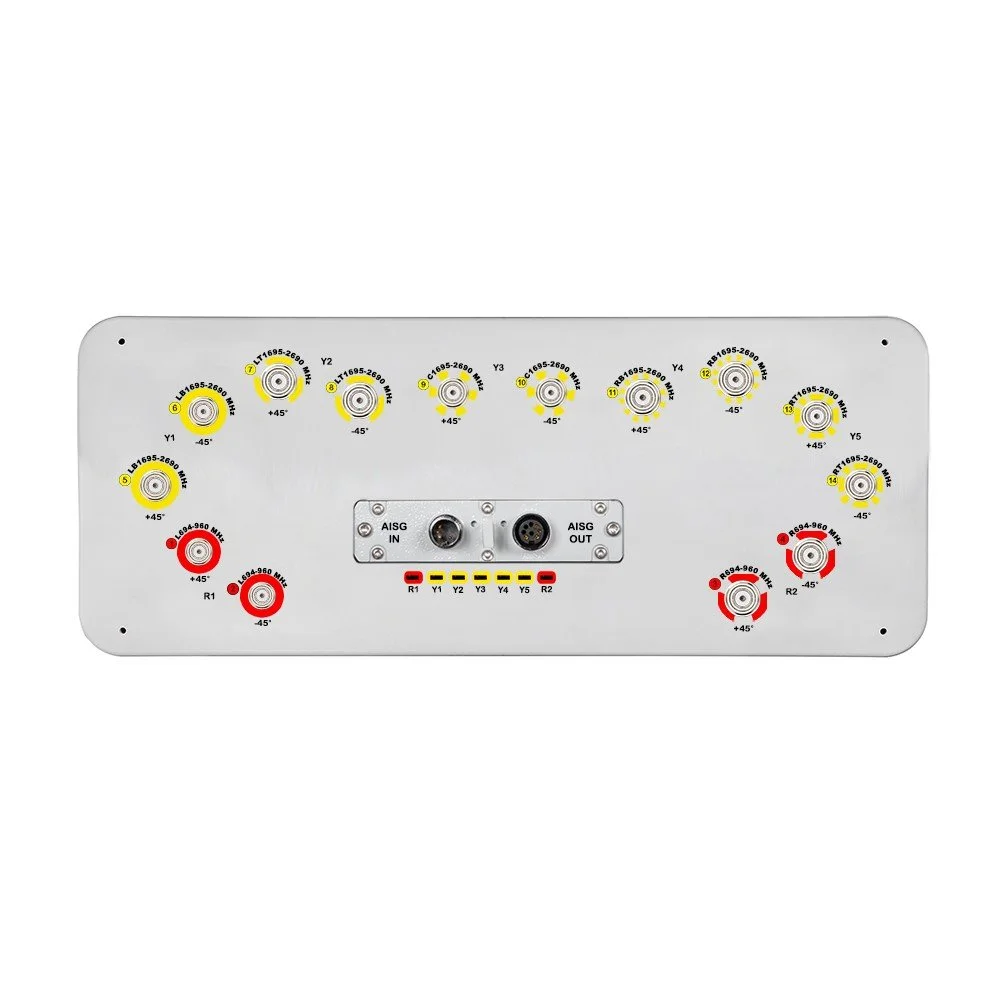
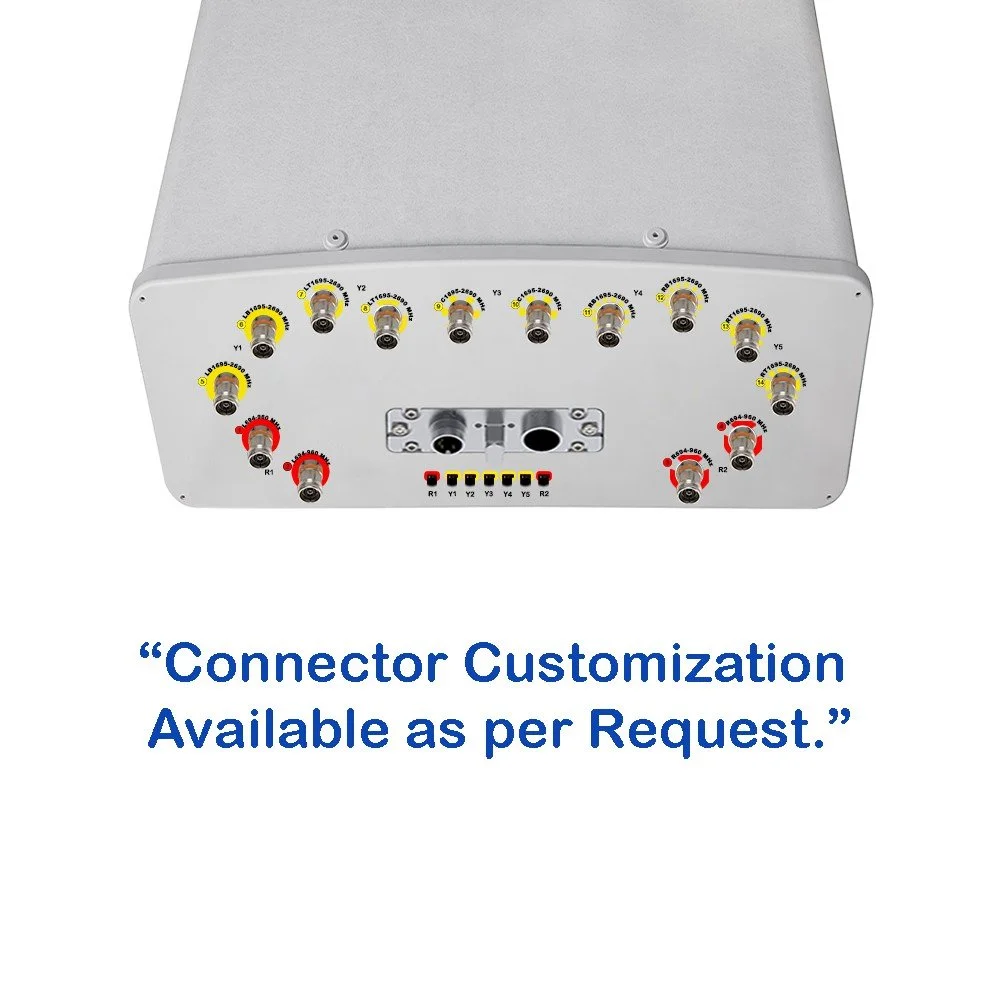
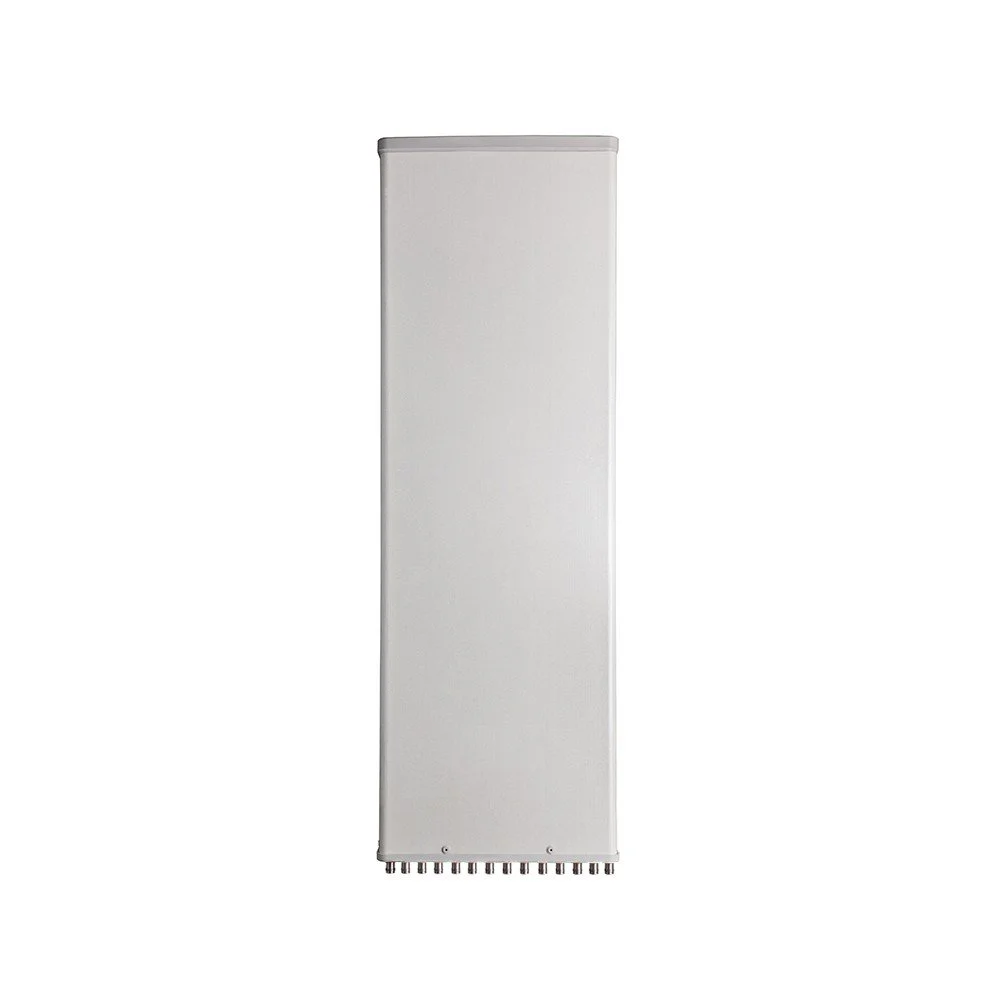
Connector Type (18x) 4.3/10 Female
Connector Position Bottom
Electrical Tilt Control Integrated RET
Radome Material Fiberglass
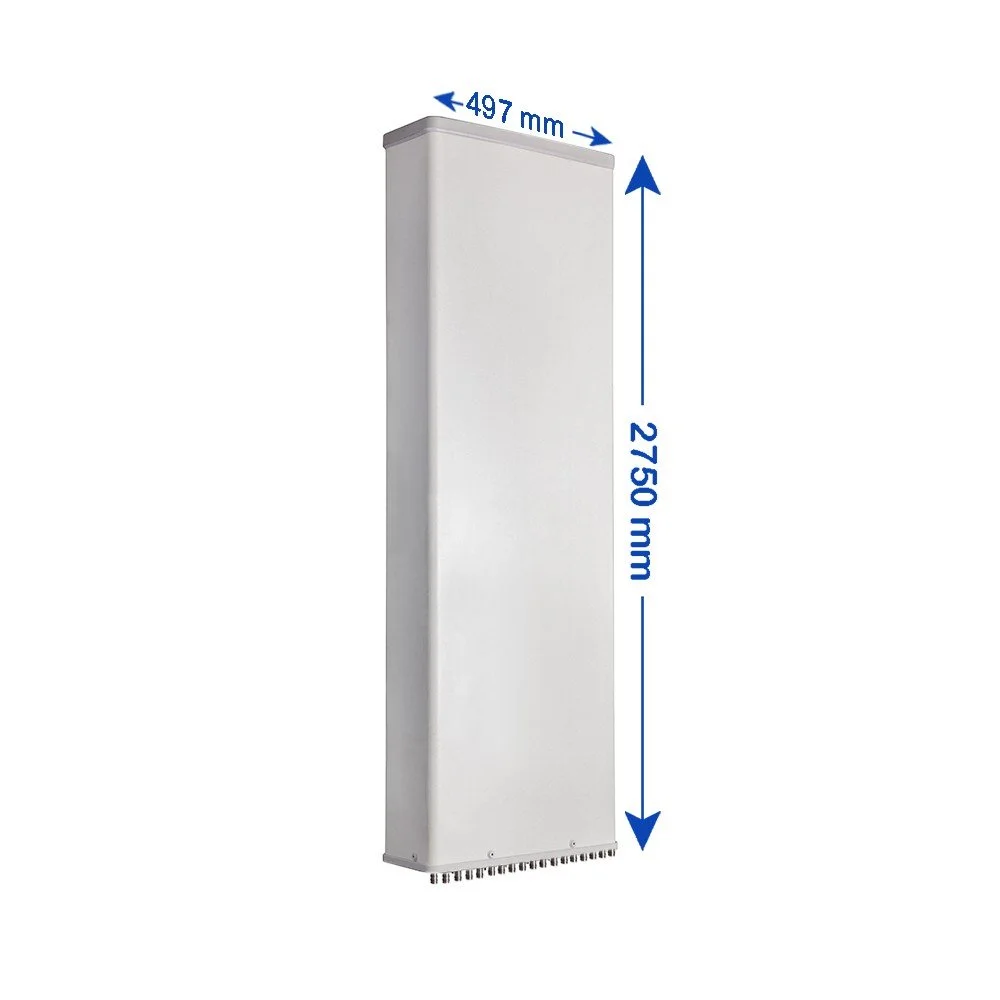
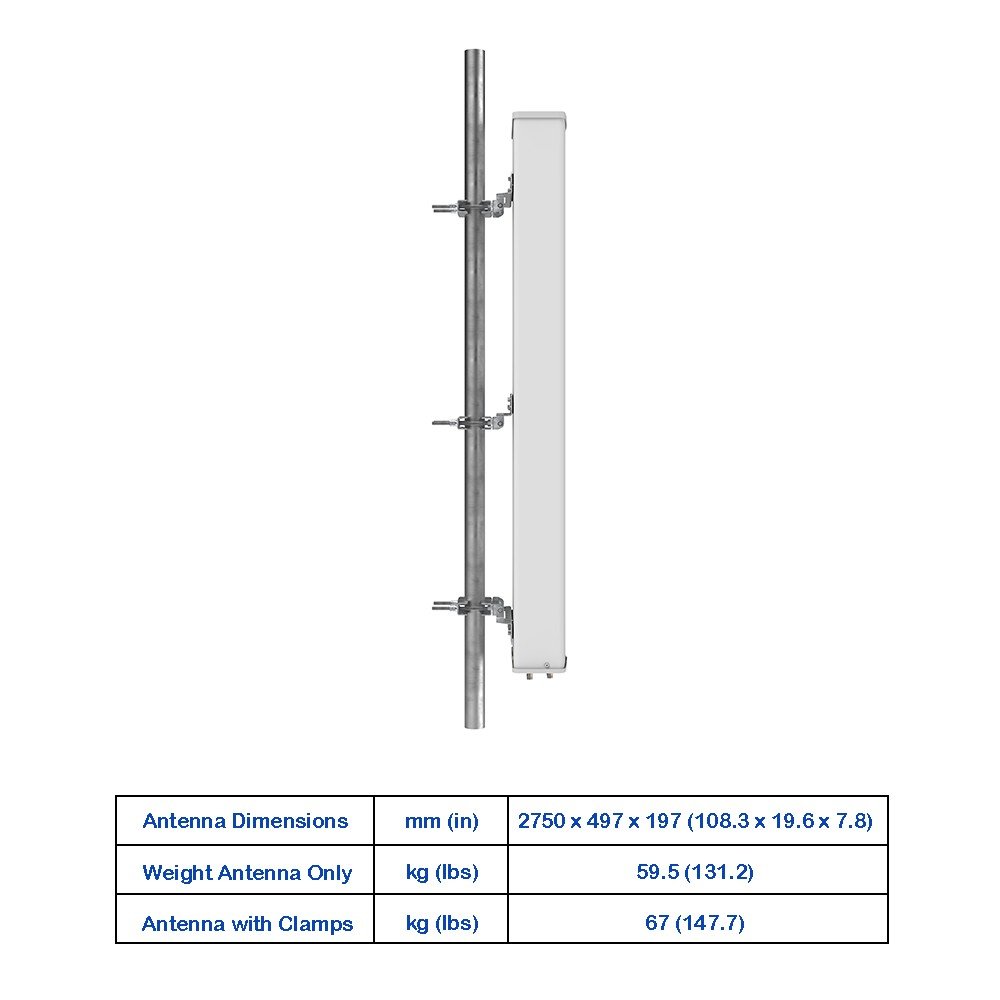
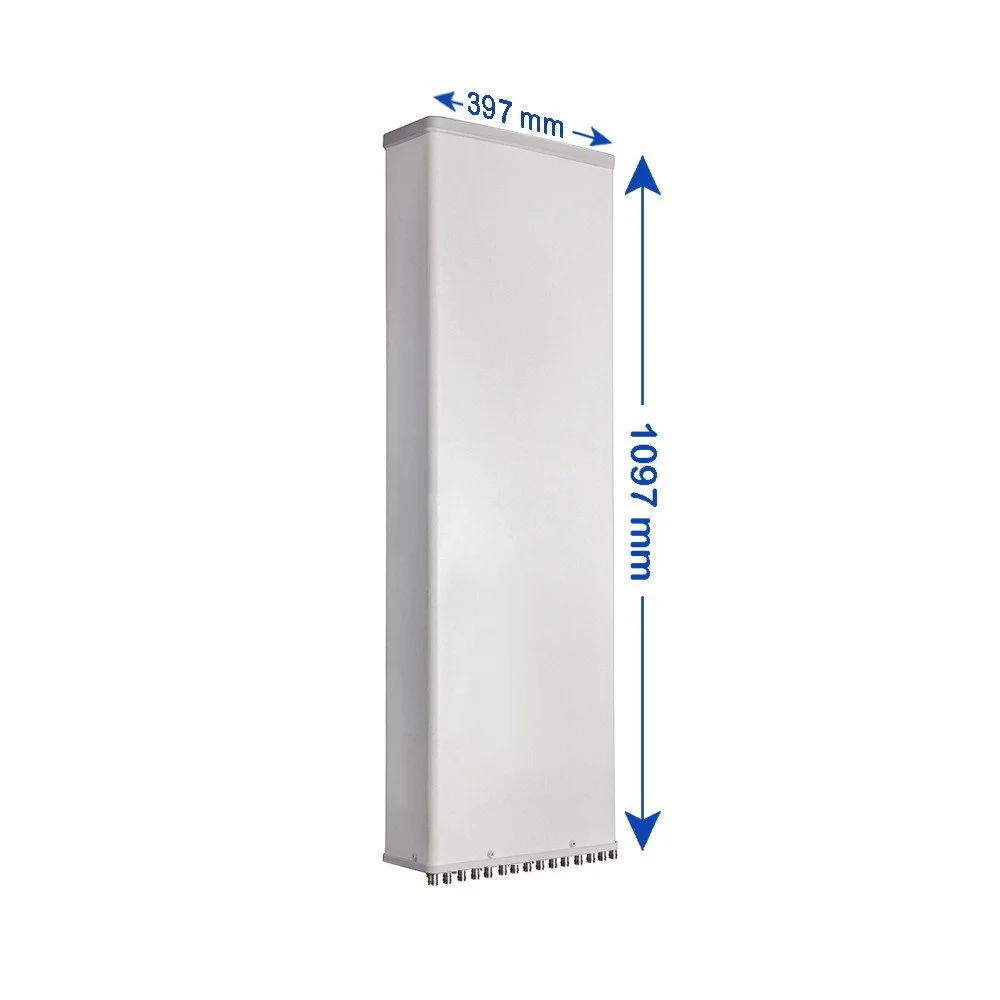
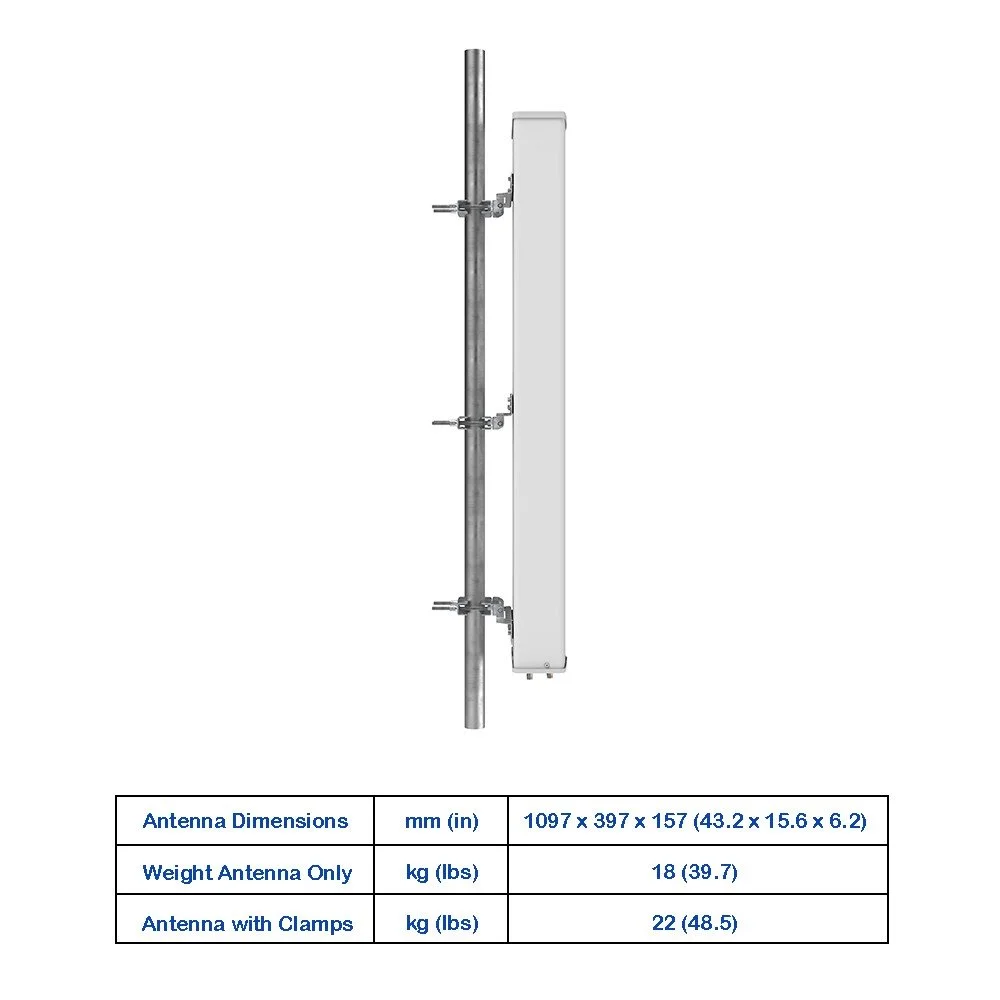
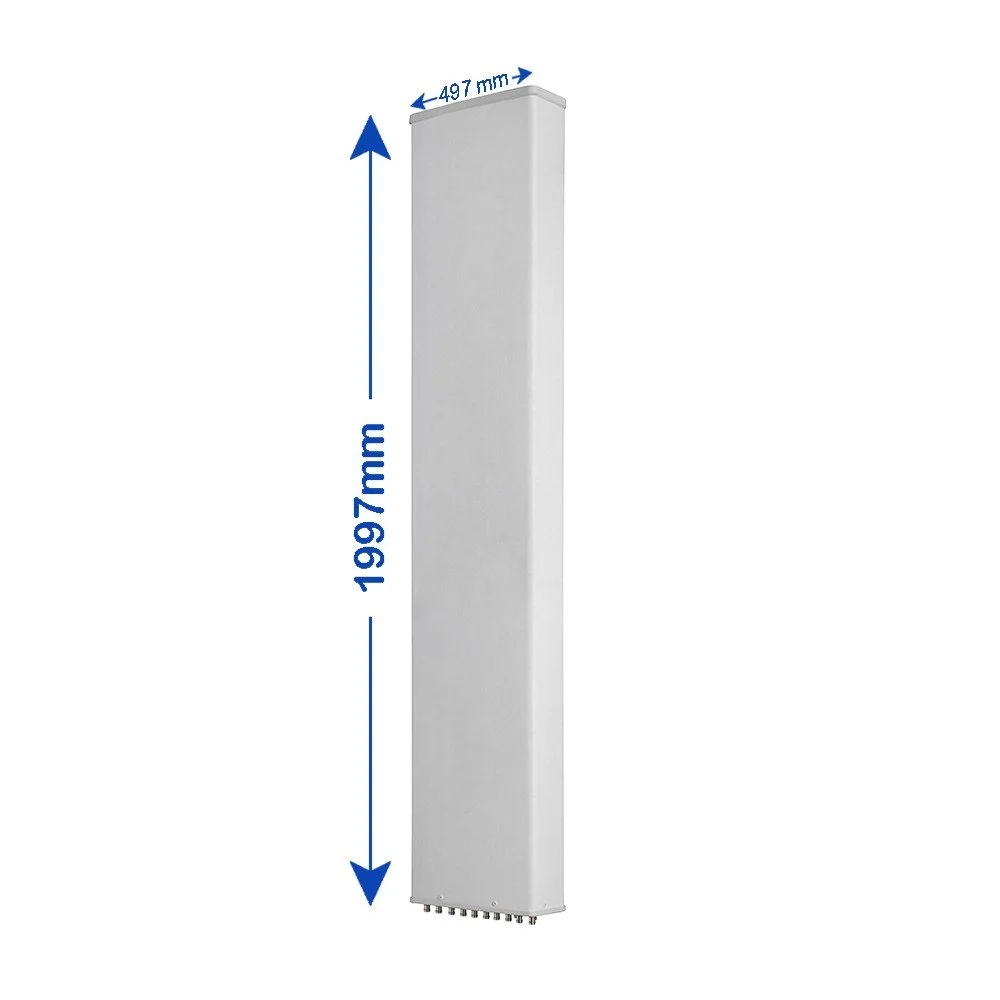
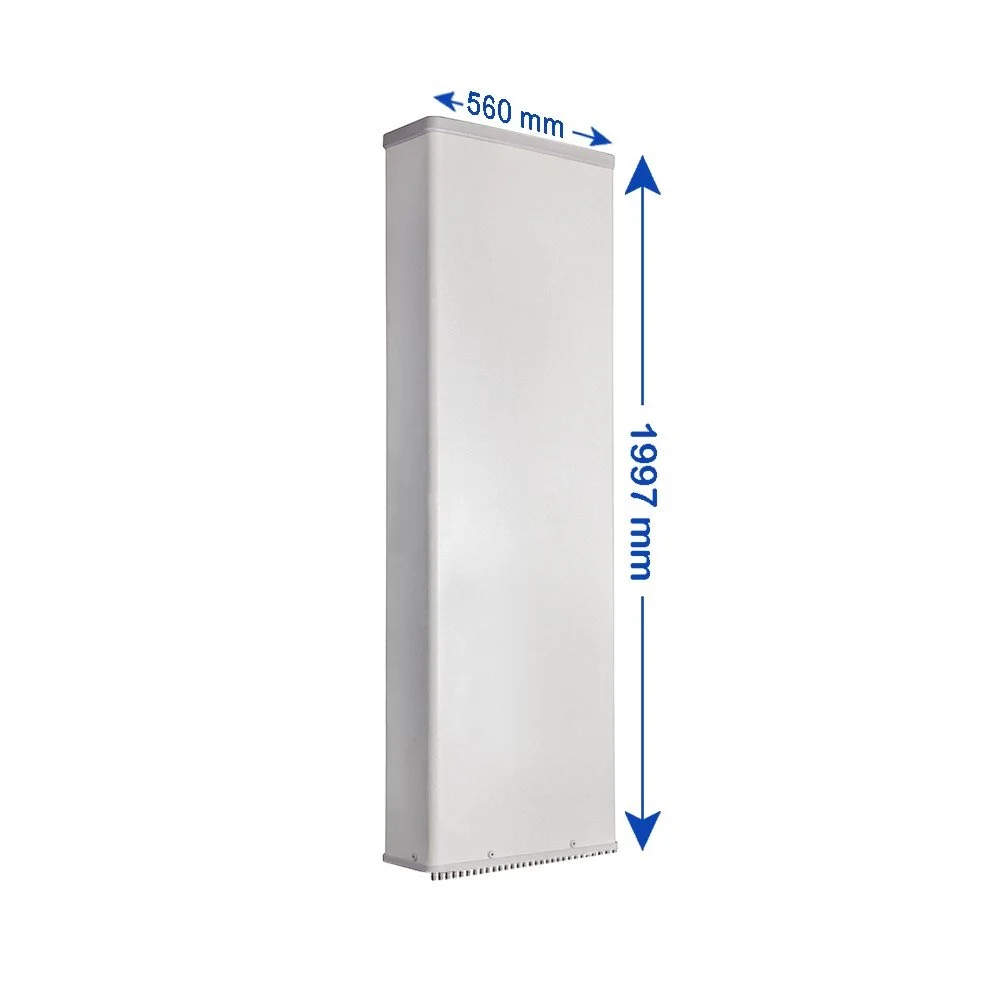
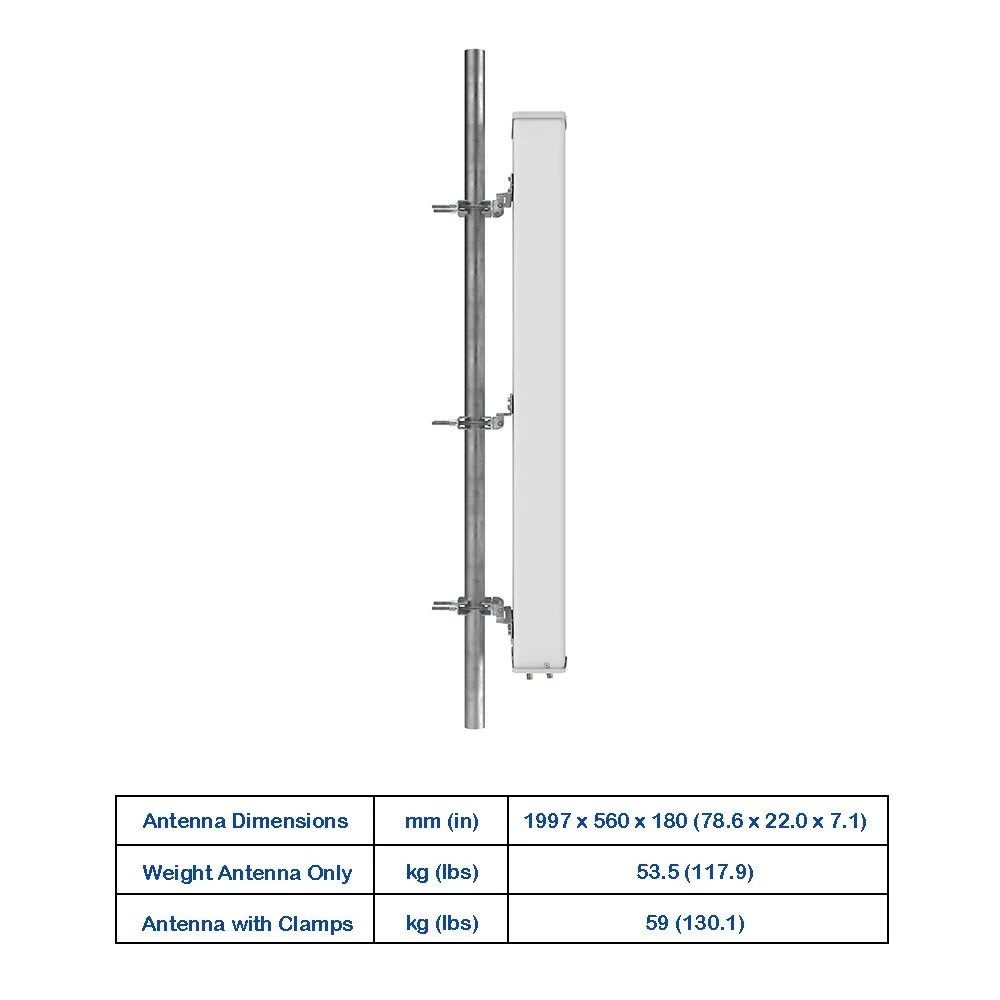
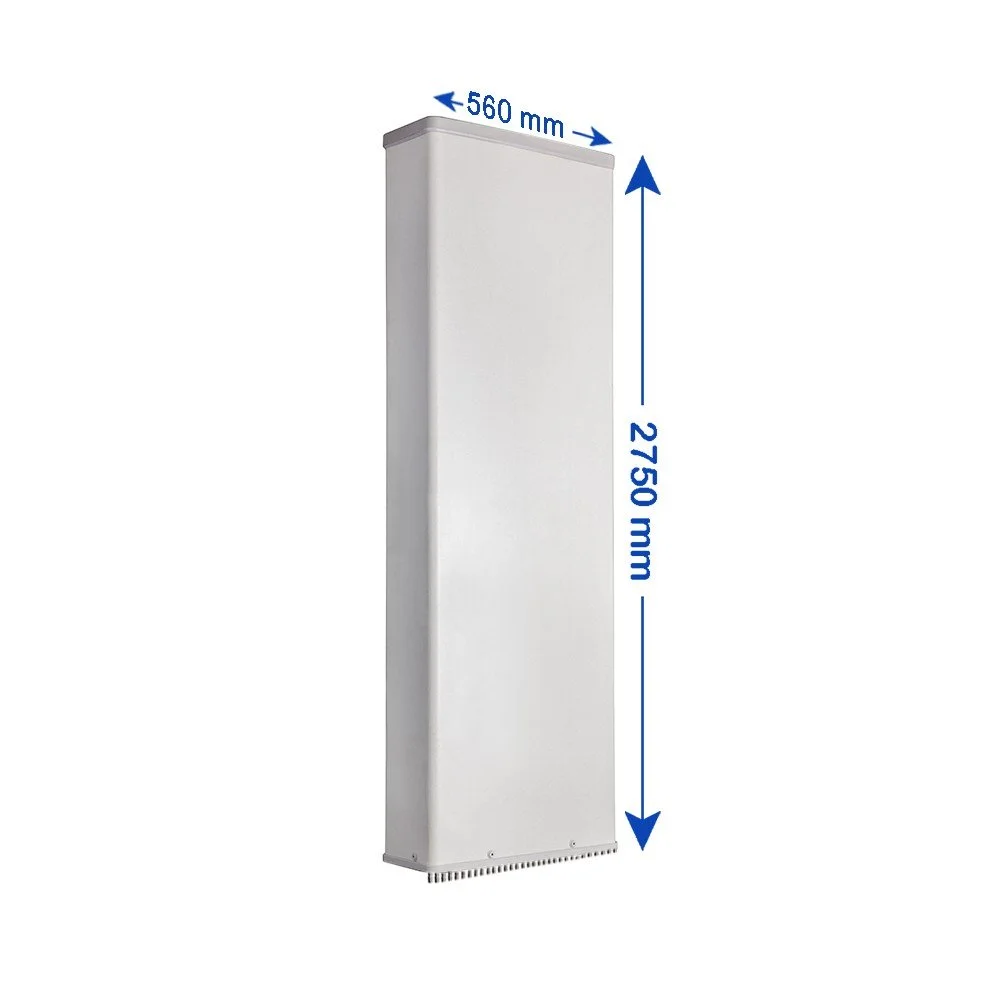
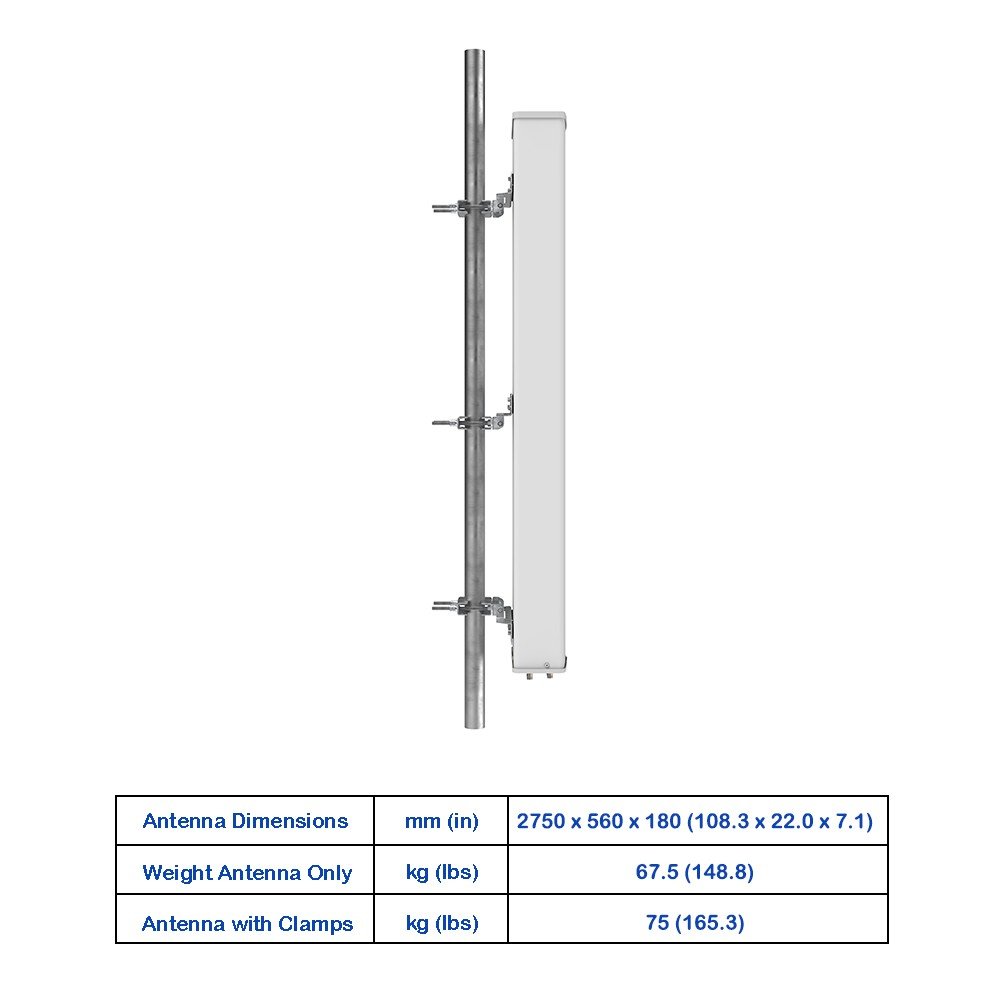
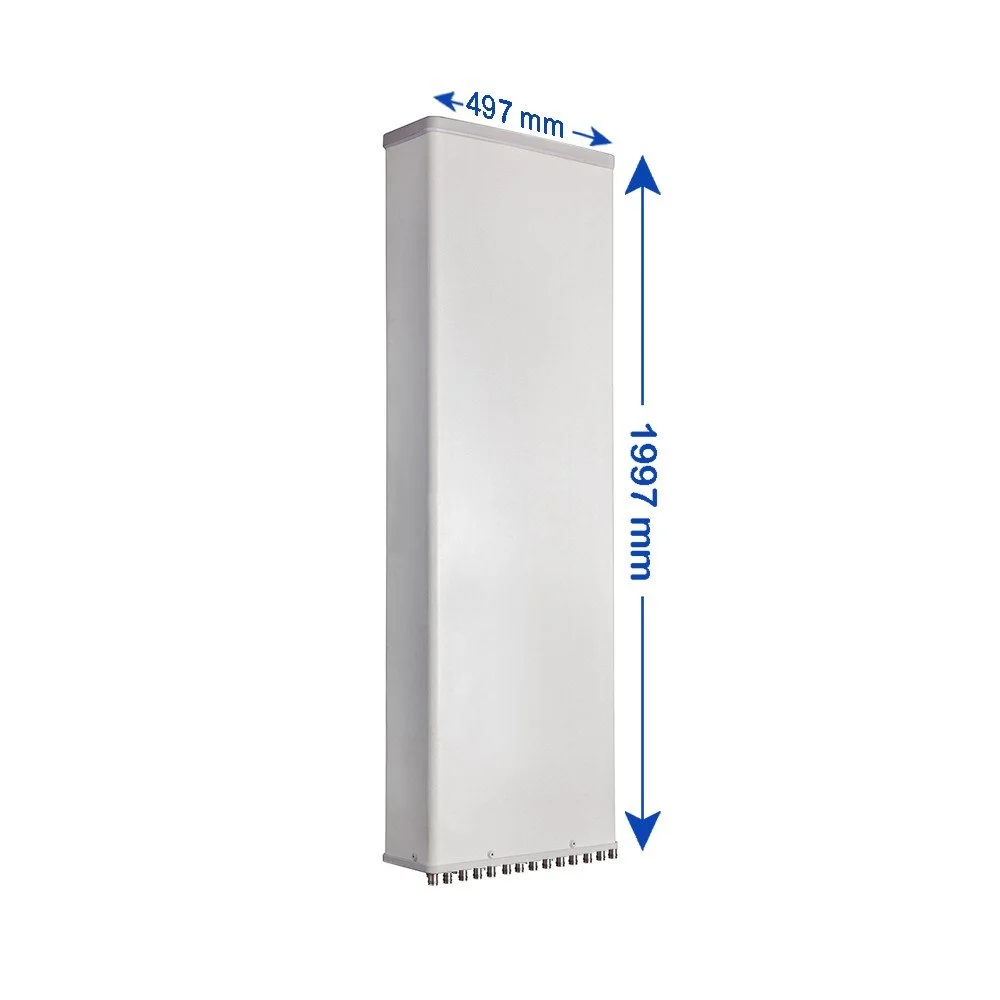
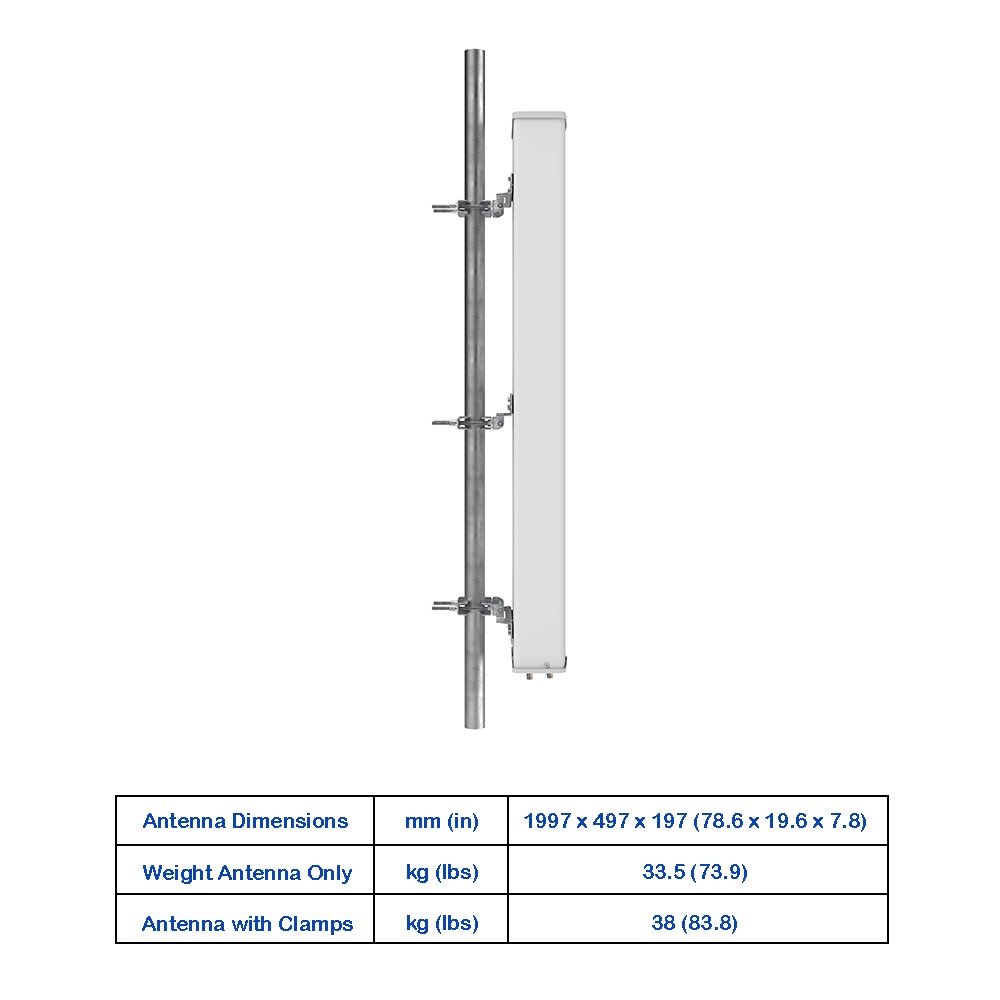
Antenna Dimensions (H × W × D) mm (in) 2750 × 497 × 197 (108.3 × 19.6 × 7.8)
Antenna Weight kg (lbs) 59.5 (131.2) – Antenna Only
with Clamps kg (lbs) 67 (147.7)
Maximum Wind Speed km/h (mph) 200 (124.3)
Wind Load at 150 km/h
Frontal N (lbf) 1265 (284.4)
Rear N (lbf) 1410 (317.0)
Lateral N (lbf) 600 (134.9)
Operating Temperature °C (°F) -40 to +60 (-40 to +140)