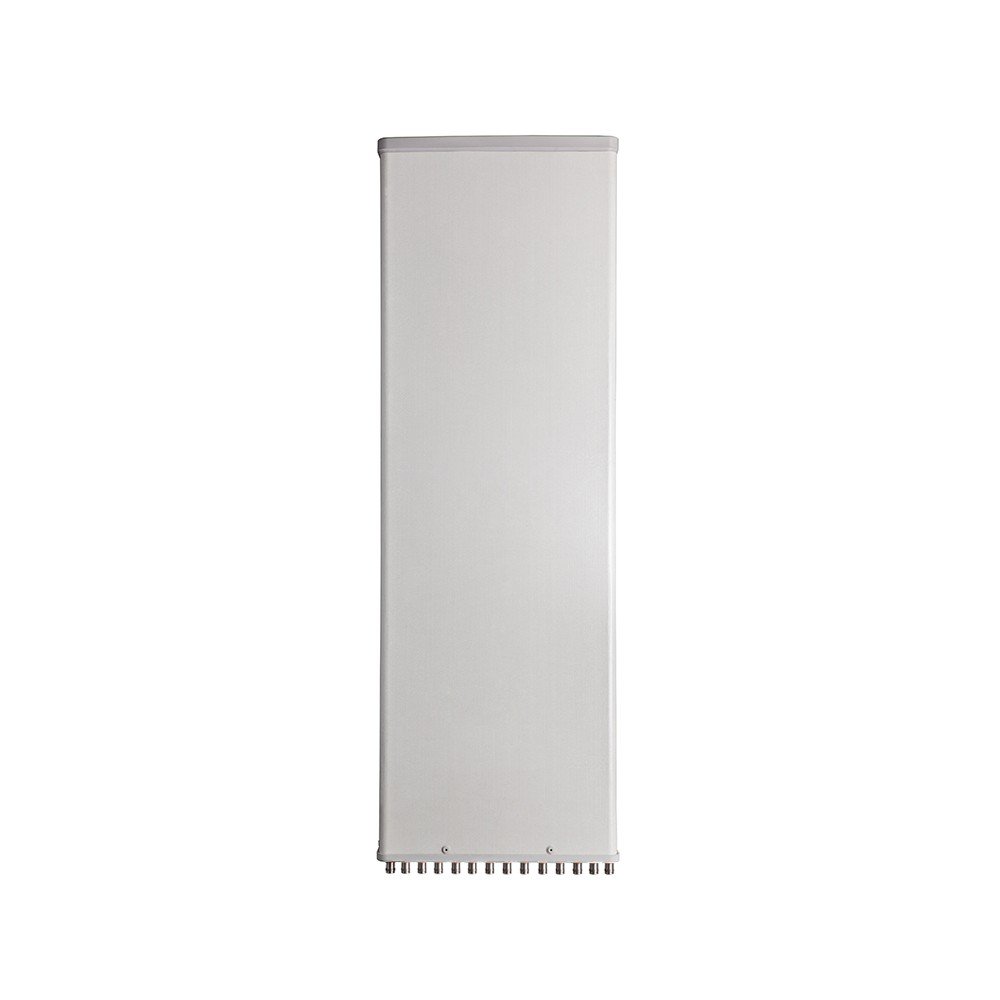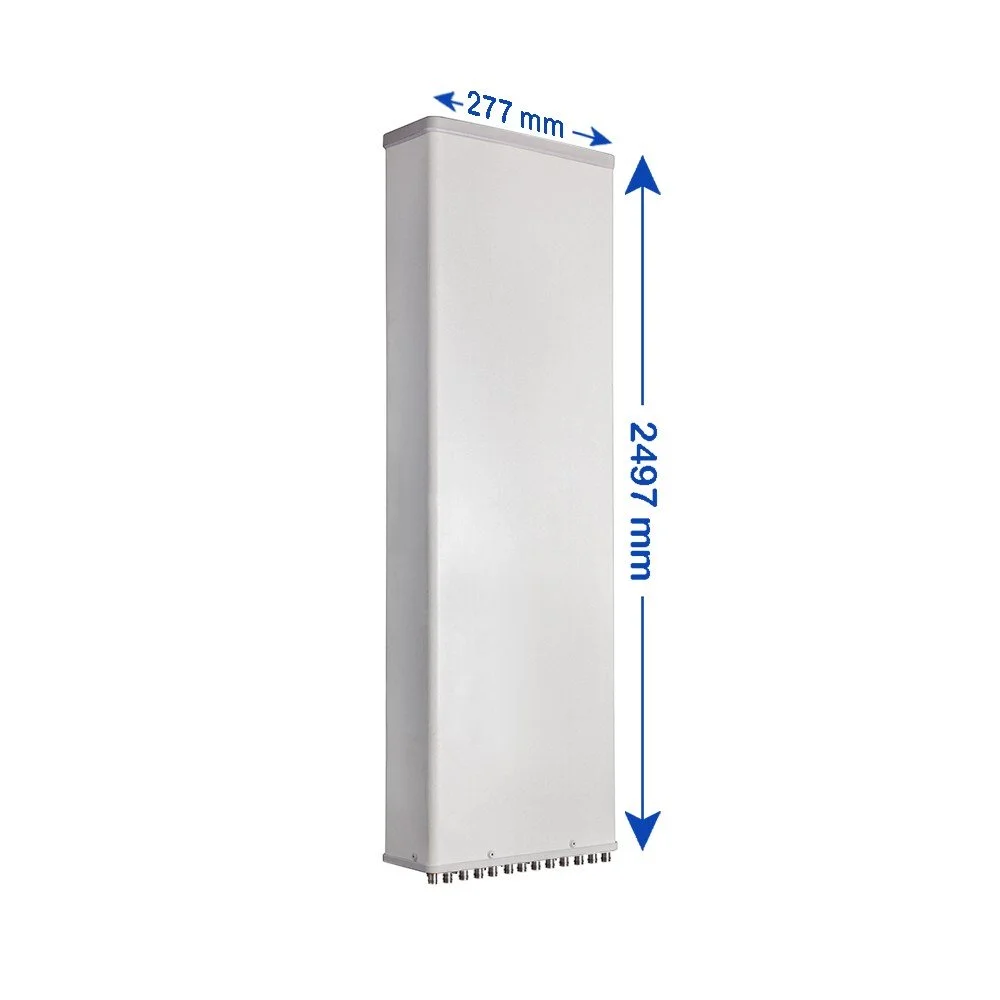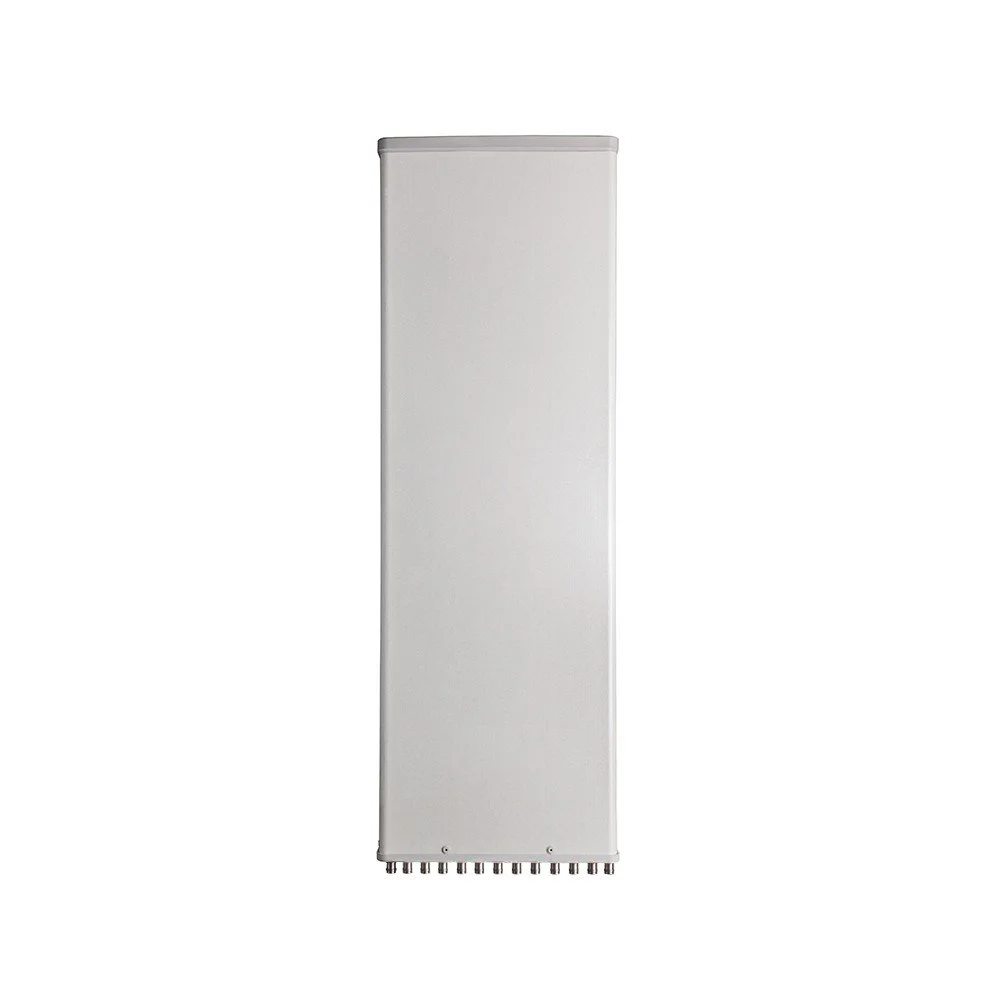
17-Port, TDD Hybrid Panel Antenna ( 698 - 3800 MHz )

₹0.00

17-Port TDD Hybrid Panel Antenna (698–3800 MHz)

Overview A high-performance TDD hybrid panel antenna engineered for multi-operator and multi-sector deployments across 698–3800 MHz. Designed for dense urban, suburban, and macro cell environments, this antenna delivers robust wideband coverage, superior isolation between ports, and flexible polarization options to support LTE, 5G NR, and legacy technologies.

Key Features

  • Frequency range: 698–3800 MHz in a single compact housing.

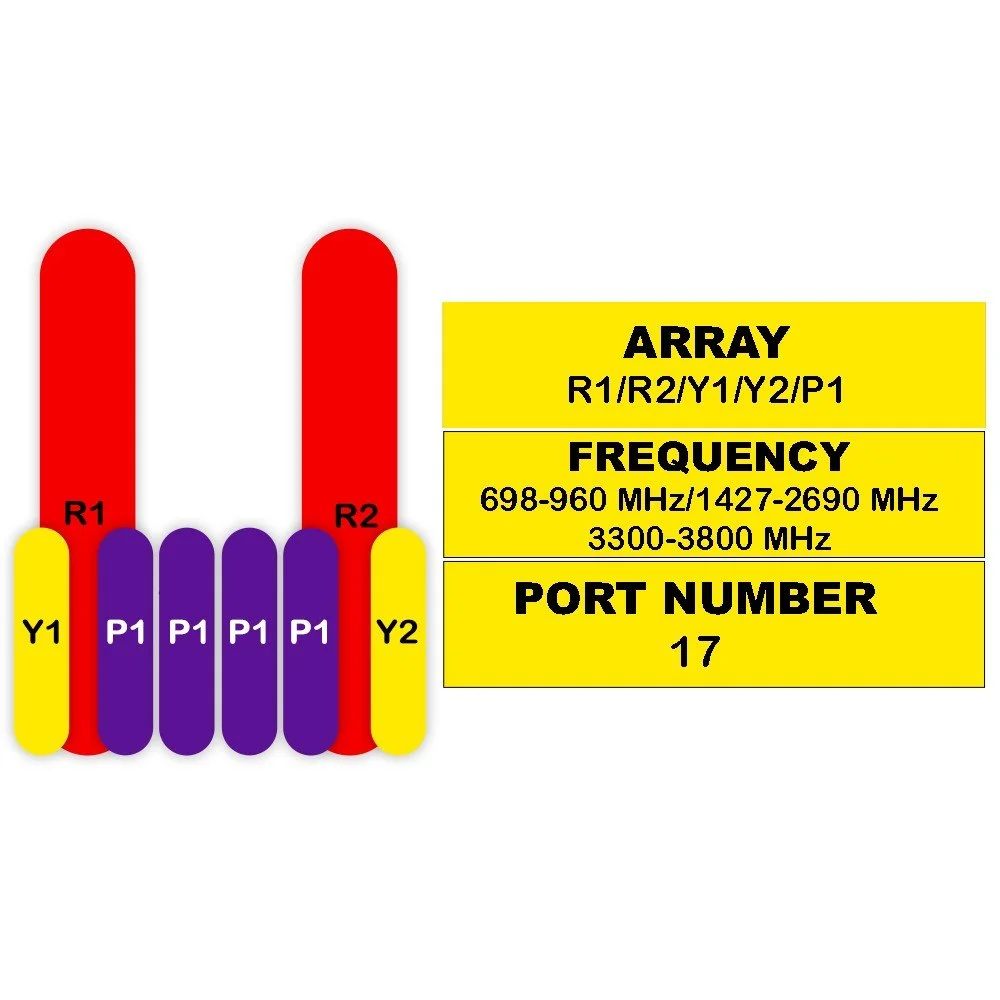
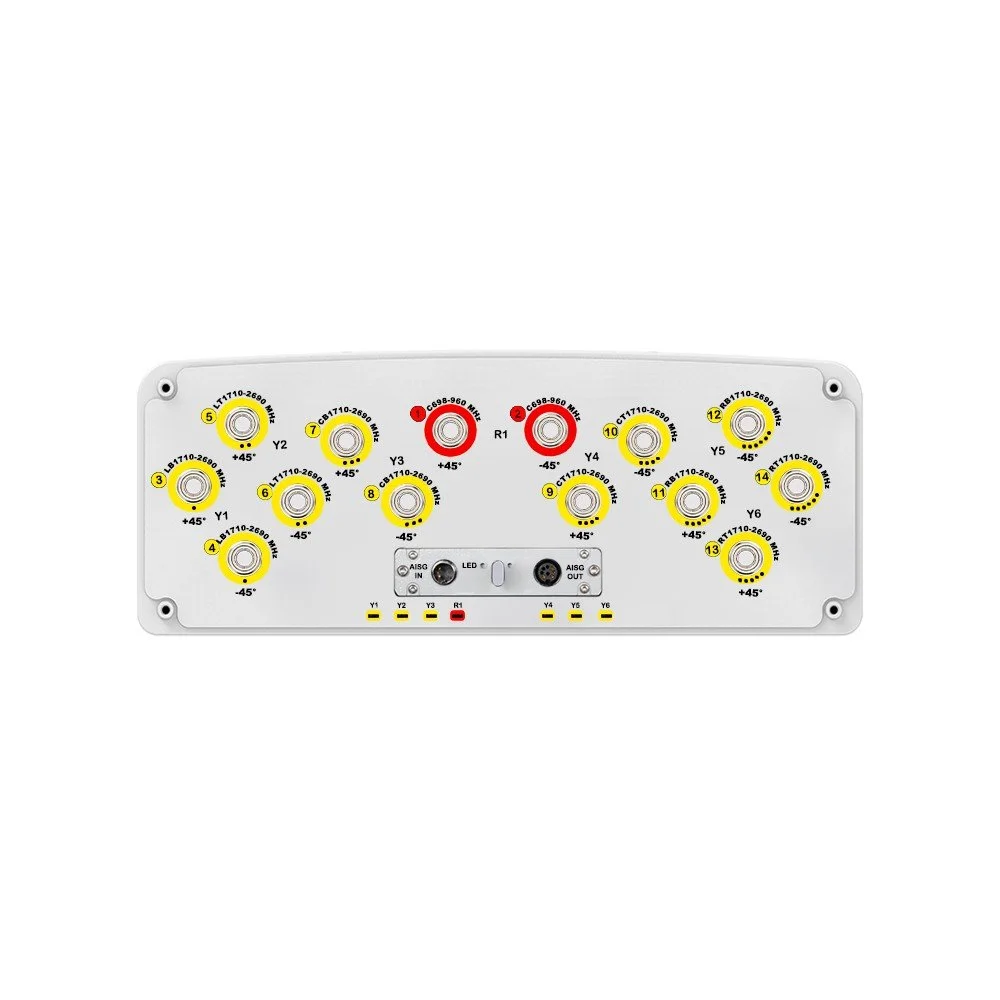
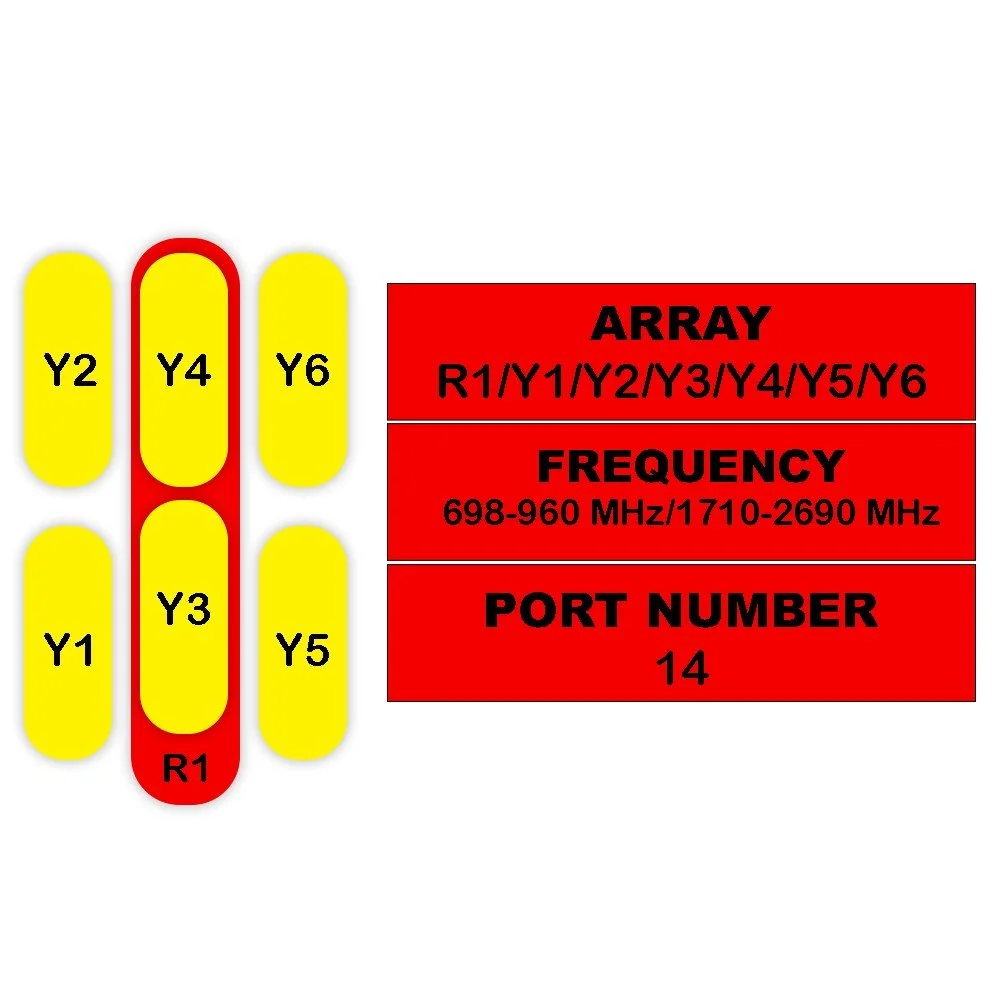
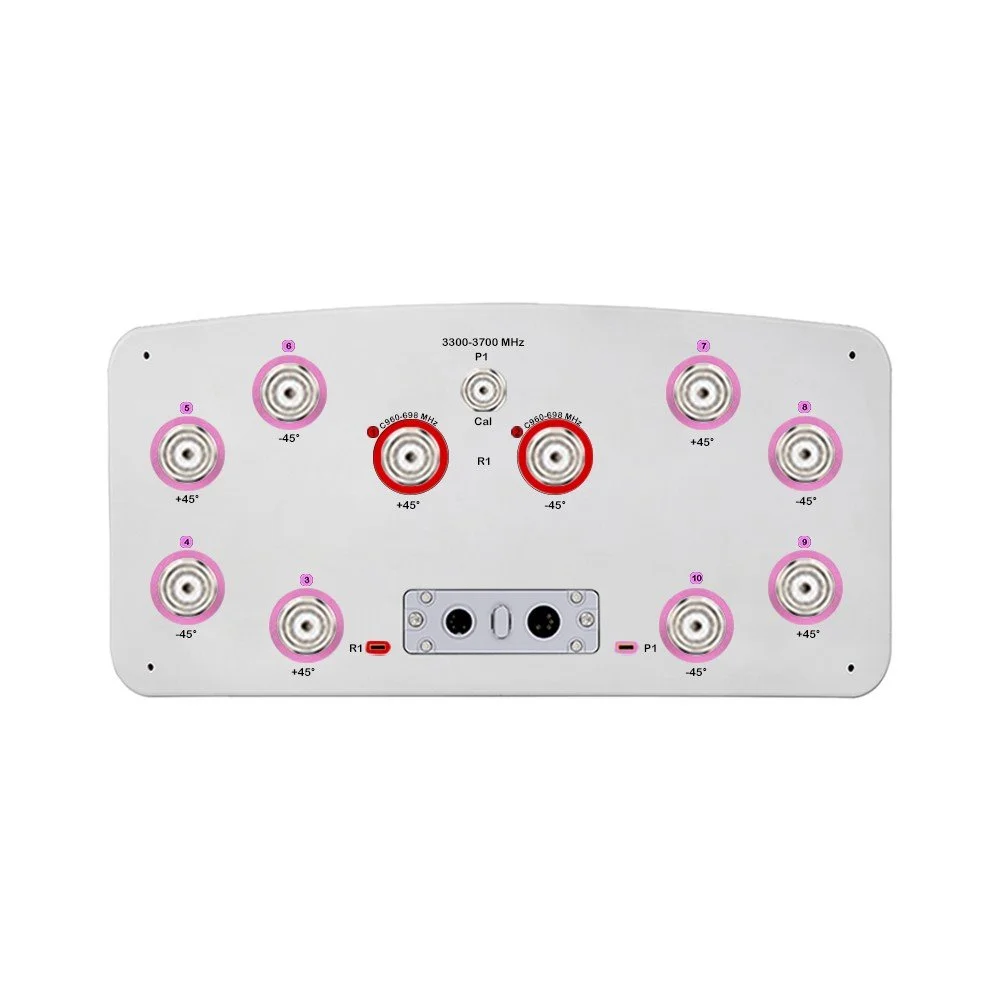
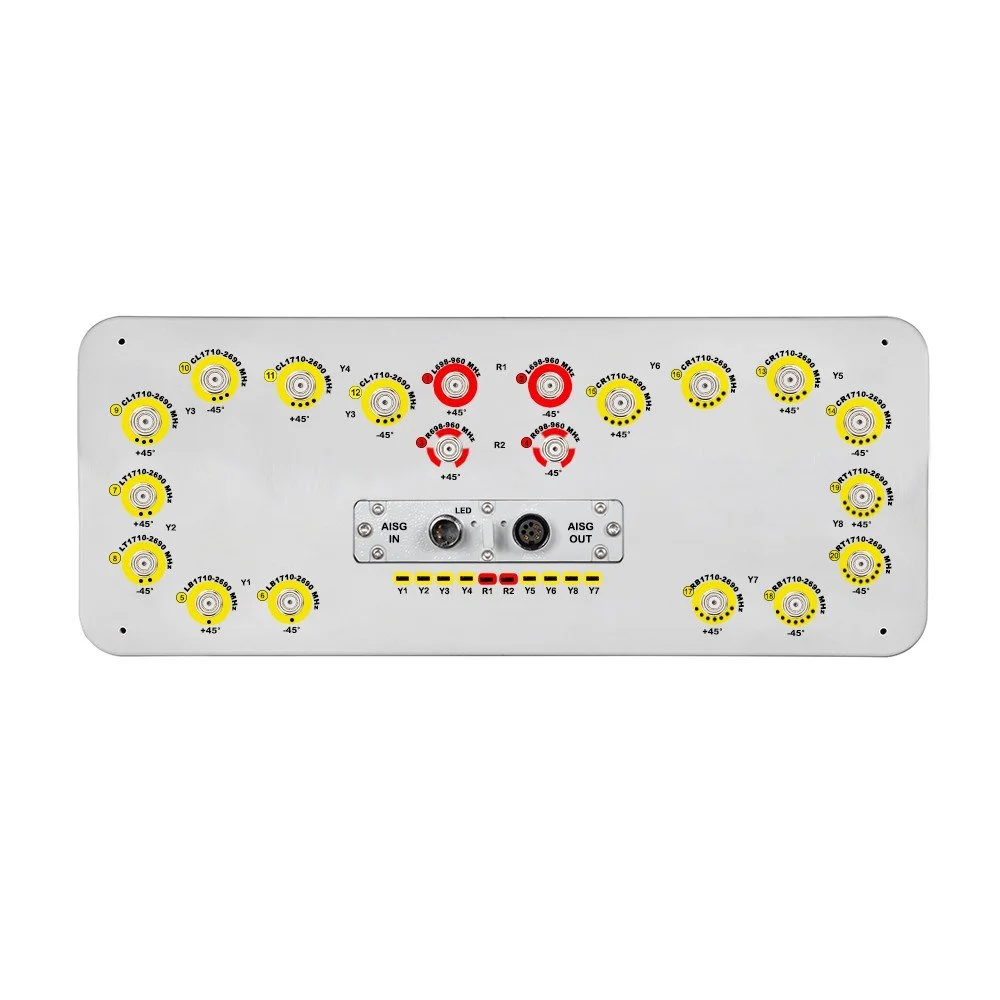
  • 17 ports configured for hybrid operation: multiple MIMO paths and combined multiband sectors in one antenna.

  • TDD support optimized for synchronized Time Division Duplex networks.

  • Dual-polarized elements with configurable polarization sets to support 2x, 4x, and higher-order MIMO.

  • High inter-port isolation to minimize intra-site interference and enable multi-operator sharing.

  • Low axial ratio across key bands for strong circular polarization performance where required.

  • Rugged, weatherproof radome rated for outdoor telecom environments (IP65/IP67 depending on mounting).

  • Corrosion-resistant mounting brackets with adjustable tilt and azimuth for precise alignment.

  • Lightweight composite radome for simplified installation and reduced tower load.

  • Integrated surge protection options available per port.

  • RoHS and CE compliant; optional carrier-specific labeling and connectors.

Typical Applications

  • Multi-operator rooftop and tower sites

  • Tower-top cell sites serving dense urban corridors

  • Small cell aggregation on rooftops and street furniture

  • Private networks and neutral-host deployments

  • Macro sites migrating to 5G TDD while maintaining legacy support

Performance Specifications :

  • Operating frequencies: 698–3800 MHz

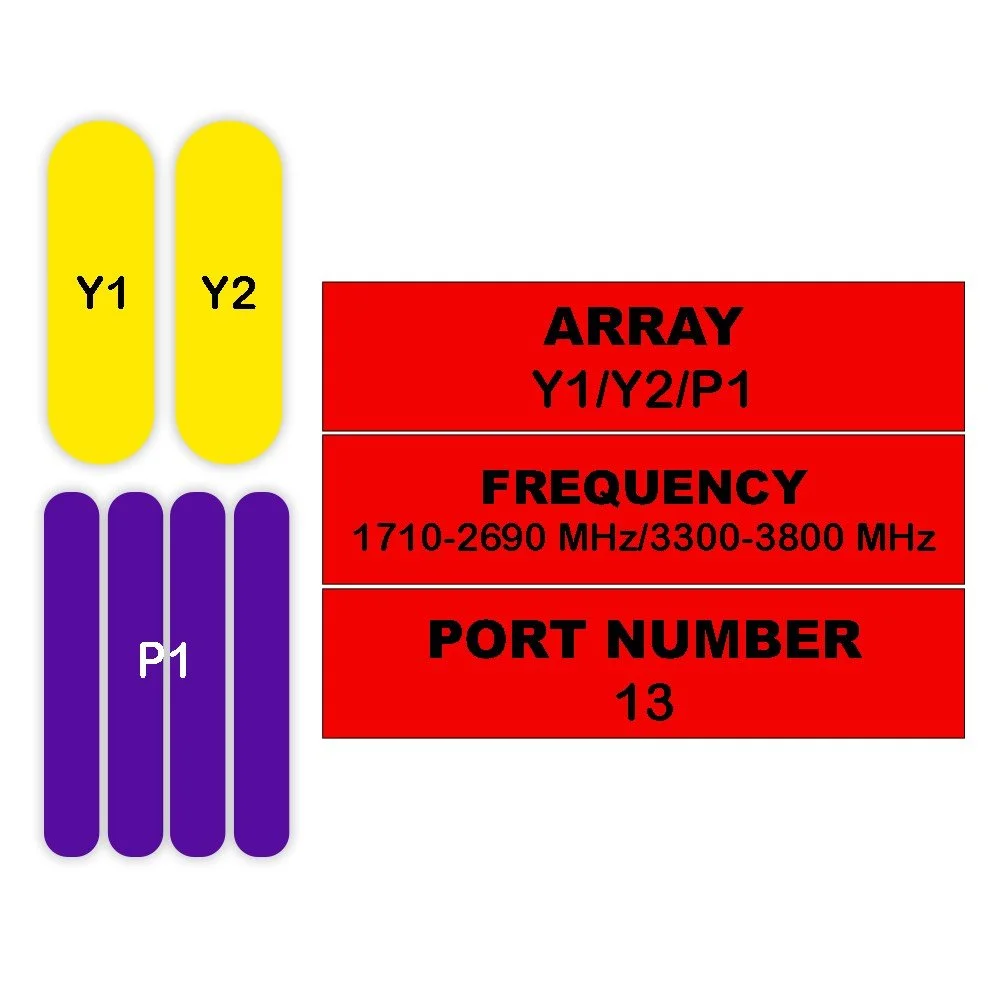
  • Ports: 17 (hybrid configuration—see options below)

  • Polarization: Dual linear (±45°) with hybridized sectors; options for cross-polar or circular hybridization

  • Gain (approximate, varies by band):

    • 698–960 MHz: 6–8 dBi

    • 1710–2700 MHz: 7–10 dBi

    • 3300–3800 MHz: 9–12 dBi

  • VSWR: ≤1.8:1 across most of band (typical), ≤2.0:1 max

  • Isolation: ≥30 dB between primary ports; ≥25 dB for adjacent sub-array ports (typical)

  • Beamwidth (H/V, approximate):

    • Low band: 70°–100° / 20°–30°

    • Mid band: 60°–90° / 12°–25°

    • High band: 40°–70° / 8°–18°

  • Power handling: up to 200 W per port (depending on configuration)

  • Impedance: 50 Ω

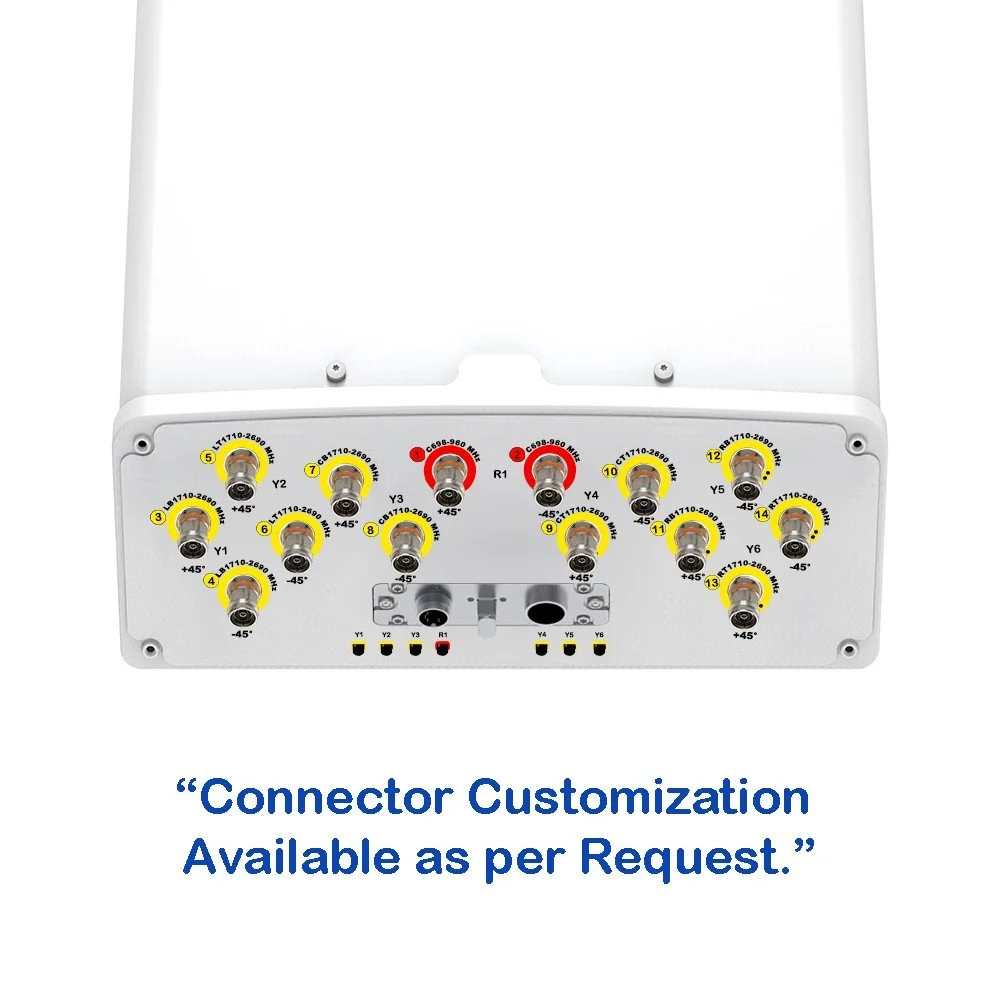
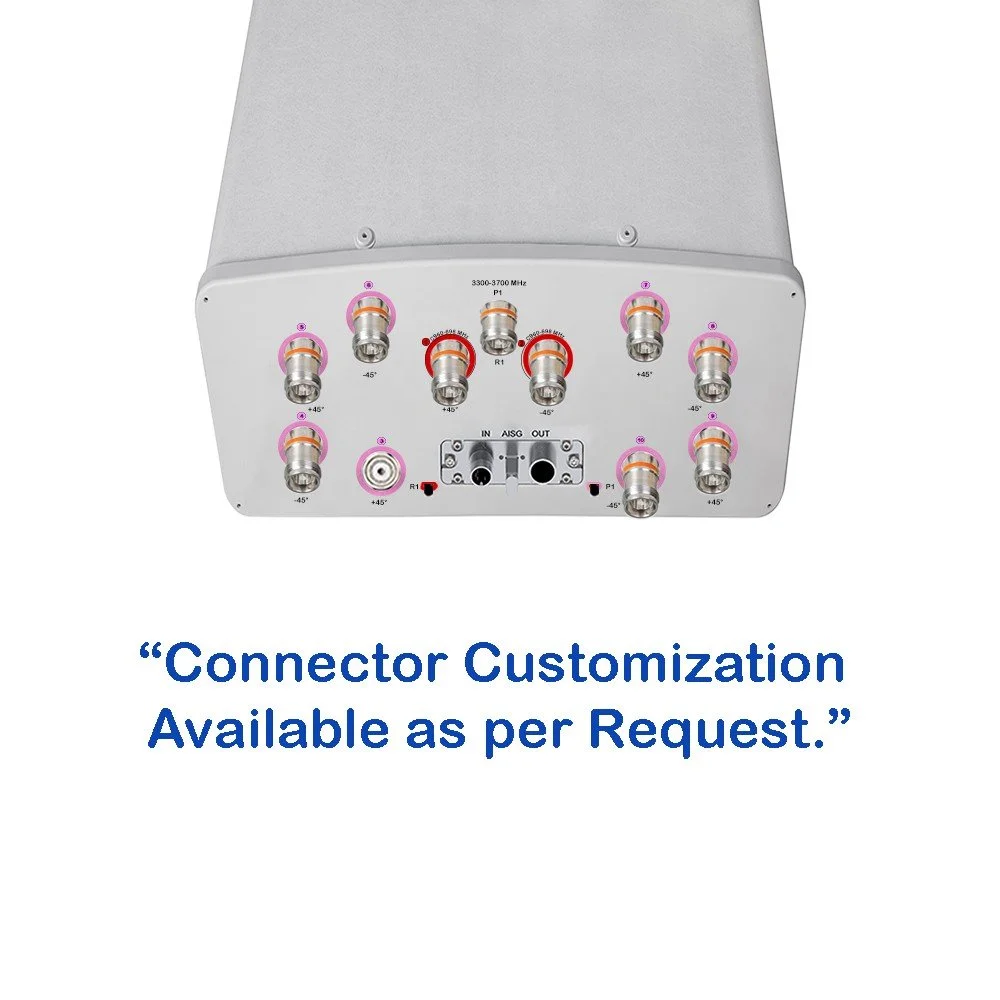
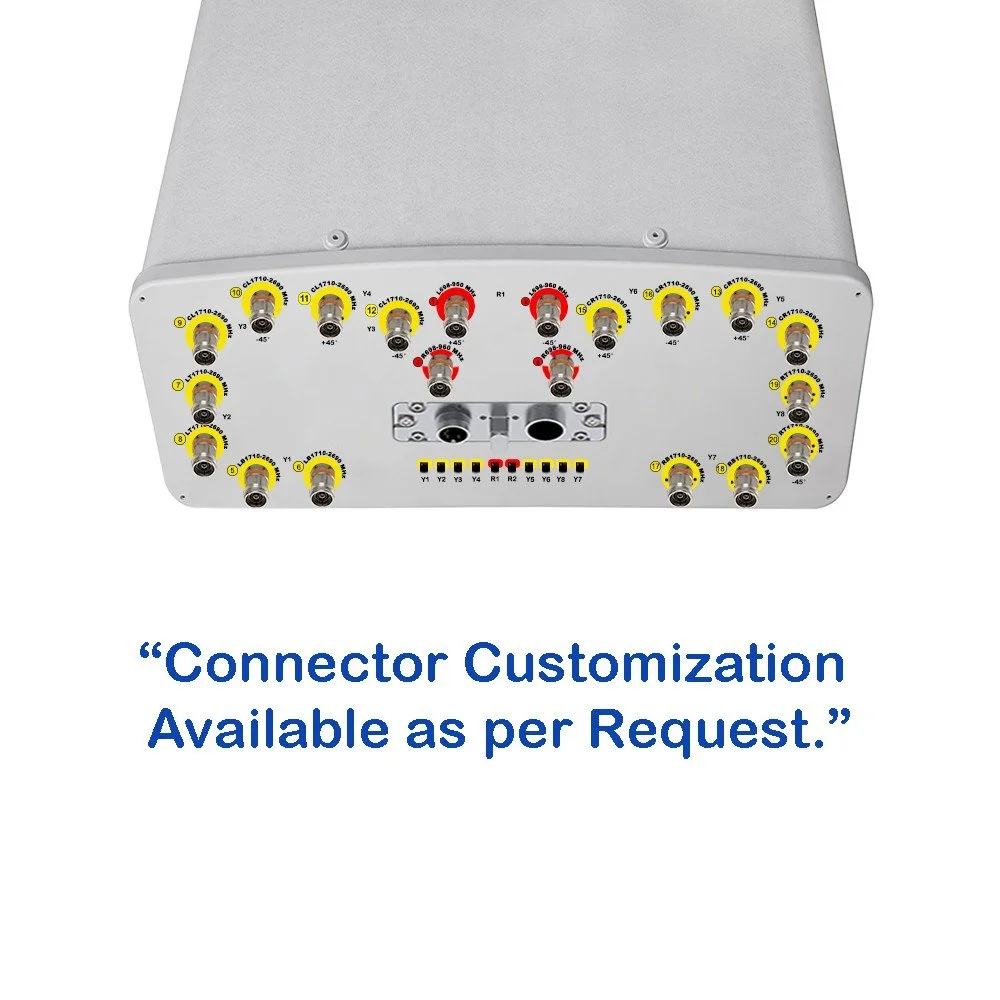
  • Connector options: N-type female (standard), optional 4.3-10 or SMA on request

  • Lightning protection: Integrated DC grounding and optional surge arrestors

Mechanical & Environmental

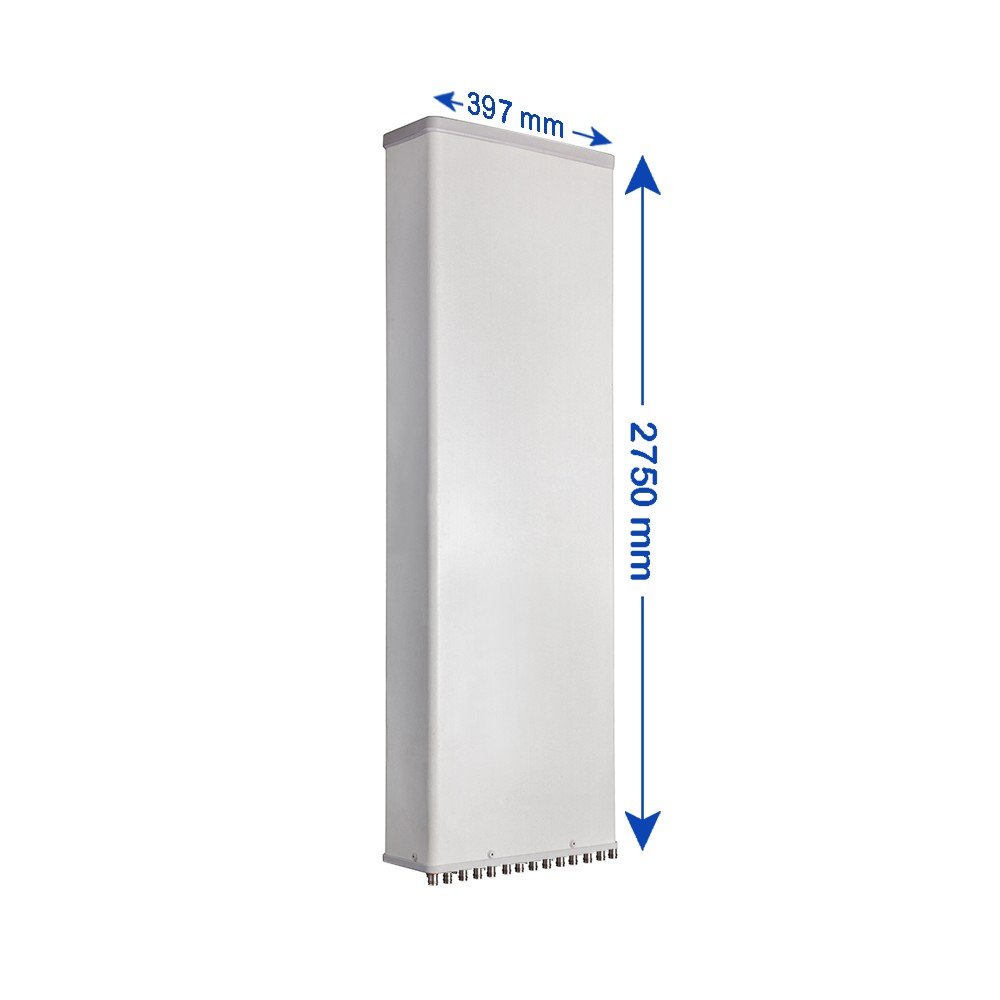
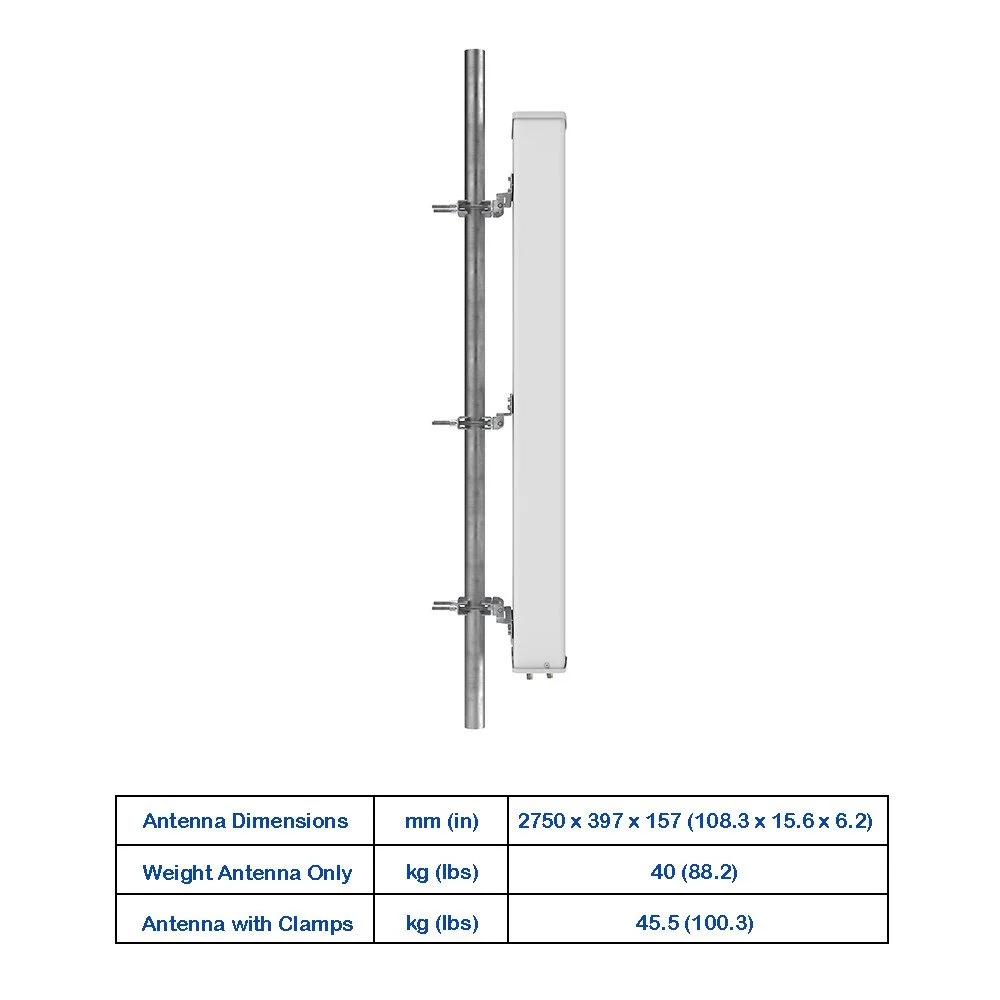
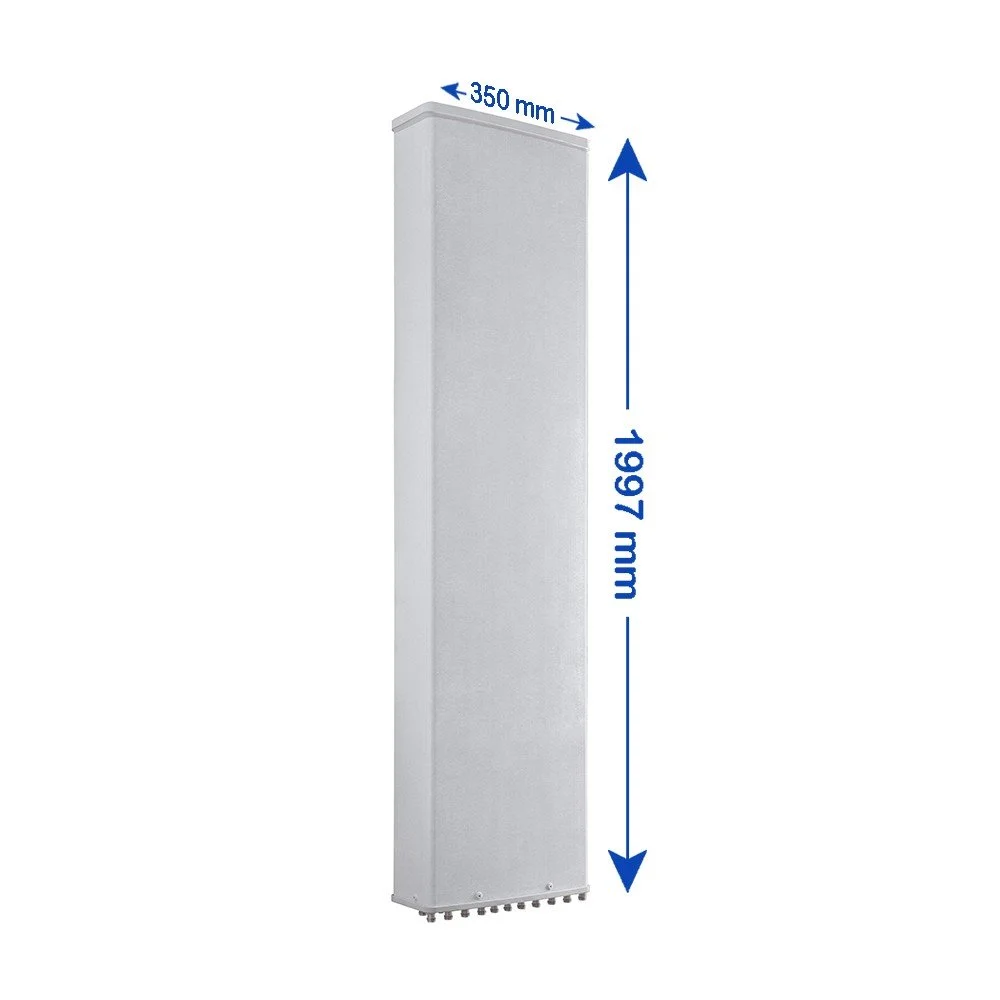
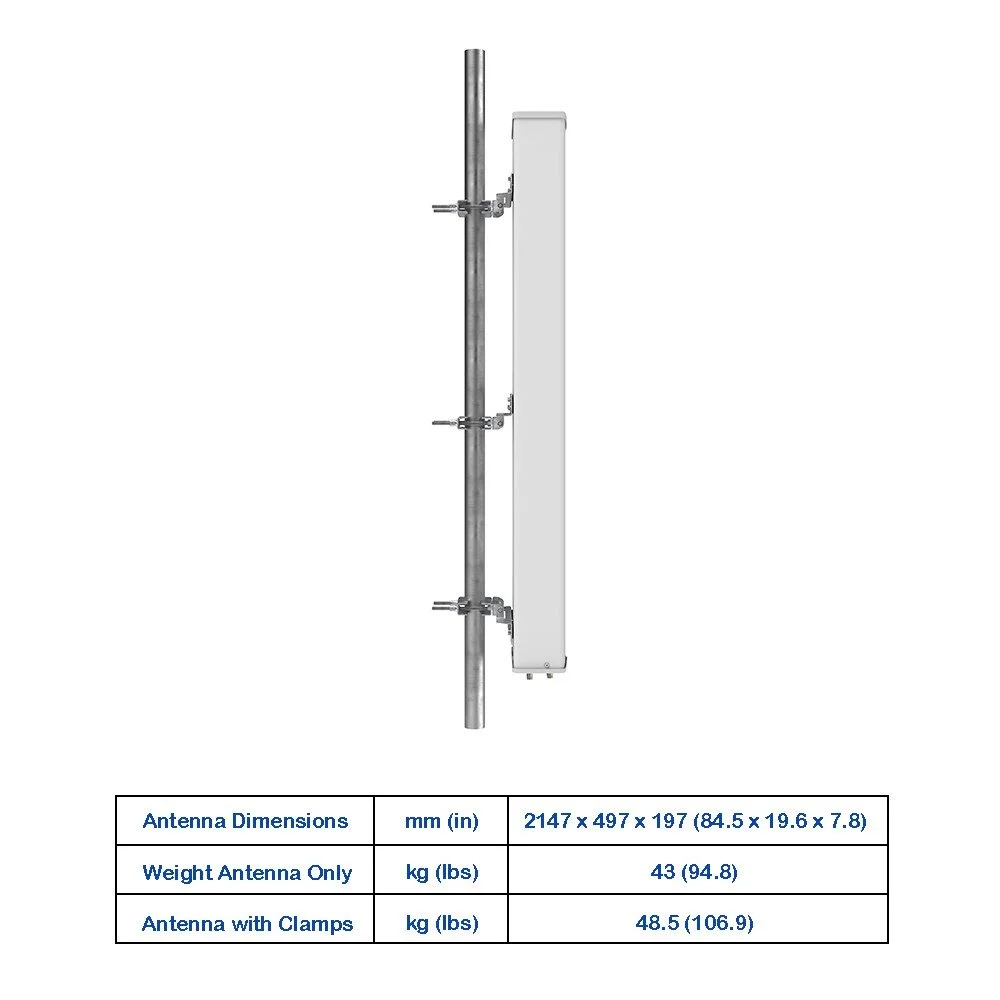
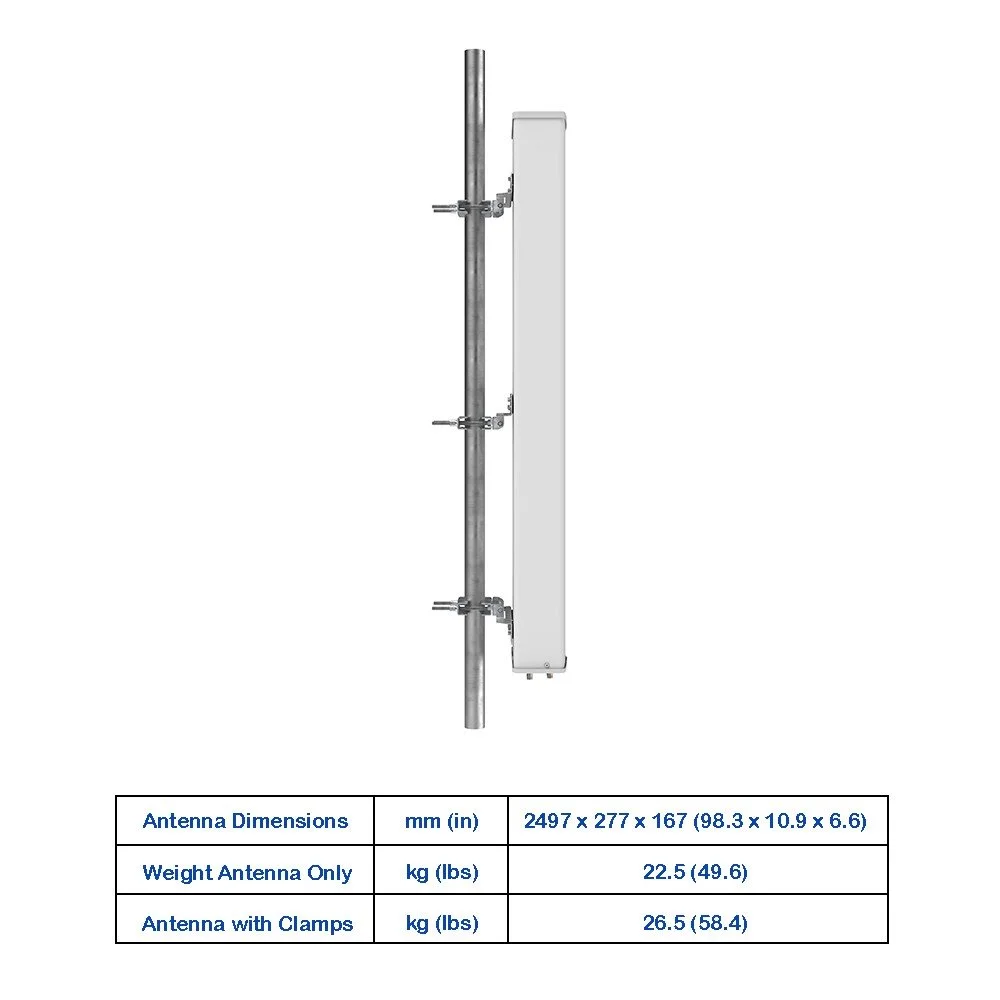
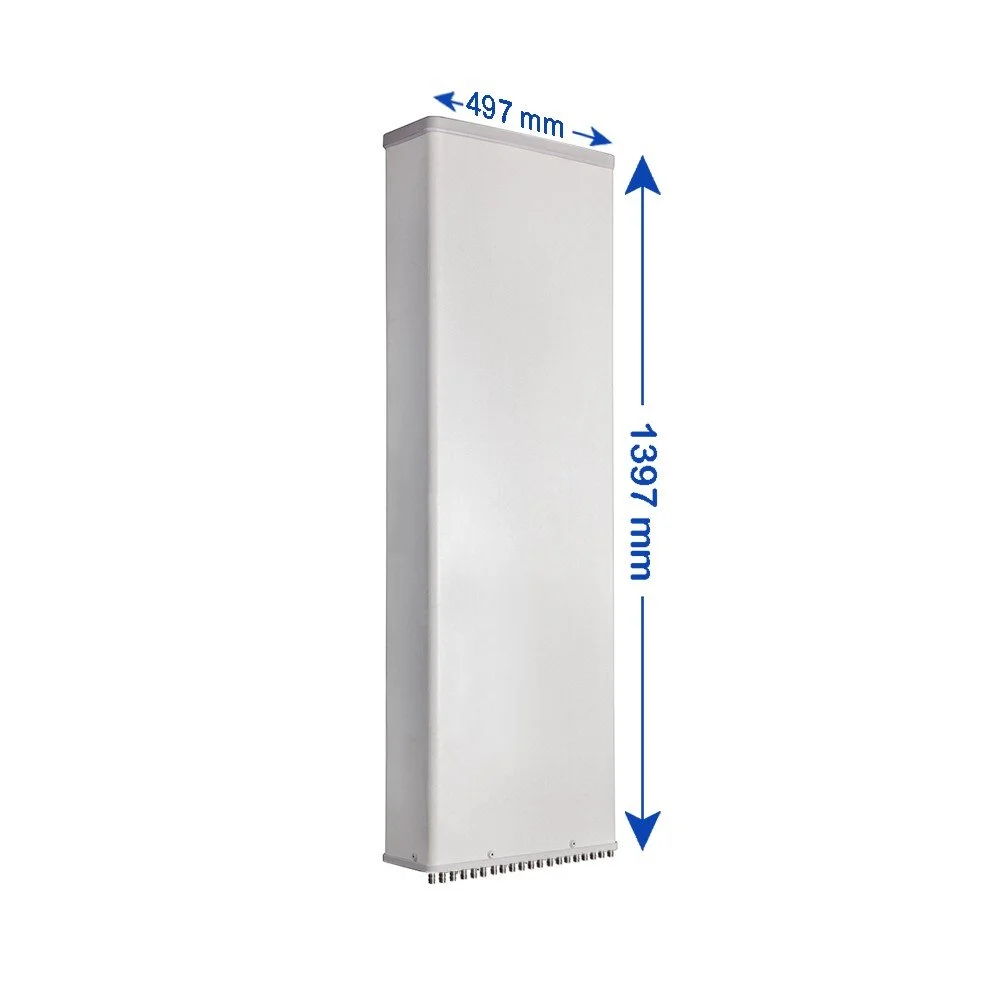
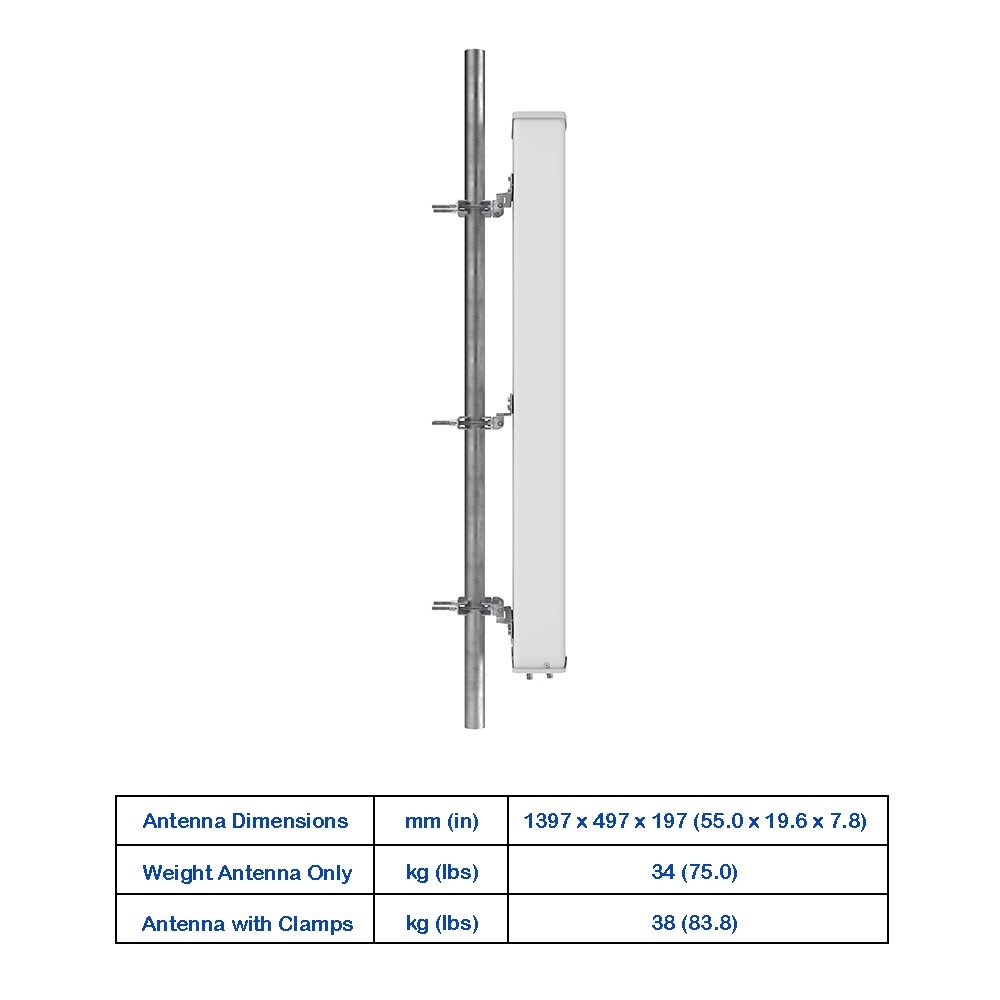
  • Dimensions (typical): 1200 mm × 400 mm × 180 mm (length × width × depth) — exact size varies by internal configuration

  • Weight: ~18–25 kg depending on options

  • Wind survival: 200 km/h (survival rating subject to mounting)

  • Operating temperature: -40°C to +65°C

  • Humidity: 0–100% condensing

  • Radome material: UV-stable composite

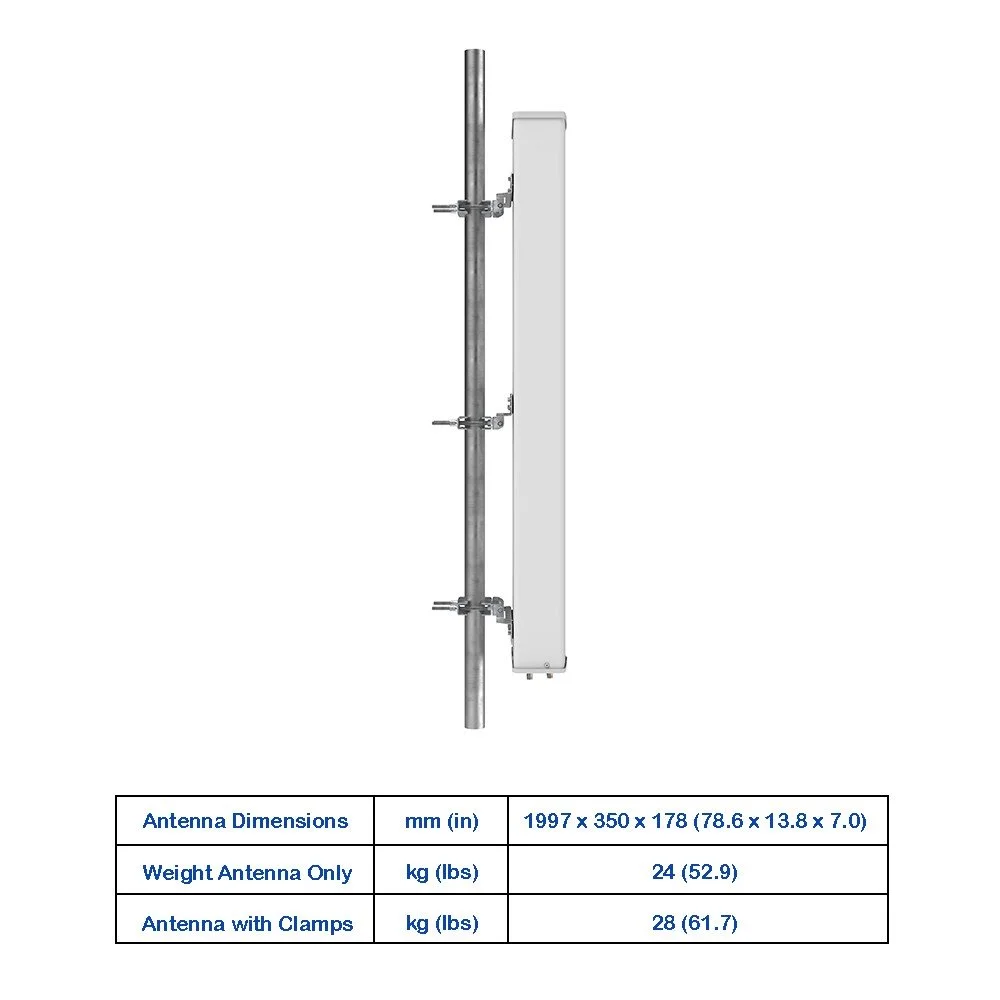
  • Mounting: Adjustable pole or wall brackets to fit 40–120 mm OD masts; custom mounts available

Hybrid Port Configurations

  • Option A — 3-sector hybrid

    • Each sector: 5 ports (2x MIMO low/mid, 1x high-band port), center/common control port

    • Total: 17 ports (3×5 + 2 common/control)

  • Option B — Multi-operator split

    • Operator 1: 6 ports (full MIMO across mid/high)

    • Operator 2: 6 ports

    • Shared ports: 5 for low-band coverage and synchronization

  • Option C — Massive 8x8 MIMO support (combined bands)

    • 8 MIMO ports for primary operator, auxiliary ports for cross-band carriers and synchronization

Ordering Options

  • Standard model with N-female connectors and integrated mounting

  • Low-profile housing variant for aesthetic-sensitive sites

  • Integrated surge protectors per port (specify required kA rating)

  • Custom cable assemblies and connectors (length and type to spec)

  • RF combiner/splitter modules pre-integrated for multi-operator splits

  • Factory RF tuning for operator-specific band plans

17-Port TDD Hybrid Panel Antenna (698–3800 MHz)

Overview A high-performance TDD hybrid panel antenna engineered for multi-operator and multi-sector deployments across 698–3800 MHz. Designed for dense urban, suburban, and macro cell environments, this antenna delivers robust wideband coverage, superior isolation between ports, and flexible polarization options to support LTE, 5G NR, and legacy technologies.

Key Features

  • Frequency range: 698–3800 MHz in a single compact housing.

  • 17 ports configured for hybrid operation: multiple MIMO paths and combined multiband sectors in one antenna.

  • TDD support optimized for synchronized Time Division Duplex networks.

  • Dual-polarized elements with configurable polarization sets to support 2x, 4x, and higher-order MIMO.

  • High inter-port isolation to minimize intra-site interference and enable multi-operator sharing.

  • Low axial ratio across key bands for strong circular polarization performance where required.

  • Rugged, weatherproof radome rated for outdoor telecom environments (IP65/IP67 depending on mounting).

  • Corrosion-resistant mounting brackets with adjustable tilt and azimuth for precise alignment.

  • Lightweight composite radome for simplified installation and reduced tower load.

  • Integrated surge protection options available per port.

  • RoHS and CE compliant; optional carrier-specific labeling and connectors.

Typical Applications

  • Multi-operator rooftop and tower sites

  • Tower-top cell sites serving dense urban corridors

  • Small cell aggregation on rooftops and street furniture

  • Private networks and neutral-host deployments

  • Macro sites migrating to 5G TDD while maintaining legacy support

Performance Specifications :

  • Operating frequencies: 698–3800 MHz

  • Ports: 17 (hybrid configuration—see options below)

  • Polarization: Dual linear (±45°) with hybridized sectors; options for cross-polar or circular hybridization

  • Gain (approximate, varies by band):

    • 698–960 MHz: 6–8 dBi

    • 1710–2700 MHz: 7–10 dBi

    • 3300–3800 MHz: 9–12 dBi

  • VSWR: ≤1.8:1 across most of band (typical), ≤2.0:1 max

  • Isolation: ≥30 dB between primary ports; ≥25 dB for adjacent sub-array ports (typical)

  • Beamwidth (H/V, approximate):

    • Low band: 70°–100° / 20°–30°

    • Mid band: 60°–90° / 12°–25°

    • High band: 40°–70° / 8°–18°

  • Power handling: up to 200 W per port (depending on configuration)

  • Impedance: 50 Ω

  • Connector options: N-type female (standard), optional 4.3-10 or SMA on request

  • Lightning protection: Integrated DC grounding and optional surge arrestors

Mechanical & Environmental

  • Dimensions (typical): 1200 mm × 400 mm × 180 mm (length × width × depth) — exact size varies by internal configuration

  • Weight: ~18–25 kg depending on options

  • Wind survival: 200 km/h (survival rating subject to mounting)

  • Operating temperature: -40°C to +65°C

  • Humidity: 0–100% condensing

  • Radome material: UV-stable composite

  • Mounting: Adjustable pole or wall brackets to fit 40–120 mm OD masts; custom mounts available

Hybrid Port Configurations

  • Option A — 3-sector hybrid

    • Each sector: 5 ports (2x MIMO low/mid, 1x high-band port), center/common control port

    • Total: 17 ports (3×5 + 2 common/control)

  • Option B — Multi-operator split

    • Operator 1: 6 ports (full MIMO across mid/high)

    • Operator 2: 6 ports

    • Shared ports: 5 for low-band coverage and synchronization

  • Option C — Massive 8x8 MIMO support (combined bands)

    • 8 MIMO ports for primary operator, auxiliary ports for cross-band carriers and synchronization

Ordering Options

  • Standard model with N-female connectors and integrated mounting

  • Low-profile housing variant for aesthetic-sensitive sites

  • Integrated surge protectors per port (specify required kA rating)

  • Custom cable assemblies and connectors (length and type to spec)

  • RF combiner/splitter modules pre-integrated for multi-operator splits

  • Factory RF tuning for operator-specific band plans

Electrical Specifications
Electrical specifications for R1/R2 and Y1/Y2 antenna bands including gain, beamwidth, isolation, and RF characteristics.
Parameter Unit 698–806 790–894 880–960 1427–1518 1695–1920 1920–2170 2300–2400 2490–2690
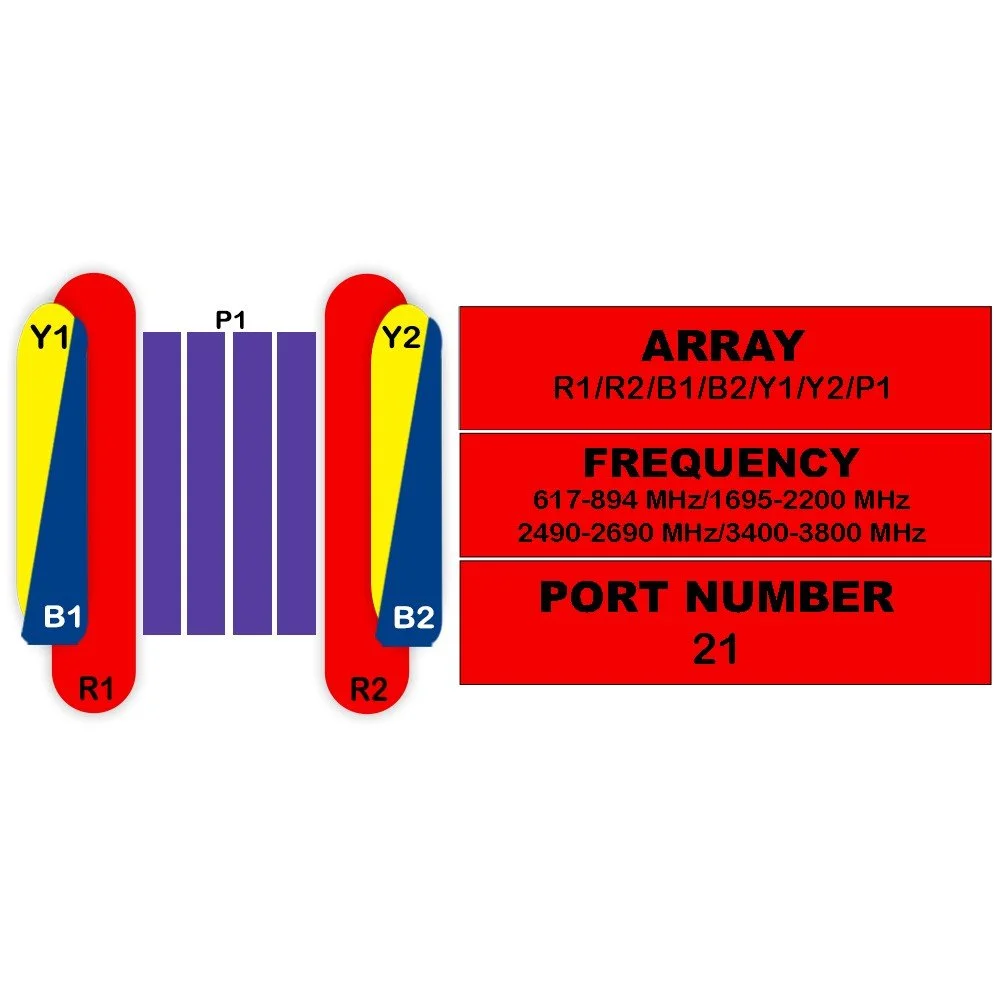
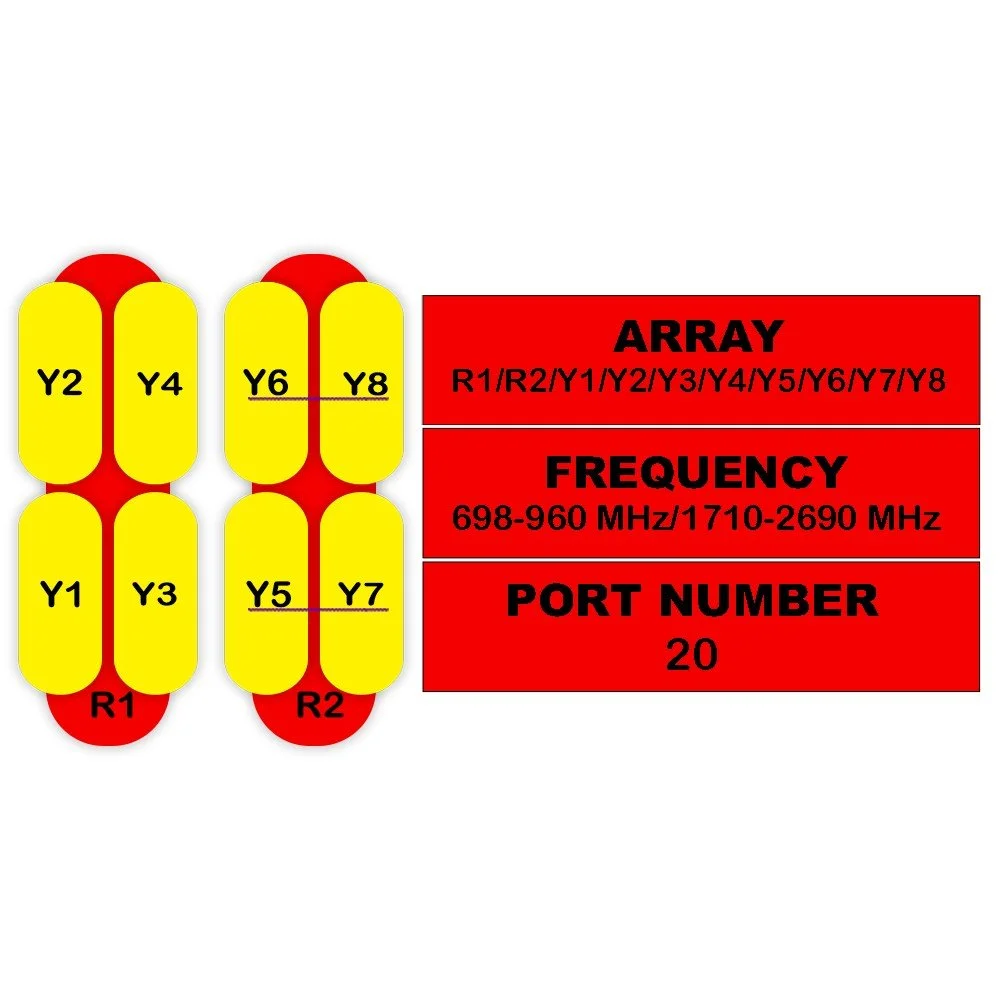
Frequency Range MHz 698–960 (R1 / R2) 1427–2690 (Y1 / Y2)
Polarization --- ±45° ±45°
Gain (Mid Tilt) dBi 16.2 16.6 17.0 16.0 16.8 17.4 17.8 17.8
Gain (Overall Tilts) dBi 15.6 ± 0.6 16.0 ± 0.6 16.4 ± 0.6 15.8 ± 0.6 16.6 ± 0.5 17.2 ± 0.5 17.6 ± 0.5 17.6 ± 0.5
Horizontal Beamwidth degree 64 ± 4.5 62 ± 4.5 58 ± 4.1 70 ± 8.5 69 ± 8.5 61 ± 6.5 60 ± 5.5 56 ± 6.5
Vertical Beamwidth degree 8.8 ± 0.9 7.8 ± 0.7 7.2 ± 0.6 8.1 ± 0.6 6.4 ± 0.8 5.9 ± 0.6 5.2 ± 0.5 4.8 ± 0.6
Electrical Downtilt (Continuous) degree 2–12 2–12
Tilt Accuracy degree < 1 < 1 < 1 < 1 < 1 < 1 < 1 < 1
Upper Side Lobe (First) dB > 16 > 16 > 16 > 15 > 15 > 15 > 15 > 15
Upper Side Lobe (Peak to 20°) dB > 15 > 15 > 15 > 14 > 14 > 14 > 14 > 14
Front-To-Back Ratio ±30° dB > 22 > 24 > 25 > 23 > 24 > 25 > 23 > 22
Cross Polar Discrimination (Boresight) dB ≥ 17 ≥ 18 ≥ 17 > 17 > 16 > 16 > 16 > 17
Cross Polar Discrimination (Sector) dB > 7.0 > 8.0 > 8.0 > 6 > 7 > 7 > 4 > 2
Isolation (Cross-Polar) dB > 26 > 26
Isolation (Port-to-Port) dB > 25 (R1//R2); > 28 (R1//Y1,Y2,P1) > 25
Impedance Ohm 50 50
VSWR --- < 1.5 < 1.5
Return Loss dB > 14 > 14
PIM3 (2x43 dBm Carrier) dBc < -150 < -150
Lightning Protection --- DC Ground DC Ground
Max Avg Input Power per Port @50°C Watts 250 200
Electrical Specifications
P1 antenna electrical specifications covering frequency range, beam configurations, calibration parameters, isolation, and RF characteristics.
Parameter Unit 3300–3600 MHz 3600–3800 MHz
Frequency Range MHz 3300–3800
Polarization --- ±45°
Electrical Downtilt (Continuous) degree 2–12
Single Column Beam
Gain dBi 15.5 ± 1 15.7 ± 1
Horizontal Beamwidth degree 75 ± 10 65 ± 10
Vertical Beamwidth (3 dB) degree 5.8 ± 0.6 5.5 ± 0.6
Cross-Polar Discrimination (0°) dB ≥ 15 ≥ 15
First Upper Side Lobe Suppression dB ≥ 15 ≥ 15
Front-To-Back Ratio dB ≥ 25 ≥ 25
Broadcast Beam (65°)
Gain (Typical) dBi 17.0 ± 0.6 17.2 ± 0.6
Horizontal Beamwidth degree 65 65
Vertical Beamwidth degree 5.8 ± 0.6 5.5 ± 0.6
Cross-Polar Discrimination (0°) dB ≥ 15 ≥ 15
First Upper Side Lobe Suppression dB ≥ 15 ≥ 15
Front-To-Back Ratio dB ≥ 27 ≥ 27
Service Beam – 0° Direct Beam
Gain dBi 21 ± 0.5 21.2 ± 0.5
3 dB Horizontal Beamwidth degree < 25 < 25
Cross Polar Ratio dB ≥ 18 ≥ 18
Front-To-Back Ratio dB ≥ 30 ≥ 30
Service Beam – ±30° Direct Beam
Gain dBi 18 18.2
3 dB Horizontal Beamwidth degree < 30 < 30
Calibration & Electrical Parameters
Coupling Factor (Calibration to Port) dB -26 ± 2
Max Amplitude Tolerance dB ≤ 0.7
Max Phase Tolerance dB ≤ 9
Average Power per Port W 25
RF Characteristics
Co-Polar Isolation Between Ports dB ≥ 20
Cross-Polar Isolation Between Ports dB ≥ 25
Impedance Ohm 50
VSWR --- < 1.5
Return Loss dB > 14
PIM3 (2×43 dBm carrier) dBc < -143
Lightning Protection --- DC Ground
Values based on NGMN-P-BASTA V11.1
Mechanical Specifications
Parameter Sub-Parameter Unit Specification
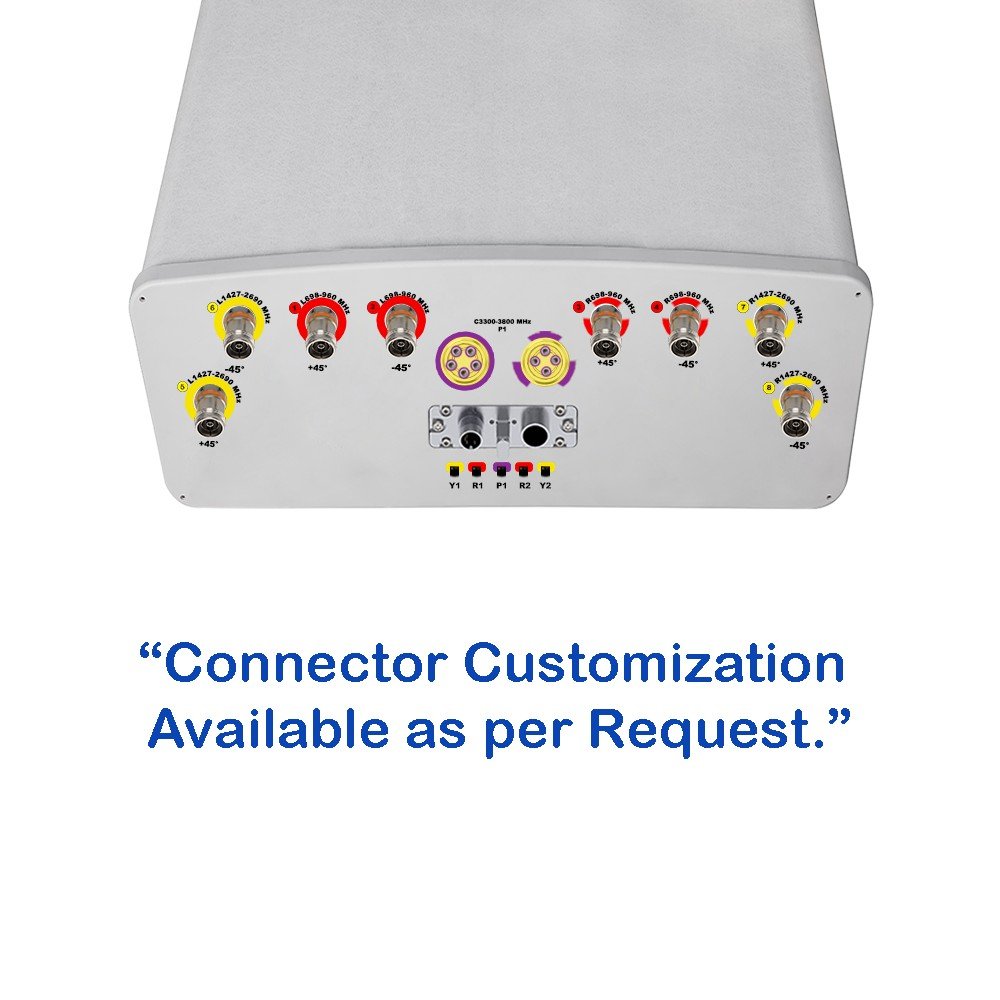
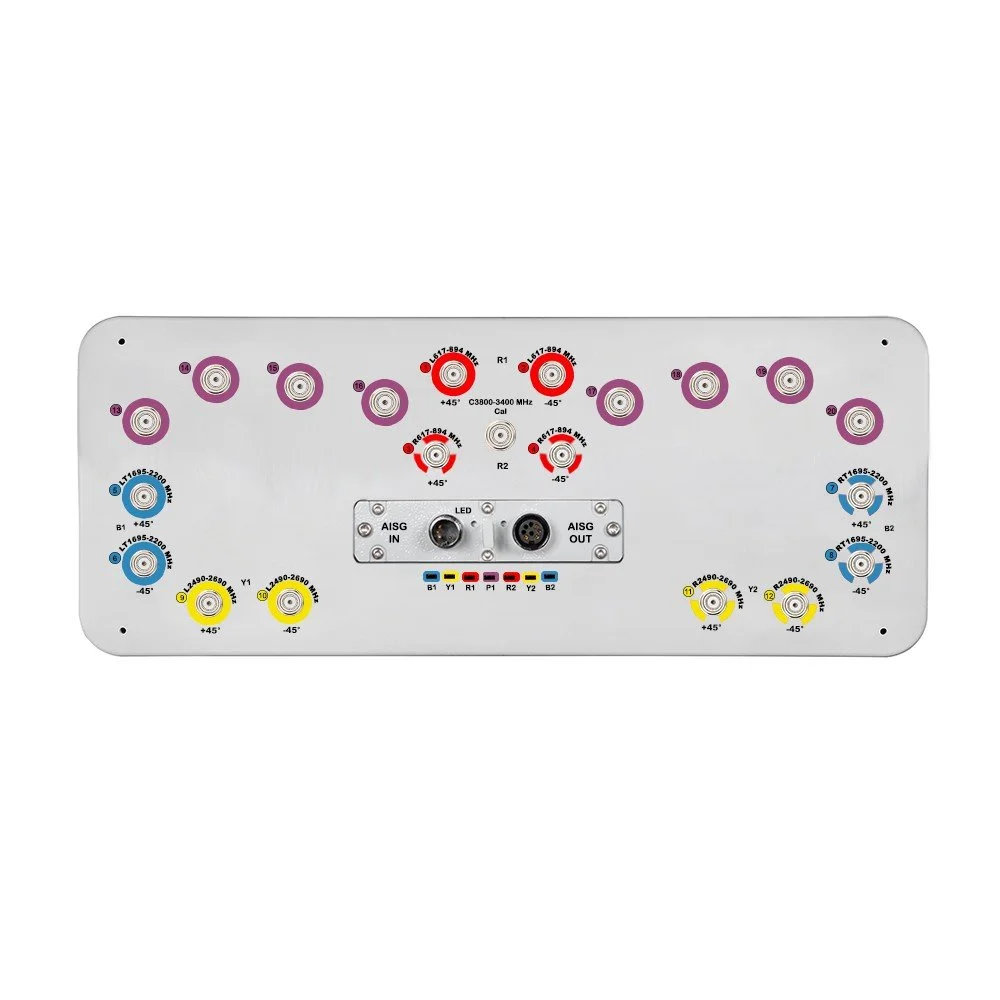
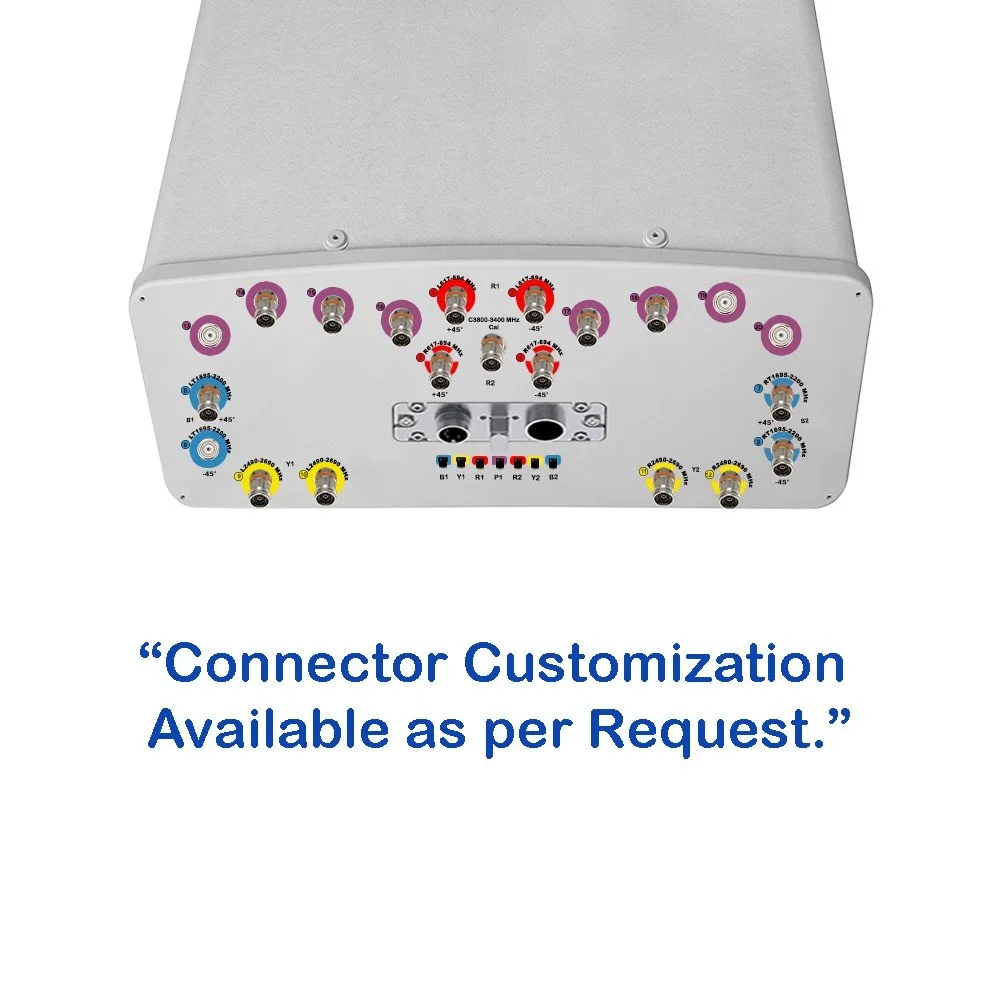
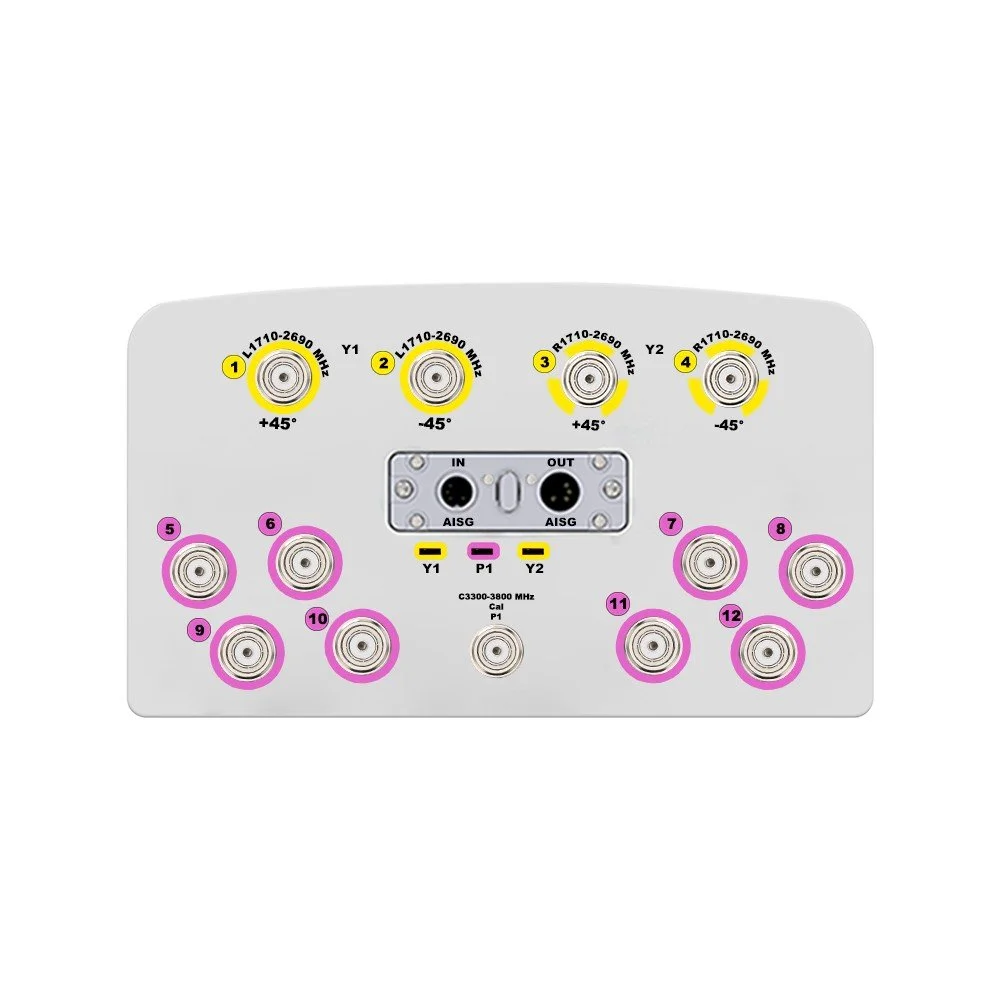
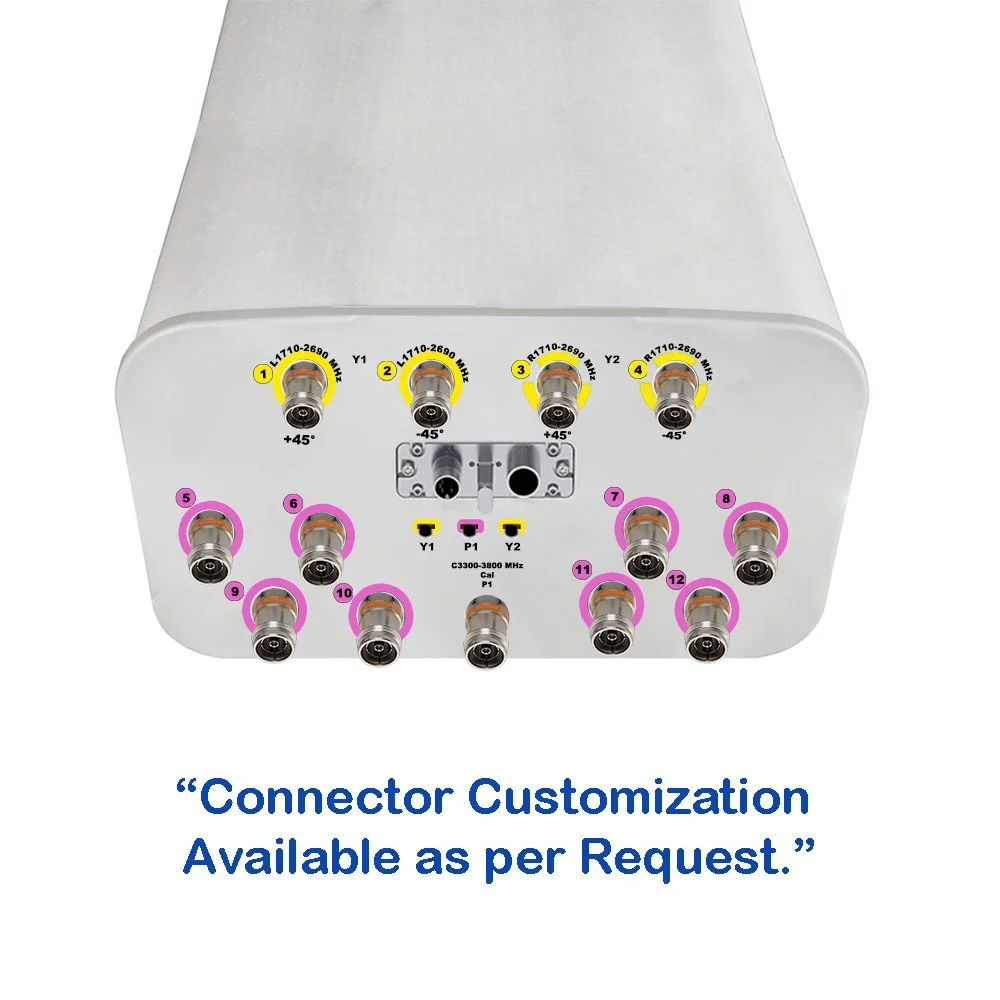
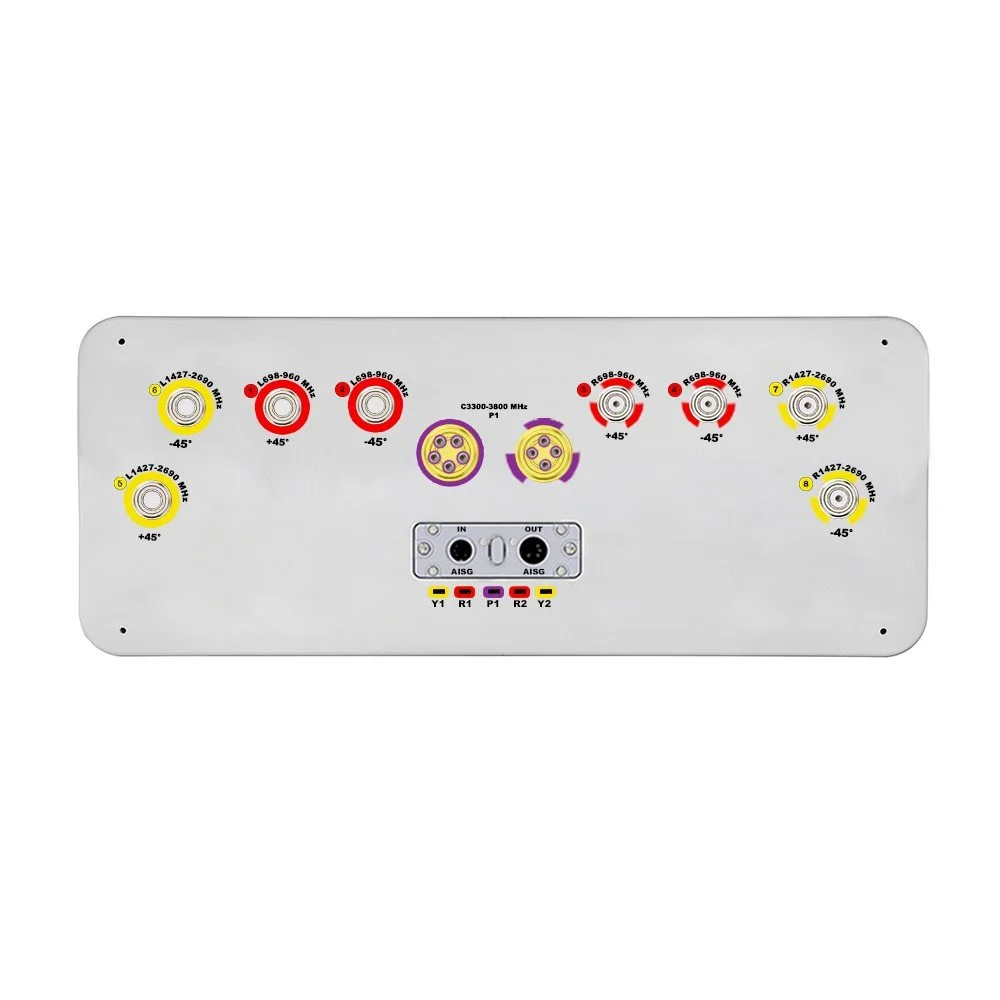
Connector Type --- --- (8x) 4.3/10 Female and (1x) MQ5 Male & (1x) MQ4 Male
Connector Position --- --- Bottom
Electrical Tilt Control --- --- Integrated RET
Radome Material --- --- Fiberglass
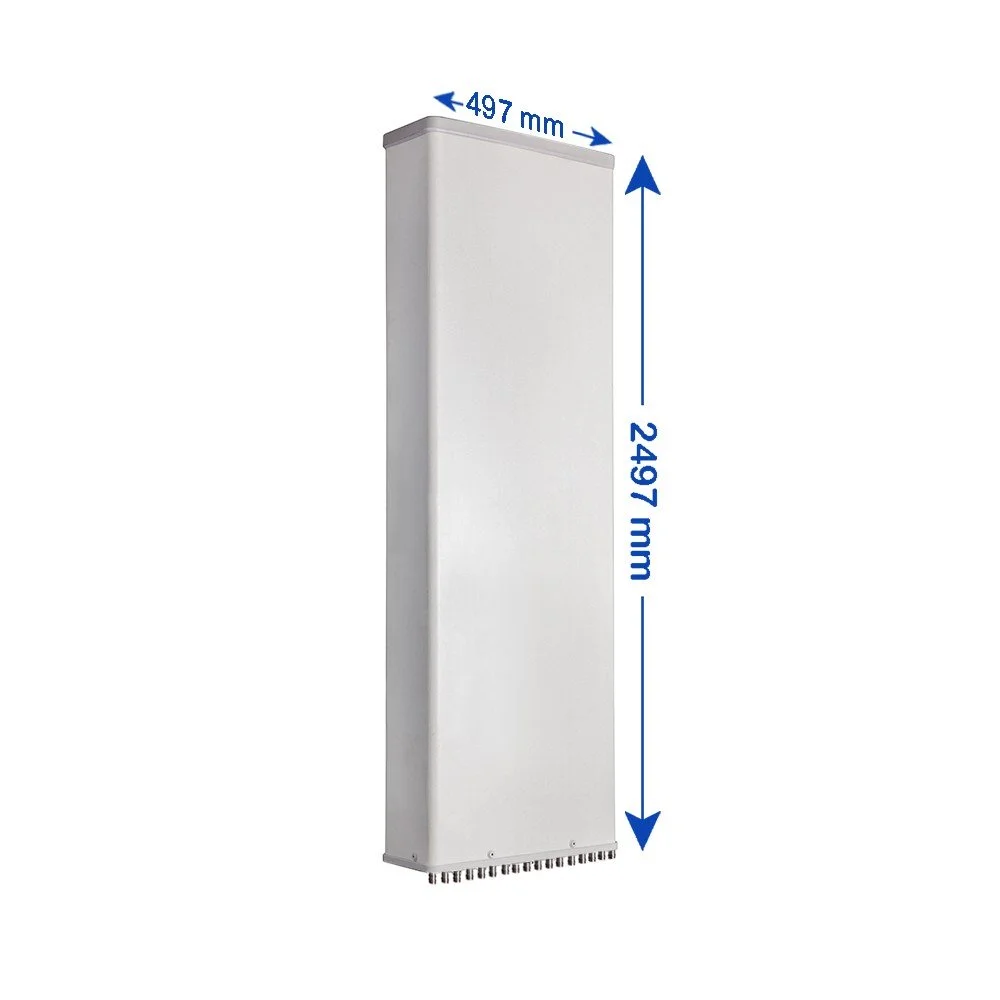
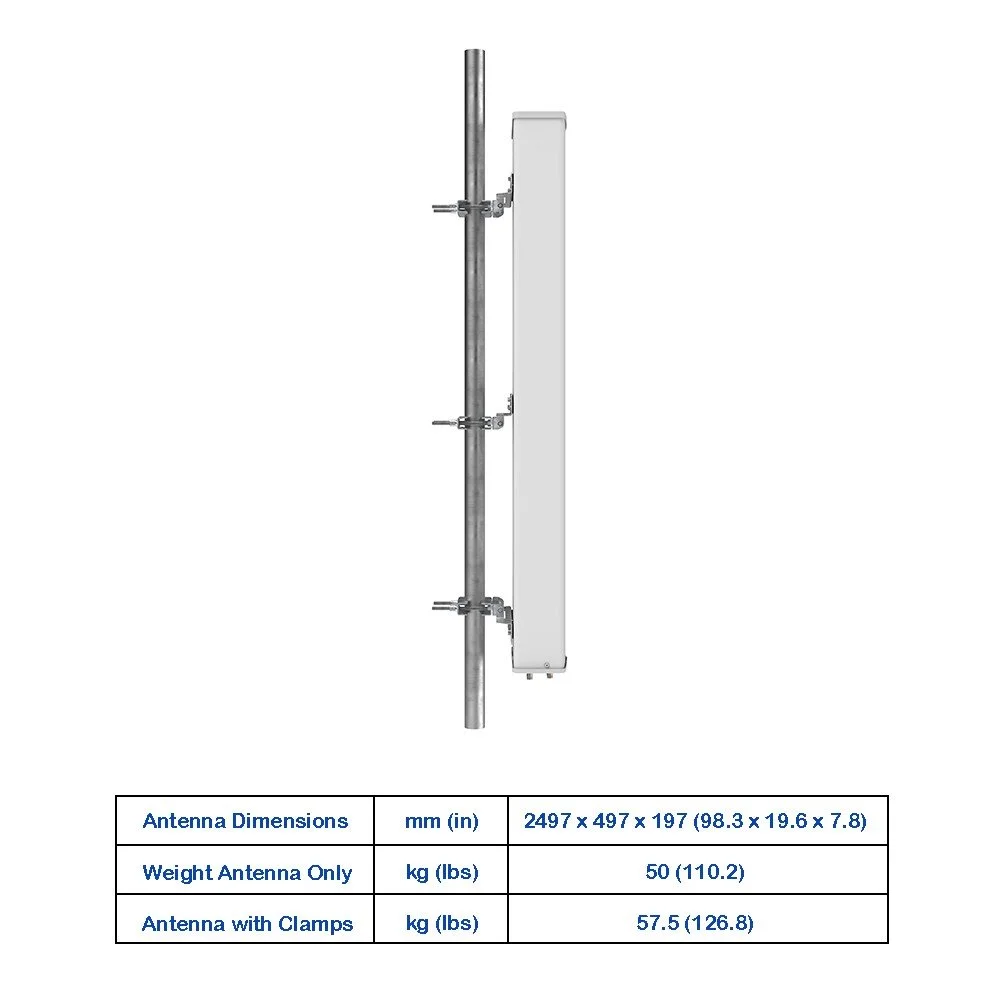
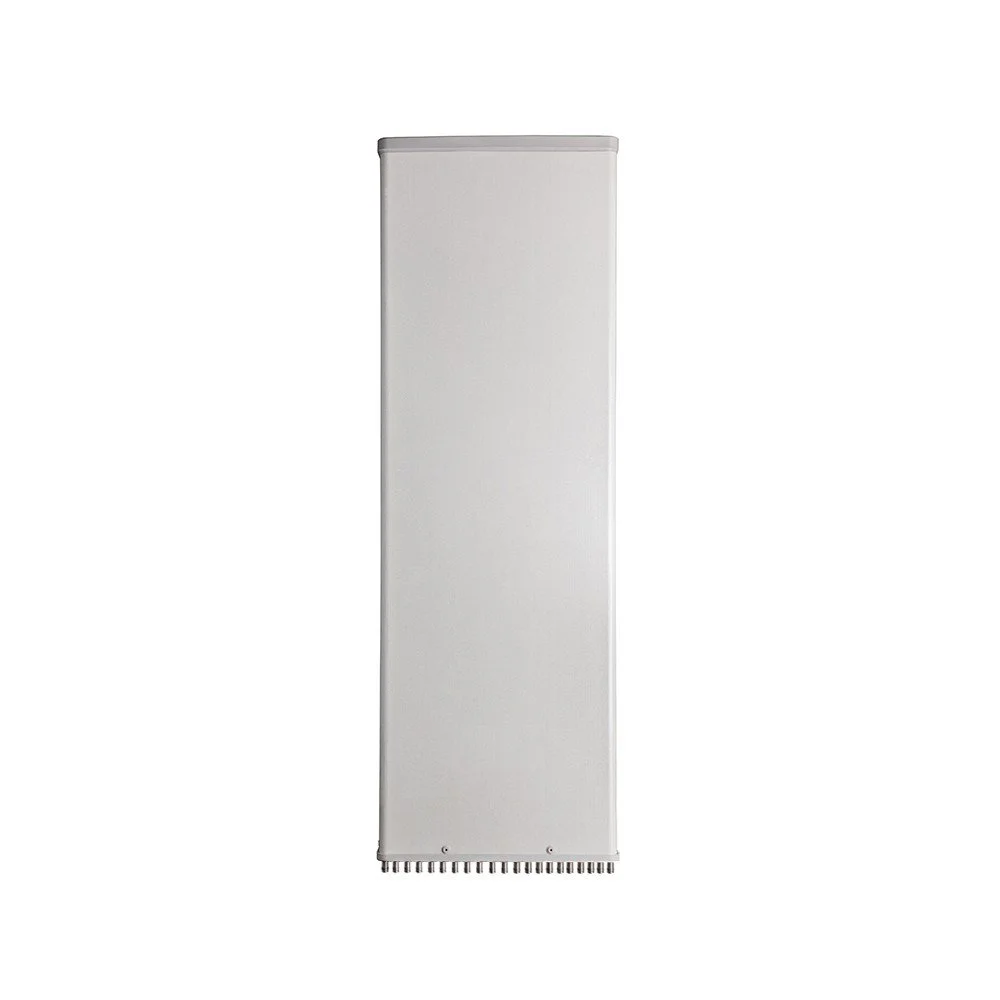
Antenna Dimensions (H × W × D) --- mm (in) 2497 x 497 x 197 (98.3 x 19.6 x 7.8)
Antenna Weight Antenna Only kg (lbs) 50 (110.2)
With Clamps kg (lbs) 57.5 (126.8)
Maximum Wind Speed --- km/h (mph) 200 (124.3)
Wind Load at 150 km/h Frontal N (lbf) 1145 (257.4)
Rear N (lbf) 1280 (287.8)
Lateral N (lbf) 560 (125.9)
Operating Temperature --- °C (°F) -40 to +60 (-40 to 140)